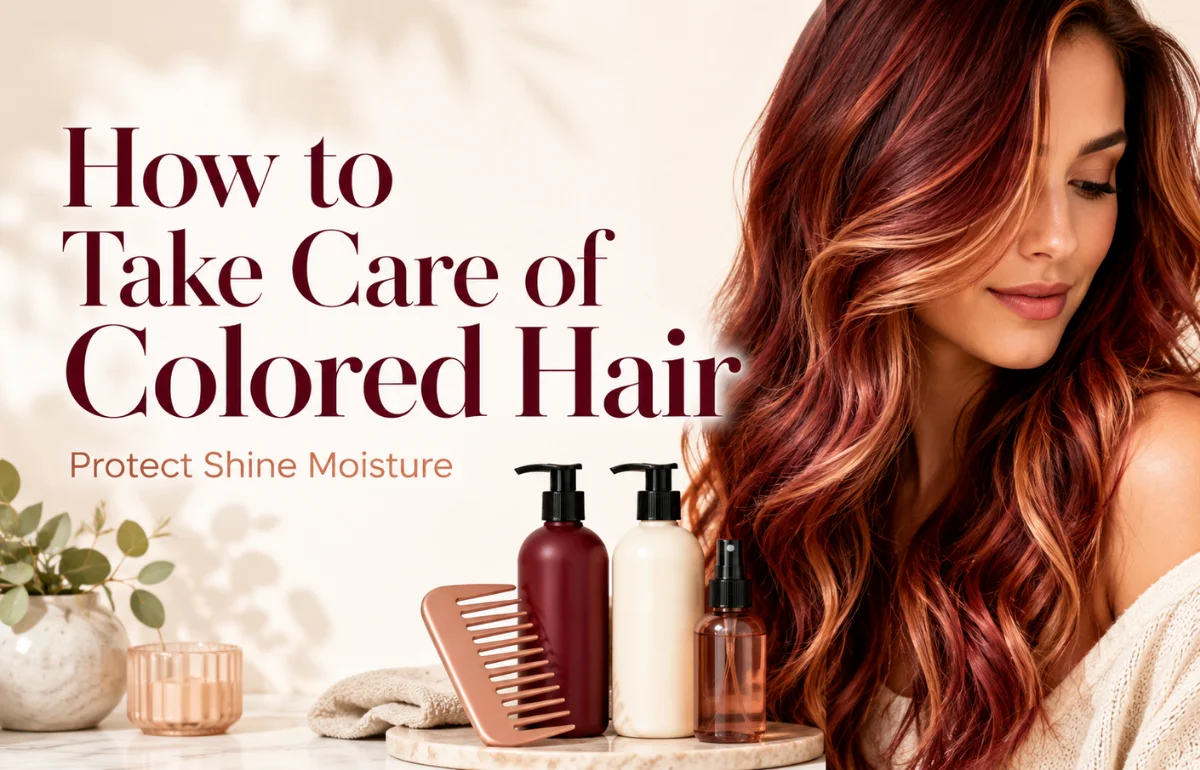
Knowing how to take care of colored hair starts with protecting two things at the same time: the color deposited inside or around the hair shaft and the condition of the hair itself. Colored hair generally needs gentler washing, regular conditioning, less high-temperature styling, and protection from sunlight, chlorine, and repeated chemical processing.
I recommend treating dyed hair as more vulnerable than untreated hair because coloring, particularly permanent dye and bleaching, can leave strands drier and more prone to breakage. A practical routine is simple: wash only when your scalp needs it, use products suitable for color-treated hair, condition after shampooing, reduce unnecessary heat, and protect your hair before swimming or spending long periods in strong sun. Dermatologists also recommend conditioning after washing and limiting excessive heat to help reduce damage.
The goal is not to stop color from fading completely. Every artificial hair color changes gradually. The real goal is to slow unnecessary fading while keeping the hair smooth, flexible, manageable, and healthy-looking.
Why Colored Hair Needs Different Care
Hair color can change more than the shade you see in the mirror. Depending on the coloring method, the process may alter the outer cuticle and expose the strand to additional dryness and damage.
Bleaching generally requires more intensive chemical processing than simply depositing a darker color. The American Academy of Dermatology notes that lightening hair by more than three shades usually requires stronger peroxide concentrations and can cause more damage.
That is why two people with dyed hair may need completely different routines. Someone using a semi-permanent dark brown color may not need the same level of repair as someone maintaining platinum-blonde highlights.
I find the most useful way to think about colored-hair care is to separate it into three jobs:
- Reduce unnecessary color loss.
- Protect chemically processed strands from further damage.
- Give the scalp the cleansing it actually needs.
A good routine needs to accomplish all three rather than focusing only on buying a shampoo labeled “color safe.”
How to Take Care of Colored Hair After Dyeing
Your everyday habits usually matter more than adding ten different products to your bathroom.
Start by keeping the routine gentle and consistent.
Wash Your Hair According to Your Scalp, Not a Fixed Schedule
One of the most common pieces of advice for dyed hair is to wash it as rarely as possible. That advice is too simplistic.
Hair should be washed according to how oily or dirty the scalp becomes. The American Academy of Dermatology also recommends adjusting shampoo frequency to your hair type and scalp condition rather than following one schedule for everyone.
If your scalp becomes oily quickly, postponing washing for days just to preserve color can leave you uncomfortable and encourage product buildup.
If your scalp stays comfortable and your hair is dry, curly, thick, or highly processed, you may naturally need less frequent washing.
The better rule is this: avoid unnecessary washes, but do not sacrifice scalp cleanliness simply to save your color.
Concentrate Shampoo on the Scalp
You normally do not need to scrub shampoo aggressively through your colored lengths.
Massage shampoo gently over the scalp, where oil, sweat, dead skin, and styling products collect. As you rinse, the shampoo travels through the lengths and helps remove surface dirt.
This approach reduces unnecessary friction on already processed hair. Dermatologists similarly recommend applying shampoo primarily to the scalp rather than rubbing it through the entire length.
Use Conditioner Every Time You Shampoo
If I had to simplify a colored-hair routine to one non-negotiable product after shampoo, it would be conditioner.
Conditioner helps improve manageability, reduce tangling, and make hair feel smoother. This becomes especially useful when chemical processing has left the lengths rough or dry.
Focus the product mainly on the mid-lengths and ends unless your hair type or product directions suggest otherwise.
For very dry, curly, bleached, long, or frequently heat-styled hair, a suitable leave-in conditioner can provide another layer of moisture and protection. The AAD specifically notes that color-treated hair can benefit from leave-in conditioner.
Colored Hair Routine: What Helps and What Hurts
The important point is that no single product can compensate for repeated physical and chemical damage.
Be Careful With Hot Water and Excessive Heat
People often concentrate on shampoo ingredients while ignoring what happens after the shower.
Flat irons, curling irons, hot brushes, and blow-dryers can expose already processed hair to additional stress. Dermatologists recommend limiting excessive heat, using low or medium settings, and using suitable heat protection.
You do not necessarily have to stop heat styling.
Instead, ask whether every styling session needs the highest temperature. In many cases, it does not.
Use the lowest effective temperature for your hair, avoid repeatedly passing a hot tool over the same section, and use a heat-protectant product according to its directions.
Very hot showers can also make dry, processed hair feel rougher. Comfortable lukewarm water is usually a more practical choice.
Protect Dyed Hair From Sun Exposure
Sunlight is an overlooked part of how to take care of colored hair.
Extended UV exposure can contribute to color changes while making hair feel dry, rough, weak, or brittle. The effect deserves even more attention with lightened, bleached, or otherwise chemically treated hair.
You do not need to avoid the outdoors.
When you expect prolonged sun exposure, consider a wide-brimmed hat or a hair product specifically designed to provide relevant UV protection.
This matters most during beach days, outdoor sports, summer travel, and other situations where your hair may be exposed for hours rather than minutes.
Protect Colored Hair Before Swimming
Pool care should begin before you enter the water, not after your hair already feels dry.
One useful method is to rinse your hair with fresh water before swimming. Hair that has already absorbed clean water may take up less pool water.
A leave-in conditioner or suitable hair oil can also create a protective layer, and frequent swimmers may benefit from a properly fitting swim cap. Recent dermatologist guidance also recommends rinsing after swimming rather than allowing pool water to remain on the hair.
If you regularly swim, this small habit can matter more than repeatedly buying intensive repair products afterward.
Salt water deserves attention too. Repeated exposure without rinsing and conditioning can leave hair dehydrated and brittle, and color-treated or bleached hair can be particularly vulnerable.
Understand Your Personal “Color-Loss Budget”
One practical concept I recommend is thinking of your routine as having a color-loss budget.
Every potentially stressful habit is a small withdrawal:
- Shampooing
- High heat
- Strong sunlight
- Chlorinated water
- Salt water
- Repeated chemical services
- Rough detangling
- Frequent clarifying treatments
One exposure rarely destroys a good color job. Problems usually appear when several exposures repeatedly overlap.
For example, someone who washes frequently, swims three days a week, straightens their hair daily, and spends weekends in strong sun has a much higher maintenance burden than someone who air-dries and rarely swims.
Instead of obsessing over one supposedly “bad” ingredient, look at your total routine.
That broader view is often missing from basic colored-hair advice.
Treat Your Roots and Ends as Different Hair
Another mistake is treating every centimetre of colored hair exactly the same.
Your roots may contain relatively new growth, while the last several inches of your hair may have been dyed, toned, highlighted, heat-styled, and exposed to weather repeatedly.
Those older ends may therefore need more conditioning and less manipulation than the hair near your scalp.
I prefer a zone-based approach:
Scalp and roots
Prioritize cleansing, comfort, and avoiding excessive product buildup.
Mid-lengths
Prioritize conditioning, detangling, and heat protection.
Ends
Prioritize moisture, gentle handling, reducing friction, and trimming when they become badly split or damaged.
This is often more logical than covering the entire head with the same amount of every product.
Choose Products According to the Problem You Actually Have
“Color-treated hair” is not one hair type.
Your hair may be fine, thick, straight, curly, oily at the scalp, dry at the ends, bleached, highlighted, red, brunette, pastel, or chemically straightened.
Choose products around those characteristics.
Do not assume more products automatically mean healthier hair.
Using too many masks, oils, leave-ins, sprays, serums, and dry shampoos can make it difficult to understand what your hair actually responds to.
Start with the essentials and add products for specific problems.
Be Strategic About Touch-Ups and Recoloring
Fresh color can look beautiful, but repeatedly applying chemical treatments to already processed sections may increase dryness and fragility.
This is especially relevant with bleach.
Try to distinguish between new growth that actually needs processing and previously lightened lengths that may only require a toner or another service recommended by your colorist.
The AAD also recommends increasing the time between chemical touch-ups when possible to help reduce damage.
If you regularly combine coloring with relaxing, perming, bleaching, or other chemical services, professional guidance becomes more valuable because the cumulative effect matters.
Handle Wet Colored Hair Carefully
Wet hair deserves gentle treatment.
Instead of aggressively rubbing it with a traditional towel, gently squeeze or blot away excess water. A soft T-shirt or suitable hair towel can help reduce rough handling.
For detangling, work through knots gradually rather than pulling from the roots downward in one movement.
A wide-tooth comb can be particularly useful. Dermatologists also advise gentle detangling because pulling and tugging can contribute to hair breakage.
Start near the ends and gradually work upward.
It takes slightly longer, but it can save you from snapping weakened strands.
Do Not Ignore Scalp Reactions to Hair Dye
Colored-hair care is not only about shine and fading.
Hair dyes can sometimes cause irritation or allergic reactions. Follow the manufacturer’s safety instructions and required testing procedures when using at-home dye.
If you experience significant burning, swelling, itching, redness, or another concerning reaction, stop using the product and seek appropriate medical advice. The AAD recommends avoiding further dye use when signs of an allergic reaction occur and consulting a dermatologist when necessary.
Persistent breakage, unusual hair loss, scalp sores, or severe irritation also deserves professional assessment rather than another cosmetic product.
A Simple Weekly Routine for Color-Treated Hair
Your routine does not need to be complicated.
On wash days, cleanse the scalp gently, condition the lengths, detangle carefully, and apply any appropriate leave-in or heat protection before styling.
Between washes, avoid constantly restyling the hair with heat simply because the ends have lost shape. Refreshing the style with lower-impact methods can reduce cumulative exposure.
Before swimming, wet and protect your hair. Afterward, rinse it promptly.
Before prolonged sun exposure, think about physical protection such as a hat.
Then pay attention to how your own hair responds.
If it becomes dry, reduce unnecessary stress. If the scalp becomes greasy or uncomfortable, wash it. If the color fades faster than expected, examine your washing, swimming, heat, and sun habits before blaming the dye alone.
That adaptable routine is more useful than following an arbitrary number of wash days.
Final Thoughts
Learning how to take care of colored hair is less about finding one miracle color-protecting product and more about controlling repeated exposure to washing, heat, sunlight, water, friction, and chemical processing.
Keep the scalp clean, condition processed lengths, handle wet hair gently, reduce unnecessary heat, protect your hair outdoors and in the pool, and give repeatedly processed ends extra care.
Start by changing the two habits that put the most stress on your own hair. A simpler routine you can maintain consistently will usually be more practical than a shelf full of products you rarely use.
Frequently Asked Questions
How often should you wash colored hair?
Wash colored hair according to your scalp’s oiliness and your hair type. Avoid unnecessary washing, but do not leave the scalp dirty merely to preserve color.
How can I make my hair color last longer?
Use gentle cleansing, condition regularly, limit unnecessary heat, protect hair from prolonged sun exposure, and rinse promptly after swimming.
Can I use regular shampoo on colored hair?
You can, but choose a shampoo appropriate for your hair and scalp that does not leave your processed lengths excessively dry or rough.
Does heat make hair color fade faster?
Frequent high-temperature styling can increase damage to already processed hair, so use the lowest effective heat and a suitable heat protectant.
How do I keep colored hair healthy and shiny?
Condition after washing, minimize rough handling and excessive heat, protect the hair from environmental stress, and avoid unnecessary overlapping chemical treatments.

Natalie Brooks is a hair care writer with 6 years of experience creating practical content about hair health, scalp care, hair routines, ingredients, and everyday maintenance. She focuses on helping readers understand their hair needs through simple, research-informed guidance while promoting realistic care practices and informed choices.