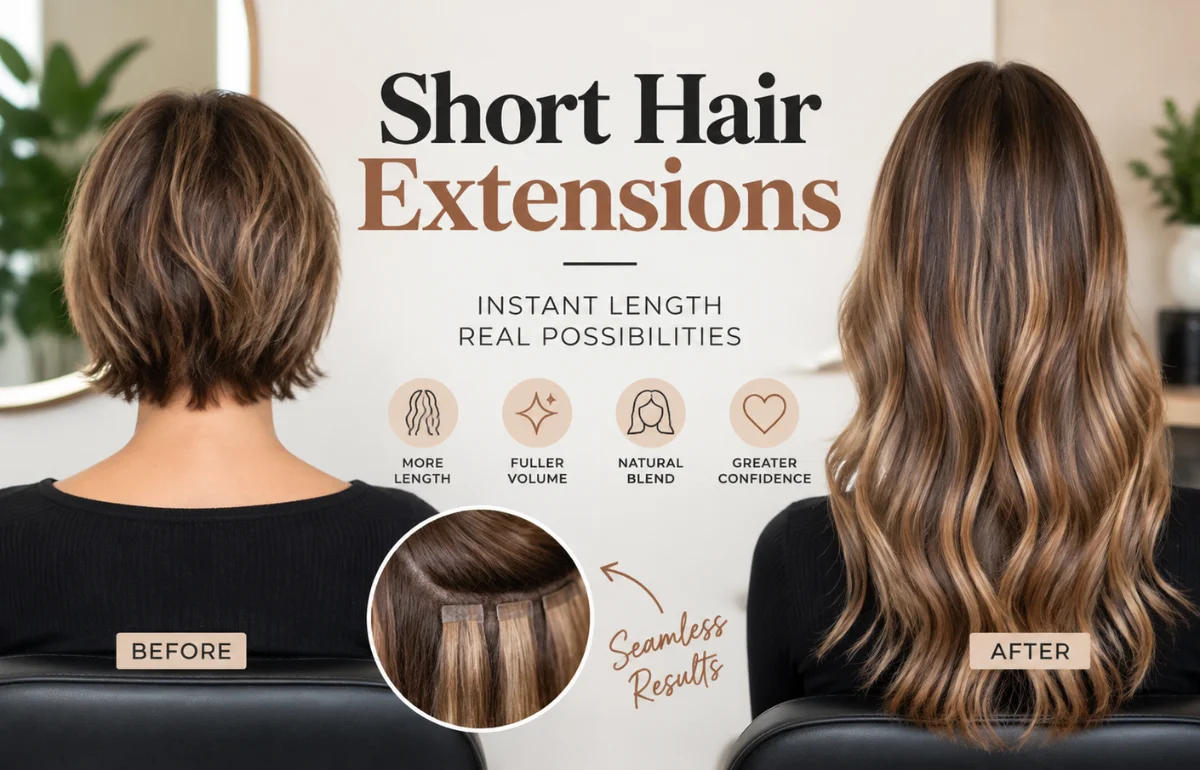
Transforming a short crop into long, flowing locks often feels like an impossible dream. Many people assume that length must be grown out patiently over years, enduring awkward transitional phases and constant styling challenges.
However, modern hairstyling techniques have completely rewritten the rules of hair transformation.
By utilising professional hair extensions, individuals with cropped styles can achieve dramatic length, gorgeous volume, and seamless blending almost instantly.
Professional practitioners looking to master these advanced transformations often enrol in a comprehensive hair extension course to learn industry-standard application methodologies.
Understanding the Mechanics of Short Hair Blending
Applying extensions to short hair presents unique technical challenges compared to working with longer natural tresses.
The primary hurdle is concealment; short blunt ends can easily create harsh visual lines where natural hair stops and extensions begin. Stylists must evaluate hair density, growth patterns, and bluntness to determine the best approach.
According to public health and safety frameworks outlined by authorities like SA Health, maintaining strict hygiene and professional handling standards during any cosmetic procedure is paramount.
When working with cropped hair, standard attachment methods require strategic placement to prevent visible tracks. Stylists frequently rely on specialised layering, texturising, and custom colour matching to unify the look.
Professionals who understand the foundational physics of hair weight distribution can successfully manage tension, reducing strain on delicate follicles.
Advanced Application Techniques for Cropped Lengths
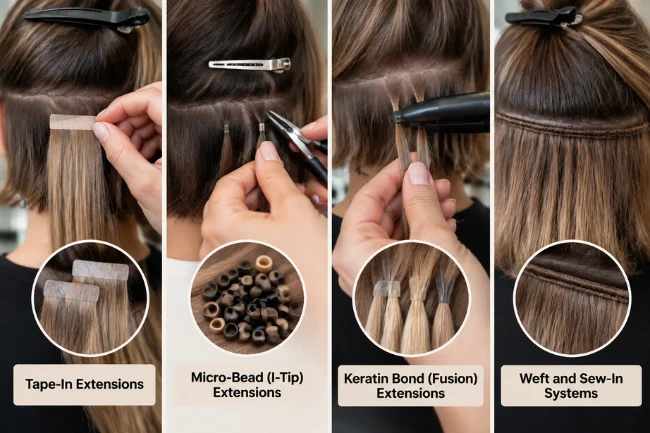
Achieving a natural finish on short strands demands precision and an understanding of various attachment systems.
Different methods suit different hair types and lifestyle requirements. Below are the primary techniques utilised by modern salons:
- Tape-In Extensions: This method uses lightweight, medical-grade adhesive strips that lie remarkably flat against the scalp, making them suitable for finer short hair types because they distribute weight evenly without creating bulky bumps.
- Micro-Bead (I-Tip) Extensions: Tiny aluminium rings clamp individual extension strands to small sections of natural hair without heat or glue, offering exceptional flexibility and 360-degree movement for short layers.
- Keratin Bond (Fusion) Extensions: Pre-bonded keratin tips are melted using thermal connectors to fuse human hair extensions directly to small natural sections, providing long-lasting hold and seamless invisibility when placed strategically near the crown and nape.
- Weft and Sew-In Systems: Custom-constructed tracks are anchored to a tight micro-bead foundation row, offering a substantial volume boost for thicker short cuts that require robust support structures.
For visual learners seeking inspiration on how professional stylists tackle short-to-long transformations, watching detailed demonstrations such as this Short Hair Updo with Clip-in Extensions Tutorial can provide valuable styling perspectives.
Maintenance and Long-Term Care Strategies
Maintaining extensions on shorter natural hair requires diligent upkeep and daily attention. Because short hair provides less anchor surface area, mechanical stress on the attachment points can occur more frequently during brushing and styling.
Salons must educate clients on proper home care routines, including sulphate-free washing, gentle detangling starting from the ends, and sleeping with hair loosely braided or tied in a silk bonnet.
Regular salon maintenance appointments every six to eight weeks ensure that bonds or tapes are adjusted as natural hair grows out, preventing matting, tangling, or undue tension on the scalp.

Natalie Brooks is a hair care writer with 6 years of experience creating practical content about hair health, scalp care, hair routines, ingredients, and everyday maintenance. She focuses on helping readers understand their hair needs through simple, research-informed guidance while promoting realistic care practices and informed choices.