Sponsored Content | Paid Partnership with No Nothing
It’s 7:40 on a Tuesday morning. Your hair looked perfectly decent last night, but now the roots have gone flat, the strands around your forehead are sticking together, and washing everything again means being late for work. The rest of your hair looks fine. This is the sort of morning when a fragrance-free dry shampoo foam becomes useful. A little attention around the roots can save a full wash-and-blow-dry routine.
The strange thing about second-day hair is how unevenly it behaves. Your ends might still be dry from yesterday’s styling while the roots look greasy. The hair around your face can appear oily long before the back needs any attention. Washing the entire head to fix three inches around your part feels excessive, especially when you spent forty minutes styling it the previous morning.
There’s a reason dry shampoo has become a bathroom staple. But getting another presentable day out of your hair takes more than covering your scalp in powder and hoping for the best.
Start With the Roots, Not the Whole Head
Oiliness begins at the scalp. Sebaceous glands produce sebum, which gradually spreads along the hair shaft. On fine, straight hair, even a little oil can make strands separate and lose volume. Thick or curly hair behaves differently, often keeping dry ends while oil collects closer to the scalp.
The temptation is to spray dry shampoo everywhere. Resist it.
Part your hair and look at what’s actually greasy. The front hairline and crown usually deserve attention first. Apply product to those areas rather than coating sections that still look clean.
The amount matters, too. More dry shampoo doesn’t automatically mean fresher hair. Too much can leave roots stiff, gritty or difficult to brush through.
There’s also a difference between oily hair and hair that needs washing. Sweat, dead skin cells and accumulated styling products don’t disappear just because something absorbs the oil around them.
After a workout, for instance, you might only need to let your hair dry and refresh a few flattened sections. After several days of heavy styling products and sweating, another layer of dry shampoo is unlikely to leave your scalp feeling comfortable.
Why Foam Is an Interesting Alternative to Powder
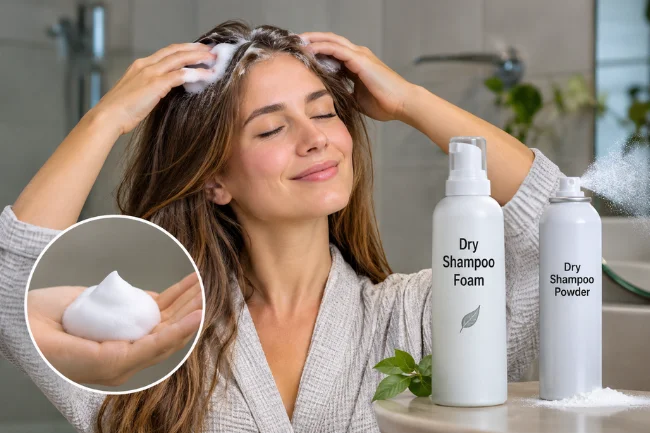
Most people picture dry shampoo as an aerosol that releases a cloud of powder. You spray near the roots, wait, brush and hope the white residue disappears.
That familiar format works for plenty of people. It can also be messy. Dark hair may show leftover particles, while fine hair sometimes ends up feeling coated.
Dry shampoo foam takes a different approach.
No Nothing’s Sensitive Dry Shampoo Foam comes out as a mousse rather than a powder spray. Its formula contains Oryza Sativa Starch, or rice starch, which absorbs excess oil. Polyquaternium-4 is among the conditioning ingredients that contribute to the product’s feel and manageability.
The application is straightforward. Shake the bottle, dispense a small amount into your palm, then massage it into the scalp and through the hair. There’s no need to aim an aerosol directly at your part or guess how much powder landed on the roots.
One verified customer, Viviane Streich, reported that she appreciated not getting the white spots she associated with conventional dry shampoo. Another reviewer had a less enthusiastic experience with the foam application, finding it more awkward to distribute than a spray.
Both observations are useful. Foam isn’t automatically everybody’s preferred format. Some people love the control of dispensing product into their hands; others prefer the speed of an aerosol.
The fragrance question is separate. No Nothing makes the foam without added fragrance or masking fragrances. For someone who already has a scented shampoo, conditioner and finishing product, that means one less smell competing for attention.
A fragrance-free label doesn’t guarantee that every ingredient suits every scalp. Anyone with a known allergy should still check the full formula.
Five Minutes, Three Problem Areas
Imagine you’re getting ready for work and only the front of your hair looks greasy. There’s no reason to start at the back of your head.
Separate the hair around your part and gently apply a small amount of dry shampoo foam to the roots. Move to the hairline, then check the crown. Those three areas are often enough to improve the appearance of a hairstyle that’s beginning to lose volume.
With the No Nothing foam, follow the directions on the bottle: shake, dispense into your palm and massage through the scalp and hair. Start with a modest amount because the mousse expands as it comes out.
Give the product a moment to settle before deciding whether you need more. If your roots still look oily, apply a little to the sections you missed. Once you’re satisfied, arrange your hair as usual.
Sometimes changing your part helps more than adding extra product. Hair that has spent the night pressed in one direction can look flatter than it actually is. Moving the part slightly or lifting the crown can bring back some shape without another round of styling.
A clean hairbrush helps, too. Brushes collect oils and residue from previous styling sessions. Running a dirty brush through freshly refreshed roots isn’t particularly productive.
For a quick morning routine, the aim is modest: make the oily sections look better and get on with your day.
How Long Can You Really Go Without Washing?

One of the more revealing reviews on the No Nothing product page comes from a customer who says the foam helps her get through an extra day before washing.
She describes applying a very small amount to her roots, working it through and combing her hair afterward. The result looks less greasy, although she notices that her roots don’t feel exactly like freshly washed hair. She expects to shampoo the following day.
That sounds like a sensible description of what dry shampoo actually does.
It absorbs oil and changes how hair looks and feels. It doesn’t remove everything that accumulates on the scalp.
The American Academy of Dermatology specifically advises against treating dry shampoo as a replacement for regular washing. Its dermatologists recommend washing with shampoo and water after one or two dry shampoo applications to prevent excessive buildup.
That doesn’t mean everyone needs to shampoo on the same schedule.
A person with an oily scalp and fine hair might wash daily. Someone with thick, textured or very dry hair might prefer longer intervals. The important distinction is between delaying a wash because your hair still feels comfortable and repeatedly covering an uncomfortable scalp with more product.
Itching, burning or persistent flaking are signs to stop relying on a quick cosmetic fix and assess what’s happening.
Dry shampoo is especially useful when the problem is limited to how the roots look. Think of a morning when your fringe has gone flat, a day after a salon blowout, or an afternoon when you have plans after work but no time to shower and restyle.
Those are reasonable jobs for a product designed to absorb oil.
A five-minute refresh won’t deliver the same result as a proper wash, and nobody should expect it to. But getting through a busy morning without washing perfectly acceptable hair from root to tip? That’s a small convenience worth having.

Natalie Brooks is a hair care writer with 6 years of experience creating practical content about hair health, scalp care, hair routines, ingredients, and everyday maintenance. She focuses on helping readers understand their hair needs through simple, research-informed guidance while promoting realistic care practices and informed choices.