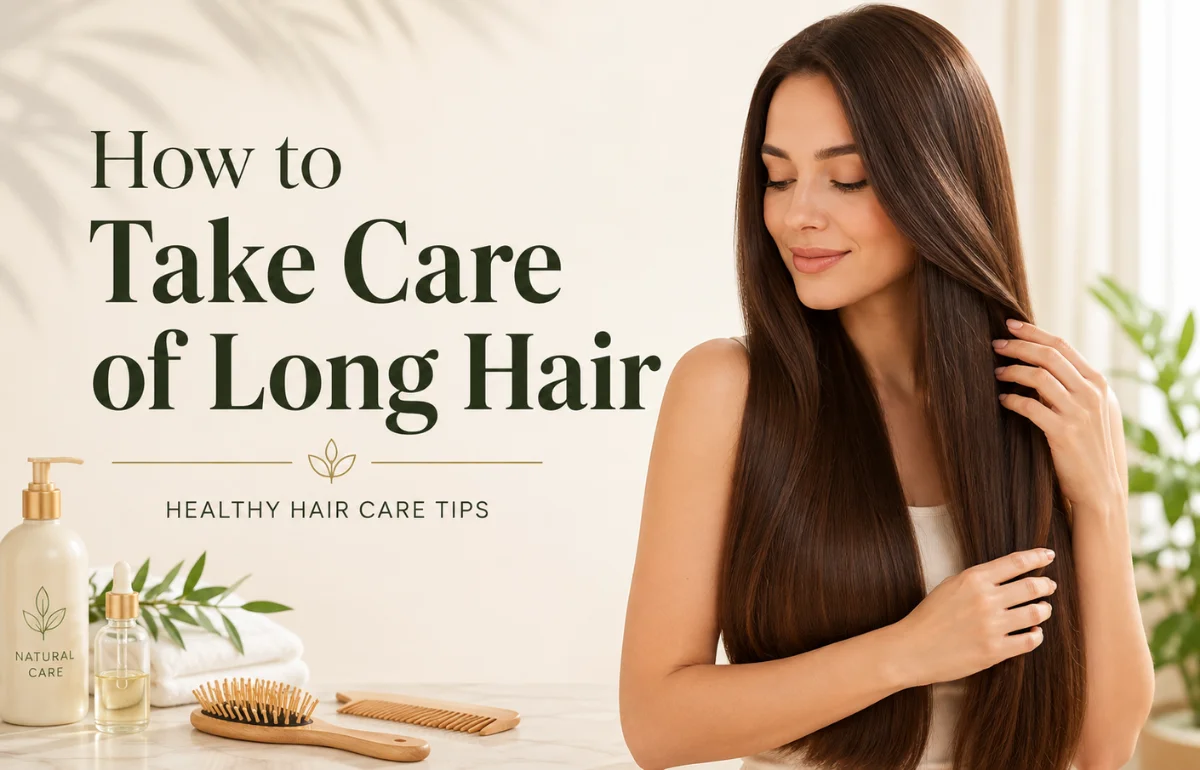
Knowing how to take care of long hair comes down to three things: keeping the scalp clean, protecting the hair shaft from repeated damage, and preventing the oldest ends from breaking faster than new hair grows. Long hair does not necessarily need more products; it needs smarter handling. I recommend washing according to scalp needs, conditioning after shampooing, detangling gently, limiting high heat and tight styles, protecting hair while sleeping, and trimming damaged ends when necessary.
The biggest mistake I see in long-hair routines is treating the roots and ends as if they have the same needs. Your scalp produces oil and collects sweat and buildup, while the ends are older, drier, and exposed to years of washing, brushing, heat, sun, and friction. A good long hair care routine respects that difference.
Why Long Hair Needs a Different Kind of Care
Scalp hair grows at roughly 1 cm per month on average. That means very long hair may contain sections that have been exposed to everyday wear for several years. The longer the strand becomes, the more opportunities it has to develop roughness, tangles, split ends, and breakage.
I think of long-hair care as a three-zone routine:
- Scalp: cleanse oil, sweat, flakes, and product buildup.
- Mid-lengths: reduce friction and maintain slip so strands do not knot and snap.
- Ends: protect them most carefully because they are the oldest and usually the driest part.
Build a Washing Routine Around Your Scalp
There is no universal rule that long hair should be washed once, twice, or three times per week. Hair texture, scalp oiliness, exercise, climate, styling products, and scalp conditions all change the answer.
The American Academy of Dermatology recommends washing based on how dirty or oily the hair becomes and applying shampoo mainly to the scalp rather than rubbing it through the full length.
When I judge whether a wash schedule is working, I look at scalp signals instead of counting days. Persistent oiliness, itching, odor, flakes, or heavy buildup can mean cleansing is needed. A tight, dry scalp and rougher lengths may mean the routine or shampoo is too harsh.
Shampoo the Scalp More Than the Ends
Apply shampoo to the scalp and massage gently with your fingertips. Avoid scratching with your nails or aggressively piling long hair on top of the head.
As you rinse, the lather moving down the hair is usually enough for normal cleansing. If the lengths are genuinely dirty from swimming, heavy oiling, smoke, or styling products, they may need more direct washing.
Condition After Every Shampoo
Conditioner improves slip and makes long hair easier to detangle. Dermatologists also recommend conditioning after shampooing to help reduce breakage and split ends.
For fine or straight hair, concentrate conditioner mainly on the mid-lengths and ends. Dry, curly, coily, bleached, or very thick hair may benefit from conditioning more of the length.
Detangle Long Hair Without a Tug-of-War
Detangling is one of the moments when long hair can lose more length than people realize. Small amounts of daily breakage can eventually make the ends look thin even when the roots are growing normally.
I prefer a “friction-first” rule: before pulling harder, reduce resistance.
Divide dense or tangled hair into sections. Add conditioner, leave-in product, or detangling spray if more slip is needed. Hold the section above the knot so the pulling force is not transferred directly to the scalp.
Work from the ends upward with your fingers or a wide-tooth comb. Do not start at the roots and force every tangle down the full length.
Wet hair needs special handling. The AAD notes that wet hair is more vulnerable to breakage for many hair types, while tightly curled or textured hair is often best combed while damp or wet and conditioned.
Dry Long Hair With Less Friction
Rubbing long hair rapidly with a bath towel can roughen the surface and create tangles. Instead, gently squeeze out excess water and blot or wrap the hair with a soft towel or microfiber towel.
If you blow-dry, remove excess water first, use a lower or moderate heat setting, keep the dryer moving, and stop once the hair is dry.
If someone asks me how to take care of long hair without completely giving up styling, this is one of my main rules: reduce unnecessary exposure rather than aiming for an unrealistic zero-heat routine.
Protect Your Length From Heat, Tension, and Repetition
One occasional styling session is different from repeating the same stress every day. Long hair often becomes damaged through accumulation rather than one dramatic event.
Dermatologists warn that frequent hot-tool use and tight hairstyles can contribute to breakage, while repeated pulling can cause traction alopecia. A hairstyle that causes pain, stinging, or obvious tension is too tight.
I also recommend rotating where you place ponytails, buns, clips, and braids. Repeated pressure on the same area can create a weak point even when the style does not feel extreme.
Give the Ends Their Own Maintenance Plan
The ends deserve separate attention because no product can permanently turn a severely split strand back into new hair.
Conditioners, silicones, oils, and styling creams can reduce friction and temporarily improve the appearance of damaged ends. But when a split keeps traveling upward, trimming removes that damaged section.
Regular trimming does not make hair grow faster from the scalp. Its value is length retention and appearance: removing badly split, thin, or catching ends can prevent the bottom of the hair from looking progressively more worn. The AAD also notes that cutting does not speed follicle growth.
Rather than trimming by a rigid calendar, check the ends every few weeks. If they tangle much more than the upper length, show repeated splits, or look noticeably thin and transparent, a small trim may help.
Choose Products Based on What Your Hair Actually Does
Long hair does not need a shelf full of products. A basic routine can work well with shampoo, conditioner, a leave-in or detangler when needed, and heat protectant if you use hot tools.
One detail often missed online is that “more moisture” is not always the answer to rough hair. Sometimes the real problem is mechanical: a backpack strap, coat collar, seat belt, rough bedding, repeated ponytail placement, or constant touching can scrape the same area day after day.
That is why I recommend looking for patterns. If the hair near one shoulder, the nape, or a particular section consistently becomes rougher or shorter, everyday friction may deserve as much attention as your shampoo.
Protect Long Hair While You Sleep
Hours of movement against bedding add friction over time. A loose braid, loose ponytail, or another comfortable low-tension style can prevent tangling without pulling the hairline.
A smooth pillowcase or bonnet may also reduce friction, particularly for curly, coily, fragile, or chemically treated hair.
Avoid going to bed with soaking-wet hair tied tightly. If you wash at night, give it enough time to dry or keep it loose while it dries.
Do Not Ignore the Scalp While Chasing Length
Healthy-looking long hair starts with a scalp that is comfortable and appropriately cleansed. Oil itself is not proof of an unhealthy scalp, and adding more oil to an itchy or flaky scalp is not always the answer.
Cleveland Clinic dermatology guidance notes that itching, redness, flaking, and dandruff can signal that the scalp needs more appropriate cleansing or treatment. Persistent symptoms should be evaluated rather than repeatedly covered with styling products.
I would also avoid fingernails, sharp scalp tools, and aggressive scrubs in an attempt to “deep clean.” Cleansing should remove buildup without irritating the skin.
Support Growth Without Falling for Miracle Claims
Hair growth happens inside the follicle. A varied diet with enough protein, energy, and essential nutrients supports normal hair production, but supplements are not a shortcut to longer hair for everyone.
If you notice sudden shedding, bald patches, a widening part, or a major change in density, do not assume you simply need a new oil or vitamin.
Persistent or unexplained hair loss deserves medical evaluation because the cause may be unrelated to your everyday hair-care routine.
A Long-Hair Routine I Would Keep Simple
On Wash Days
Clean the scalp according to its needs, rinse thoroughly, condition the lengths, detangle gently, and remove water without rough towel rubbing.
Use a leave-in or detangler if it improves manageability. If you use heat, apply heat protection and use the lowest effective temperature.
Between Washes
Avoid unnecessary product layering, detangle only when needed, and choose low-tension hairstyles.
Pay attention to high-friction situations such as scarves, jacket collars, backpacks, car seats, and sleeping positions.
Every Few Weeks
Inspect the ends and hairline for increasing splits, white breakage points, thinning, or sections that snap more easily.
Clean brushes and combs, reassess buildup, and change any habit that repeatedly stresses the same area.
Common Long-Hair Mistakes That Quietly Reduce Length
Trying to grow long hair while repeatedly breaking it is like filling a bucket with a slow leak. Growth can be normal at the scalp while the overall length barely changes.
The habits I would correct first are aggressive brushing, skipping conditioner, daily high heat, tying wet hair tightly, painful hairstyles, ignoring severely split ends, and coating the scalp with heavy products when buildup is the actual problem.
The goal is not to avoid touching or styling your hair. It is to reduce repeated damage enough that the length you grow is not constantly lost through breakage.
When to See a Dermatologist
See a dermatologist if you notice sudden or excessive shedding, bald patches, a rapidly widening part, recession around the hairline, scalp pain, burning, significant itching, scaling, sores, or ongoing breakage that does not improve with gentler care.
Early assessment is especially important when tight hairstyles may be causing traction alopecia, because prolonged pulling can eventually lead to permanent loss.
Frequently Asked Questions
How often should I wash long hair?
Wash according to scalp oiliness, buildup, activity level, and hair texture rather than following one fixed schedule.
How can I prevent split ends in long hair?
Reduce heat, friction, rough towel drying, and aggressive brushing; condition regularly and trim ends that are already badly split.
Is it better to sleep with long hair up or down?
A loose braid or another low-tension style can reduce tangling and friction. Avoid anything tight enough to pull at the scalp.
Does trimming long hair make it grow faster?
No. Trimming does not change growth at the follicle, but it can remove damaged ends and improve length retention.
How can I keep long hair healthy without many products?
Focus on gentle cleansing, conditioning, careful detangling, low heat, low-tension hairstyles, and protection from repeated friction.
Keep the Routine Simple Enough to Maintain
Learning how to take care of long hair is mostly about preserving what has already grown. Clean the scalp when it needs cleansing, condition the length, protect the ends, reduce repeated friction, and treat persistent scalp problems as warning signs rather than normal beauty concerns.
Start by changing the one habit that causes the most stress to your hair—daily high heat, rough detangling, tight ponytails, or skipped conditioner. Keep that change consistent, then fix the next weak point. Long, healthy-looking hair is usually built through small protective habits repeated far more often than dramatic treatments.

Natalie Brooks is a hair care writer with 6 years of experience creating practical content about hair health, scalp care, hair routines, ingredients, and everyday maintenance. She focuses on helping readers understand their hair needs through simple, research-informed guidance while promoting realistic care practices and informed choices.