
A Psychodiagnostisch Centrum is a psychological diagnostic center that investigates mental health concerns, patterns of behavior, cognitive abilities, and emotional difficulties through structured assessment. The Dutch term translates roughly as “psychodiagnostic center.” Rather than relying on one questionnaire, such a service typically combines clinical interviews, relevant psychological tests, background information, and professional judgment to understand what may be causing a person’s difficulties. Its main purpose is to answer a clear diagnostic question and recommend appropriate support or treatment.
I see its greatest value when someone has symptoms that overlap, an earlier diagnosis does not fully explain their experience, or previous treatment has not helped. The term describes a type of service, but it can also appear in the name of a particular provider. Knowing the difference makes it easier to find the right assessment.
What Does a Psychodiagnostisch Centrum Actually Do?
A center connects overlapping symptoms with their possible explanations, such as anxiety, ADHD, trauma, depression, or developmental differences.
A qualified professional examines history, context, and daily effects. This work, called psychodiagnostiek in Dutch, may identify a condition, distinguish explanations, or clarify strengths and support needs.
Not every assessment ends with a psychiatric diagnosis. Sometimes the most useful finding is that difficulties are better explained by stress, circumstances, learning needs, or a combination of influences that do not fit neatly into one category.
The word “centrum” also does not guarantee that a facility provides therapy, medication, crisis services, or assessments for every age group. Each provider sets its own scope.
Is Psychodiagnostisch Centrum a Specific Organization?
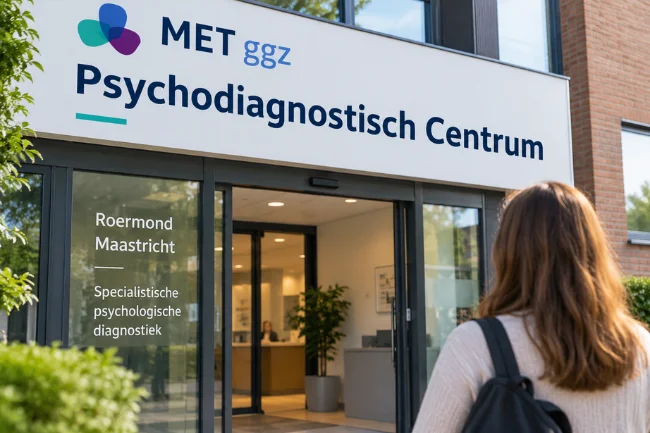
Sometimes. For example, MET ggz operates a service called Psychodiagnostisch Centrum in Roermond and Maastricht, Netherlands. Its published patient information describes specialist assessments for adults aged 18–65 whose difficulties remain unclear or whose treatment has stalled. It directs prospective patients to contact their general practitioner and notes that this particular service does not accept people outside its stated age range.
I would never assume those criteria apply to every psychological assessment center. If you are searching for a named clinic, check its official eligibility and referral information rather than relying on a general description of psychodiagnostics.
When Might Someone Need Psychodiagnostic Assessment?
A full evaluation is not necessary for every period of worry or sadness. A family doctor or mental health professional may be the better starting point. Specialist assessment helps when questions remain unanswered.
Common reasons include:
- Persistent attention, memory, or organizational problems that disrupt work or education.
- Questions about ADHD, autism spectrum disorder (ASS in Dutch), or developmental differences.
- Emotional symptoms that could reflect more than one mental health condition.
- Repeated treatment attempts with limited benefit or unexplained setbacks.
- Concerns about personality functioning, relationships, or long-standing behavioral patterns.
- Learning or cognitive difficulties that require tailored educational or clinical recommendations.
I would pay particular attention to change over time. New symptoms following medication changes, bereavement, or illness may need different investigation from difficulties present since childhood.
An assessment is not a shortcut to obtaining a preferred label. Its value lies in testing competing explanations fairly, including the possibility that more than one condition is present.
How the Assessment Process Usually Works
Although methods vary, good psychodiagnostic care begins with a question, not a stack of tests. The center should explain the purpose, activities, practical arrangements, and feedback process beforehand.
1. Referral, Screening, and Intake
The center first decides whether it is equipped to answer your question. In the Netherlands, access to insured specialist mental healthcare generally involves a referral, commonly from a huisarts (general practitioner). In Belgium, some convention-based first-line psychological services are directly accessible, but those arrangements should not be confused with guaranteed access to a specialist diagnostic center.
During intake, the clinician asks what is troubling you, how long it has been happening, and what you hope to learn. You may discuss medical history, medications, sleep, family circumstances, schooling, work, earlier treatment, and any urgent safety concerns.
I recommend describing concrete situations rather than only naming suspected conditions. “I miss deadlines despite working late” gives an assessor more usable information than “I definitely have ADHD.”
2. A Personalized Assessment Plan
Next comes a tailored plan. A clinical interview might be enough for one question, while another needs several visits, standardized questionnaires, cognitive tasks, or additional information from someone who knows you well.
A partner, parent, teacher, or previous clinician may contribute background information where appropriate and with the necessary permissions. For children, observations across settings can help. Clinicians should consider language, culture, disability, and test suitability.
More testing is not automatically better. I would want to know what each proposed test adds and whether its findings could change the final recommendation.
3. Interviews, Tests, and Clinical Interpretation
The actual evaluation may involve timed tasks, self-report questionnaires, structured interviews, or behavioral observations. Some sessions feel like a conversation; others require sustained concentration.
Scores are interpreted in relation to test quality, appropriate comparison groups, developmental history, and daily functioning. One high or low score cannot establish a diagnosis. Clinicians must weigh conflicting evidence and alternative explanations.
For ADHD specifically, the UK’s NICE guidance emphasizes a full clinical and psychosocial assessment rather than diagnosis from rating scales alone. The same broader principle matters across psychological assessment: a questionnaire is evidence, not a verdict.
4. Feedback, Report, and Recommendations
At the feedback appointment, the professional should explain what was found, what remains uncertain, and what the findings mean in ordinary language. You may receive a written diagnostic report covering the original question, methods, results, interpretation, and recommended next steps.
I would ask for the recommendations to be specific. “Consider therapy” is less actionable than a plan explaining which problems should be addressed first, what kind of support may fit, and who will coordinate follow-up.
You can ask about unexpected conclusions and point out factual errors.
Types of Tests a Center May Use
The right tools depend on the question. A comprehensive assessment can combine different methods without using every type listed below.
| Assessment type | What it explores | Typical reason to use it |
|---|---|---|
| Clinical interviews | Symptoms, history, functioning, context | Clarifying competing explanations |
| Cognitive or intelligence tests | Reasoning, processing, working memory | Understanding learning or cognitive strengths and difficulties |
| Attention and executive-function measures | Concentration, planning, mental control | Investigating functional attention problems |
| Personality assessment | Enduring patterns of feeling, thinking, and relating | Understanding complex or recurring difficulties |
| Symptom questionnaires | Reported mood, anxiety, trauma-related or other symptoms | Supporting, not replacing, clinical judgment |
| Developmental and collateral information | Earlier behavior across settings | Examining possible neurodevelopmental conditions |
Test quality matters as much as test selection. In the Netherlands, COTAN, a committee associated with the Nederlands Instituut van Psychologen, evaluates psychological instruments against criteria including reliability, validity, and norms.
I would be cautious about any provider promising a definitive answer from a single online quiz. Digital screening can be a useful starting point, but it does not replace a properly conducted assessment.
Psychodiagnostic Center vs. Psychologist vs. Psychiatrist
These services overlap, but their primary functions are not identical. The distinction matters when deciding where to begin.
| Provider or service | Main focus | What to clarify before booking |
|---|---|---|
| Psychodiagnostic center | Detailed assessment and diagnostic formulation | Whether it provides treatment or assessment only |
| Psychologist or psychotherapist | Assessment and psychological therapy, depending on qualifications | Training, protected professional title, and specialty |
| Psychiatrist | Medical assessment of mental health conditions and medical treatment | Whether medication review or specialist medical evaluation is needed |
| General practitioner | Initial assessment, physical health review, referral and ongoing coordination | Whether specialist referral is indicated |
A center may employ several professionals. Psychiatrists can prescribe medication when appropriate; a testing service may not.
For immediate danger, severe deterioration, or suicidal crisis, a routine testing appointment is not the right entry point. Contact local emergency services or urgent medical care instead.
What Makes an Assessment Trustworthy?

I look beyond a clinic’s polished website. A reliable diagnostic service should be transparent about who conducts the evaluation, how conclusions are reached, and what happens when the evidence is inconclusive.
In the Netherlands, the BIG-register allows patients to check registration for regulated professions such as gezondheidszorgpsycholoog (GZ-psycholoog) and psychiatrist. In Belgium, clinical psychologists require professional recognition and a federal authorization known as a visum. Requirements differ across professions, so verify the relevant credential rather than assuming every person called a “psychologist” has the same legal status.
Useful questions to ask before committing include:
- Who supervises the diagnostic work and signs the report?
- Which conditions and age groups does the service assess?
- How are alternative explanations and coexisting conditions considered?
- Are tests suitable for my language and circumstances?
- Will I receive understandable feedback and a written summary?
- What happens if the findings do not support a clear diagnosis?
One overlooked quality marker is a clinician’s willingness to say, “We do not yet know.” Responsible uncertainty beats a forced diagnosis.
Costs, Insurance, and Waiting Times in the Netherlands and Belgium
Fees and access are among the most common sources of confusion. There is no universal assessment price. Cost depends on referrals, insurance contracts, tests, and whether you seek a private report.
Netherlands
Dutch government guidance says insured mental healthcare usually requires an appropriate referral, often from a general practitioner. Coverage and any out-of-pocket costs depend on the insurance policy and applicable rules. Before the first appointment, ask your insurer and provider whether the specific diagnostic pathway is covered, whether the provider is contracted, and whether your deductible applies.
Belgium
Belgium’s RIZIV/INAMI supports certain psychological care through participating mental health networks. Under its published arrangement, first-line psychological support may be directly accessible, and eligible sessions have defined patient contributions. However, that does not establish that a separate, extensive diagnostic battery is included or reimbursed.
I suggest requesting a written estimate with three separate items: intake, testing/reporting, and feedback. Also ask about cancellation fees, expected wait time, the number of visits, and whether the report can be shared with a referring professional. A low advertised appointment price may not represent the total evaluation cost.
Privacy, Consent, and Your Right to Understand the Results
Psychological reports can contain intensely personal information. A sound center should explain how it stores records, who can access them, and under which conditions information is shared with other providers or outside organizations.
In the Netherlands, patients have legal rights to information, participation in care decisions, access to medical records, and copies of those records, subject to relevant exceptions. Privacy and data-protection requirements also apply. In Belgium, ask the service to explain the applicable patient-rights and confidentiality arrangements before records are disclosed.
I would be especially careful when an assessment is requested by an employer, school, insurer, or legal representative. Ask who the client is, what questions the report will answer, who receives the full report, and whether a shorter functional summary can meet the purpose without disclosing unnecessary details.
A report interprets evidence at one point in time. It should guide decisions, not define a person.
What Happens If the Results Are Inconclusive?
Sometimes a careful assessment cannot distinguish between overlapping conditions, or it identifies significant difficulties without confirming a formal diagnosis. That outcome can feel disappointing, particularly if someone has waited months for answers.
I would still regard a well-explained inconclusive result as useful when it narrows possibilities and identifies what to do next. The report may recommend monitoring symptoms, treating sleep or anxiety first, obtaining medical investigations, gathering childhood records, or revisiting the question after circumstances change.
For example, a person with attention problems, poor sleep, and high stress might receive recommendations to address sleep and stress while the clinician continues exploring longstanding attention symptoms. This is an illustration, not a diagnosis: similar symptoms can arise from different causes.
A second opinion may be reasonable when the explanation does not match the evidence, the process seems incomplete, or treatment decisions carry major consequences. Bring the existing report so unnecessary repeat testing can be avoided where possible.
How to Prepare for Your First Appointment
Preparation is less about rehearsing answers and more about helping the assessor see your day-to-day reality. I would bring a brief timeline of symptoms, previous diagnoses, current medication, and treatments already tried. Relevant school reports or earlier evaluations may also help, provided the center asks for them.
Write down two or three concrete examples of the difficulties you face, where they occur, and their effect on work, relationships, study, or daily routines. Mention both strengths and problems. If your symptoms change with sleep, stress, substances, or medication, say so.
You do not need to perform well on a psychological test. The aim is an accurate picture, not a perfect score. If instructions are unclear, you feel exhausted, or the test language is difficult, tell the examiner rather than guessing silently.
Final Thoughts
A Psychodiagnostisch Centrum is most useful when the goal is clarity rather than a quick label. I would start by writing down the question I want answered, checking the clinician’s qualifications, and confirming referral rules, cost, and follow-up before booking.
A good assessment should leave you with a clearer understanding of your difficulties and a realistic next action—even when the answer is more nuanced than expected.
Frequently Asked Questions About Psychodiagnostisch Centrum
What is the main purpose of a Psychodiagnostisch Centrum?
Its purpose is to investigate psychological or cognitive difficulties and provide a reasoned explanation, diagnostic formulation, and recommendations for suitable care.
Do I need a referral to visit a psychodiagnostic center?
It depends on the provider and country. Insured specialist mental healthcare in the Netherlands generally requires a referral; other services may have different access rules.
How long does psychodiagnostic testing take?
The time varies with the questions and methods involved. Ask the center about the number of sessions, reporting time, and total expected duration.
Can a psychodiagnostic assessment diagnose ADHD or autism?
An appropriately qualified service can assess these conditions, but diagnosis requires a comprehensive evaluation, not a questionnaire score alone.
Is a Psychodiagnostisch Centrum covered by health insurance?
Sometimes. Coverage depends on the specific assessment, referral, insurer or national reimbursement pathway, and the provider’s arrangements.

Sophia Bennett is a mental health writer with 8 years of experience creating thoughtful, research-informed content about emotional wellbeing, stress management, mindfulness, self-care, and healthy coping strategies. She focuses on making mental wellness topics easier to understand while encouraging readers to seek support from qualified mental health professionals when needed.