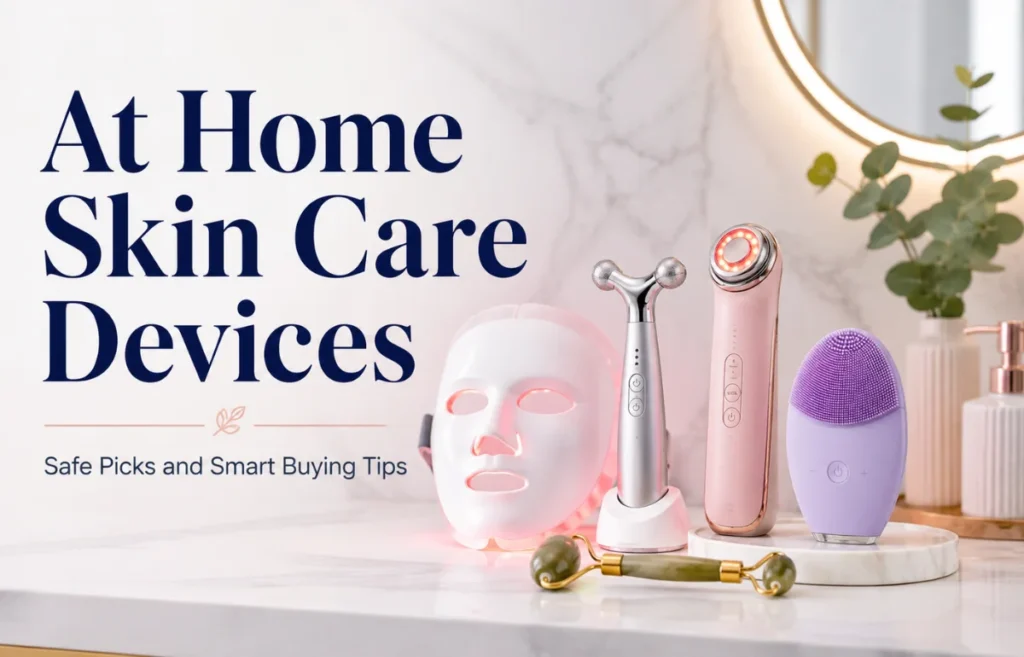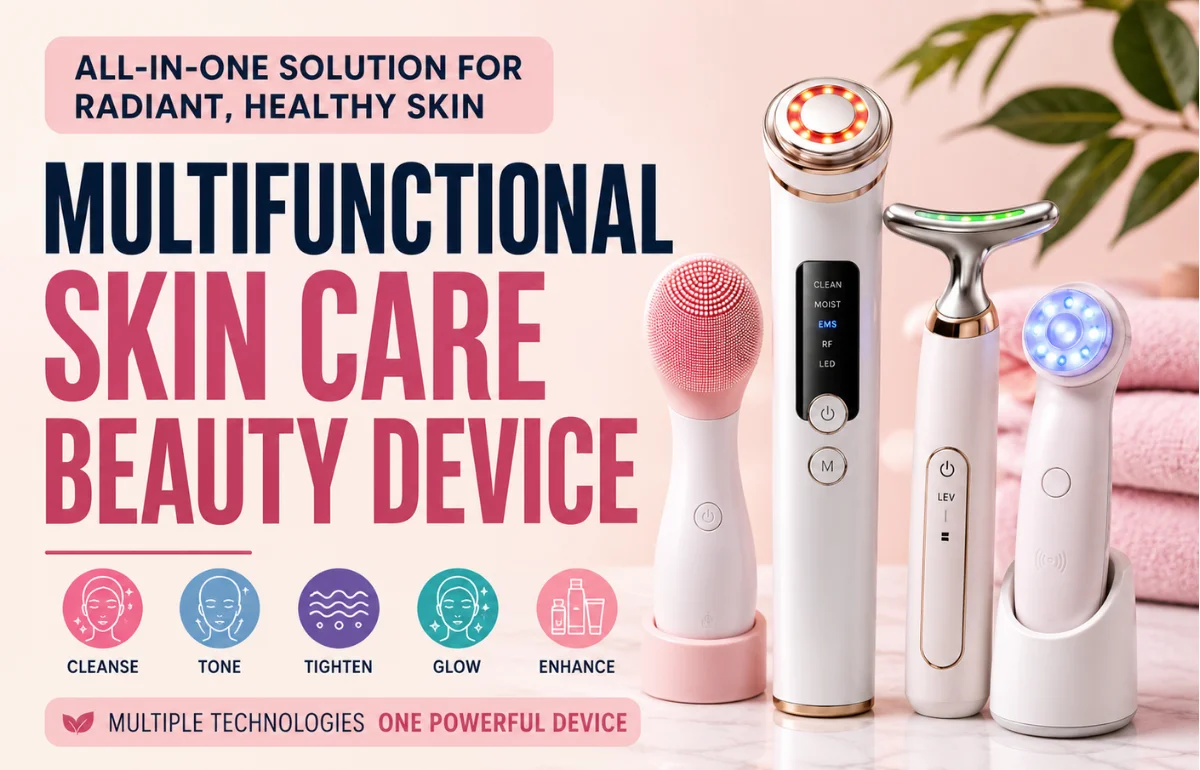
A multifunctional skin care beauty device is an at-home or professional facial tool that combines two or more skin-care technologies in one unit. Depending on the model, it may use LED light, microcurrent, radiofrequency, vibration, heat, cooling, cleansing, or product-delivery modes to support concerns such as dullness, fine lines, mild acne, puffiness, or uneven-looking texture. In simple terms, it replaces several single-purpose beauty tools with one device. I think the smartest way to judge one is not by how many modes it advertises, but by whether each function has a clear purpose, sensible safety controls, and instructions that fit a realistic skin-care routine.
That matters because “7-in-1,” “10-in-1,” and similar labels can sound more impressive than they are. Two devices may list the same number of functions but deliver very different energy levels, treatment times, and user experiences.
For a buyer, the real question is not “How many things does this device do?” It is “Which functions are relevant to my skin, and can I use them consistently and safely?”
What Does a Multifunctional Skin Care Beauty Device Do?
Most multifunctional facial devices combine technologies that act on the skin in different ways. A typical model may include:
- LED light therapy
- Microcurrent or EMS
- Radiofrequency warming
- Sonic vibration or cleansing
- Heating and cooling
- Product-application or infusion modes
- Facial massage
These functions are not interchangeable. Blue LED, for example, is commonly used in devices intended for inflammatory acne, while red or near-infrared light is frequently used in devices aimed at signs of skin ageing. The American Academy of Dermatology notes that visible red and blue light can help certain types of pimples, but visible light does not treat every form of acne.
I prefer to think of a multifunctional device as a toolbox. Each mode should have a specific job rather than existing only to make the feature count look bigger.
How the Main Technologies Work
LED Light Therapy
LED facial devices expose the skin to selected wavelengths of visible or near-infrared light. Red and near-infrared modes are commonly associated with photobiomodulation and cosmetic rejuvenation, while blue light is used in some products intended for mild to moderate inflammatory acne.
The American Academy of Dermatology reports that red-light therapy may produce improvements in concerns such as fine lines, rough texture, discoloration, and loose-looking skin, although at-home results vary and more research is still needed.
FDA records also show home-use masks combining red, blue, infrared, and amber wavelengths for wrinkle- or acne-related indications.
Microcurrent and EMS
Microcurrent devices use very low-level electrical current, while EMS produces more noticeable muscle stimulation. They are commonly marketed for facial toning, contour definition, and a temporarily lifted appearance.
I would not treat these modes as substitutes for medical or surgical lifting procedures. A realistic expectation is a cosmetic effect that may depend on repeated use.
Radiofrequency
Radiofrequency, or RF, uses electrical energy to create controlled heat in tissue. In non-invasive cosmetic devices, the aim is generally to warm the skin and support a firmer or smoother appearance.
A 2024 review of home facial-rejuvenation devices identified RF, microcurrent, and LED among the major technologies being studied, while also showing that safety and effectiveness vary between devices and study designs.
There is an important distinction between non-invasive home RF and RF microneedling. The FDA states that RF microneedling is a medical procedure and should not be performed at home; reported complications have included burns, scarring, fat loss, disfigurement, and nerve damage.
Sonic Cleansing, Heat, and Cooling
Sonic vibration can support cleansing or massage, while warm modes may make massage more comfortable. Cooling modes are usually intended to soothe the skin or reduce the look of temporary puffiness.
I see these as useful supporting features rather than the strongest reason to buy an expensive device. Aggressive cleansing or pressure can also irritate sensitive skin.
Multifunctional Device vs Single-Function Device
If you mainly want red-light therapy, a dedicated LED mask may make more sense than paying for six extra functions. If you genuinely use cleansing, microcurrent, red light, and cooling, an all-in-one facial device can be more practical.
What Results Can You Realistically Expect?
The biggest mistake in beauty-device shopping is expecting salon-level transformation from a small home tool.
Home devices are usually designed around convenient treatment schedules and built-in safety limits. Changes can therefore be gradual, and consistency often matters more than intensity.
Depending on the technology, realistic goals may include:
- A fresher or more radiant appearance
- Temporary reduction in facial puffiness
- Smoother-looking surface texture
- Support for mild inflammatory acne with an appropriate light device
- Subtle improvement in the look of fine lines
- Temporary toning from electrical stimulation
- A more consistent facial-care routine
I would be cautious about claims such as “permanently lifts the face,” “melts facial fat,” “erases pores,” or “removes wrinkles instantly.” Those phrases usually set expectations that a home skin care device cannot reliably meet.
The Buying Framework I Use: Function, Dose, Contact, Consistency
When I assess a multifunctional skin care beauty device, I use four questions.
1. Function: Does Each Mode Solve a Real Problem?
Write down your two main skin goals before shopping.
If your priority is fine lines, red light may be more relevant than blue light. If your main concern is inflammatory acne, the light wavelength and intended use matter more than whether the device also offers cooling or vibration.
2. Dose: Does the Brand Explain the Output?
For energy-based features, clear specifications are a sign of transparency. Depending on the technology, useful details may include wavelength, irradiance, intensity levels, temperature range, current settings, and treatment time.
A label saying “powerful red light” tells me much less than a device that explains its wavelength and session instructions.
This is a practical detail many shoppers miss: the feature name tells you what technology is present; dose information tells you more about how it is actually being used.
3. Contact: Does It Fit and Move Properly?
A technically impressive device can still be frustrating if the head is too small, a mask sits poorly, electrodes lose contact, or controls are awkward.
For handheld tools, I look for an ergonomic shape and easy, steady contact without the need to press hard.
4. Consistency: Will You Actually Use It?
A 20-minute device used twice and forgotten is less useful than a five-minute device you can keep in your routine.
Check session length, charging time, cleaning requirements, conductive-gel needs, recommended frequency, and whether multiple modes can be used during the same session.
I call this “routine friction.” Product pages rarely emphasize it, but it often decides whether a beauty device becomes useful or ends up in a drawer.
Which Features Match Which Skin Goals?
How to Use a Multifunction Facial Device Safely
Start with the manufacturer’s instructions because treatment schedules vary.
I would normally use a new device on clean skin unless its manual specifically requires a serum, gel, or conductive product. Begin at the lowest comfortable setting instead of immediately choosing maximum intensity.
Do not assume that using every mode in one session creates faster results. Some functions have separate schedules, and strong skin-care actives can make skin more reactive.
Eye protection matters when a light-based device requires it. The AAD advises following the device directions and using the recommended eye protection rather than substituting ordinary sunglasses.
Anyone with an implanted electrical device, photosensitivity, active skin disease, recent cosmetic procedures, or medication that increases light sensitivity should read the contraindications carefully and seek professional advice when appropriate.
A Beauty Device Should Support Your Routine, Not Replace It
A multifunction facial machine does not replace cleanser, moisturizer, sun protection, or evidence-based treatment for a diagnosed skin condition.
The most useful device is one that fits around those basics without making your routine unnecessarily complicated.
This leads to a simple value test: does the device replace two or three tools you already use, or does it simply add another task?
If it requires several attachments, constant charging, long sessions, and a complicated schedule, an impressive feature list may have little practical value.
Are Expensive Devices Always Better?
No.
A higher price may reflect construction quality, more consistent energy delivery, research, warranties, customer support, or regulatory work. It may also reflect branding.
Instead of judging by price alone, compare intended use, technical specifications, adjustable intensity, automatic timers, contact design, cleaning requirements, warranty support, and regulatory status where relevant.
Be cautious with vague regulatory wording. The AAD explains that “FDA-cleared” has a specific meaning for devices and should not be confused with loose marketing language such as “FDA certified.”
Who Should Consider a Multifunctional Beauty Device?
These devices make the most sense for people who enjoy technology-based skin care, can follow a routine consistently, and have two or more concerns that match the device’s actual functions.
They are a weaker fit for someone who expects instant results, dislikes repetitive routines, has highly reactive skin, or is buying mainly because a product advertises a large number of modes.
A focused device with two relevant functions can be a smarter purchase than a 10-function tool filled with modes you will never use.
My Three-Use Test Before Buying
Before paying, name three situations in your normal week when you would genuinely use the device. Then identify which mode you would choose each time.
If you cannot do that, you may be attracted to the specification list rather than the product’s usefulness.
Also ask whether the device consolidates your routine. The best multifunctional products earn their place by reducing clutter and making consistent care easier.
Final Thoughts
A multifunctional skin care beauty device can conveniently combine LED therapy, microcurrent, non-invasive RF, cleansing, massage, heating, cooling, and other facial-care functions. Its real value depends on relevant technology, transparent specifications, safe use, and consistency—not the number printed on the packaging.
Start by listing your two biggest skin concerns. Then choose the device whose strongest, best-documented functions match those needs instead of automatically buying the model with the longest feature list.
Frequently Asked Questions
Do multifunctional skin care beauty devices really work?
Some technologies, including certain LED, RF, and microcurrent applications, have research behind them, but results depend on the device, concern, schedule, and individual skin.
How often should I use a multifunctional facial device?
There is no universal schedule. Follow the manufacturer’s directions because LED, microcurrent, RF, cleansing, and massage modes may require different frequencies.
Can I use a multifunctional beauty device every day?
Some gentle modes may be designed for frequent use, while energy-based modes may not be. Use daily only when the device instructions recommend it.
Which multifunctional beauty device is best for wrinkles?
Look for a device designed for ageing concerns with clearly documented technologies such as red or near-infrared LED, microcurrent, or appropriate non-invasive RF.
Can a multifunctional skin care beauty device replace professional treatments?
Usually not. Home devices are best treated as supportive tools; professional procedures use different equipment, energy levels, techniques, and clinical oversight.

Mia Anderson is a skincare writer with 8 years of experience creating practical, research-informed content about skincare routines, skin health, ingredients, and everyday self-care habits. She focuses on helping readers understand skincare choices through simple explanations and realistic routines while encouraging professional advice for specific skin concerns.