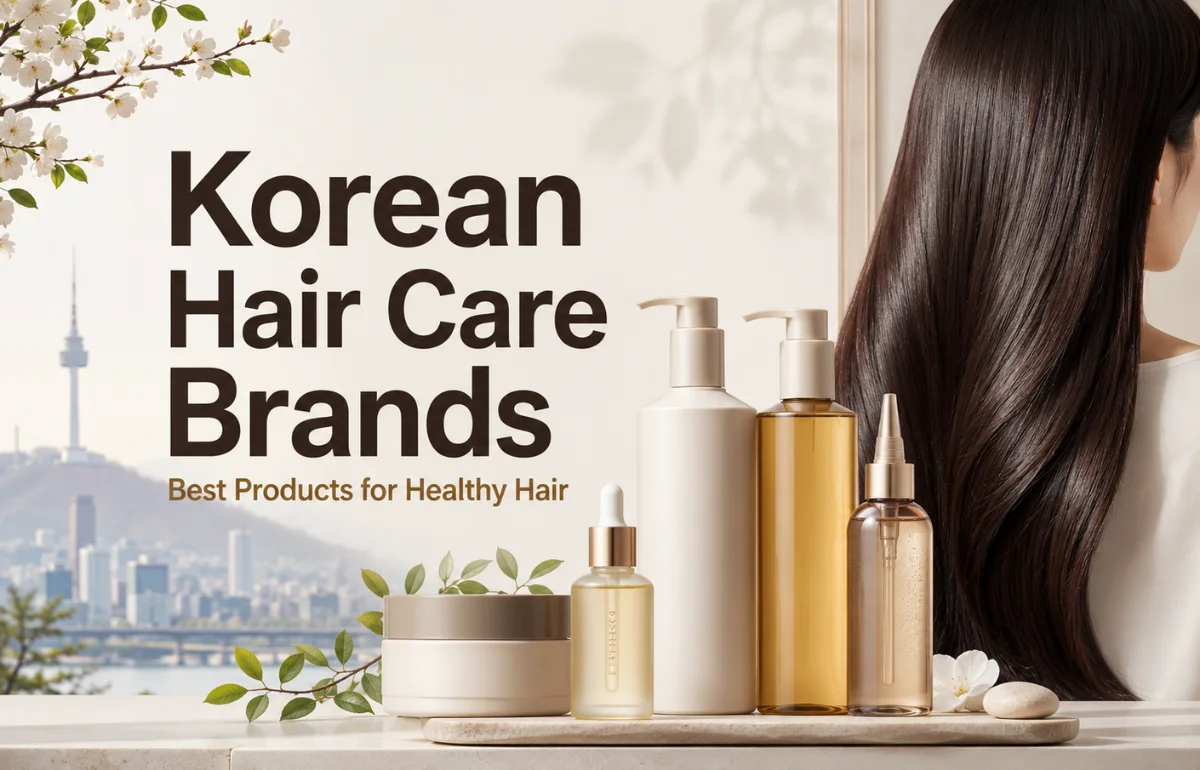
Korean hair care brands are South Korean beauty companies that create shampoos, conditioners, scalp treatments, masks, serums, and styling products using the ingredient-focused approach associated with K-beauty. Instead of treating hair care as a basic wash-and-condition routine, many Korean ranges separate scalp needs from strand needs. You will often find products for oily roots, sensitive scalps, thinning concerns, heat damage, color damage, frizz, and dry ends within the same brand.
I find that the simplest way to understand Korean hair care is “scalp care plus fiber care.” The scalp is skin, while the visible hair shaft needs cleansing, conditioning, lubrication, and protection. This explains why Korean hair care brands frequently offer scalp scalers, root tonics, protein treatments, water-based masks, and lightweight finishing oils alongside shampoo.
Why Korean Hair Care Brands Feel Different
The biggest difference is specialization. A conventional range may offer one shampoo for dry hair and another for oily hair. A Korean range is more likely to separate oil control, flaky scalp care, root volume, cosmetic thinning care, cuticle smoothing, protein conditioning, and heat protection.
Many lines combine traditional ingredients, such as ginseng and herbal extracts, with amino acids, hydrolyzed proteins, silicones, botanical oils, salicylic acid, panthenol, and caffeine. Ryo focuses on scalp and root care informed by Korean herbal traditions, while Dr.FORHAIR offers a derma-inspired system arranged around thinning, oiliness, dryness, and damage.
That approach is not automatically better for everyone. A fragranced shampoo may irritate a sensitive scalp, and a rich protein mask can make fine hair feel coated. I recommend judging a formula by scalp condition, hair texture, styling habits, and climate rather than buying it simply because it is Korean.
Best Korean Hair Care Brands at a Glance
| Brand | Best suited to | Standout product type | Watch for |
|---|---|---|---|
| Ryo | Oily scalp and weak-feeling roots | Scalp and root shampoos | Strong herbal fragrance |
| Dr.FORHAIR | Scalp-focused routines | Folligen and scalp shampoos | Not a medical hair-loss treatment |
| AROMATICA | Oily or buildup-prone scalp | Rosemary scalp products | Fragrance or essential oils |
| KUNDAL | Everyday cleansing and value | Shampoo-treatment pairs | Rich formulas may weigh hair down |
| La’dor | Bleached or heat-styled hair | Protein ampoules | Too much protein may feel stiff |
| UNOVE | Very dry, processed lengths | Deep damage treatments | Can flatten fine hair |
| Mise en Scène | Frizz, shine, and dry ends | Perfect Serum | Easy to overapply |
| Moremo | Fast conditioning | Water treatments | Softness is temporary cosmetic care |
| Rated Green | Dry scalp and mask lovers | Scalp masks and leave-ins | Match richness to oil level |
| Growus | Dry scalp and sensorial care | Scalp ampoules | Often fragranced |
Korean Hair Care Brands Worth Knowing
Ryo
Ryo is a clear example of traditional Korean inspiration meeting modern hair care. The brand focuses on scalp condition, roots, oil control, dandruff-related concerns, and weak-feeling hair rather than one universal shampoo.
I would consider Ryo when roots become greasy quickly but lengths still need conditioning. Use shampoo mainly on the scalp, then apply a separate treatment from mid-length to ends.
Dr.FORHAIR
Dr.FORHAIR suits shoppers who want a clinical-looking, concern-based range. It organizes products around thinning, oily scalp, dryness, sensitivity, and damage, which makes shopping by problem easier.
Keep expectations realistic. Shampoo can cleanse buildup, support scalp comfort, and improve cosmetic volume, but it cannot diagnose or cure hormonal, autoimmune, nutritional, or genetic hair loss. Professional assessment is recommended when shedding accelerates or thinning becomes noticeable.
AROMATICA
AROMATICA is strongly associated with rosemary scalp care. Its Rosemary Scalp Scaling Shampoo targets scalp cleansing and buildup, while the range includes complementary root and scalp products.
It makes sense for oily roots, frequent exercisers, styling-product users, or anyone who enjoys an aromatic wash. Sensitive scalps should approach fragranced or essential-oil formulas carefully.
KUNDAL
KUNDAL is popular for accessible, large-format shampoo and treatment pairs, particularly its Honey and Macadamia line. Its official Korean store lists both Nature Shampoo and Protein Treatment in multiple sizes.
KUNDAL is a practical entry point for normal-to-dry hair and fragrance-focused shoppers. Fine hair usually needs less treatment, while coarse or porous hair may tolerate a richer application.
La’dor
La’dor is known for salon-inspired protein care. Its Keratin Power Glue ampoules are marketed as no-rinse treatments for hair affected by dyeing, perming, and dryness, with a focus on elasticity and manageability.
I see La’dor as a targeted purchase, not an automatic full routine. Start with one treatment. If hair becomes stiff, dull, or tangled, reduce the frequency and alternate with a moisturizing conditioner.
UNOVE
UNOVE targets severely damaged, chemically processed, and heat-styled hair with dense masks and protein-rich treatments. Its Deep Damage products are positioned for rough, delicate, and breakage-prone lengths rather than oily scalp care.
Apply these products from mid-length to ends and rinse thoroughly. Thick, bleached, high-porosity hair may appreciate the slip, while fine hair may need treatment only occasionally.
Mise en Scène
Mise en Scène is a useful starting point for Korean hair serums. The Perfect Serum family focuses on gloss, smoothing, and damage care, with variations for different finishing needs.
I treat serum as a friction-control step, not a replacement for conditioner. One or two drops on damp ends can improve combing and shine without making roots greasy.
Moremo
Moremo is known for quick water treatments. Its Water Treatment Miracle 10 is positioned as a rapid conditioning product for dry or damaged hair.
The advantage is convenience. A fast-rinse treatment may be more useful than a luxurious mask that remains unopened because the routine feels too time-consuming.
Rated Green and Growus
Rated Green offers scalp masks, protein leave-ins, and treatments featuring shea butter, plant proteins, and botanical extracts. Growus offers scalp ampoules and treatments for dryness, flaking, and damage.
Rated Green suits mask-led routines, while Growus appeals to shoppers seeking a lighter scalp treatment or sensorial finishing step.
My Three-Zone Method for Choosing Korean Hair Products
Most lists sort products into “dry hair” or “oily hair.” I use a three-zone check because one head can have several different needs.
Zone 1: Scalp
Decide whether the scalp is oily, dry, flaky, itchy, sensitive, or comfortable. Shampoo should be selected mainly for this zone.
Persistent itching, sores, sudden shedding, or patchy loss should not be treated as a shampoo problem. A dermatologist can identify conditions cosmetic products cannot resolve.
Zone 2: Mid-Lengths
Check for tangling, color damage, roughness, loss of elasticity, or a coated feeling. Conditioner and masks belong here.
The American Academy of Dermatology recommends conditioner after shampoo, particularly for fragile or thinning hair. Conditioning reduces friction and improves manageability, although it does not permanently reverse structural damage.
Zone 3: Ends
Look for splitting, dryness, heat damage, and frizz. Serums, oils, leave-ins, and heat protectants are most useful here.
This method prevents overbuying. You may need an AROMATICA scalp shampoo, a UNOVE treatment, and a Mise en Scène serum rather than three items from one collection.
How to Match a Brand to Your Hair Type
| Hair or scalp concern | Product strategy | Brands to explore |
|---|---|---|
| Oily roots, dry ends | Scalp shampoo plus light conditioner on ends | AROMATICA, Ryo, Mise en Scène |
| Bleached or heat-damaged hair | Gentle cleanser, rich mask, leave-in protection | UNOVE, La’dor, Moremo |
| Fine hair that becomes flat | Lightweight shampoo and minimal serum | Dr.FORHAIR, Moremo, Mise en Scène |
| Thick, coarse, or porous hair | Rich conditioner, mask, and finishing oil | UNOVE, KUNDAL, La’dor |
| Dry, tight-feeling scalp | Mild cleanser and scalp hydration | Rated Green, Growus, Dr.FORHAIR |
| Persistent flakes or irritation | Evidence-based dandruff care and medical advice | Medicated care first; cosmetics second |
A Simple Korean Hair Care Routine
A Korean hair routine does not need eight products. I prefer four functional steps.
Cleanse the scalp with a shampoo selected for oil level and sensitivity. Condition the mid-lengths and ends after washing; dermatologists recommend regular conditioner to reduce friction and support manageability.
Add one occasional treatment. Choose protein-focused care for rough, highly processed hair and moisturizing care when hair feels stiff or straw-like.
Finish with a small amount of leave-in serum or oil on damp ends. Heat protection and gentle handling matter more than owning several overlapping masks.
What to Check Before Buying
Read the full ingredient list, not only the front label. “Herbal,” “protein,” “scalp,” and “damage repair” are broad marketing terms.
Check for fragrance, essential oils, heavy silicones, strong cleansers, or multiple proteins when you already know your scalp or hair reacts poorly to them.
Verify the seller, too. Packaging and formulas can vary by market, so I prefer official stores or authorized retailers with clear return and authenticity policies.
FAQs About Korean Hair Care Brands
Are Korean hair care brands good for curly hair?
They can be, but choose by porosity, dryness, protein tolerance, and formula weight rather than curl pattern alone.
Which Korean hair care brand is best for damaged hair?
UNOVE, La’dor, Moremo, and Mise en Scène are useful starting points, depending on whether you need protein, moisture, slip, or heat protection.
Can Korean shampoo help with hair loss?
It may improve scalp cleanliness, comfort, or cosmetic volume, but it cannot treat every cause of hair loss. Progressive thinning needs professional assessment.
How often should I use a Korean hair mask?
Start once weekly, then adjust. Fine or low-porosity hair may need less, while bleached or coarse hair may benefit more often.
Where can I buy authentic Korean hair care products?
Choose official brand stores, authorized K-beauty retailers, or established sellers that clearly disclose sourcing, returns, and marketplace seller identity.
Choose by Function, Not Hype
The best Korean hair care brands are not those with the longest routines or most viral packaging. They are the ones that solve a specific problem without creating another.
Identify your scalp condition, mid-length damage, and end dryness. Then choose one cleanser, one conditioner, and one targeted treatment. That focused approach is easier to evaluate and more likely to leave hair clean, flexible, smooth, and manageable.

Natalie Brooks is a hair care writer with 6 years of experience creating practical content about hair health, scalp care, hair routines, ingredients, and everyday maintenance. She focuses on helping readers understand their hair needs through simple, research-informed guidance while promoting realistic care practices and informed choices.