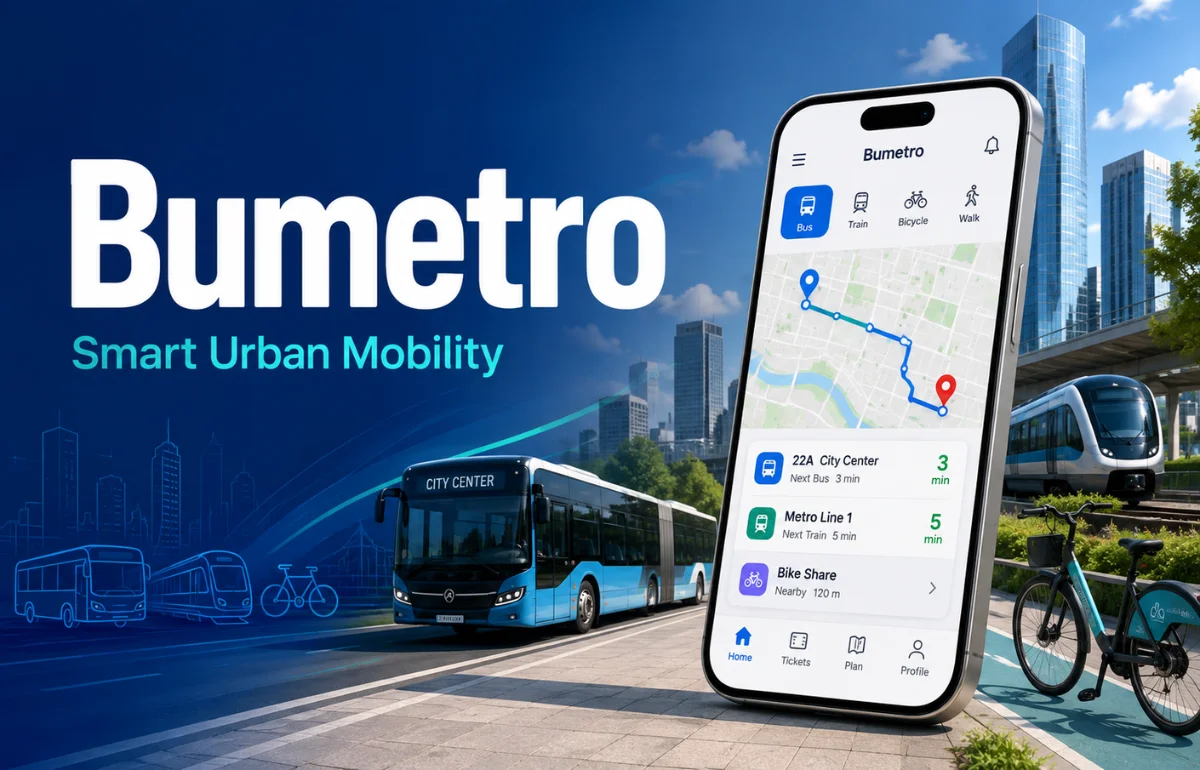
Bumetro is a name currently used online for a digital urban-mobility platform intended to bring different ways of getting around a city into one place. In simple terms, it is described as a trip-planning service that can help users compare public transport, bikes, shared rides, journey times, fares, and live travel information without switching between several apps.
There is one important limitation. When I researched Bumetro in August 2026, I found several recent articles describing it as a mobility app, but I could not verify a clearly attributable official website, major app-store listing, named operator, supported-city directory, pricing page, or public release history under that exact name. That does not prove the service does not exist. It does mean I would treat specific feature claims cautiously until an official source confirms them.
What Is Bumetro Supposed to Do?
The idea behind Bumetro is straightforward: city travel is fragmented. A commuter may use one service for train times, another for buses, another for bike sharing, and a separate ride-hailing app.
Recent web coverage presents Bumetro as a platform designed to reduce that fragmentation. Raw Magazine describes it as bringing buses, bikes, trains, and shared rides into one experience, while another recent article presents it as an urban-mobility service centered on real-time information and multi-mode travel.
From a rider’s point of view, the proposed workflow is familiar: enter an origin and destination, compare route options, choose the trip that best fits your time or budget, then follow the directions.
I would describe that concept as multimodal journey planning, closely related to the broader Mobility-as-a-Service idea of making separate transport services feel like one connected system.
What I Could Actually Verify About Bumetro
This is where I think readers need more clarity than most existing articles provide.
Current articles mention live tracking, in-app payments, eco-impact scores, personalization, and accessibility. Yet the same coverage often shifts to wording such as “mobility apps like this,” “typically,” or “tend to,” which makes it difficult to tell which features belong specifically to Bumetro.
During my research, I did not find a primary source that allowed me to independently confirm those functions.
| Common online claim | My verification status |
|---|---|
| Multimodal trip planning | Described by recent third-party articles; primary product documentation not located |
| Real-time tracking | Frequently claimed; official data sources not identified |
| In-app fare payments | Mentioned online; supported payment systems not verified |
| Eco-impact scoring | Described by third parties; calculation method not documented |
| Personalized routes | Mentioned online; implementation not explained |
| Accessibility tools | Discussed generally; exact supported features not verified |
| Supported cities | No authoritative city-by-city list located |
| Pricing | No authoritative pricing page located |
| Latest updates | No clearly attributable public changelog located |
For me, that distinction is essential. A trustworthy technology article should separate “the product does this” from “products in this category often do this.”
How a Mobility Platform Like Bumetro Works
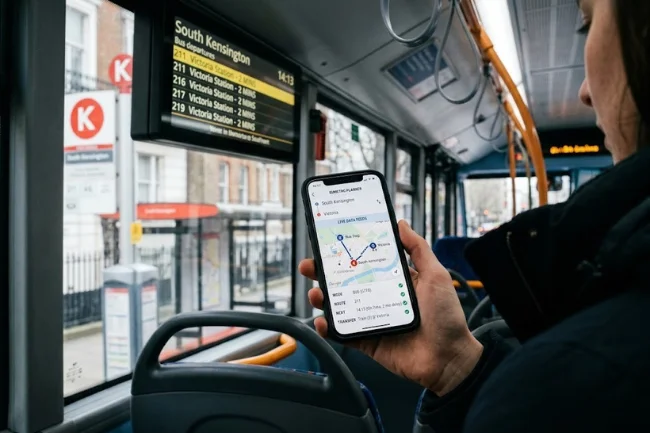
Even though Bumetro’s own technical stack is unclear, the technology behind modern transit planners is well established.
Transit Schedules and Live Data
Public transport apps need structured information about routes, stops, timetables, transfers, fares, and service changes. One widely used open standard is GTFS, the General Transit Feed Specification.
GTFS Schedule handles static information such as routes, stops, trips, times, calendars, and related transit data. GTFS Realtime can provide trip updates, vehicle positions, and service alerts. Official GTFS documentation describes it as a standard transit agencies can use to distribute passenger information to software applications.
I found no documentation showing that Bumetro specifically uses GTFS. I mention it because any credible app promising live public-transport planning needs dependable data from somewhere.
Route Calculation
A mobility service can combine a user’s location with nearby stops, walking routes, transfers, traffic conditions, fares, and vehicle positions.
The route engine then has to rank possible journeys. The “fastest” route may not always be the best one. Some users care more about fewer transfers, shorter walks, lower cost, wheelchair access, or a safer connection time.
That is why I look for an explanation of what a route recommendation is actually optimizing rather than simply trusting a “smart route” label.
Real-Time Information Has Limits
Live information is only as reliable as the feed behind it.
GTFS Realtime, for example, can carry delays, cancellations, route changes, service alerts, and vehicle positions. If a transit operator sends incomplete or delayed information, the passenger app can inherit those weaknesses.
The Bumetro Features That Would Matter Most
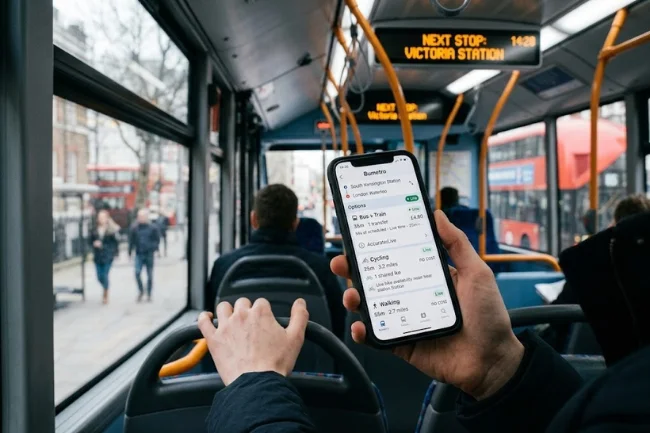
If I were deciding whether to use Bumetro every day, I would care less about a long feature list and more about a few functions working reliably.
Accurate Multimodal Planning
The strongest use case would be seeing train, bus, walking, cycling, and shared-mobility choices in one search.
A useful result should show total time, transfers, walking distance, estimated cost, and realistic alternatives. It should also make clear whether the information is scheduled or live.
Actionable Disruption Alerts
Notifications become valuable when they tell me something I can act on: a cancelled train, a delayed bus, a closed station, or a connection I am likely to miss.
A flood of generic alerts does not improve a commute. Specific, timely warnings do.
Clear Fares and Payments
Existing articles suggest that a Bumetro-style service may support in-app payments. Before relying on that, I would want to know which transit operators accept it, whether extra fees apply, what the refund policy is, and who processes the payment.
Those details are more useful than a broad claim that tickets can be purchased in the app.
Accessibility-Aware Routes
Accessibility needs more than a checkbox.
A strong mobility app should identify step-free routes, accessible stations, elevator availability, walking distance, and wheelchair-friendly services where data supports them. I would also look for screen-reader support, text scaling, voice guidance, and controls that do not depend only on color.
Saved Places and Preferences
For frequent riders, small conveniences matter. Saving home and work, choosing a preferred walking distance, avoiding certain modes, or remembering accessibility needs can remove friction from everyday travel.
Bumetro vs. a Mature Mobility Platform
Because official Bumetro documentation is difficult to verify, I think a benchmark comparison is more responsible than treating every online claim as confirmed.
| Area | What I expect from a mature mobility platform | Bumetro’s verifiable position |
|---|---|---|
| Route planning | Routes, times, transfers, walking, alternatives | Described online; official documentation limited |
| Live data | Delays, cancellations, vehicle positions, alerts | Claimed by third parties; source feeds unclear |
| Coverage | Searchable cities and transit partners | No authoritative list located |
| Payments | Operators, fees, refunds, security details | Specifics not verified |
| Accessibility | Documented accessibility filters and support | Mentioned generally; implementation unclear |
| Privacy | Clear policy for location and account data | No clearly attributable policy located in my review |
| Updates | Dated versions and release notes | No clear official changelog located |
| Support | Help center and account-recovery route | No authoritative support path located |
This is the information gap I would most like to see Bumetro close.
Is Bumetro Free?
I would not publish a firm yes or no based on the evidence currently available.
Third-party coverage implies that core trip planning may be free while premium functionality or ticketing could involve extra costs, but that language describes mobility apps in general rather than a confirmed Bumetro pricing model.
Until an official pricing page or verified store listing appears, I would check separately for transit fares, booking fees, subscriptions, cancellation charges, and refund terms before entering payment details.
Where Is Bumetro Available?
Current articles say coverage may depend on partnerships with local transit agencies, but I did not find a reliable city-by-city Bumetro coverage page during my review.
That matters because a travel app can technically open in many places while still having weak local data. A route planner becomes useful only when it has accurate stops, schedules, disruptions, fares, and transport options for the place where you are traveling.
My practical test is simple: I compare a few routes I already know. If an app misses a major local line, gives outdated station information, or fails to show a routine disruption, I keep the local transit authority’s service as a backup.
Privacy and Safety: What I Would Check
Mobility apps may request precise location to calculate nearby stops and routes, so privacy deserves attention before permissions are granted.
In 2026, the U.S. Federal Trade Commission announced a settlement that would restrict data broker Kochava from selling or sharing sensitive location data without affirmative express consent. The case is not about Bumetro, but it illustrates why movement data deserves careful handling.
Before using any service presented as Bumetro, I would check:
- the legal name of the operator;
- an official privacy policy;
- when precise location is collected;
- whether location history is stored;
- whether data is shared with advertising or analytics partners;
- account-deletion instructions;
- payment-security information;
- a genuine support contact.
If those basics are missing, I would avoid storing payment information.
Why People Are Searching for Bumetro
Bumetro has gained fresh web visibility in 2026 because multiple articles have started describing it as an urban transportation platform. That naturally creates follow-up searches: What is it? Is it an app? Is it free? Where does it work? Is it safe?
What I find unusual is that secondary articles are easier to locate than strong primary documentation.
That creates an information gap where repeated assumptions can start to look like established facts. I think readers are better served when the mobility concept and the verified product are treated separately.
Should You Use Bumetro?
I would base the decision on verification rather than promotional language.
If you find a legitimate Bumetro product with a clearly named developer, official privacy policy, supported-city information, current store listing, and accurate local transit data, the concept is genuinely useful. Bringing several transport choices into one interface can simplify city travel.
If the only evidence available is third-party coverage written in broad or conditional terms, however, I would not assume that live tracking, payments, carbon scoring, or accessibility tools are active in your region.
My rule is straightforward: verify the operator, test a familiar route, review permissions, and confirm costs before depending on the platform for an important journey.
FAQs
What is Bumetro?
Bumetro is described online as an urban-mobility and trip-planning platform that combines multiple transport options, although official product details remain limited.
Is Bumetro a real app?
Recent websites describe it as an app or mobility platform, but I could not verify a clearly attributable major app-store listing under the exact name in August 2026.
Is Bumetro free to use?
I found no authoritative pricing page. Claims about free basic planning or paid features currently come mainly from general third-party descriptions.
Does Bumetro work in every city?
No verified worldwide coverage list was available in my research; useful availability would depend on local transport data and integrations.
Is Bumetro safe to use?
I would verify the developer, official domain, privacy policy, permissions, payment terms, and support details before sharing personal or financial information.
My Take on Bumetro
Bumetro is an interesting idea because the problem it aims to solve is real: city travel often requires several disconnected transport services and apps. A single place to compare those choices can be genuinely useful.
What is missing today is the primary documentation I expect from a mature mobility product. If you are researching Bumetro, look first for an official developer, current app-store page, supported locations, transparent pricing, privacy terms, and dated updates.
Until those sources are easy to verify, I would keep a clear line between features that are technically possible for a modern mobility platform and features that are actually confirmed for Bumetro. If you plan to try it, verify the source first and test it on a familiar trip before relying on it for daily travel.

Noah Sterling is a technology research writer with 8+ years of experience covering emerging technologies, software trends, digital tools, and innovation. He creates practical, research-based articles to help readers understand the evolving technology landscape.