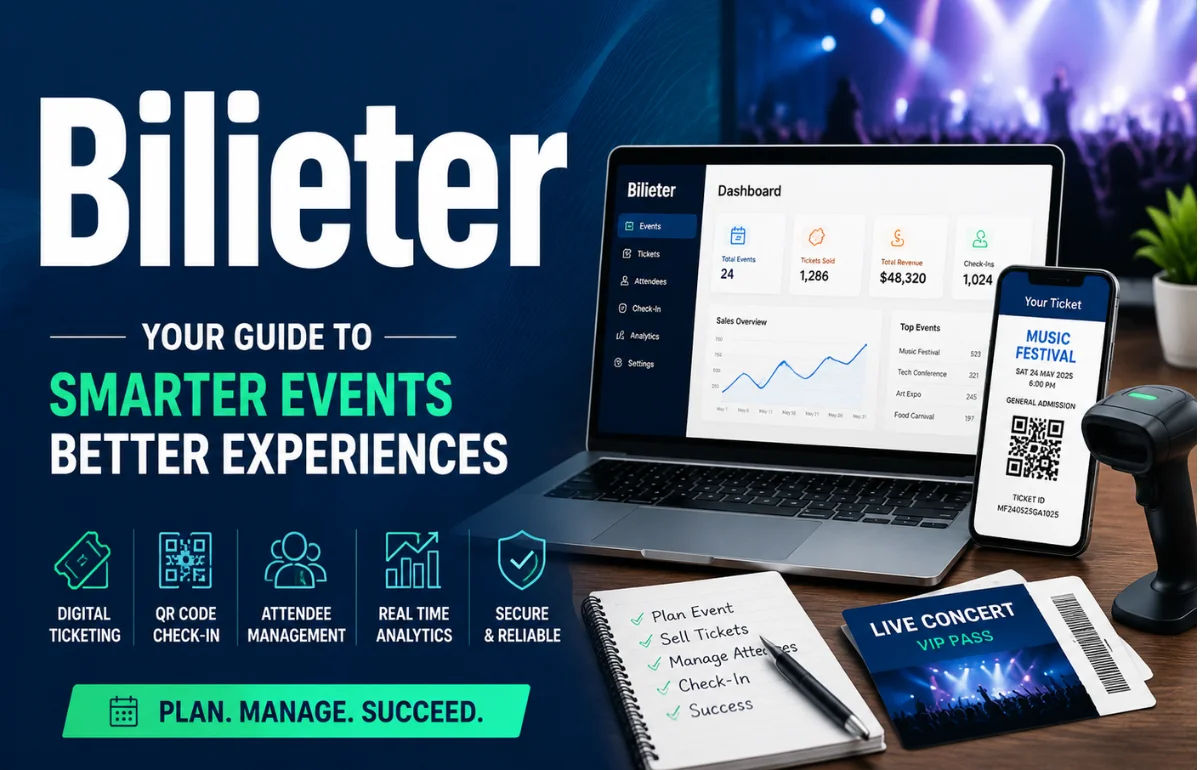
Bilieter is an independent website focused on digital ticketing, event planning, venue operations, and event-management technology. Despite some online descriptions that make it sound like ticket-selling software, Bilieter’s current terms state that it is an informational publication: it does not issue, sell, broker, or guarantee event tickets.
In practical terms, Bilieter is a learning resource for organizers who want guidance on online ticket sales, QR-code check-in, event security, attendee management, ticket marketing, and operational planning. When I reviewed the site’s homepage, About page, editorial policy, and legal disclaimer, I found that the clearest way to understand Bilieter is as a specialized event-industry content platform rather than a working box-office application.
What Is Bilieter?
Bilieter publishes guides, comparisons, templates, and educational articles for people responsible for running events. Its stated audience includes event organizers, venue managers, school administrators, festival producers, and other professionals working behind the scenes.
The website concentrates on the operational side of events rather than themes, décor, or entertainment trends.
Its main subjects include digital ticketing systems, ticket fraud prevention, QR-code scanning, registration software, venue layouts, seating plans, event security, ticket promotion, and onsite staff coordination.
The homepage organizes its content into areas such as Ticketing & Event, Event Planning, Events & Festivals, and Travel for Events.
The name can create confusion. One article on the site describes Bilieter as an AI-powered digital ticketing system, yet its current Terms of Use says Bilieter is an informational publication and does not sell tickets.
Based on the public pages I examined, readers should treat it as an editorial resource unless a separate, verifiable software product is introduced.
Is Bilieter a Ticketing Platform or an Information Website?
At present, the most defensible answer is that Bilieter is an information website.
I could not find a public organizer registration page, live event marketplace, ticket checkout, pricing page, scanner application, software documentation portal, or product dashboard accessible from the main website. Those are normally basic signs of an operating ticketing service.
The site instead publishes articles and identifies its main monetization model as Google AdSense display advertising.
It also invites readers to contact the team about content suggestions, guest posts, collaborations, advertising, and technical website issues.
This distinction protects readers from making the wrong assumption. An article can explain dynamic pricing or duplicate-ticket detection, but that does not prove the website itself provides those functions as software.
What Topics Does Bilieter Cover?
Digital Ticketing and Online Registration
Bilieter’s strongest topical focus is the move from paper tickets and cash boxes to digital event registration.
Its articles discuss event pages, mobile purchases, electronic tickets, QR codes, gate scanning, duplicate detection, ticket categories, capacity controls, and sales reporting.
Bilieter does not process the ticket journey itself according to its terms, but its educational material helps readers understand what to expect from software that does.
QR Codes, Ticket Security, and Check-In
Another major theme is secure admission.
Bilieter discusses unique QR codes, duplicate-scan alerts, dynamic codes, offline scanning, network reliability, gate layouts, troubleshooting desks, and staff preparation.
One guide also covers scanner hardware, backup power, dedicated connectivity, and post-event scan analysis.
This matters because ticketing decisions should not be based only on how attractive the sales page looks. The critical moment often happens at the entrance.
A platform may perform well during checkout but create problems if its check-in app is slow, cannot work offline, or gives staff unclear error messages.
Event Planning and Venue Operations
Bilieter also expands beyond ticket transactions.
Its published topics include event security plans, event-planning fundamentals, staffing, venue capacity, seating, arrival flow, and operational checklists. The About page says its purpose is to cover the “backend engine” that makes an event function.
That gives the website a broader role than a conventional ticketing blog.
Organizers can use it to consider how ticket technology connects with crowd movement, entry lanes, security, customer support, marketing, and financial reporting.
Ticket Sales and Event Marketing
The website also publishes advice on attracting buyers and building registration pages that convert. This brings ticketing technology and event marketing together, while strong content marketing practices help businesses improve how they reach and engage their audiences.
A ticketing system is not only a checkout tool. It also affects buyer trust, mobile usability, abandoned purchases, discount campaigns, reminder emails, and audience data.
A strong event page should explain the value of attending, make ticket options easy to compare, show the date and venue clearly, and remove unnecessary checkout friction.
School and Community Events
Bilieter has specific content about digital ticketing for schools.
It discusses cash-handling risks, capacity limits, counterfeit tickets, parent adoption, mobile purchasing, and reporting for school sports, dances, graduations, and community events.
A school has different requirements from a large festival. It may rely on volunteers, have limited technical support, charge low ticket prices, and need a simple experience for parents.
An expensive enterprise platform can be excessive, while a basic free service may lack the reliability required for a busy game night.
How Bilieter Can Help Event Organizers

I would use Bilieter primarily as an early-stage research resource. It can help an organizer learn digital ticketing vocabulary, identify operational risks, and prepare better questions for software vendors.
After reading about QR scanning, an organizer may know to ask whether a vendor supports offline check-in.
After reviewing ticket-fraud guidance, the organizer may ask whether codes are static or rotating. After studying reporting, the organizer may request exports for sales, attendance, refunds, promotions, and buyer sources.
Bilieter can therefore be useful before a product demonstration or purchasing decision. It helps readers build a requirements list.
It should not be the only source used for a commercial decision. Pricing, uptime, data protection, payout schedules, refund rules, accessibility, supported countries, payment processing, and contractual responsibilities must be verified directly with the chosen provider.
Bilieter Compared With a Real Ticketing System
The practical rule is simple: content about a service is not the same as the service itself.
Before entering payment information or planning an event around any brand, confirm that you are on an official transactional platform and read its pricing and legal documents.
How to Evaluate Ticketing Advice on Bilieter
Separate Verified Facts From Examples
Some articles use specific numbers, scenarios, performance claims, or descriptions of advanced features.
I recommend checking whether each claim links to a named source, product document, study, or tested system.
A scenario can make an article understandable without being a documented case study. Likewise, a statement that an AI system detects fraud or changes prices does not establish that a public Bilieter product currently performs those tasks.
Check the Publication Date
Ticketing technology changes quickly. Fees, payment methods, security standards, app features, and vendor policies can change within months.
Bilieter displays publication dates, which helps readers judge freshness.
I would still verify commercial information directly with vendors, especially when an article mentions pricing, service fees, specifications, or compliance.
Test Advice Against Your Event Type
A recommendation for a 5,000-person festival may be unnecessary for a 150-person school performance.
Your decision should account for attendance, ticket price, venue connectivity, staffing, entry speed, seating rules, and buyer demographics.
Small events may need only a mobile scanner and backup attendee list. Larger venues may require synchronized gates, dedicated devices, offline databases, network redundancy, access zones, and onsite technical support.
What to Check Before Choosing Any Ticketing Tool
Bilieter’s content can help you build a vendor checklist, but that checklist should go beyond attractive features.
Total Cost
Calculate platform fees, card-processing charges, payout fees, taxes, refund costs, equipment rental, and optional marketing tools.
Confirm whether the organizer or buyer pays each charge.
Event-Day Reliability
Ask about offline scanning, device limits, duplicate detection, server uptime, traffic spikes, manual lookup, battery use, and support response times.
Request a rehearsal before a high-attendance event.
Money and Refunds
Confirm payout timing, reserve policies, chargeback responsibility, cancellation procedures, refund fees, and what happens when an event is postponed.
These details affect cash flow and can become especially important when an organizer has already paid deposits to venues, suppliers, or performers.
Data Ownership and Privacy
Find out who controls attendee information, how it can be exported, how long it is stored, which third parties receive it, and whether the provider supports the privacy rules in your region.
The ability to export customer data also matters when changing ticketing providers or analyzing repeat attendance.
Accessibility and Buyer Experience
Test checkout on a phone.
Review screen-reader compatibility, language options, payment choices, ticket retrieval, wallet support, and the process for people who do not own smartphones.
These checks bridge the gap between reading general ticketing advice and safely adopting a real system.
Who Should Read Bilieter?
Bilieter is most relevant to first-time event organizers, school administrators replacing cash entry, venue teams reviewing gate operations, festival planners researching ticket security, small businesses comparing event tools, and marketers improving registration pages.
Experienced event professionals may also find useful prompts and checklists, although they should validate technical and commercial claims against primary documentation.
Frequently Asked Questions
What is Bilieter?
Bilieter is an informational website covering digital ticketing, event planning, venue operations, security, and event marketing. Its terms state that it does not directly sell or broker tickets.
Is Bilieter a real ticketing platform?
The public website currently identifies Bilieter as an editorial publication, not a direct ticket merchant. No clear organizer signup or live ticket marketplace was visible during my review.
Does Bilieter sell event tickets?
No. Bilieter’s Terms of Use say the website does not issue, sell, broker, or guarantee tickets for third-party events.
Is Bilieter useful for event organizers?
Yes, as a research resource. Its guides can help organizers learn about QR scanning, ticket security, event marketing, check-in planning, and software selection.
Is the information on Bilieter trustworthy?
The site publishes an editorial policy and says its content is reviewed, but readers should still verify prices, product features, security claims, and legal requirements with primary sources.
Final Takeaway
Bilieter is best understood as a digital ticketing and event-planning publication.
It can help you learn how modern ticket sales, QR-code admission, venue operations, event security, and ticket marketing fit together, but it should not be mistaken for a live ticket seller based on its current legal description.
Use Bilieter to build your knowledge and prepare smarter vendor questions. Before choosing a system, compare real providers, calculate the full fee structure, test the buyer journey, and run an event-day check-in rehearsal.
That next step turns useful reading into a safer, more reliable ticketing decision.

Noah Sterling is a technology research writer with 8+ years of experience covering emerging technologies, software trends, digital tools, and innovation. He creates practical, research-based articles to help readers understand the evolving technology landscape.