
Menopause can make your days feel unpredictable. Sleep gets patchy, energy rises and falls, and your mood may not always follow the plan. In the middle of all that change, a spiritual routine can become something steady to hold on to. Whether it’s prayer, meditation, or a few quiet moments with a favorite passage, a regular practice can give your day a rhythm and help you feel more balanced, even when your body is doing its own thing.
You don’t need long sessions or perfect conditions to feel the benefit. Here’s how to build a practice that supports your balance through this season of life.
Talk to the Right Specialists First
A spiritual routine works best as part of a bigger support system. Because menopause affects different women in different ways, it helps to have a few knowledgeable people in your corner. Consider these:
- Your doctor or a gynecologist: They can talk through your symptoms and what options may be right for you.
- A menopause-certified practitioner: Some healthcare providers specialize in this stage of life and can offer focused guidance.
- A sleep specialist: If broken sleep is wearing you down, they can help you look at what’s going on and what might help.
- A registered dietitian: They can help you think about food and energy in a way that fits your changing body.
- A counselor or therapist: Big life transitions can stir up big feelings, and it helps to have someone to talk to.
- A spiritual leader or mentor: A pastor, rabbi, imam, chaplain, or trusted guide can help you shape a practice that feels true to your beliefs.
You could also try a menopause-specific wellness program. For instance, if you’re working on weight goals, structured support from dedicated plans, such as the WeightWatchers menopause program, can complement your personal spiritual care.
You don’t need every specialist listed above. Start with the one that feels most useful and add support as you go.
Use Your Routine as a Steady Anchor

When so much feels like it’s shifting, your mental health can also be impacted, leading to anxiety, stress, and mood swings. In this perceived chaos, a familiar ritual can offer comfort.
Lighting a candle, saying the same opening prayer, or sitting in the same chair each day tells your mind and body that this is a moment to settle. That sense of predictability can be grounding, especially on days when other things feel out of your control.
Start Your Day with a Calm Moment
Did you know that research has proven that the first thoughts you have early upon waking up can shape the rest of your day? Put simply, how you start your morning can make a great difference in how you’ll feel during the day.
Even a minute or two of quiet reflection, gratitude, or prayer can help you start from a place of calm rather than rush. If mornings are rough after a restless night, try a short practice before you reach for your phone- just a few slow breaths and one intention for the day.
Fit Your Practice In Your Schedule but Don’t Drop It
Short practices still count. If you used to pray for thirty minutes, try five. If long meditation feels out of reach, try three deep breaths and a single phrase that grounds you. A brief, regular moment of stillness feels more sustaining than a long session they keep skipping.
A few ideas:
- A one-minute prayer or blessing when you wake up
- A short gratitude list before bed
- A single verse, mantra, or line of poetry to repeat during the day
- Five slow breaths before you start your first task
Attach Your Ritual to Something You Already Do
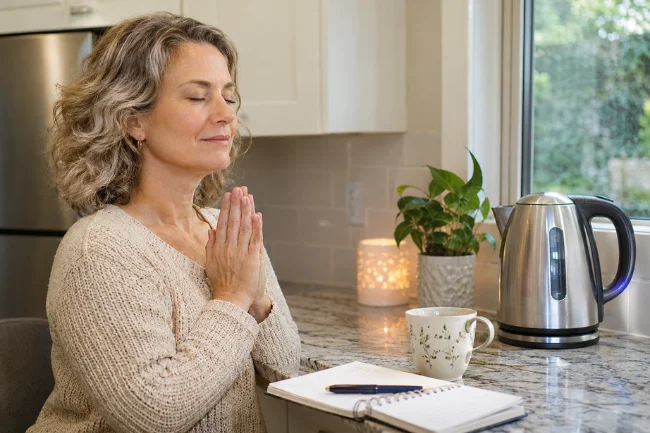
On busy days, the easiest habits are the ones that piggyback on existing ones. Pair your practice with something you do anyway:
- While the kettle boils or your coffee brews
- During your commute or a walk
- When you brush your teeth
- Right after you sit down at your desk
- As you turn off the lights at night
Linking your ritual to a daily anchor means you don’t have to remember it separately.
Make Your Space Comfortable
Physical comfort can make it easier to feel restless, so making some adjustments can go a long way in improving how you feel at home or at the office. For instance, try to keep your space cool if you’re prone to hot flashes, keep a glass of water nearby, wear a light layer you can easily remove, and choose a seat that supports you.
A small, inviting spot, such as a chair by a window or a cushion in a quiet corner, gives you a place to return to.
Try Moving Meditation
Sitting still isn’t the only way to connect. Gentle walking, stretching, or slow yoga can turn movement into a spiritual practice. Let your breath set the pace and use the time to reflect or pray. For some women, moving feels more grounding than sitting, especially when restlessness creeps in.
Let Your Practice Support Your Wellness Goals
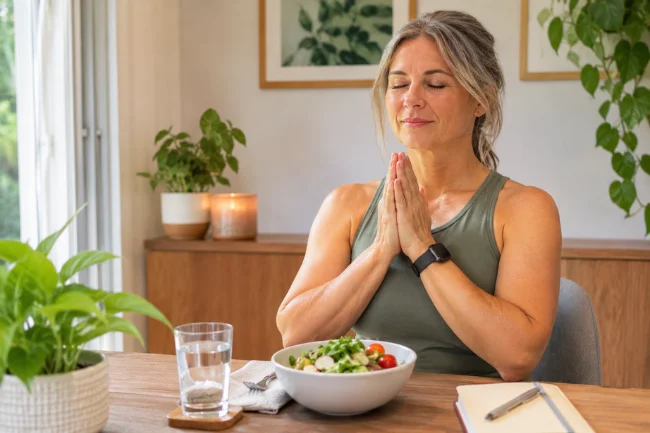
Many women notice changes in their weight, energy, and eating habits during menopause. Your spiritual routine can help you stay balanced through those changes. For instance, a mindful pause before a meal, a moment of gratitude for your body, or a short reflection on what you need can all fit naturally into a healthy routine.
Pairing this inner work with practical, menopause-focused support can help you feel more grounded in both mind and body.
Find Others to Share the Journey
Connection can make it easier to navigate life changes. Even if you are not an extrovert, you may consider joining a prayer group, a meditation circle, or an online community of women going through similar changes. Sharing stories reminds you that you’re not alone, and a little accountability can keep you going when motivation dips.
A Practice That Keeps You Steady
Menopause may change the shape of your days, but a spiritual routine can help you stay centered through it all. By listening to your body, getting the right support, and keeping your practice simple and flexible, you give yourself a steady place to return to. Start with one small step today, and let it grow from there. If you are looking for more helpful resources, browse guides at Shiva Lord and connect with specialised healthcare specialists.

Claire Morgan is a health and wellness writer with 7 years of experience creating clear, research-informed content on nutrition, sleep, movement, preventive habits, and everyday wellbeing. She focuses on making reliable health information practical and easy to understand. Her articles are educational and do not replace professional medical advice.