
Bed pages is a search phrase commonly used for Bedpage, an online classified-ad platform built around local, city-based listings. The site presents itself as a Backpage alternative and allows visitors to browse advertisements by location and service category. Today, Bedpage is especially associated with adult-oriented and personal-service listings, although the broader concept follows the familiar online-classifieds model: advertisers publish listings, visitors browse them, and interested users make contact outside or through the platform’s available communication options.
If you searched for “Bed pages,” “Bedpage classifieds,” “Bedpage website,” or “sites like Backpage,” you are probably looking for information about the same general platform.
There is one distinction worth understanding from the start. Bedpage is not Backpage, nor should every website containing “Bedpage” in its domain name be assumed to belong to the same operator. That difference becomes particularly important when discussing safety, scams, payments, and privacy.
What Does Bed Pages Mean?
When people type Bed pages into Google, the intent usually relates to Bedpage rather than pages about beds, bedroom furniture, or bedding.
Bedpage describes itself as a classified advertising website and markets itself as an alternative to the former Backpage platform. Its current indexed U.S. pages organize listings geographically, allowing users to move through states, cities, and service categories.
That city-first structure is one reason the service feels different from a conventional dating app.
A dating app normally revolves around user profiles, matching systems, swipes, recommendations, and ongoing accounts. A classified site works more like a digital notice board. Someone publishes an advertisement in a particular area, and another visitor finds it through a category or location.
That distinction also affects trust.
On a dating platform, users may assume that profiles have passed some degree of platform-level screening. On an open classified platform, I prefer to assume nothing about an advertisement until its claims can be independently checked.
That is a useful rule for Bed pages and almost every other user-generated marketplace.
Why Did Bedpage Become Associated With Backpage?
The connection makes more sense once you understand what happened to Backpage.
Backpage had been a major classified advertising website with numerous categories, but its adult advertising business became the subject of extensive federal criminal investigations. The U.S. government seized Backpage.com in April 2018. Federal prosecutors later obtained convictions involving former Backpage owners, and the Department of Justice has described the site as having been a leading forum for prostitution advertising before its seizure.
Bedpage positioned itself as a Backpage-style replacement and continues to describe itself in that manner on its own website.
That similarity does not make the two businesses the same organization.
I mention this because many online articles use “Backpage,” “Bedpage,” and “Backpage alternative” almost interchangeably. That creates unnecessary confusion about ownership, history, and legal responsibility.
There is another historical point that is frequently misstated.
The U.S. seizure of Backpage occurred in early April 2018. The Allow States and Victims to Fight Online Sex Trafficking Act, commonly known as FOSTA, became law on April 11, 2018. It changed federal law concerning certain online conduct related to prostitution and sex trafficking, including provisions affecting Section 230 protections.
Therefore, saying simply that “FOSTA shut down Backpage” is chronologically inaccurate. The events were closely connected to the same broader policy debate, but the Backpage seizure was already underway before FOSTA was signed.
That detail is often missing from Bedpage explainers.
How Does Bed Pages Work?
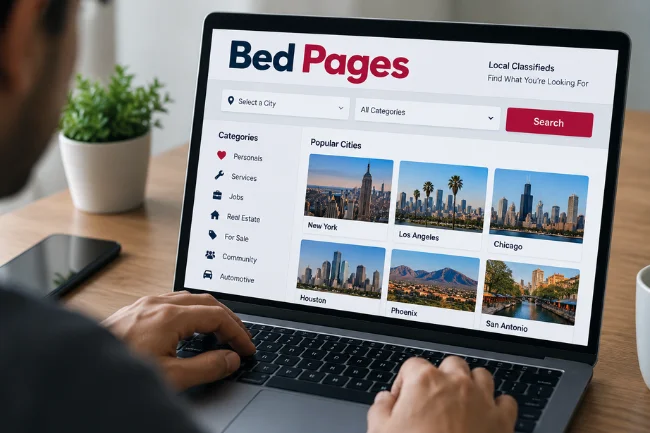
The basic concept behind Bed pages is straightforward: listings are organized by geographic area and category.
Visitors can choose a location, browse available advertisements, open individual listings, and decide whether they want to contact an advertiser. Current indexed Bedpage pages show extensive city-based organization across the United States.
The platform itself describes the service as a place where advertisements can be posted across multiple locations and categories.
Location-Based Browsing
Local search is central to the Bedpage model.
Instead of searching one nationwide feed, visitors can narrow listings to a state or metropolitan area. This approach is similar to traditional newspaper classifieds and early internet marketplaces.
From a user-experience perspective, that structure has an obvious advantage: location becomes the first filter rather than something users must discover after opening a profile.
It also creates a downside.
A large classified network can contain dramatically different listing quality from one city to another. A positive experience in one location tells you little about advertisements appearing hundreds of miles away.
Advertiser-Generated Listings
Bedpage listings are created by advertisers rather than written or independently verified by an editorial team.
That matters because the platform and the person behind an individual advertisement are two separate sources of information.
A real website can host a misleading advertisement.
Likewise, a technically secure HTTPS connection only tells you that information traveling between your browser and that website is encrypted. It does not prove that every person advertising there is genuine.
This is one of the most useful distinctions I make whenever I evaluate an online marketplace.
Adult-Oriented Categories
Current Bedpage search results prominently feature adult-oriented service categories, and the platform is widely identified as an adult classifieds service.
That means age restrictions, local laws, consent, exploitation concerns, and personal safety deserve more attention here than they would on an ordinary marketplace for furniture or used electronics.
Anyone using an adult-oriented classifieds service should be of legal age and should understand the laws applying in their own jurisdiction.
Bed Pages vs. Backpage
The names and layouts may appear related, but their histories should not be combined.
| Feature | Bedpage | Backpage |
|---|---|---|
| Basic model | Location-based classified advertising | Location-based classified advertising |
| Current status | Bedpage-branded websites remain accessible | Backpage.com was seized by U.S. authorities in April 2018 |
| Connection between them | Markets itself as a Backpage alternative | Separate former classified platform |
| Adult listings | Prominent part of current Bedpage search presence | Adult advertising generated most of Backpage’s activity and revenue in many years, according to DOJ |
| Legal history | Should be assessed independently | Former owners and executives faced major federal prosecutions and convictions |
| User takeaway | Do not assume every advertisement is verified | The original website is no longer an operating classifieds service |
The Department of Justice reported that in most years more than 90% of Backpage’s revenue and activity came from adult-related sections. It has also documented subsequent convictions, forfeitures, and compensation proceedings related to the former website.
Those facts belong to Backpage’s history. They should not automatically be attributed to Bedpage merely because Bedpage markets itself as an alternative.
Is Bed Pages Legit?
There is no useful one-word answer.
The better question is: “Which part are you trying to verify?”
You may be asking whether the domain actually exists, whether it contains malware, whether its advertisements are accurate, whether an advertiser is genuine, whether payments are safe, or whether the advertised activity is legal.
Those are completely different questions.
Recent automated security analysis of bedpage.com reported no major malware or phishing detections at the time of checking and described the domain as having a long operating history.
That does not certify every listing appearing on the site.
This distinction is especially important because multiple similarly named Bedpage domains exist online. For example, a September 2026 automated assessment of bedpage.cc reported several external security-provider warnings and gave that separate domain a very low trust rating.
In other words, typing the right-looking name is not enough.
| What You Are Checking | What It Actually Tells You | What It Does Not Prove |
|---|---|---|
| HTTPS connection | Data is encrypted in transit | Advertiser is trustworthy |
| Domain reputation scan | Known technical or security problems may be detected | Every listing is genuine |
| Profile photos | Shows what an advertiser claims | Photo belongs to that person |
| Reviews | Can reveal patterns and complaints | Every review is authentic |
| Long-established domain | Website has existed for some time | Transactions are risk-free |
| Verification badge or claim | Some checking may have occurred | Identity or advertised service is guaranteed |
For me, this is the most practical way to think about Bedpage safety: evaluate the domain, the advertisement, the person, and the requested transaction separately.
Never allow one positive signal to substitute for all the others.
Bed Pages and the Lookalike-Domain Problem
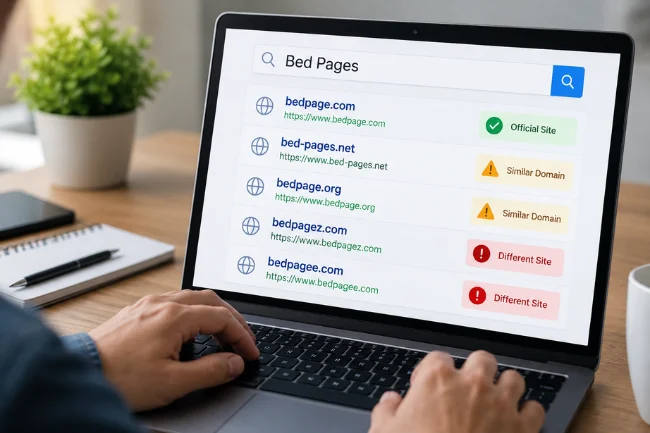
This is an area where many Bedpage guides are surprisingly weak.
Searching the name produces numerous domains containing variations of Bedpage. Some market themselves as classifieds sites, some as dating communities, and others appear to operate independently from the main .com domain.
That creates what I call a brand-confusion risk.
A visitor may read a favorable security report about one domain, click a search result for another domain, and incorrectly assume the report applies to both.
It does not.
The same rule applies to reviews. Complaints concerning one Bedpage-style domain should not automatically be transferred to another without confirming the exact URL.
Before entering contact information, account credentials, identity documents, or payment details, check the entire domain name rather than relying on the logo or website design.
A copied layout can be produced in hours. A familiar-looking logo proves very little.
Common Risks When Using Online Classifieds
The risks associated with Bed pages are not unique to Bedpage. Similar problems can occur on dating sites, social networks, marketplaces, job boards, rental platforms, and messaging apps.
Fake identity claims are one concern. A listing may use outdated, edited, or stolen photographs. Reverse-image searching publicly available profile pictures can sometimes reveal whether the same image appears under unrelated names elsewhere online.
Advance-payment requests deserve even more caution.
The Federal Trade Commission repeatedly warns consumers that scammers favor payment methods that are difficult to reverse, including cryptocurrency, wire transfers, gift cards, and certain payment apps. The FTC advises consumers to be particularly cautious when someone unexpectedly insists that payment must be made through one specific hard-to-recover method.
Urgency is another warning sign.
A scammer may claim that immediate payment, identification, or personal information is required to prevent a problem. Pressure is useful to fraudsters because it discourages verification.
Extortion can also occur after someone responds to an adult-oriented advertisement. Threats may involve fabricated debts, supposed managers, fake law-enforcement claims, or demands for money. If a stranger threatens violence or blackmail and demands payment, preserving the evidence and reporting the threat to the relevant authorities is safer than attempting to negotiate.
Personal privacy deserves equal attention.
A phone number, email address, full name, workplace, home address, social-media profile, and identifiable photograph can be combined into a much more detailed identity profile than many people realize.
The less unnecessary information you disclose to an unverified stranger, the smaller your exposure if that person turns out to be fraudulent.
Is Bed Pages Legal?
Using an online classifieds website and engaging in whatever an advertisement offers are not necessarily the same legal question.
The legality of a listing depends on the advertised activity, the people involved, and the jurisdiction in which that activity occurs.
Some classified advertisements may concern lawful personal services or dating. Other advertised activities can be restricted or prohibited depending on local, state, federal, or national law.
In the United States, federal law also creates specific liability relating to online services operated with intent to promote or facilitate another person’s prostitution, with additional provisions relating to sex trafficking. FOSTA added 18 U.S.C. §2421A and modified the legal framework affecting certain claims and prosecutions involving online platforms.
This should not be interpreted as a universal statement that simply visiting Bedpage is illegal.
It means that “Is Bedpage legal?” is too broad a question for an accurate answer.
The relevant law depends on what is being advertised, where the participants are located, and what actually happens. Anyone uncertain about a specific activity should check current local law or seek qualified legal advice rather than relying on an advertisement or forum post.
How I Evaluate a Bedpage Listing
I would never decide whether an online listing is trustworthy from its appearance alone.
Professional photographs, polished writing, a detailed profile, or a long description can all be copied. Equally, poor grammar does not automatically prove fraud.
I look for consistency instead.
Does the claimed location match the contact information? Does the same photograph appear under different identities? Does the conversation suddenly move toward money? Are promises changing? Is there unusual pressure to disclose private information? Is someone refusing reasonable verification while demanding irreversible payment?
A genuine-looking page containing one major contradiction deserves more scrutiny than an unattractive page that is internally consistent.
I also separate platform claims from independent evidence.
Bedpage’s own homepage makes promotional claims about its popularity and relationship to Backpage. Those statements are useful for understanding how the platform describes itself, but marketing copy should not be treated as independent proof of traffic, safety, or market share.
That principle applies to almost every website I review.
Bed Pages, Privacy, and Digital Footprints
People often think privacy means using a nickname.
In reality, digital privacy is cumulative.
A separate phone number may still connect to a payment account. A profile picture may appear on a public social network. A username may be reused on several websites. An email address may expose a full name through another service.
Even small pieces of information can become identifying when combined.
That is why I recommend thinking about privacy before starting a conversation, not after something feels wrong.
Users should also remember that screenshots can outlive deleted advertisements. Anything placed in a listing or sent to a stranger may potentially be copied, forwarded, archived, or published elsewhere.
For adult-oriented platforms, that possibility deserves serious consideration before sharing sensitive photographs or identity documents.
Bedpage Safety Is Really a Four-Layer Question
A useful way to understand Bed pages is to divide trust into four layers.
- The first is domain trust: are you on the website you intended to visit?
- The second is technical trust: does the site show signs of malware, phishing, or other security problems?
- The third is listing trust: is the advertisement accurate and genuinely connected to the person claiming to have posted it?
- The fourth is transaction trust: is the requested interaction, payment, or exchange safe and lawful?
Most misleading Bedpage reviews answer only one layer and then apply that answer to everything.
A website can pass malware scans while hosting a fraudulent advertisement. A real advertiser can appear on a fake copy of a legitimate website. A genuine listing can still involve an unsafe payment arrangement.
Once those layers are separated, Bedpage becomes much easier to evaluate rationally.
Should You Trust Bed Pages Reviews?
Reviews can be useful, but they need context.
First, verify which exact domain the reviewer used. As noted earlier, multiple Bedpage-style domains exist.
Second, look for repeated patterns rather than dramatic individual stories. Ten unrelated users describing the same billing or verification problem is more informative than one vague accusation.
Third, treat promotional reviews cautiously when they immediately direct readers toward a competing service.
Review platforms themselves warn that individual reviews may not necessarily be representative, particularly when businesses have relatively small numbers of ratings.
The goal is not to find one reviewer who agrees with you. It is to build a consistent picture from several independent signals.
Who Is Bed Pages Best Understood For?
Bed pages is best understood as a local classified-ad search environment rather than a conventional social network.
People searching the term may be researching Bedpage itself, looking for Backpage alternatives, checking whether a particular Bedpage domain is safe, investigating complaints, or trying to understand how classified personal ads work.
Regardless of the reason, the same principle applies: the platform, advertiser, and transaction should be evaluated independently.
That approach is more useful than declaring an entire classifieds website either “100% safe” or “100% scam.”
Real platforms can contain fake users, and fake websites can convincingly imitate real platforms.
Final Thoughts
Bed pages generally refers to Bedpage, a city-based classified advertising platform that markets itself as a Backpage alternative. Its familiar classifieds structure helps explain its visibility, but users should not confuse Bedpage with the former Backpage company or assume that every similarly named domain belongs to the same service.
The biggest practical lesson is simple: verify the exact domain, question individual listings independently, protect personal information, and be cautious whenever someone pressures you toward irreversible payment.
If you are researching Bed pages before using the platform, make domain verification and personal privacy your next steps rather than relying on one review, one profile, or one automated trust score.
Frequently Asked Questions
What is Bed pages?
Bed pages usually refers to Bedpage, an online classifieds platform that organizes local advertisements by city and category and markets itself as a Backpage alternative.
Is Bedpage legit?
The bedpage.com domain is an established, functioning website, but that does not guarantee that every user-generated listing or advertiser on the platform is genuine.
Is Bedpage the same as Backpage?
No. Backpage was seized by U.S. authorities in April 2018, while Bedpage is a separate classifieds platform that markets itself as an alternative to the former site.
Is Bedpage legal to use?
Legality depends on your location and the activity involved. Visiting a classifieds website and participating in a particular advertised transaction are separate legal questions.
Is Bedpage safe?
No user-generated marketplace can guarantee every listing. Check the exact domain, independently verify claims, protect personal information, and avoid suspicious or irreversible payment requests.

Noah Sterling is a technology research writer with 8+ years of experience covering emerging technologies, software trends, digital tools, and innovation. He creates practical, research-based articles to help readers understand the evolving technology landscape.