Zoechip is a name used by websites that offer free browser-based streaming of movies and TV shows, usually without requiring a conventional paid subscription. Rather than operating like Netflix, Disney+, or another clearly identified licensed platform, Zoechip is better understood today as a changing collection of Zoechip-branded domains whose ownership, content licensing, and security status are not always easy to verify.
People usually search for Zoechip because they want to know whether it still works, whether it is safe, whether watching movies there is legal, or which Zoechip website is genuine. Those are reasonable questions, but there is no single answer that applies to every Zoechip-branded domain.
While researching Zoechip in October 2026, I found that this uncertainty around domain identity is actually one of the most important things users should understand before visiting any site carrying the name.
Zoechip at a Glance
Here is the simplest way to understand the service.
A currently visible Zoechip-branded page advertises movies, television programs, search tools, watchlists, categories, quality options, and account functionality. However, the existence of these features does not establish whether every title is licensed for distribution.
What Is Zoechip Used For?
The basic attraction is straightforward: people want easy access to movies and television without adding another monthly streaming subscription.
Zoechip-branded sites have promoted large movie and TV libraries, browser-based playback, HD viewing, search features, multiple genres, trending titles, and access that may not require payment.
From a user-experience perspective, that model is appealing. A visitor searches for a movie, selects a title, and tries to watch it directly in the browser instead of checking several subscription platforms.
The difficult part comes after that.
A large entertainment catalog does not automatically tell me who licensed the content, who operates the website, how visitor information is handled, or whether embedded video providers and advertising networks can be trusted.
Those questions matter just as much as whether the play button works.
Why Has Zoechip Become So Difficult to Identify?
This is where Zoechip differs from established streaming companies.
A normal commercial streaming service tends to maintain a stable brand, company identity, support system, privacy policy, billing structure, and set of official domains and applications.
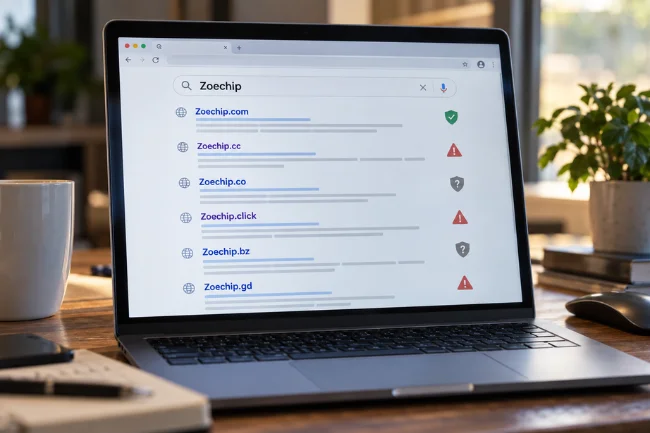
Search results for Zoechip show something much less stable.
Different Zoechip-related domains have appeared over time, including addresses using extensions such as .com, .cc, .co, .click, .bz, and .gd. Some have existed for years, while others appeared only recently. Independent security services also give different ratings to different domains.
I describe this problem as “brand identity drift.”
The Zoechip name can remain familiar even while the domain behind that name changes.
That creates a risk users rarely consider: even if someone had a harmless experience with a Zoechip website in the past, that experience does not prove that a different Zoechip address found six months later has the same owner, code, advertising partners, or security practices.
A recognizable name can therefore create more confidence than the underlying domain deserves.
Is Zoechip Still Working in 2026?
Some Zoechip-branded websites are still accessible as of October 2026.
During my research, I found a currently accessible Zoechip-branded page displaying both movies and television shows, along with categories, watchlists, user-account controls, trending content, and other streaming-oriented features.
That does not mean every older Zoechip URL still works.
Streaming domains can disappear, redirect, expire, change ownership, or be replaced. Search engines may also continue displaying references to an older address after its status has changed.
This explains why searches such as “Zoechip new site,” “Zoechip not working,” and “what happened to Zoechip?” continue appearing.
I would therefore avoid treating any permanent list of “official Zoechip links” as reliable. A list published today could become inaccurate later, and an expired domain could theoretically end up under completely different ownership.
The Biggest Zoechip Safety Question Is Not Just Malware
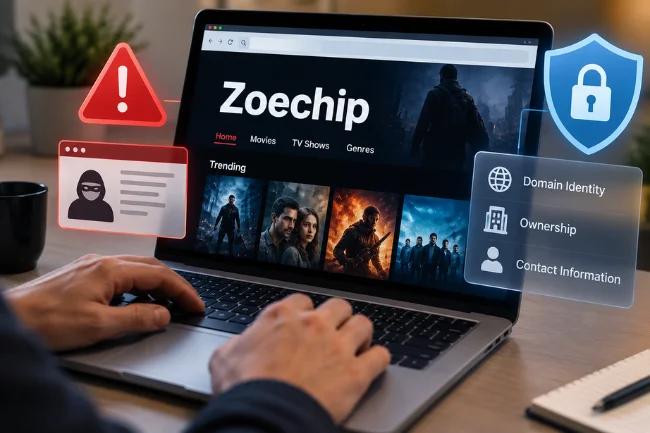
When people ask whether Zoechip is safe, they usually mean, “Will I get a virus?”
That is only one part of website safety.
I look at five separate areas:
1. Domain Identity
Who operates the website?
Can I identify a registered company, responsible organization, business address, or clearly documented ownership structure?
With changing streaming domains, answering those questions can be difficult.
That uncertainty matters because users need to know who receives information submitted through login forms, contact forms, notification prompts, or other interactive features.
2. Malware and Suspicious Redirects
Security tools have produced warnings for some Zoechip-related domains.
For example, Gridinsoft classified one Zoechip-branded .co domain as phishing and assigned another recently registered Zoechip-branded .bz domain a low trust score. These automated ratings are not court judgments and can sometimes produce false positives, but they are meaningful warning signals rather than guarantees of safety.
Older Zoechip-associated URLs have also appeared in malware sandbox reports showing malicious activity during particular tests. Again, those findings relate to specific domains and specific testing periods rather than proving that every website carrying the Zoechip name behaves identically.
That distinction is essential.
3. Advertising and Fake Buttons
Unofficial streaming websites may depend heavily on third-party advertising networks.
That can introduce redirects, pop-ups, fake download buttons, fake security alerts, notification requests, or pages designed to resemble legitimate services.
The U.S. Federal Trade Commission specifically advises consumers to avoid unfamiliar websites offering free movies, shows, games, or similar downloads because such environments can expose people to malware.
The FTC has also warned that pirated streaming applications can be used to distribute malicious software capable of stealing passwords, financial information, and other sensitive data.
4. Account and Password Risk
One current Zoechip-branded page includes account creation and login functionality.
That creates another issue users should consider.
If you reuse the same password across multiple websites, entering it into an unfamiliar streaming service can expose accounts elsewhere if the site’s security is weak or credentials are compromised.
Password reuse is especially risky when the identity of the site’s operator cannot be confidently established.
5. Privacy and Tracking
“No registration required” should never be interpreted as “no data collection.”
Websites can see or process information such as an IP address, browser type, operating system, approximate location, cookies, referral source, device characteristics, and interaction data without knowing a person’s name.
Advertising and analytics providers may collect additional information depending on how the website is configured.
That difference is frequently overlooked when people evaluate free streaming sites.
Does HTTPS Mean Zoechip Is Safe?
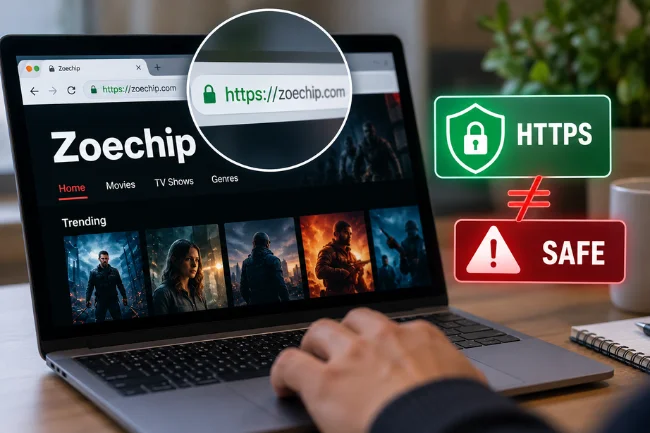
No.
This is one of the most common misunderstandings I see when people evaluate websites.
HTTPS means information transmitted between your browser and the web server is encrypted during transport. That is useful, but HTTPS does not tell you whether the website operator is trustworthy.
A scam site can have HTTPS.
A phishing site can have HTTPS.
An unofficial streaming site can have HTTPS.
A valid certificate also does not establish copyright licensing, inspect every advertisement, or guarantee that an external download is harmless.
I treat HTTPS as a minimum technical requirement, not as a stamp of legitimacy.
Is Zoechip Legal?
There is no responsible universal answer because copyright law varies by country and because legality depends on whether the provider has permission to distribute the specific content involved.
The central question is licensing.
Commercial films and television programs are normally protected by copyright. A streaming platform typically needs authorization, licensing agreements, ownership rights, or another applicable legal basis to distribute that content.
A Zoechip-branded FAQ page claims that watching its content is legal because it links to videos rather than hosting them directly. That is the website’s own position; it should not be treated as an independent legal determination.
I could not verify public evidence showing comprehensive licensing agreements for the broad Zoechip catalogs I reviewed.
That makes comparisons with mainstream licensed platforms difficult.
Copyright authorities also warn consumers about unauthorized streaming. The UK Intellectual Property Office, for example, describes accessing films, TV programs, and other copyrighted works from unauthorized sources as copyright infringement and warns that pirate services may expose users to malware, fraud, and data theft.
Laws and enforcement practices differ internationally, so anyone needing a legal determination for a particular country should rely on local copyright guidance rather than a streaming site’s disclaimer.
Zoechip vs. Licensed Streaming Platforms
The biggest differences are not simply price and catalog size.
The real trade-off is therefore larger than “free versus paid.”
Users are also trading predictability, accountability, security transparency, licensing clarity, and customer support.
Does Zoechip Have an App?
Users frequently search for a Zoechip app or APK.
I would be particularly cautious here.
Installing software is more sensitive than simply loading a webpage because an application can request device permissions and interact with the operating system in ways a normal browser page cannot.
The FTC has specifically warned that applications and add-ons providing pirated streaming content may carry malware capable of affecting not only the streaming device but potentially other devices connected to the same network.
If a website unexpectedly asks you to install an APK, browser extension, video codec, “special player,” security update, or unknown application before watching something, I would treat that as a serious red flag.
The safer standard is straightforward: obtain entertainment applications from verified publishers through recognized app stores and confirm that the publisher matches the actual streaming company.
Why Free Streaming Websites Can Still Make Money
A question that deserves more attention is: if viewers do not pay, how does the website make money?
“Free” rarely means there is no commercial incentive.
Streaming websites may earn revenue through advertising impressions, pop-under advertising, referral programs, affiliate offers, notification advertising, traffic monetization, or other third-party relationships.
That does not automatically mean a free website is malicious. Many legitimate services operate perfectly respectable ad-supported business models.
The issue is transparency.
A licensed ad-supported platform normally tells users who operates the service and provides terms, privacy information, advertiser standards, and support channels.
With an unofficial site whose ownership frequently changes, identifying the economic relationship behind advertisements becomes much harder.
That is why I consider business-model transparency an underrated safety signal.
What Should You Do If You Already Used Zoechip?
Visiting a website does not automatically mean your device is infected.
There is no reason to assume the worst simply because you opened a page.
However, I would pay attention to what happened during the visit.
If you installed software, downloaded an unexpected file, enabled browser notifications, entered a reused password, saw unexplained redirects, or submitted financial information, the risk level is different from simply viewing a webpage.
Useful precautions include updating your browser and operating system, running a reputable security scan, checking installed browser extensions, reviewing notification permissions, and changing any password that was entered on an unfamiliar domain and reused elsewhere.
The FTC lists unexpected redirects, excessive pop-ups, new browser extensions, homepage changes, freezes, and significant slowdowns among possible signs of malware.
What Are Safer Zoechip Alternatives?
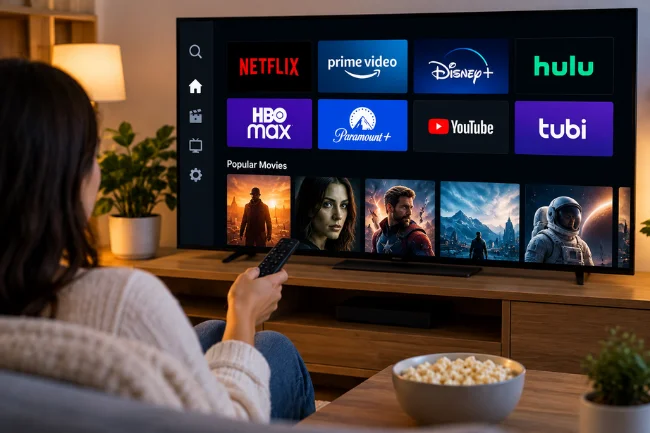
The safest replacement is not another randomly selected free streaming mirror.
Instead, search for the specific film or program through legitimate availability databases, the rights holder’s website, or well-known streaming platforms operating in your country.
Depending on location and title, legal options can include subscription services, broadcaster websites, rental stores, library-supported streaming services, and legitimate ad-supported platforms.
Availability changes constantly because licensing agreements expire and vary between countries.
I prefer searching for the title first and the platform second. That prevents paying for a new subscription only to discover that the desired movie is unavailable in your region.
Free legal streaming also exists. “Free streaming” and “piracy” are not synonymous. Legitimate ad-supported services can offer movies and television without monthly subscription fees while operating under documented licensing arrangements.
A Better Way to Judge Sites Like Zoechip
After reviewing Zoechip, I think users need a better test than simply asking, “Does the site work?”
I use three layers.
First comes identity: who operates the service?
Second comes authorization: why does this company have the right to distribute the content?
Third comes security: what happens to my browser, data, account credentials, and device when I interact with it?
A streaming website that passes only the third test is not necessarily legitimate.
A site that loads without malware today may still have unclear licensing or ownership.
Likewise, a familiar brand name does not guarantee that a newly registered domain using that name belongs to the same operator.
That three-layer test—identity, authorization, and security—is useful well beyond Zoechip. It works for evaluating unfamiliar streaming services, download portals, browser extensions, software repositories, and online stores.
Should You Use Zoechip in 2026?
Based on what I found, I would not treat Zoechip as equivalent to a verified mainstream streaming company.
The main issue is uncertainty.
Different domains use the Zoechip name, domain histories vary, independent security ratings differ, and I could not verify a stable corporate identity or broad public licensing documentation covering the catalogs promoted by Zoechip-branded sites.
That does not prove that every Zoechip domain will infect a device or that every individual stream has the same legal status.
It does mean users should avoid making assumptions based solely on the familiar Zoechip name, an HTTPS padlock, a professional-looking interface, or claims made by the website itself.
For regular movie and TV viewing, I would choose a service whose operator, licensing model, privacy practices, and applications can be independently verified.
FAQs About Zoechip
Is Zoechip safe?
Safety depends on the exact domain. Some Zoechip-branded domains have received phishing, suspicious-site, or malware-related warnings, so the name alone cannot guarantee safety.
Is Zoechip legal?
Legality depends on the content’s licensing status and the laws where you live. A site’s own claim that streaming is legal does not independently prove distribution rights.
Is Zoechip still working?
Some Zoechip-branded pages remain accessible in 2026, although addresses have changed over time and there is no independently confirmed permanent domain.
Why does Zoechip keep changing domains?
Possible reasons include hosting changes, domain expiration, blocking, copyright complaints, technical issues, migration, or unrelated operators adopting the same brand name.
Is there an official Zoechip app?
I could not independently verify an official app from a clearly identified Zoechip company. Be cautious with APKs, extensions, or software offered through unfamiliar streaming websites.
Final Thoughts
Zoechip remains popular as a search term because the promise is attractive: movies and television without another subscription. But the more useful question is not simply whether Zoechip offers free streaming.
It is whether the exact service you are looking at has a verifiable operator, legitimate content rights, transparent privacy practices, and a trustworthy security history.
For me, the changing-domain problem is the biggest warning sign. A familiar name can survive long after the technology, ownership, or security conditions behind it have changed.
Before streaming from any unfamiliar service, verify the platform rather than trusting the logo. If your goal is simply to watch a particular movie or TV show, search for its licensed availability in your region first. That small check can save you from questionable domains, unnecessary downloads, and risks that are far more expensive than a streaming subscription.

Noah Sterling is a technology research writer with 8+ years of experience covering emerging technologies, software trends, digital tools, and innovation. He creates practical, research-based articles to help readers understand the evolving technology landscape.