
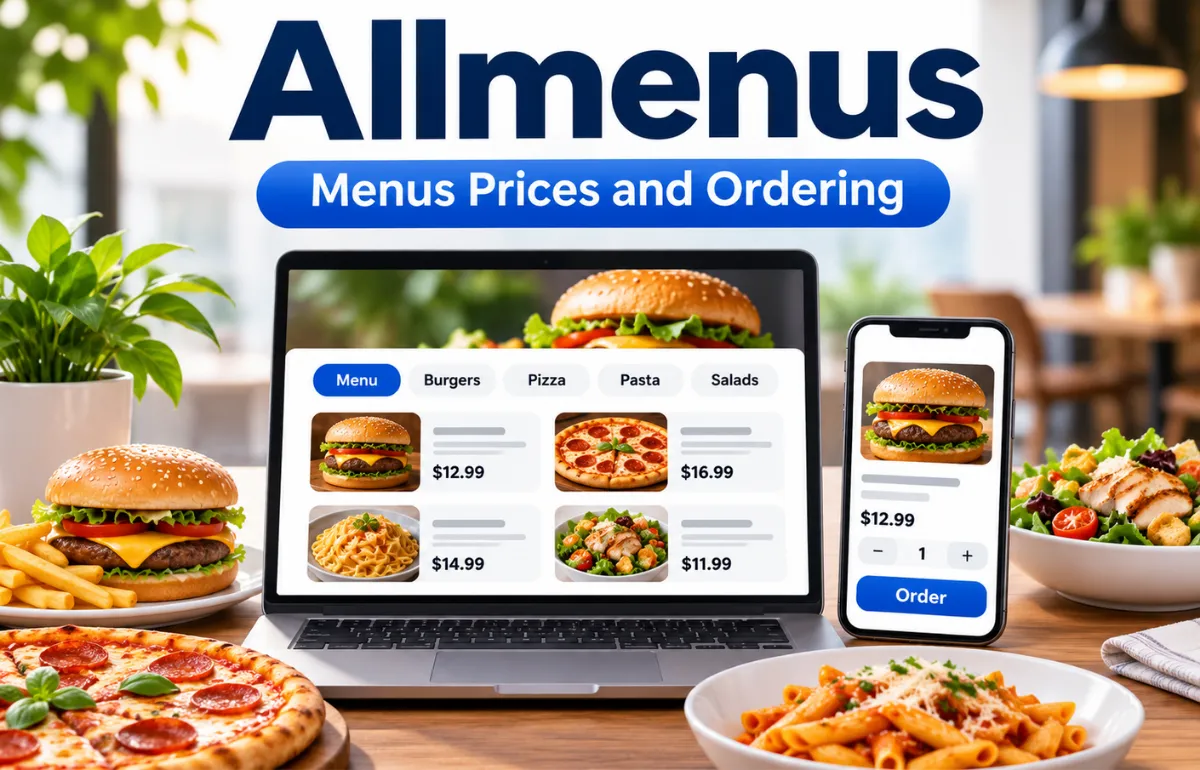
Allmenus is a United States-based online restaurant menu directory that helps people find restaurants, browse food choices, and check menu details before deciding where to eat. At Allmenus.com, visitors can search by location or restaurant name and explore listings for local establishments and national chains.
Some restaurants also provide a route to online takeout or delivery ordering through Grubhub or Seamless. Allmenus itself is best understood as a menu-discovery website, not a guarantee of current prices, availability, or delivery service.
I think that distinction matters: a directory is useful for deciding what sounds good, but the restaurant or ordering checkout should be the final authority before money changes hands.
What Makes Allmenus Different From a Food Delivery App?
Most food apps are built around an immediate transaction: enter an address, choose a meal, pay, and track an order. Allmenus starts earlier in the decision. Its central attraction is the ability to look through restaurant menus, including those of places that may not offer online delivery through the platform.
That makes the website useful when I’m comparing cuisines, figuring out whether a café serves breakfast, or checking whether a local restaurant has vegetarian options. I don’t need to commit to an order just to research what might be available.
The trade-off is that discovering a dish and being able to order that dish are two different things. A menu listing may exist even when there is no online ordering option. Likewise, a displayed price should be treated as a reference, not a binding quote.
Who Owns Allmenus? A Brief History
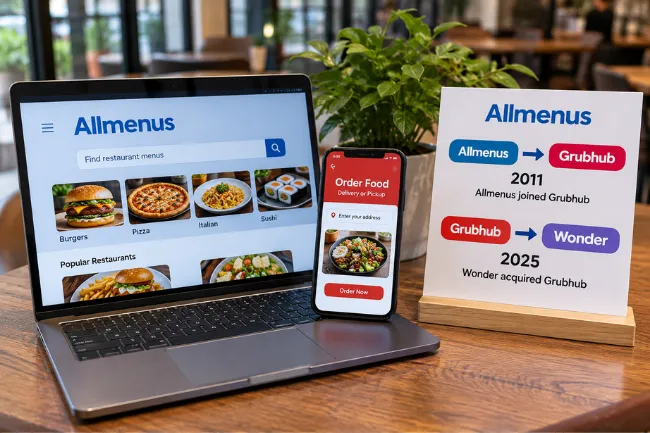
Allmenus became part of Grubhub’s portfolio in 2011, when Grubhub acquired Dotmenu, the company behind Allmenus and Campusfood. The connection explains why some Allmenus pages direct users toward Grubhub for orders rather than processing purchases independently.
There has been a more recent corporate change, too. In January 2025, Wonder completed its acquisition of Grubhub from Just Eat Takeaway.com.
Allmenus continues to identify itself on its website as part of the Grubhub family. For everyday users, the practical relationship remains the more useful fact: Allmenus helps people discover menus, and participating ordering services handle transactions.
Allmenus’ About Us page mentions more than 425,000 menus. Its homepage describes coverage of more than 415,000 restaurants.
These figures are the site’s own published descriptions, not independently verified live counts; they also refer to different things, so I wouldn’t treat them as interchangeable.
How to Find Restaurant Menus on Allmenus
1. Search by City, ZIP Code, or Restaurant Name
Start on the homepage and enter an address, city, or ZIP code. You can also search for a restaurant by name. For broad exploration, city pages let you browse restaurants without knowing exactly where you want to eat.
This is particularly handy in a large city, where a simple search for “pizza” or “Chinese food” can produce a confusing number of results elsewhere. On Allmenus, cuisine categories help narrow the research to the kind of meal you’re considering.
If the same chain operates in several neighborhoods, pay attention to the location rather than assuming every branch serves an identical menu.
2. Open a Listing and Inspect the Full Menu
A restaurant page may show its name, address, telephone number, cuisine information, and food categories. Individual entries can include dish names, short descriptions, sizes, and listed prices.
I recommend reading beyond the headline dish. A sandwich that sounds inexpensive may have extra charges for sides, while a family platter might not tell you how many people it serves. Descriptions can also reveal ingredients you would otherwise miss.
An empty field does not mean a service is unavailable. It may simply mean the directory hasn’t collected that detail.
3. Look for Ordering Options, If You Need Them
According to the official Allmenus FAQ, eligible restaurant listings can display an Order button that starts the ordering process through Grubhub or Seamless. Not every restaurant has that connection.
Before checking out, confirm the correct branch, pickup or delivery choice, selected items, and final amount.
The checkout service—not an older menu snapshot—is where taxes, delivery charges, service fees, and live item availability may become clear.
If no order button appears, you can still use the menu for research and contact the restaurant directly to ask about ordering.
What Information Can You Actually Find?
Allmenus is most valuable as a structured view of what a restaurant serves. Depending on the listing, you may find appetizers, main courses, drinks, desserts, lunch specials, children’s meals, or catering options arranged into readable sections.
Its city pages also group restaurants by cuisine, including Italian, Mexican, Japanese, Mediterranean, breakfast, sandwiches, and many others.
That creates a useful alternative to scrolling through promotional photos when you’re trying to answer a basic question: “Does this restaurant serve what I want?”
However, coverage varies from place to place. A listing may omit opening hours, recent seasonal specials, updated portion details, photographs, or comprehensive dietary information.
Ratings and reviews are mentioned in Allmenus’ site description, but I wouldn’t assume every listing has a useful or recent review history.
I see the information as a starting point for a decision, not a complete restaurant profile.
Is Allmenus Free to Use?
Browsing Allmenus menus is free for diners. You generally don’t need to buy anything simply to look at restaurant listings and compare dishes.
Restaurant owners also have a notable benefit: Allmenus says it lists and helps maintain restaurant menu information at no cost. That’s separate from any commercial agreement a restaurant may have with Grubhub for online ordering.
For customers, “free to browse” doesn’t mean “free delivery.”
If you follow a listing to a third-party checkout, the platform may show food prices, applicable taxes, delivery charges, and other fees.
Always judge affordability using the final checkout total rather than the directory’s displayed entrée price.
How Accurate Are Allmenus Menus and Prices?
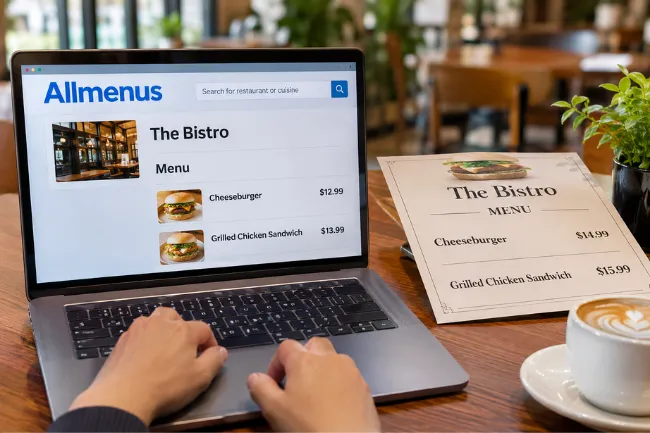
This is the question I would ask before relying on any restaurant directory. Allmenus openly warns on its menu pages that information may not reflect recent changes and recommends checking current details with the restaurant.
Why does that happen?
The platform says it collects menus from restaurant websites, restaurant submissions, and outside data providers. Those sources may be updated on different schedules.
A restaurant can change prices, discontinue a dish, rename a combo, or revise its hours before the directory catches up.
The Three-Check Method I Recommend
When a menu detail really matters, I recommend three separate checks as a practical decision rule:
- Location: Is this the exact restaurant branch, with the right street address?
- Menu: Does the restaurant’s official site, active ordering page, or staff confirm that the item is still offered?
- Total: What is the current price after options, taxes, and any pickup or delivery fees?
This separates three kinds of errors that people often mix together: wrong branch, outdated item, and unexpected final cost.
For example, suppose an Allmenus page shows a pasta dish for $13. That doesn’t establish that the dish is available tonight or that it will cost $13 at checkout.
I would check the restaurant’s current menu and the final order summary before making plans around that number.
For allergies, the standard needs to be stricter. A dish description is not a reliable allergen certification.
Ask restaurant staff directly about ingredients, preparation, and cross-contact risks; don’t infer safety from the absence of an ingredient in a listing.
Allmenus vs. Grubhub, Yelp, Google Maps, and Restaurant Websites
These services overlap, but they don’t all solve the same problem. Choosing the right one depends on whether you’re discovering options, checking a business, reading opinions, or placing an order.
| Service | Best Starting Use | What to Verify Separately |
|---|---|---|
| Allmenus | Browsing restaurant menus and comparing dishes | Current prices, item availability, and branch details |
| Grubhub | Ordering from participating restaurants | Final fees, delivery coverage, and estimated timing |
| Yelp | Exploring restaurant reviews and customer photos | Whether uploaded menus and reviews are current |
| Google Maps | Checking location, navigation, hours, and general business information | Holiday hours and current menu prices |
| Restaurant’s official website | Finding restaurant-published menus and direct contact details | Whether its page has been updated for the specific branch |
My preference is to combine tools rather than expect one website to do everything.
I might use Allmenus to shortlist meals, a map service to check the journey, and the restaurant’s own ordering channel to confirm what is available.
For a new restaurant, customer reviews can help with atmosphere and service expectations. For a specific dish, an official current menu or a quick phone call is often more decisive than star ratings.
Benefits of Allmenus for Restaurant Owners
A restaurant menu is more than a price list; it’s part of how customers decide whether a business fits their needs.
An accessible listing can help a potential diner discover signature dishes before visiting or calling.
Getting Listed and Correcting Information
Allmenus directs restaurant owners to its Restaurant Center to submit new listings or request corrections.
Its FAQ says it accepts menu information through several sources, including restaurant websites and direct submissions.
If I managed a restaurant, I would audit the listing against the official menu: business name, phone number, address, food categories, item names, descriptions, and prices.
A wrong phone number can lose an inquiry; a stale menu price can create an awkward conversation at the counter.
Restaurant owners should follow the current instructions in the Restaurant Center rather than assume that editing an external directory instantly updates their listing.
Discoverability Without Relying on Ads
People search online using specific phrases such as “Thai lunch menu near me” or “vegetarian options in Chicago.”
A properly described menu gives searchers more useful information than a bare business name.
That doesn’t guarantee Google rankings or new customers. Search visibility depends on many factors, and Allmenus does not promise that a free listing will produce a particular result.
I would treat it as one piece of an accurate online presence, alongside the restaurant’s website, business profile, and active ordering channels.
Consistent branch information across those sources is more practical than chasing every possible directory.
Free Listing Is Not the Same as Free Order Processing
One distinction deserves emphasis: Allmenus’ stated free menu listing service should not be confused with the terms of a restaurant’s Grubhub partnership.
Delivery marketplaces may have separate contractual costs or fees.
Owners should review any ordering agreement directly, particularly the services included and how fees affect margins.
A listing helps customers find information; it does not, by itself, create a full online sales operation.
Common Problems and How I Would Handle Them
If a menu shows an old price, check the restaurant’s official menu or contact staff. If you operate the business, report the discrepancy using Allmenus’ correction route.
If a restaurant appears closed or has moved, verify the address and operating status through the business’s official channels before traveling. Old directory pages can remain discoverable even when circumstances change.
If an item is listed but can’t be ordered, the menu may be informational, or the item may be temporarily unavailable. Confirm with the restaurant rather than assuming there’s a website error.
If there is no Order button, that does not necessarily mean the business refuses takeout. It may simply not participate in the relevant ordering integration.
If two branches show different menus, this isn’t always a mistake. Franchise locations, local specials, supply differences, and pricing policies can vary. Match the exact address before comparing.
Is Allmenus Legitimate and Safe?
Yes, Allmenus is an established restaurant menu website associated with Grubhub, not an anonymous copycat directory.
Its official domain is allmenus.com, and its FAQ explains how restaurant information is collected and corrected.
Legitimacy, though, doesn’t equal perfect accuracy.
Allmenus notes that a listing does not necessarily imply affiliation with or endorsement by the restaurant. That disclosure is another reason I would verify sensitive details before visiting or ordering.
For transactions, check the website address after following an ordering link and review the payment total and policies on the actual checkout service.
Avoid sending payment details through unsolicited messages claiming to correct a menu or confirm a reservation.
When Is Allmenus Most Useful?
I consider the strongest use case to be early-stage meal planning: you’re curious about nearby options, you want to compare types of dishes, or you need to learn what a restaurant generally serves before committing.
It can also help families compare children’s menus, groups investigate catering selections, and travelers unfamiliar with a U.S. neighborhood identify possible dining choices.
In each case, the value comes from quickly narrowing options—not replacing a direct confirmation.
When timing, food safety, or a strict budget matters more than exploration, I would switch to a current official source sooner.
The smarter question isn’t whether Allmenus is universally better than another app; it’s whether it answers the question you have right now.
Frequently Asked Questions About Allmenus
What is Allmenus used for?
Allmenus helps users discover U.S. restaurants, browse menus, compare dishes, and find ordering links for participating businesses.
Can I order food directly from Allmenus?
Some listings have an Order button that connects to Grubhub or Seamless. Allmenus primarily serves as a menu directory, not an independent checkout service.
Are the prices on Allmenus accurate?
Not necessarily. Restaurants can change prices before listings are updated, so confirm current costs with the restaurant or active checkout page.
Does Allmenus charge restaurants to list menus?
Allmenus says menu listings and maintenance are free. A separate Grubhub ordering partnership may involve different commercial terms.
How can I update incorrect information on Allmenus?
Restaurant owners can use the Restaurant Center linked from Allmenus to request corrections to menus or business details.
Final Thoughts
Allmenus is useful because it answers a simple question quickly: what can I eat at this restaurant?
Its searchable U.S. menu directory can make comparing local food options easier, especially before you’ve chosen a place.
I would use it to explore, then verify the exact branch, current menu, and final price through an official restaurant channel.
Visit Allmenus to explore nearby menus, and make that quick verification your last step before ordering or heading out.

Noah Sterling is a technology research writer with 8+ years of experience covering emerging technologies, software trends, digital tools, and innovation. He creates practical, research-based articles to help readers understand the evolving technology landscape.