
Cavazaque is an unusual spelling associated with Kawasaki, the Japanese motorcycle manufacturer. In motorcycle-related online content, it may function as a playful nickname, a phonetic-looking variation, or simply a misspelling of Kawasaki. It is not an official Kawasaki brand, motorcycle model, or product range.
Some websites describe Cavazaque as Brazilian motorcycle slang, but its precise origin and how widely riders actually use it have not been firmly established. If you encounter the term beside a Ninja sport bike, a motocross photo, or a discussion about motorcycle parts, Kawasaki is the most useful interpretation to check first.
The surrounding context matters, though: the same word has also appeared outside motorcycle culture.
I find the distinction between a plausible meaning and a proven history especially useful here. A simple definition solves the immediate puzzle, but the available evidence tells a more interesting—and more cautious—story.
Cavazaque at a Glance
| Question | Short answer |
|---|---|
| What does Cavazaque usually refer to in motorcycle content? | An altered spelling associated with Kawasaki |
| Is it a separate manufacturer? | No verified motorcycle manufacturer by that name |
| Is it an official Kawasaki model? | No |
| Is it a Portuguese translation of Kawasaki? | No established official translation |
| Where did the spelling start? | Unknown |
| Where should buyers look for reliable details? | Kawasaki’s regional website and owner resources |
This distinction matters because online explanations often turn an interesting possibility into a confident claim. The evidence supports a connection with Kawasaki in some contexts. It does not support assigning the word one inventor, one country of origin, or one fixed meaning in every setting.
Is Cavazaque the Same as Kawasaki?
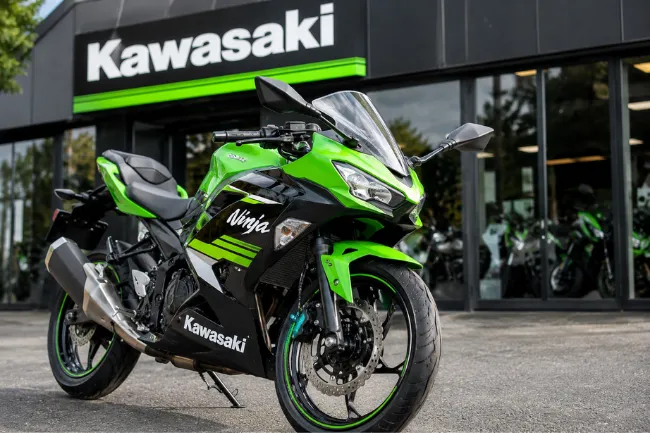
In a motorcycle conversation, Cavazaque may be intended to mean Kawasaki. But the two words are not interchangeable when accuracy matters.
Kawasaki is an established Japanese manufacturer. Its motorcycle business has a documented history, authorized dealers, technical manuals, model names, and genuine replacement parts.
Cavazaque has none of that official standing. You won’t find it presented as a factory motorcycle family alongside Ninja, Z, or Versys on Kawasaki’s official model pages.
I would interpret a casual caption saying “Cavazaque Ninja” as a possible reference to a Kawasaki Ninja, not proof that a separate bike exists. Yet I would never use that interpretation alone to identify the engine, year, trim, or legal identity of a vehicle.
There is also a subtle difference between “a nickname people might use” and “a widely accepted nickname.” The first requires evidence of individual use; the second requires evidence of consistent usage across a community.
Those are different claims, and the available public record does not justify treating them as identical.
Why Does Cavazaque Look and Sound Like Kawasaki?
The most obvious explanation is sound. Kawasaki is a Japanese name that people pronounce through the habits of their own languages.
When a foreign brand name is typed from memory, spoken quickly, or turned into a joke, its spelling can drift.
Cavazaque keeps a recognizable rhythm while changing several letters. That makes a sound-based association understandable, especially when the word appears next to a motorcycle photograph.
Similar-looking forms include kavazaki, cavasaki, kawazaki, and kavazaqui, although their appearance in search results does not prove they share exactly the same origin.
Three possibilities can produce an unconventional spelling: someone makes an ordinary typing error; someone writes what they think they heard; or someone deliberately alters the brand name for humor.
A single word on a page rarely reveals which explanation is correct.
I pay particular attention to the accompanying text. A joking caption suggests deliberate wordplay. A seller’s technical listing containing several errors may suggest careless spelling.
Neither situation automatically tells us how the term first developed.
Where Did Cavazaque Come From? What the Records Show
The honest answer is that no verified origin story has been established. I could not confirm a named creator, a first social media post, or a documented linguistic source explaining exactly when the expression began.
There is, however, an older example worth examining.
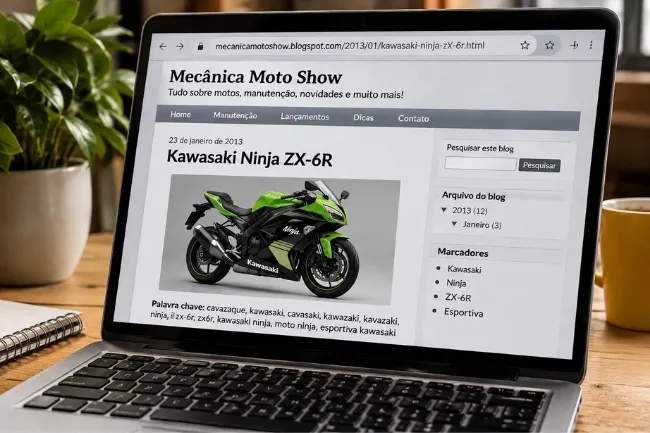
A Portuguese-language motorcycle blog posted an article titled “Kawasaki Ninja ZX-6R” on January 23, 2013.
Near the bottom, a long “Palavra chave” (keyword) sequence includes cavazaque alongside numerous alternative spellings of Kawasaki and searches for Ninja motorcycles.
That record is useful because it places the spelling in a motorcycle-related context years before many recent explanatory articles appeared.
It also sets a limit on what I can claim: the term appears in a keyword string, not in a documented conversation between riders.
The page does not tell us whether people were using it affectionately, searching with a mistaken spelling, or targeting multiple search queries.
A dated appearance is not necessarily the first appearance. It is simply an example I can point to.
Anyone claiming that the term was invented in a particular year, by a named rider, or on one specific platform should be able to produce stronger primary evidence.
Why the 2013 Example Matters
The blog’s keyword list contains many spellings, not one carefully defined piece of slang.
That suggests an important alternative to the usual viral-origin story: Cavazaque may have circulated partly as a search variation or misspelling before writers began presenting it as a cultural expression.
This is a possibility, not a proven explanation.
Still, it helps explain why a word can be visible online without having a dictionary definition or a traceable creator.
Is Cavazaque Brazilian Portuguese Slang?
Several online articles connect Cavazaque with Brazil and Portuguese-speaking motorcycle fans.
The association is understandable: the 2013 example comes from a Portuguese-language blog, and Kawasaki has a real commercial presence in Brazil.
Kawasaki’s company history records the establishment of Kawasaki Motores do Brasil in 2007 and motorcycle sales beginning in Brazil in 2008.
The official Kawasaki Brazil site lists familiar families including Ninja, Z, Versys, and KX.
But a Brazilian page containing the word is not enough to prove that it is common Brazilian slang.
For that claim, I would want dated posts from identifiable speakers, examples from different communities, and ideally a credible explanation from someone who studies or documents the language.
Nor is Cavazaque an official Portuguese translation of Kawasaki.
Brand names normally remain brand names even when people pronounce them differently. A local joke can coexist with the official spelling without replacing it.
How Might People Use Cavazaque Online?
The clearest way to interpret an unfamiliar term is to read the complete post, not isolate the word.
Consider these illustrative examples; they demonstrate possible interpretations, not quotations from verified social media users.
In a Motorcycle Caption
Imagine a photo of a green sport bike labeled “my Cavazaque.”
With the image and a visible Ninja badge, a Kawasaki reference becomes likely. The joke is in the altered name, not in a new vehicle category.
In a Comment or Meme
A short comment might use the spelling to mimic a casual spoken name or tease a friend’s motorcycle obsession.
Without the original thread, however, I would not assume the writer’s nationality or intentions.
In a Sales Listing
A headline reading “Cavazaque 650 for sale” leaves too much unanswered.
Does it refer to a Ninja 650, a Z650, or something else? Those are distinct motorcycles. A nickname and an engine-size number cannot establish which machine is being advertised.
I also separate discoverability from popularity.
A word can appear on several blogs because websites discuss it, even if everyday riders seldom use it. Search-result repetition is not the same as evidence of widespread adoption.
Which Kawasaki Motorcycles Are Connected to the Term?
Cavazaque is not associated with one verified factory model.
If it refers to Kawasaki, the particular motorcycle must be established from its actual name, appearance, or documentation.
Ninja: Sport and Supersport Motorcycles
Ninja is Kawasaki’s well-known sport motorcycle family. It includes models designed for different riders and performance levels.
The official Ninja page identifies the GPz900R, introduced in 1984, as the first model to carry the Ninja name.
A Ninja 500 and a Ninja ZX-6R do not offer the same riding experience simply because both have Ninja on the bodywork.
Their intended uses, ergonomics, engines, and ownership demands differ. That is why “Cavazaque Ninja” is too vague for technical advice.
Z: Street-Focused Motorcycles
Kawasaki’s Z family generally emphasizes a naked street-bike layout rather than the full fairings associated with many Ninja models.
A caption featuring a Z bike could still use an informal brand-name spelling, but it would not make Z and Ninja the same motorcycle.
Versys: Road Versatility and Touring
Versys models are associated with adaptable road riding and touring.
They illustrate another problem with assuming every Kawasaki-related post refers to a sport bike: the manufacturer serves multiple riding styles.
KX and KLX: Off-Road Riding
KX models are closely associated with motocross competition.
KLX variants include trail-oriented machines and, in some markets, road-legal dual-sport options.
The exact version matters, especially if a rider wants to use a bike on public roads.
The useful takeaway is simple: the real model family tells you what a motorcycle is designed to do. The informal spelling does not.
Cavazaque vs. Kawasaki: The Practical Difference
| Feature | Cavazaque | Kawasaki |
|---|---|---|
| Status | Informal or uncertain spelling | Official manufacturer name |
| Factory motorcycle range | None established | Ninja, Z, Versys, KX, and others |
| Verified founding history | Unknown | Documented corporate and motorcycle history |
| Suitable for searching memes | Potentially | Yes |
| Suitable for locating precise parts | No | Yes, with model and year |
| Suitable for registration or insurance | No | Yes, using exact vehicle records |
| Reliable for checking recalls | No | Use official model/VIN resources |
I see the practical difference as a question of purpose.
Informal language can be perfectly understandable between friends. Official identification, particularly when money or safety is involved, needs exact terminology.
Does Cavazaque Have Other Meanings?

Yes, at least in the sense that the same spelling appears in a documented, non-motorcycle title.
The Portuguese art gallery Quadrado Azul hosted an exhibition named “Cavazaque Piu Piu” by the artist duo Musa paradisiaca in Porto, from May 4 to July 1, 2019.
The gallery describes an installation involving synchronized lights, objects, and sound.
Its description does not present the title as a reference to Kawasaki motorcycles.
That finding is a useful reminder not to force a single interpretation onto every occurrence of a rare word.
Seeing Cavazaque in an arts calendar, event listing, or unfamiliar title calls for a different reading than seeing it next to a motorcycle.
It would also be a mistake to conclude that the art exhibition invented the expression or explains the motorcycle spelling.
The records show the same letters in different settings; they do not establish a shared etymology.
How to Search for Reliable Kawasaki Information
If you’re trying to identify a motorcycle rather than understand an online joke, I recommend switching from the informal term to the factory name as soon as possible.
Start With the Full Model and Year
Search for a phrase such as “Kawasaki Ninja 650 2022 owner’s manual” instead of “Cavazaque 650.”
Add your country when necessary because available models, equipment, and documentation can vary by market.
Check the Official Model Pages
Use Kawasaki’s regional website to verify whether the model exists in that market.
Do not rely on a photograph’s color or a seller’s nickname. Similar-looking motorcycles may have important mechanical differences.
Use the Correct Parts Diagram
Kawasaki’s official parts diagrams let owners select a product category and model.
For replacement parts, confirm the model year and variant, then match the appropriate part number.
A vaguely described “Ninja part” may not fit the motorcycle in front of you.
Confirm Manuals and Safety Notices
The owner and service manual resource is a better starting point for maintenance guidance than a meme or an anonymous listing.
For U.S. vehicles, Kawasaki also provides a VIN-based recall lookup.
If you’re elsewhere, use the appropriate local Kawasaki support channel.
The vehicle identification number, or VIN, is especially valuable when names are confusing.
It allows an authorized dealer or official system to identify the actual vehicle rather than guess from internet wording. Avoid posting a full VIN publicly just to settle a spelling question.
How I Judge Claims About Unusual Internet Words
An unfamiliar search term can collect confident explanations surprisingly quickly.
I use a straightforward evidence test before accepting one.
First, I look for a dated occurrence of the exact spelling.
Next, I check the setting: Was it written in a conversation, a keyword list, a product catalog, or an unrelated title?
Then I ask whether the source identifies the writer and supports the claimed meaning.
Finally, I distinguish an example from a trend.
One blog entry proves that somebody put a word on a page. It does not prove that millions of users adopted it, that a language community recognizes it, or that it emerged from a specific social platform.
That approach is particularly valuable with Cavazaque because recent articles sometimes repeat broad claims about rider culture without linking to the original posts that would substantiate them.
I would rather give a reader a carefully limited answer than invent a richer history that cannot be checked.
What Should You Remember About Cavazaque?
If you encountered Cavazaque beside a motorcycle, start by checking for Kawasaki.
That interpretation fits the visible connection with older motorcycle keywords and recent discussions.
But keep the claim proportionate to the evidence: it is an unofficial spelling; its precise origins remain uncertain, and other contexts exist.
For a quick conversation, the distinction may be a curiosity. For purchases, repairs, insurance, or safety checks, it becomes essential.
Before acting on a motorcycle listing or technical claim, check the official Kawasaki model page and verify the bike’s model year and identification details.
Frequently Asked Questions
What is Cavazaque in English?
In motorcycle content, Cavazaque may be an informal spelling of Kawasaki; it has no verified standalone English definition.
Is Cavazaque a real motorcycle brand?
No official motorcycle manufacturer or Kawasaki model named Cavazaque has been established.
Does Cavazaque come from Brazil?
It appears in Portuguese-language motorcycle material, but a specifically Brazilian origin or widespread slang usage has not been proven.
Is Cavazaque a Kawasaki Ninja?
Not as a model name. A post may use the term while showing a Kawasaki Ninja, but the exact Ninja model must be identified separately.
How do I find parts for a Cavazaque motorcycle?
Use the correct Kawasaki model, year, and variant—or ask an authorized dealer to help identify the bike from its VIN.

Noah Sterling is a technology research writer with 8+ years of experience covering emerging technologies, software trends, digital tools, and innovation. He creates practical, research-based articles to help readers understand the evolving technology landscape.