Cómo empezar a correr means learning how to start running in a way your body can tolerate, your schedule can support, and your motivation can sustain. For most beginners, that does not mean running several miles on day one. It means combining easy running with walking, allowing recovery between workouts, gradually increasing the amount of running, and paying attention to how your body responds.
If I were helping a complete beginner, my first goal would not be speed, distance, calories, or even a 5K. I would focus on making running feel manageable enough to repeat. That is the foundation of endurance.
A sensible beginner running routine usually starts with two or three sessions per week. You alternate short periods of jogging with walking, keep the pace conversational, and increase the workload only after your current level starts feeling comfortable.
That simple approach can turn someone who says, “I can’t run,” into someone who runs regularly.
Why Starting Slowly Works Better Than Trying to Get Fit Fast
Running looks simple because there is no complicated equipment or technique required to begin. Your cardiovascular system, however, can improve faster than some of the tissues absorbing the impact of every stride.
Your breathing may feel noticeably better after a few weeks while your feet, calves, knees, tendons, and bones are still adapting to the workload.
This creates a common beginner trap.
You start feeling fitter, so you suddenly run farther. Your lungs handle it. Your legs may not.
That is why I prefer gradual progression over aggressive mileage targets. You are not only training your heart. You are teaching your whole body to tolerate repeated impact.
Current CDC guidance recommends that adults work toward at least 150 minutes of moderate-intensity aerobic activity or 75 minutes of vigorous activity per week, along with muscle-strengthening activity on at least two days. Beginners can build toward those levels gradually rather than trying to achieve them immediately.
What You Need Before Your First Run
You need less equipment than running culture sometimes makes it seem.
For your first few weeks, focus on four things:
- Comfortable running or athletic shoes
- Clothing appropriate for the weather
- A safe place to run
- Enough time to exercise without rushing
You do not need a GPS watch, carbon-plated shoes, energy gels, compression sleeves, or an elaborate training app.
A phone timer can handle run-walk intervals perfectly well.
Choose Running Shoes for Comfort, Not Marketing
The best beginner running shoe is usually the one that feels comfortable on your feet.
You should have enough room in the toe box for your toes to move naturally, while the heel should feel secure without excessive slipping. The shoe should not create pressure points, rubbing, numbness, or immediate discomfort.
Do not assume the most expensive shoe will automatically be the best shoe for you.
If possible, try several models and walk or jog briefly in them before deciding.
Cómo empezar a correr: An 8-Week Beginner Running Plan
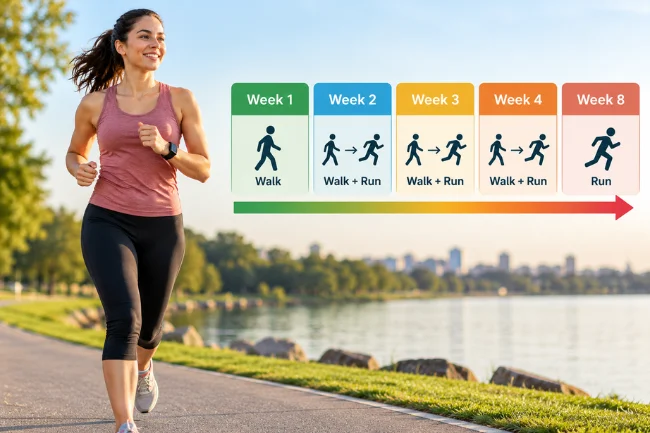
When someone asks me how to start running from zero, I like the run-walk method because walking is not treated as failure. Walking is part of the training.
Established beginner programs use the same general principle. The NHS Couch to 5K program, for example, uses three weekly sessions and gradually increases running over nine weeks while recommending recovery days between runs.
Here is a flexible eight-week version for a healthy beginner.
This is a framework, not an exam.
If week three feels difficult, repeat it. If you need longer walking intervals, take them.
Progress is not measured by whether you followed the calendar perfectly. It is measured by whether your body is becoming more comfortable with running.
Warm Up Before Every Run
Begin each session with about five to ten minutes of brisk walking.
The goal is simply to transition from resting to exercising instead of going directly from sitting at a desk to running.
The NHS also recommends five to ten minutes of brisk walking or gentle jogging as a running warm-up and a gradual cool-down afterward.
After your workout, walk easily for another five minutes while your breathing settles.
How Fast Should a Beginner Run?
Usually, slower than you think.
One of the biggest mistakes I see in beginner training plans is treating every run like a fitness test.
Most early runs should feel controlled.
Try what runners commonly call the talk test: you should be able to speak in short sentences without gasping for air. If you can only get out one or two words, slow down.
Your jogging pace may initially be only slightly faster than your walking pace. That is completely acceptable.
Use Effort Instead of Chasing Pace
GPS pace can be misleading for new runners because hills, weather, sleep, temperature, stress, and previous activity all affect how hard a particular pace feels.
I prefer a simple 1-to-10 effort scale.
Aim for roughly a 3 to 4 during most beginner runs, where 1 feels extremely easy and 10 represents an all-out effort.
Save serious speed training for later.
Your first job is building consistency.
Running Form: Keep It Simple
Beginners sometimes become so worried about perfect running form that they make their movement stiff and unnatural.
You do not need to consciously control every joint.
Start with a few basic cues:
Keep your head upright and look ahead rather than constantly staring at your feet.
Let your shoulders stay relaxed.
Keep your arms bent naturally and allow them to swing mostly forward and backward.
Use relatively short, comfortable steps rather than deliberately reaching your foot far in front of you.
Try to land quietly rather than pounding the ground.
Most importantly, avoid forcing yourself into a particular foot strike simply because someone online says every runner must land on the forefoot, midfoot, or heel.
Comfortable movement matters more than trying to imitate a textbook photograph.
Running vs. Walking for Beginners
Walking and running are not competitors. They are tools you can combine.
If running continuously feels overwhelming, increasing your walking fitness first can make the transition much easier.
Even walking regularly counts as meaningful physical activity. The CDC specifically recognizes brisk walking as moderate-intensity aerobic exercise.
Take Recovery Days Seriously
Fitness does not improve only while you are exercising.
Training provides the stimulus. Recovery gives your body an opportunity to adapt to it.
For most beginners, I recommend avoiding running on consecutive days during the first several weeks.
A simple schedule could look like this:
Monday: Run-walk workout
Tuesday: Rest or easy walking
Wednesday: Run-walk workout
Thursday: Rest
Friday: Run-walk workout
Saturday: Easy activity
Sunday: Rest
There is no prize for squeezing seven workouts into seven days.
Three workouts you can recover from are far more useful than six workouts that leave your legs constantly sore.
Add Strength Training to Become a More Complete Runner
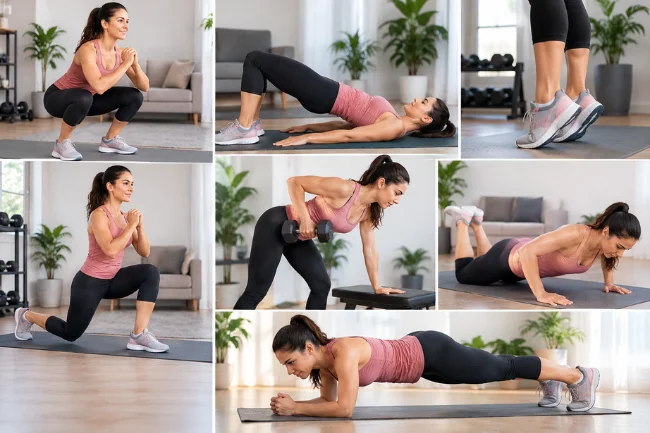
Running improves running, but strength work can complement it.
You do not need bodybuilding-style workouts.
Two short sessions each week can cover the major muscle groups and also help you meet current physical-activity recommendations.
A beginner routine might include:
- Squats or chair squats
- Glute bridges
- Calf raises
- Split squats
- Rows
- Push-ups or elevated push-ups
- Planks or dead bugs
Start with movements you can control comfortably.
I would rather see someone perform a few exercises consistently for three months than attempt an exhausting 60-minute routine twice and quit.
My Three-Dial Rule for Beginner Runners
I use a simple framework to judge whether training is progressing at a sensible rate. Think of your body as having three dials: breathing, soreness, and motivation.
Dial 1: Breathing
Easy running should become gradually less stressful. You should recover more quickly after each interval as your fitness improves.
Dial 2: Soreness
Mild muscle stiffness can happen when you introduce new activity. But soreness should not keep escalating from one workout to the next.
Dial 3: Motivation
If every run feels like something you dread, the plan may be too demanding.
When all three dials are moving in the wrong direction—breathing feels harder, soreness keeps increasing, and motivation is collapsing—I would reduce the training load rather than pushing through simply because the schedule says so.
This is often more useful than blindly following mileage numbers.
How Much Should You Increase Your Running?
There is no single percentage that works perfectly for every runner.
Instead of automatically adding distance every week, earn your progression.
I like this rule:
Repeat a workload until it feels familiar before making it harder.
That may mean completing the same type of run three or four times before increasing the running intervals. NHS injury-prevention advice similarly recommends becoming comfortable with a comparable run before increasing distance or intensity.
Also, change one major variable at a time.
If you increase distance, do not simultaneously increase speed and add another weekly run.
Your body handles progression better when it knows what it is adapting to.
What Should You Eat Before Running?
For a short, easy beginner run, you generally do not need specialized sports nutrition.
If you recently ate a normal meal and feel comfortable, you may already have enough energy.
If you are hungry before running, a small carbohydrate-focused snack that you personally tolerate can work well, such as:
- A banana
- Toast
- A small bowl of oatmeal
- Crackers
- A small yogurt with fruit
Avoid experimenting with large, heavy meals immediately before running.
Your digestive system may have strong opinions about that decision.
Hydration can also stay simple. Drink normally throughout the day and pay additional attention to fluids when you are exercising in hot or humid conditions.
Short beginner workouts generally do not require sports drinks or energy gels.
Normal Discomfort vs. Pain You Should Not Ignore
Learning the difference between effort and injury is one of the most valuable skills a new runner can develop.
Heavy breathing, warm muscles, mild fatigue, and temporary muscle soreness can occur with exercise.
Sharp pain, rapidly worsening pain, major swelling, an altered walking pattern, or pain that keeps returning in the same place deserves more attention.
Do not try to “run through” significant pain merely to complete a training schedule.
Stop the workout and allow the problem to settle. Seek appropriate medical evaluation when symptoms are severe, persistent, worsening, or concerning.
People with chronic medical conditions or disabilities may also benefit from discussing appropriate exercise types and amounts with a healthcare professional. Current CDC guidance specifically recommends professional advice when health conditions may affect exercise choices.
How to Stay Consistent When Motivation Disappears
Motivation is useful, but routines are more dependable.
Instead of asking yourself every afternoon whether you “feel like running,” decide in advance when running happens.
For example:
“I run Monday, Wednesday, and Saturday mornings.”
That removes a surprisingly large amount of negotiation.
Make the Minimum Version Easy
Here is another strategy I use: create a minimum workout.
On a low-motivation day, your goal might simply be to put on your shoes, walk for ten minutes, and decide whether to continue.
Many people continue once they are outside.
If you still feel exhausted after ten minutes, going home is not failure. You protected the habit without forcing a poor-quality workout.
Consistency is built by reducing the number of times one missed run turns into an abandoned month.
Common Beginner Running Mistakes
Running Too Fast
Easy running should actually feel easy. Constant hard running makes recovery more difficult and can turn every session into something you dread.
Increasing Distance Too Quickly
Feeling good after two weeks does not mean your body is ready to double its workload.
Give your muscles and connective tissues time to adapt.
Comparing Yourself With Experienced Runners
Someone posting a 7-minute-mile training run may have been running for 15 years.
Their pace tells you nothing useful about what your pace should be.
Ignoring Rest
Rest days are part of training, not empty spaces between “real” workouts.
Beginner programs commonly place recovery days between runs for exactly this reason.
Making Weight Loss Your Only Measure of Success
Body weight can fluctuate for many reasons.
Also track improvements such as running longer without stopping, recovering faster, sleeping better, maintaining a routine, or simply feeling more capable.
Those changes often appear before dramatic visual changes do.
What Should You Do After You Can Run for 30 Minutes?
Once you can comfortably run for around 30 minutes, you have options.
You might train for your first 5K, gradually extend one weekly run, improve your pace, explore trails, join a running group, or simply maintain three easy runs per week.
Do not rush to add everything at once.
Personally, I would spend several weeks making 30-minute running feel normal before adding demanding interval workouts or aggressively increasing mileage.
A durable running habit is more valuable than rapid progress followed by burnout.
FAQs About Cómo empezar a correr
How long should a beginner run for the first time?
Start with about 20–30 minutes total, mostly walking with short jogging intervals. You do not need to run continuously during your first workout.
Is it OK to run every day as a beginner?
Usually, beginners are better served by running two or three nonconsecutive days per week so the body has time to recover and adapt.
How do I start running if I am completely out of shape?
Begin with regular walking, then introduce very short jogging intervals such as 30–60 seconds followed by one or two minutes of walking.
How long does it take to become comfortable with running?
Many beginners notice meaningful improvement within several weeks, although the timeline varies with fitness level, consistency, recovery, age, and training intensity.
Should I run through muscle soreness?
Mild muscle stiffness may settle with easy movement, but sharp, worsening, persistent, or movement-altering pain is a reason to stop and assess the problem rather than forcing another run.
Your Next Run Matters More Than Your Perfect Plan
Cómo empezar a correr is ultimately less about discovering the perfect training schedule and more about choosing a workload you can repeat.
Start slower than your enthusiasm tells you to. Use walking whenever you need it. Keep most runs easy, leave recovery days between sessions, add basic strength work, and progress only when your current training feels manageable.
For your next move, choose three realistic training days for the coming week and complete your first easy run-walk session. You do not need to prove that you are a runner on day one.
You only need to give yourself a reason to run again.

Lauren Mitchell is a fitness and exercise specialist with 11+ years of experience helping people build strength, improve mobility, and maintain healthier lifestyles. She provides evidence-based fitness guidance focused on effective workouts, injury prevention, and sustainable exercise habits.