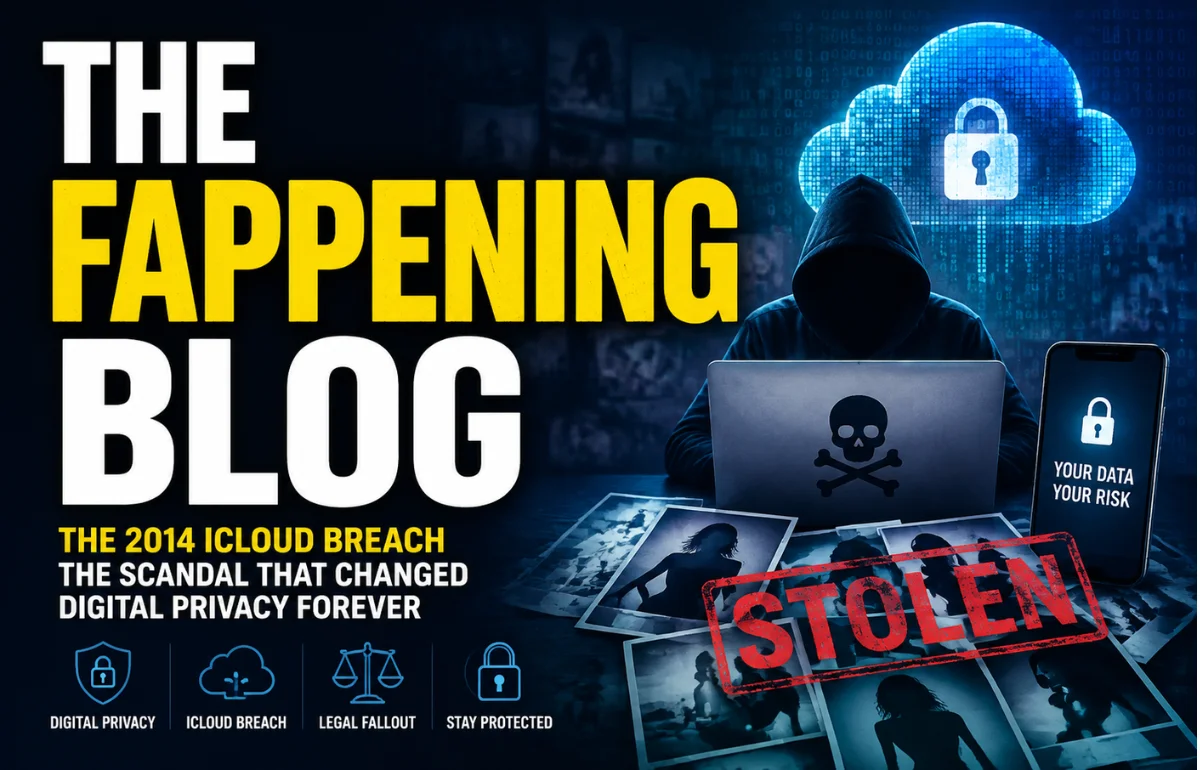
The Fappening Blog was a website — and later a series of mirror sites — that emerged in 2014 to host and distribute stolen private photographs of dozens of celebrities, including Jennifer Lawrence, Kate Upton, and Kirsten Dunst. The images were obtained through unauthorized access to victims’ Apple iCloud accounts and were first posted on the anonymous imageboard 4Chan before spreading rapidly across the internet. The event, which became known as “The Fappening” or “Celebgate,” remains one of the most significant and widely discussed digital privacy violations in internet history.
If you’ve searched for this topic, you’re probably not just curious about the scandal itself. You’re likely trying to understand what actually happened, who was responsible, what the legal fallout looked like, and what it means for your own digital privacy. This article covers all of that — without sensationalizing the victims or pointing anyone toward harmful content.
The 2014 Hack: What Actually Happened
In the weeks leading up to August 31, 2014, several hackers quietly spent months targeting celebrity Apple ID accounts. The primary method wasn’t a dramatic Hollywood-style breach of Apple’s servers. It was far more mundane — and more alarming for that reason.
The hackers used a combination of phishing emails, brute-force password guessing, and social engineering to answer security questions and reset account credentials. Apple’s “Find My iPhone” API at the time had no rate-limiting on login attempts, meaning attackers could try thousands of password combinations without triggering a lockout.
Once inside an iCloud account, they accessed the full automatic backups — including photos and videos the victims may not have even realized were being stored in the cloud.
On August 31, 2014, the images were posted to 4Chan. Within hours, they had spread to Reddit, Imgur, and dozens of other platforms. The Fappening Blog became one of the primary sites aggregating and hosting the stolen content, driving massive search traffic during the peak of the event.
Who Was Behind It — and Who Went to Prison
This is one of the areas where most articles on this topic either go vague or get things wrong. The prosecutions are public record.
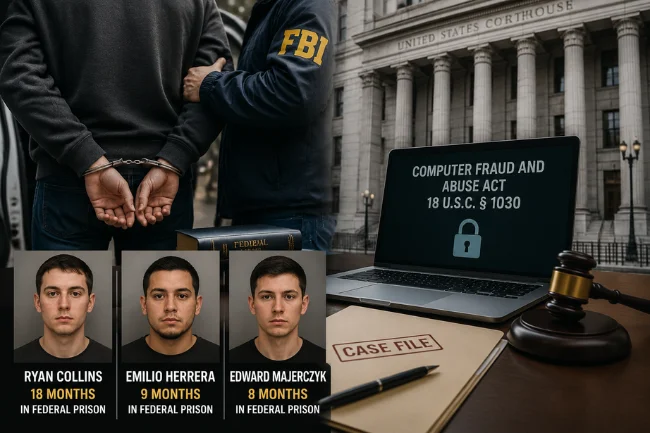
Ryan Collins, a Pennsylvania man, was arrested in 2016 and pleaded guilty to a felony violation of the Computer Fraud and Abuse Act (CFAA). He had spent roughly 18 months phishing Apple and Google account credentials from over 100 victims, the majority of them female celebrities. He was sentenced to 18 months in federal prison.
Emilio Herrera of Chicago pleaded guilty to the same charge and was sentenced to 9 months in prison.
Edward Majerczyk, also from Illinois, pleaded guilty to unauthorized computer access and received an 8-month federal sentence.
All three were prosecuted under 18 U.S.C. § 1030 — the CFAA — specifically for intentionally accessing a protected computer without authorization. None of the prosecutions involved charges specifically tied to distributing non-consensual intimate images, because at the time, federal law had no dedicated statute for that offense. That gap in the law became a major point of advocacy following the event.
How Apple Responded
Apple initially pushed back on the characterization that iCloud itself had been “hacked,” and technically that was accurate — the attackers didn’t break into Apple’s infrastructure. They exploited weak passwords and security questions, combined with the missing rate-limit on login attempts.
That said, Apple moved quickly after the event to address the specific vulnerability. Within days, the company:
- Added brute-force protection (rate-limiting) to the Find My iPhone API
- Began sending email and push notifications to users when their Apple ID was accessed from a new device or browser
- Expanded the push for two-factor authentication across iCloud accounts
Apple’s CEO Tim Cook also gave an interview to the Wall Street Journal confirming the company would increase the prominence of security alerts — a direct response to the breach.
The Fappening Blog: Current Status in 2025–2026
This is probably the most-searched question on this topic that virtually no article answers directly: is the site still active?
The original domain associated with The Fappening Blog was repeatedly taken down, but mirror sites and successor domains continued to appear under slightly varied URLs. As of 2025, the original event-specific content sites that launched in 2014 are no longer operational in their original form.
However, it’s worth being clear: sites that aggregate leaked or non-consensually shared intimate images continue to exist across the internet under various names and domains. Visiting or sharing content from any such site carries legal risk in many jurisdictions, and in some countries — including the UK, Australia, Canada, and several U.S. states — simply possessing or distributing non-consensual intimate images is a criminal offense, regardless of whether you were involved in the original theft.
What Changed in Privacy Law After The Fappening
This is the part of the story that I find most underreported, and it matters.
Before 2014, only a handful of U.S. states had laws specifically addressing non-consensual pornography (often called “revenge porn” laws). The Fappening — along with sustained advocacy from organizations like the Cyber Civil Rights Initiative — accelerated legislative action significantly.
If your real concern is keeping personal images private, choosing a privacy-focused service built around secure sharing is a far better option than assuming auto-backup platforms protect you by default.
Here’s a comparison of the legal landscape before and after:
| Legal Area | Before The Fappening (Pre-2014) | After The Fappening (2015–2024) |
|---|---|---|
| U.S. States with NCII laws | ~3 states | 48+ states |
| Federal CFAA coverage of image theft | Yes (unauthorized access) | Yes, with stronger enforcement |
| Dedicated federal NCII law | None | SHIELD Act passed 2022 (federal criminal statute) |
| Platform removal obligations | Voluntary | DMCA + platform policies tightened significantly |
| UK law | Limited civil remedies | Criminal offense under the Online Safety Act 2023 |
| Apple iCloud brute-force protection | Not present | Rate-limiting added within days of the breach |
The SHIELD Act (Stopping Harmful Image Exploitation and Limiting Distribution), signed into law in 2022, created a federal criminal offense for knowingly sharing intimate visual depictions of an identifiable person without consent. This filled the gap that existed during the 2014 prosecutions.
What The Fappening Taught Us About Cloud Storage — That We’re Still Ignoring
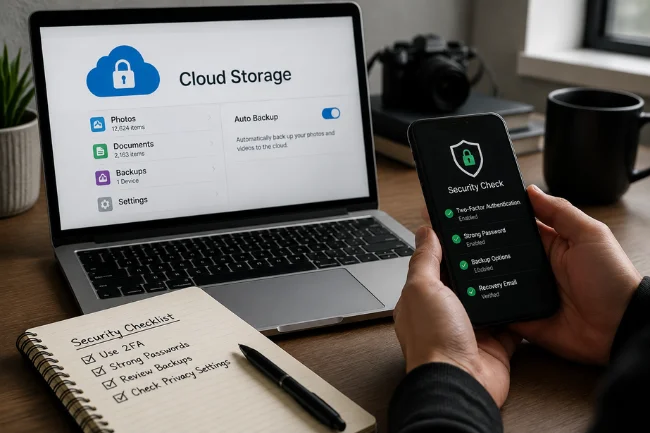
I’ve spent years writing about digital security, and the uncomfortable truth is that most people made the same mistakes in 2024 that the victims’ accounts exposed in 2014. The specific vulnerabilities that enabled this breach are still relevant.
Security questions are a weak link. What’s your mother’s maiden name? What was your first pet’s name? This information is often findable through a few minutes of social media research. If a platform still requires security questions, treat the answers as passwords — use random strings, not real answers, and store them in a password manager.
Automatic cloud backup is opt-out, not opt-in. Most people don’t realize that when they set up a new iPhone or Android device, photos automatically back up to the cloud by default. If you have content on your phone you’d prefer not to store remotely, you need to actively disable that feature — it won’t turn itself off.
Metadata is a secondary exposure vector. Every photo taken on a smartphone contains EXIF metadata — the file’s hidden layer of information that includes the GPS coordinates of where it was taken, the exact timestamp, and device model. Even if an image itself isn’t sensitive, metadata can reveal your home address, daily routine, or workplace. Tools like ExifTool (free, open-source) let you strip this data before sharing photos.
If you’re concerned about images of yourself already circulating online, understanding how to protect your cloud photos — and how to verify where your images appear — is a practical first step.
Here’s a quick comparison of major cloud storage platforms’ current security defaults:
| Platform | 2FA Default | End-to-End Encryption for Photos | Metadata Stripping on Upload |
|---|---|---|---|
| Apple iCloud | Optional (strongly prompted) | Advanced Data Protection (opt-in) | No |
| Google Photos | Optional | No (standard accounts) | No |
| Microsoft OneDrive | Optional | No (consumer accounts) | No |
| Proton Drive | Optional | Yes (by design) | No |
| Tresorit | Optional | Yes (by design) | No |
The takeaway: if end-to-end encryption matters to you for sensitive files, the mainstream consumer platforms don’t offer it by default. You either need to enable Apple’s Advanced Data Protection explicitly, or use a privacy-first alternative.
The Human Cost That Gets Reduced to a Footnote
When this story gets covered, the focus tends to drift toward the technical details or the cultural spectacle. What’s regularly minimized is what happened to the actual people involved.
Jennifer Lawrence, in interviews following the event, described it as a “sex crime” — not a scandal, not an accident, not a leak. Her framing was deliberate and legally accurate: the images were stolen. She hadn’t consented to their distribution. The fact that she was a public figure didn’t alter that reality.
Multiple victims reported lasting anxiety about their digital privacy, a reluctance to use cloud services, and what several described as a permanent sense that the content was still circulating somewhere, even after takedowns.
The psychological research on non-consensual image sharing consistently shows elevated rates of depression, PTSD symptoms, and social withdrawal in victims. This isn’t unique to celebrities. Studies from the Cyber Civil Rights Initiative found that the majority of NCII victims reported significant impacts on their employment, relationships, and mental health.
The permanence of the internet compounds all of this. Unlike a physical violation, digital content can resurface years later, re-traumatizing victims with each new upload.
Frequently Asked Questions
What exactly was The Fappening Blog?
The Fappening Blog was a website that aggregated and hosted stolen private celebrity photographs following the 2014 iCloud hack — it was not a legitimate blog but a distribution point for non-consensually shared intimate images.
Is it illegal to view or share content from The Fappening Blog?
Yes, in many jurisdictions. Sharing such content is a criminal offense in the UK, Australia, Canada, and over 48 U.S. states, and the 2022 federal SHIELD Act makes distribution a federal crime in the United States.
Who actually hacked the celebrities’ iCloud accounts?
Three men were prosecuted: Ryan Collins (18 months in federal prison), Edward Majerczyk (8 months), and Emilio Herrera (9 months), all convicted under the Computer Fraud and Abuse Act for unauthorized access to protected computers.
Was Apple’s iCloud system directly breached?
No — Apple’s core servers were not breached. Attackers exploited weak passwords, security questions, and a missing rate-limit on Apple’s Find My iPhone login API, which allowed unlimited password-guessing attempts.
How can I protect my own photos from a similar breach?
Enable two-factor authentication on every account, use a password manager with unique passwords, disable automatic cloud photo backup for sensitive content, and consider Apple’s Advanced Data Protection or Proton Drive for encrypted cloud storage.
A Final Word
The Fappening Blog was a flashpoint — not just for celebrity culture or tabloid media, but for how society understands digital privacy, consent, and the accountability of platforms and individuals online.
The prosecutions happened. The laws changed. The platforms tightened their policies. And yet, the core vulnerabilities — reused passwords, security questions, unencrypted cloud backups, metadata in photos — remain widespread.
If this article leaves you with one practical action, make it this: go enable two-factor authentication on your iCloud, Google, or Microsoft account today. It takes three minutes and closes the single most significant gap that enabled the 2014 breach in the first place.
And if you’re a researcher, journalist, or advocate working on NCII issues, organizations like the Cyber Civil Rights Initiative (cybercivilrights.org) offer both victim resources and policy research worth exploring.

Noah Sterling is a technology research writer with 8+ years of experience covering emerging technologies, software trends, digital tools, and innovation. He creates practical, research-based articles to help readers understand the evolving technology landscape.