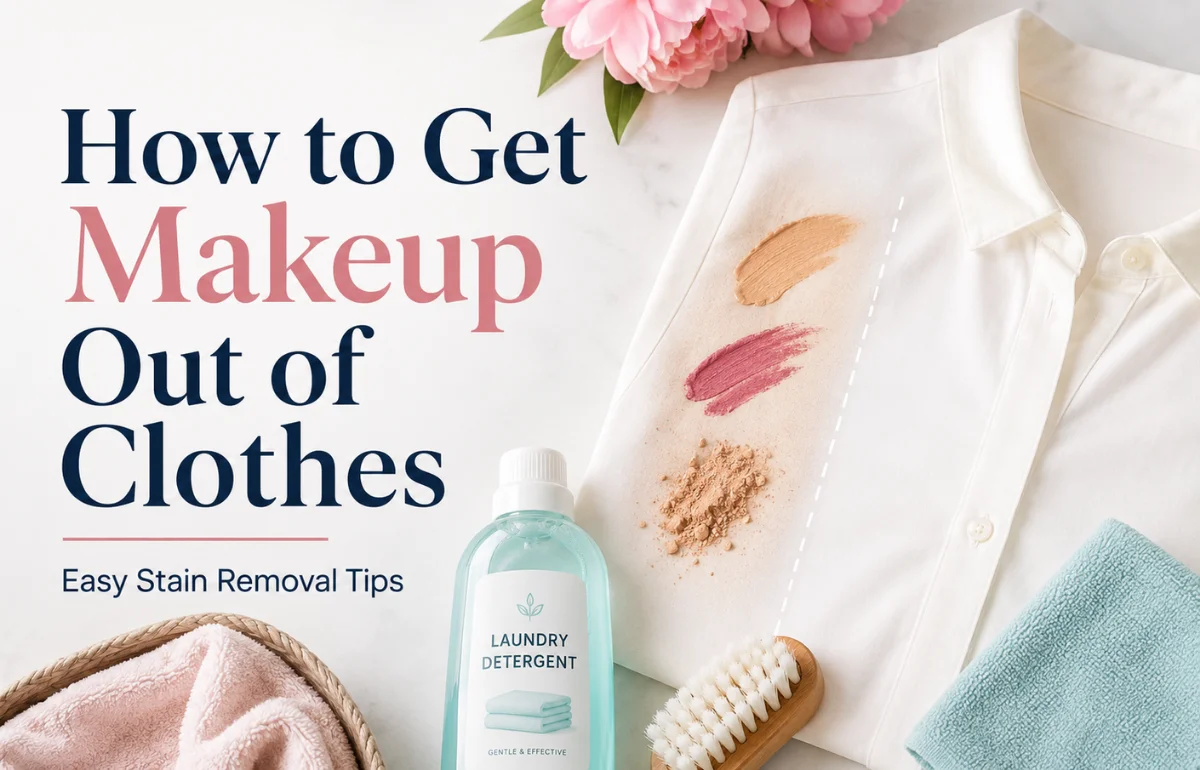
Knowing how to get makeup out of clothes comes down to identifying what is actually inside the makeup stain and treating it before heat sets it into the fabric. For most fresh stains, I recommend removing excess product first, applying a small amount of liquid laundry detergent or grease-cutting dish soap, gently working it into the stained area, rinsing with cool or lukewarm water, and washing according to the garment’s care label.
The right method changes with the product. Foundation and concealer often contain oils and pigments, lipstick contains waxes and oils, while mascara and waterproof makeup may contain film-forming ingredients designed to resist moisture.
The most important rule is simple: do not put a makeup-stained garment in the dryer until the stain has completely disappeared. Dryer heat can make leftover oils, dyes, and pigments much harder to remove.
Why Makeup Stains Can Be Difficult to Remove
Makeup is designed to stay on skin for hours, so it should not be surprising that some formulas also cling stubbornly to fabric.
A makeup stain may contain several components at once, including:
- Oils
- Waxes
- Silicones
- Mineral or synthetic pigments
- Dyes
- Film-forming polymers
- Sunscreen ingredients
- Fragrances and emollients
That is why simply rinsing a foundation or lipstick stain with water often does very little.
I prefer to think about makeup stains in three groups: powder-based stains, oil-and-pigment stains, and waxy or waterproof stains. Once I know which group I am dealing with, choosing the right cleaning method becomes much easier.
What Should You Do Immediately After Makeup Gets on Clothing?
Acting quickly gives you the best chance of removing the stain completely.
First, remove as much excess makeup as possible without spreading it. If the product is thick, use the edge of a spoon, dull knife, or clean card to lift it away.
For powder makeup, do not immediately rub the fabric with a wet cloth. Moisture can turn loose powder into a paste and push pigments deeper into the fibres. Instead, shake or gently brush away as much powder as possible.
For liquid foundation, lipstick, mascara, or concealer, blot rather than scrub.
I also recommend placing a clean white towel or paper towel behind the stained area while treating it. This helps stop dissolved makeup from transferring to another part of the garment.
Best Makeup Stain Removers by Product Type
Always check the garment care label before using any cleaning product, especially on silk, wool, acetate, embellished clothing, or garments labelled dry-clean only.
How to Get Liquid Foundation Out of Clothes
Liquid foundation is one of the most common makeup stains because many formulas contain pigments combined with oils, silicones, or emollients.
Start by lifting away any thick excess without rubbing it further into the fabric.
Apply a small amount of liquid laundry detergent directly to the affected area. If the foundation feels particularly oily, I would use a small amount of grease-cutting dish soap instead.
Gently work the cleaner into the fabric using your fingers or a soft cloth. Allow it to remain on the stain for around 5 to 10 minutes unless the product label gives different instructions.
Rinse from the back of the fabric so the water helps push the foundation outward rather than further through the fibres.
Wash the garment according to its care label and inspect it before drying.
If you can still see foundation, repeat the treatment.
How to Remove Powder Foundation, Blush, or Eyeshadow
Powder makeup requires a slightly different approach.
My first move would be to remove the loose pigment before adding any liquid. Hold the garment over a sink or bin and gently shake it. A clean, soft brush can also help lift powder from the surface.
Once the loose material is gone, apply liquid laundry detergent to any remaining mark.
Work it in gently, rinse, and wash according to the care instructions.
This dry-first approach is especially useful with highly pigmented eyeshadows and blush because immediately adding water may create a concentrated coloured paste.
How to Get Lipstick Out of Clothes
Lipstick stains can be stubborn because they combine strong colour pigments with waxes and oils.
Carefully scrape away excess lipstick without enlarging the stain. Then apply a small amount of grease-cutting dish soap or heavy-duty liquid laundry detergent.
Gently massage the cleaner into the stained fibres and leave it briefly before rinsing.
If colour remains after the oily residue has disappeared, a colour-safe stain remover or oxygen-based laundry product may help, provided it is appropriate for the garment.
Never assume a product is safe just because the fabric is white. Check both the care label and the stain remover instructions first.
How to Remove Mascara and Eyeliner From Clothes
Mascara and eyeliner can contain pigments, waxes, oils, and ingredients intended to resist smudging.
Blot away wet product carefully. Do not wipe it sideways because that usually creates a larger black or brown mark.
Apply liquid laundry detergent to the affected area and gently work it through the fabric.
Rinse thoroughly and inspect the garment.
Waterproof mascara may need more than one treatment because its formulation is deliberately designed to resist water. Repeating a mild treatment is generally better than attacking the fabric aggressively with a strong chemical.
How to Get Waterproof Makeup Out of Clothes
Waterproof foundation, mascara, long-wear lipstick, and transfer-resistant cosmetics can require extra patience.
Instead of thinking only about the colour you see, think about the invisible film holding that colour to the fibres.
Start with a detergent capable of breaking down oily residue. Work a small quantity into the stain and rinse it thoroughly.
If necessary, repeat the treatment before laundering.
This is one situation where patience matters. Two or three mild treatments may be safer for the garment than one extremely aggressive treatment.
How to Remove Dried or Set-In Makeup Stains
A dried makeup stain is harder to remove, but it is not automatically permanent.
Start by checking whether any dried product can be gently lifted from the surface. Then dampen the stained area and apply liquid laundry detergent.
Allow the detergent enough contact time to loosen the oil and pigment before rinsing.
For washable, colourfast clothing, an oxygen-based stain remover may help with residual colour. Follow its label carefully and test an inconspicuous area when appropriate.
The biggest problem with an older stain is often previous heat exposure. If the garment has already been tumble-dried or ironed, the stain may require several treatments.
My Makeup Stain Decision Rule
A useful way to choose a treatment is to ask three questions before reaching for a cleaner.
1. Is the makeup loose and powdery?
Remove it dry first.
2. Does the stain feel oily or greasy?
Use liquid laundry detergent or a small amount of grease-cutting dish soap before laundering.
3. Is the oily residue gone but colour remains?
Consider a fabric-safe stain remover designed for residual pigments or dyes.
This sequence prevents a common mistake: trying to bleach away colour while the oily base underneath the stain has not yet been removed.
That distinction is particularly useful with lipstick, full-coverage foundation, long-wear concealer, and heavily pigmented makeup.
Fresh Makeup Stains vs Set-In Makeup Stains
The lesson here is straightforward: treating makeup before laundry day gives you a significant advantage.
How to Treat Makeup on Delicate Fabrics
Not every garment should be treated like a cotton T-shirt.
Silk, wool, acetate, velvet, delicate rayon, structured garments, and clothing with embellishments may react badly to aggressive rubbing or strong stain removers.
If the label says dry-clean only, avoid experimenting with several household chemicals. Remove excess makeup carefully and take the garment to a professional cleaner.
Tell the cleaner what caused the stain if you know. Knowing whether it was lipstick, foundation, mascara, or another cosmetic can help them choose an appropriate treatment.
For washable delicate fabrics, test any cleaning solution on an inconspicuous area first.
Common Mistakes That Make Makeup Stains Worse
Several small mistakes can turn a removable stain into a difficult one.
Rubbing the stain immediately
Scrubbing can spread pigments and push them deeper into woven fibres.
Using hot water too soon
Hot water is not automatically better. Starting with cool or lukewarm water is generally safer while you determine what type of stain you are treating.
Putting stained clothes in the dryer
This is one of the biggest mistakes. Always inspect the stain after washing and before machine drying.
Mixing cleaning chemicals
More products do not necessarily mean better results. Never casually combine household cleaners, particularly bleach products with ammonia or acidic cleaners.
Ignoring the care label
A stain-removal method that works well on durable cotton may damage silk, wool, dyed fabrics, or special finishes.
Can Makeup Remover Be Used on Clothing?
Sometimes people reach for facial makeup remover because it is designed to dissolve cosmetics.
I do not consider it the best universal first choice for clothing. Makeup removers can contain oils, fragrances, surfactants, or other ingredients that may leave a second mark on fabric.
If you decide to try one, test a hidden area first and use only a small amount.
For most washable everyday clothing, laundry detergent or grease-cutting dish soap is a more predictable starting point.
How to Prevent Makeup From Getting on Clothes
Prevention takes less time than stain removal.
Put makeup on before dressing when possible, especially when wearing white shirts, high collars, formalwear, or delicate fabrics.
When pulling a top over your head after applying makeup, covering your face loosely with a clean scarf, cloth, or protective dressing hood can reduce foundation transfer.
I also recommend allowing complexion products and setting sprays to dry before getting dressed.
Pay particular attention to collars. Foundation transfer around necklines often happens gradually rather than through one obvious accident.
A Simple Rule to Remember
When you are figuring out how to get makeup out of clothes, remember this order:
Remove excess product, treat the oily or waxy base, rinse out loosened makeup, address remaining pigment, wash according to the care label, and check before applying heat.
You do not need the strongest cleaner in the cupboard. Matching the cleaning method to the makeup formula and fabric is usually more effective than scrubbing harder.
If you have a makeup-stained garment in front of you now, identify whether the stain is powdery, oily, waxy, or waterproof, check the care label, and start with the gentlest suitable treatment before the stain has time to set.
Frequently Asked Questions
Does makeup come out of clothes in the wash?
Many makeup stains will wash out if they are pretreated first, but oily foundation, lipstick, mascara, and waterproof cosmetics often need treatment before machine washing.
How do you get foundation out of clothes quickly?
Remove excess foundation, apply liquid laundry detergent or grease-cutting dish soap, gently work it into the stain, rinse, and wash according to the care label.
Can dish soap remove makeup stains from clothes?
A small amount of grease-cutting dish soap can help with oily makeup such as foundation and lipstick, provided the fabric is washable and colourfast.
How do you remove makeup from white clothes?
Pretreat the makeup stain first, wash according to the garment label, and use a fabric-safe oxygen-based stain remover for remaining colour when appropriate.
Can dried makeup stains still be removed?
Yes. Many dried makeup stains can improve after repeated pretreatment with liquid detergent, although stains exposed to dryer or iron heat may be more difficult to remove.

Olivia Parker is a home improvement research writer with 8+ years of experience covering home design, renovation ideas, maintenance tips, and practical living solutions. She creates easy-to-follow content to help readers make informed decisions about improving their homes.