
Key Takeaways
- A calmer home usually begins with less sensory clutter, not more decor.
- Layered lighting gives each room more flexibility for work, gathering, and rest.
- Scent should be subtle, optional, and appropriate for the size and purpose of a room.
- Sound, texture, airflow, and visual order all affect how comfortable a space feels.
- Small daily resets can make a home feel more settled without a major redesign.
- Fresh air, clean surfaces, and safety should come before added fragrance.
Why Home Atmosphere Matters
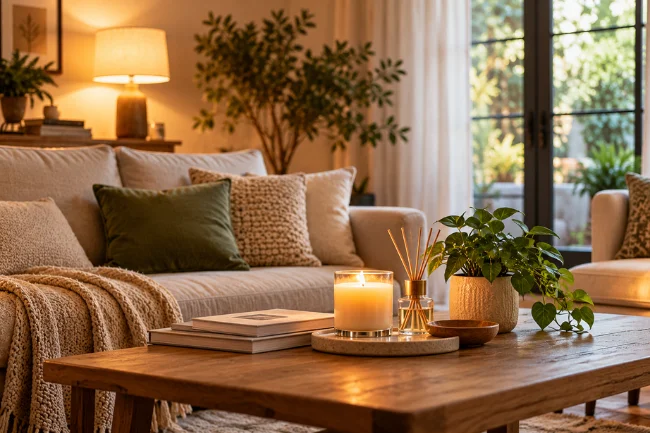
A room is more than its furniture and paint color. Bright light, visual clutter, unwanted noise, stale air, and strong fragrance can all make a space feel demanding. By contrast, a room with softer light, a clear path to move through, and fewer competing sensations can feel easier to inhabit.
Creating that feeling does not require a full renovation or a large budget. Start by noticing what feels harsh at the end of the day. It may be an overhead fixture, a crowded coffee table, or a scent that lingers too long. Even thoughtful details, such as luxury candles, work best as part of a broader atmosphere rather than as the sole solution.
The Five Sensory Layers Of A Calmer Home
A useful approach is to consider the home through five connected sensory layers. Adjusting one layer can help, but the strongest results often come from making several small changes that support one another.
- Light: Brightness, warmth, direction, and glare.
- Scent: Strength, timing, and each household member’s response.
- Sound: Music, silence, steady background sound, and unwanted noise.
- Texture: Rugs, curtains, cushions, wood, and other materials.
- Visual order: Clear surfaces, simple storage, and comfortable circulation.
A beautiful lamp will not fully calm a room if the television is loud and the air feels stuffy. Think of each layer as a supporting element, then remove or soften what competes for attention.
Start With Light
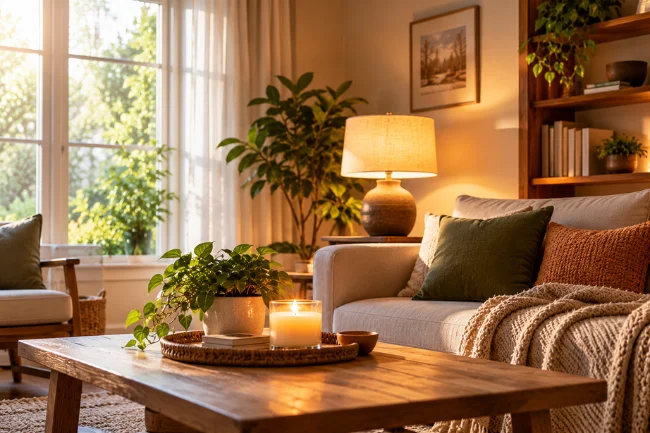
Lighting is often the simplest place to begin because it immediately changes the character of a room. A single bright ceiling fixture may be useful for cleaning or cooking, but it can feel overly intense when the goal is to read, talk, or wind down.
Practical Lighting Steps
- Turn off the brightest overhead light when it is no longer needed.
- Add a lamp near seating, a bedside table, or a reading chair.
- Use a shade or indirect lighting to reduce glare.
- Keep task lighting where it supports a specific activity.
- Use dimmers when possible so the room can change with the time of day.
Daylight matters too. Opening curtains in the morning, when privacy and weather permit, can make rooms feel fresher and reduce the need for artificial light. As light, sound, and scent shape the experience of home, the goal is not constant mood lighting but lighting that suits the activity at hand.

Olivia Parker is a home improvement research writer with 8+ years of experience covering home design, renovation ideas, maintenance tips, and practical living solutions. She creates easy-to-follow content to help readers make informed decisions about improving their homes.