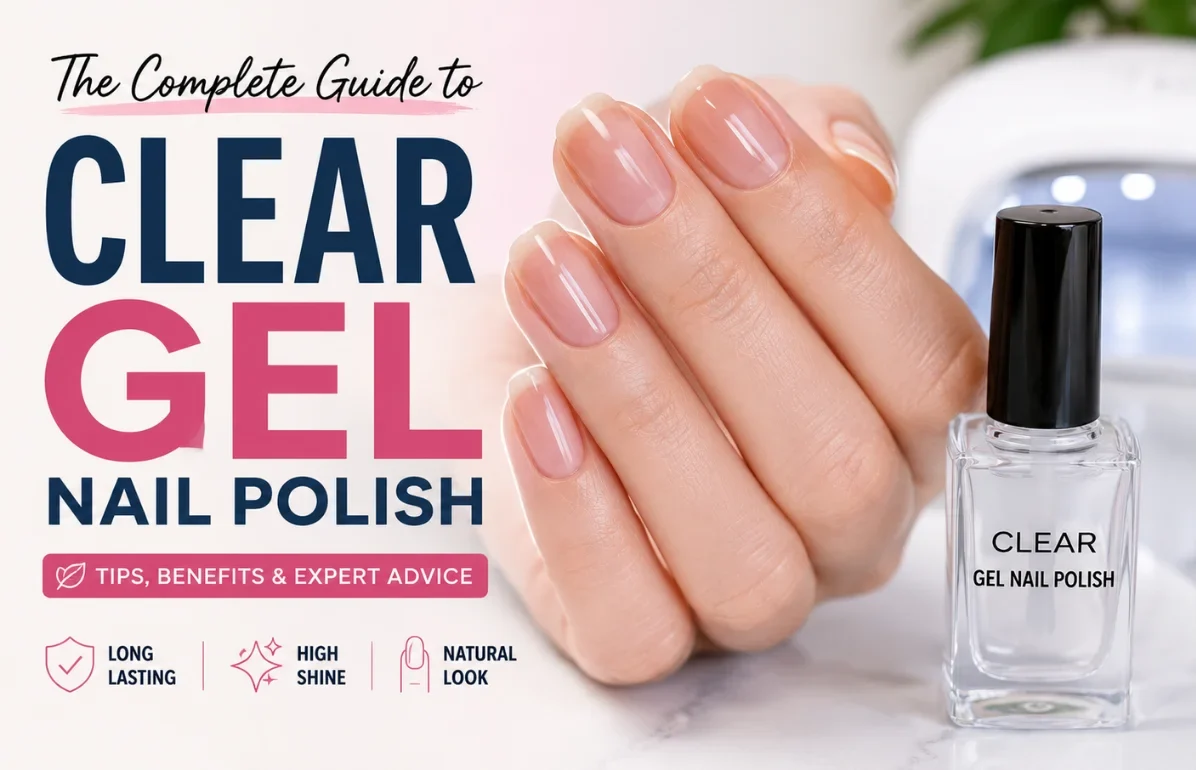
Clear gel nail polish is a transparent, light-cured nail coating designed to give natural nails a smooth, glossy, durable finish without adding opaque colour. Unlike ordinary clear nail polish, most true gel formulas contain light-reactive ingredients that harden, or “cure,” under a compatible LED or UV nail lamp. The result is a tougher coating that can resist chips and surface scratches for longer than traditional air-dry polish.
I think of clear gel as the “glass finish” option in a manicure: it can make bare nails look cleaner and more polished, protect a colour manicure, or serve as one layer in a larger gel system. The important detail is that clear gel polish, clear base coat, clear top coat, builder gel, and hard gel are not automatically interchangeable.
What Does Clear Gel Nail Polish Actually Do?
At its simplest, clear gel nail polish adds a transparent coating over the natural nail. It enhances shine, smooths minor surface texture, and gives the nail plate a more finished appearance while allowing the natural nail colour to remain visible.
Depending on the formula, a clear gel product may be designed as a standalone sheer manicure, a base layer under coloured gel, a sealing top coat, or a lightly reinforcing overlay. That is why I always recommend reading the product label rather than assuming every clear bottle performs the same job.
A true gel product usually needs curing because its formula is designed to polymerise when exposed to the correct wavelength of light. Regular clear nail polish, by comparison, dries mainly as solvents evaporate into the air.
Clear Gel Polish vs. Other Clear Nail Products
The biggest source of confusion is the word “clear.” Several products look almost identical in the bottle but behave very differently on the nail.
This distinction matters because using a top coat as a base, or applying hard gel when you expected a simple soak-off polish, can create adhesion or removal problems.
If I am choosing a product for a natural-looking manicure, I look for wording such as “clear gel polish,” “soak-off clear gel,” or a system that explicitly says it can be worn alone.
Why People Choose a Clear Gel Manicure
It Keeps the Natural Nail Visible
Not everyone wants colour. Clear gel works well when you want nails to look groomed, glossy, and intentional without changing their natural appearance.
This is especially useful for minimalist manicures, professional settings, bridal looks, short nails, or anyone who wants a clean finish that grows out less noticeably than a dark colour.
It Can Last Longer Than Regular Clear Polish
Traditional clear polish can lose shine or chip relatively quickly, especially on hands exposed to frequent washing, typing, cleaning, or everyday friction. A properly applied and fully cured gel coating usually forms a more durable film.
Actual wear time varies with nail preparation, product system, nail flexibility, application thickness, curing, and daily habits. For many users, the real advantage is not simply “more days”; it is maintaining gloss and edge integrity for longer.
The Detail Most Buyers Miss: Clarity Is Not Just “Transparent”
Two clear gels can look transparent in the bottle and still cure differently on the nail.
Some formulas cure with a slightly warm, cool, violet, or grey cast. Others may appear perfectly clear in a thin layer but look cloudy when applied too thickly. A glossy surface can also disguise tiny bubbles that become more visible in daylight.
Here is the practical test I prefer: make a thin cured swatch on a transparent nail tip and place it over both white paper and printed black text. White paper reveals yellowing or colour cast; black text reveals haze and loss of optical clarity.
That simple two-background test tells you more about the finished appearance than staring at the bottle.
How to Choose the Best Clear Gel Nail Polish
Check Whether It Is Soak-Off or File-Off
For a simple home manicure, a soak-off gel is usually the more convenient category. It is designed to soften with the removal method specified by the manufacturer, commonly acetone-based removal.
File-off products may be better suited to structured overlays or professional services, but they require more controlled removal to avoid thinning the natural nail.
Match the Polish to the Lamp
“LED” and “UV” are often used casually in nail marketing, but compatibility depends on the photoinitiators in the formula and the output of the lamp. The safest approach is to use the curing time and lamp specifications recommended by the gel manufacturer.
Under-curing is not something I would treat as a harmless cosmetic issue. Uncured or partially cured gel can leave reactive ingredients in contact with the skin or nail area.
Look at Viscosity, Not Just Shine
A thin clear gel self-levels quickly and feels close to regular polish. It is useful for simple natural manicures but may run into the sidewalls if overloaded.
A thicker clear gel gives more control and can smooth minor unevenness, but it can also create bulky edges if applied carelessly. If the product is marketed as builder gel, treat it as a different product category rather than “extra-thick polish.”
Clear Gel Nail Polish vs. Regular Clear Polish
If you are deciding between gel and traditional polish, the best option depends on your routine rather than which product sounds more advanced.
I would choose regular clear polish when fast application and easy removal matter most. I would choose clear gel when I want a longer-wearing glossy finish and I am prepared to cure and remove it correctly.
How to Apply Clear Gel Nail Polish for a Clean Finish
Start with clean, dry nails and shape the free edge. Gently manage surface shine only if the specific system requires it; aggressive buffing is unnecessary and can weaken the natural nail.
Keep cuticle work neat, remove dust, and avoid leaving oils or lotion on the nail plate before application. Apply thin, controlled layers and keep uncured product off the surrounding skin.
Cure each layer for the time specified by the manufacturer. If the product is a full gel system, use its recommended base and top layers rather than mixing products randomly unless compatibility is confirmed.
Why Clear Gel Sometimes Peels, Lifts, or Turns Cloudy
Peeling is often blamed on “bad gel,” but application problems are common. Product touching the skin, incomplete nail preparation, thick coats, incompatible layers, insufficient curing, or very flexible nails can all contribute to early lifting.
Yellowing has a different set of possible causes. Staining from pigments, smoking, cleaning chemicals, cosmetics, prolonged environmental exposure, or the formula itself may alter the appearance of a clear manicure.
If a clear finish changes colour quickly, I would compare a freshly cured sample with an unused swatch. That helps separate nail-surface staining from a product-level colour shift.
Is Clear Gel Nail Polish Safe?
Clear does not mean chemically inactive before curing. Gel nail products commonly use acrylate or methacrylate chemistry, and uncured monomers can irritate or sensitise skin in some people. DermNet notes that acrylate monomers are strong irritants and allergens, while the polymerised material is comparatively inert.
For that reason, I would avoid getting uncured gel on the cuticles or surrounding skin and would not intentionally “test” gel on skin. The FDA also advises following product directions and avoiding skin contact with certain methacrylate-containing nail products to reduce allergic-reaction risk.
Gel manicures also use curing lamps that emit ultraviolet radiation. The American Academy of Dermatology recommends protecting the hands with broad-spectrum, water-resistant SPF 30+ sunscreen or dark, opaque fingertip-less gloves before gel manicures.
If you develop persistent itching, swelling, blistering, nail separation, or a rash around the fingers or elsewhere after using gel products, stop using them and seek medical advice rather than repeatedly changing brands.
Removing Clear Gel Without Damaging the Nail
Do not peel or pry gel from the nail, even when lifting has already started. Peeling can remove superficial layers of the natural nail along with the product.
For soak-off gel, follow the manufacturer’s removal instructions. The American Academy of Dermatology identifies acetone as an effective method for removing gel polish and cautions that picking or filing it off incorrectly can damage nails.
If the product does not soften as expected, confirm whether it is actually soak-off gel. Builder and hard gel products may require different removal techniques.
Who Is Clear Gel Nail Polish Best For?
Clear gel suits people who like a polished but understated manicure, want natural nails to remain visible, or need a transparent foundation for nail art.
I would be more cautious if someone already has irritated skin around the nails, repeatedly experiences gel-related rashes, has damaged or separating nails, or cannot reliably keep uncured product away from the skin.
A Simple Buying Checklist
Before buying, I would check six things: the exact product type, whether it is soak-off, compatible lamp requirements, curing time, viscosity, and whether it is intended to be worn alone.
The best clear gel nail polish is not necessarily the thickest, hardest, or glossiest option. It is the formula that matches your nail type, your manicure goal, your lamp, and your removal routine.
FAQs About Clear Gel Nail Polish
Can I wear clear gel nail polish by itself?
Yes. If the product is designed for standalone wear, clear gel can be worn alone for a glossy, natural-looking manicure.
Does clear gel nail polish need a UV or LED lamp?
Most true gel polishes need a compatible curing lamp. Always follow the specific lamp type and curing time stated by the manufacturer.
How long does clear gel nail polish last?
Wear varies by product, nail preparation, curing, and daily use, but gel generally lasts longer than traditional air-dry clear polish.
Why is my clear gel nail polish turning yellow?
Possible causes include staining, chemical exposure, pigments, smoking, environmental factors, or the gel formula itself.
Can I put regular clear nail polish over gel polish?
You can use some regular polishes over a fully cured gel surface, but adhesion and removal may differ. For the most predictable result, use products intended for the same system.
Final Thoughts
Clear gel nail polish is a practical choice when you want natural-looking nails with a smoother, glossier, longer-wearing finish. The key is knowing what you are actually buying: clear gel polish, base coat, top coat, builder gel, and hard gel can look similar but perform very different jobs.
Choose a formula that matches your lamp and removal preference, keep uncured gel away from the skin, and follow the manufacturer’s cure times rather than improvising. If you are buying your next clear gel, compare product type and curing instructions first; those two details will usually tell you more than the marketing name on the front of the bottle.

Olivia Parker is a home improvement research writer with 8+ years of experience covering home design, renovation ideas, maintenance tips, and practical living solutions. She creates easy-to-follow content to help readers make informed decisions about improving their homes.