Gel nails are a type of manicure made with a gel-based polish that’s cured under UV or LED light instead of air-drying the way regular nail polish does. That light-curing step is the whole secret — it triggers a chemical reaction that hardens the formula in seconds, so you leave the salon (or your kitchen table) with a manicure that’s already rock solid, not smudged from the drive home.
I got my first gel set about eight years ago after ruining a fresh manicure within a day of getting it done. A friend dragged me to her nail tech and said “just try gel, you’ll never go back,” and she was right. If you’re asking yourself what are gel nails and whether the extra cost is worth it, this guide walks through how they actually work, the different types available, how long they last, and a few things about gel nails I genuinely wish someone had told me before my first appointment.
How Gel Nails Actually Work
The Curing Process Explained
Gel polish doesn’t dry the way regular polish does. Instead, it cures — meaning it goes through a chemical reaction rather than simply evaporating solvents into the air.
Most salons use either UV lamps or LED lamps for this step. UV lamps typically emit light around 365 nanometers, while LED lamps use a narrower band closer to 405 nanometers. LED lamps cure gel faster (often in 30-60 seconds per coat versus 2 minutes under UV), which is part of why more salons have switched to LED equipment over the past few years.
The light activates photoinitiators in the gel formula. These are compounds that, once exposed to the right wavelength, kick off a polymerization reaction — the individual molecules in the gel link together into a hard, flexible network. That’s a detail most articles skip, but it explains why using the wrong lamp for a specific gel brand sometimes leaves your manicure tacky or under-cured.
What Gel Polish Is Actually Made Of
Gel polish is built from oligomers and monomers, usually urethane acrylates or methacrylates, combined with pigments and the photoinitiators mentioned above.
This is a meaningfully different chemistry than traditional nail lacquer, which relies on nitrocellulose dissolved in solvents like butyl acetate. Regular polish hardens as those solvents evaporate. Gel polish hardens through a bonding reaction, which is why it holds up so much better to daily wear, dishwashing, and typing.
Gel Nails vs Regular Polish vs Acrylics
People often lump these three together, but they’re genuinely different products with different pros, application methods, and price points.
The Different Types of Gel Nails
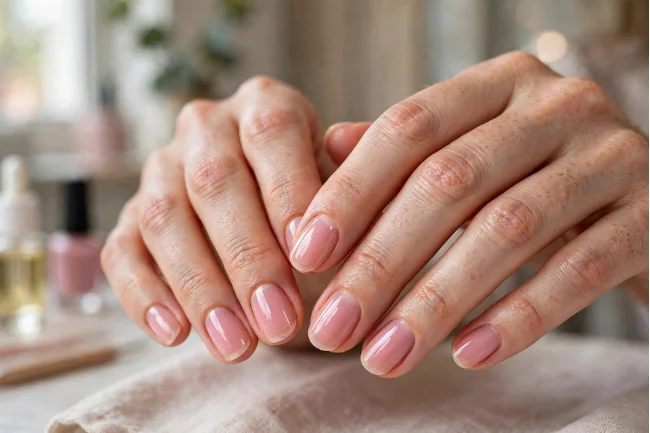
Not all gel manicures are the same, and this is where a lot of confusion comes from when people search what are gel nails expecting one simple answer.
Soak-Off Gel Polish
This is the most common type and probably what most people picture when they think of a gel manicure. It’s applied in thin coats over your natural nail, cured between layers, and removed by soaking in acetone. No added length, just color and shine on your own nail.
Hard Gel or Builder Gel
Hard gel is thicker and used to add structure, length, or strength to the nail. It’s often used to overlay natural nails that are thin or peeling, or combined with tips for extra length. Unlike soak-off gel, hard gel typically has to be filed off rather than soaked, which is a distinction a lot of first-timers aren’t told about until they’re already in the chair.
Gel Extensions (Sometimes Called Gel-X)
These use pre-made or sculpted tips coated in gel to add significant length. They’ve become popular as a lighter, less damaging alternative to traditional acrylic extensions, since the tips are thinner and the removal process tends to be gentler on the natural nail.
How Long Gel Nails Actually Last
On average, a gel manicure holds up for two to three weeks without chipping. I’ve personally gotten close to four weeks out of a set when I was diligent about wearing gloves for cleaning and avoiding harsh soaps, though most nail techs will tell you two to three weeks is the realistic window before regrowth starts making the manicure look dated.
Wear time depends on a few things: how well your nails were prepped before application, whether each layer was fully cured, your nail growth rate, and how much your hands are in water or exposed to friction day to day.
What Actually Happens During a Gel Manicure
The process is fairly consistent from salon to salon, though the exact products vary.
Your nails get shaped, and the surface is lightly buffed to help the gel adhere. A thin base coat goes on first and gets cured. Then come one or two coats of color, each cured separately under the lamp. A top coat seals everything and gets its own cure cycle. Many salons finish with a cleanser or alcohol wipe to remove the sticky residue left on the surface after the final cure, which is a normal part of the chemistry, not a sign of a bad manicure.
Pros and Cons of Gel Nails
| Pros | Cons |
|---|---|
| Dries instantly, no smudging | Requires acetone soak or filing to remove |
| Lasts significantly longer than regular polish | UV lamps involve some sun-equivalent light exposure |
| High shine that doesn’t dull quickly | Improper removal can thin or damage the nail plate |
| Resistant to chipping from daily tasks | Costs more per appointment than regular manicures |
| Can be reinforced with hard gel for extra strength | Some people develop sensitivities to the acrylate ingredients over time |
Gel Nails and Nail Health — What Doesn’t Get Talked About Enough
Here’s something that rarely comes up in beauty content but genuinely matters: repeated exposure to the acrylates and methacrylates in gel formulas can, over time, lead to contact dermatitis or a genuine allergy in some people. It usually shows up as redness, itching, or swelling around the nail bed or fingertips, and once someone develops this sensitivity, it typically doesn’t go away, even if they switch products.
Dermatologists have flagged this as a growing issue as gel manicures became a weekly habit for a lot of people rather than an occasional treat. It’s not common, but it’s common enough that if you ever notice irritation after a fill, it’s worth mentioning to your nail tech and possibly taking a break rather than pushing through it.
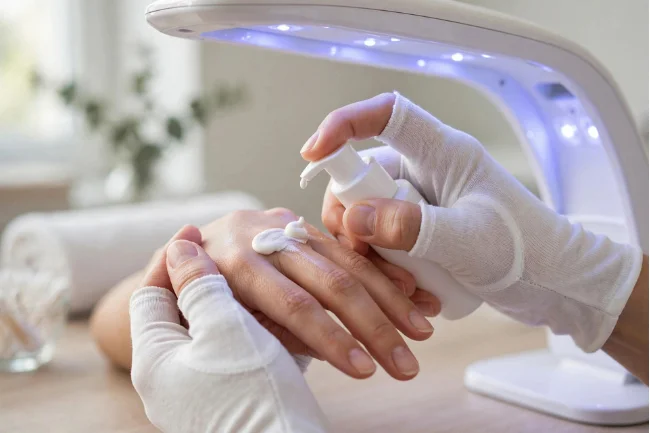
On the UV exposure side, the amount of UV light from a nail lamp during a single manicure is small, but frequent exposure adds up. Some people apply a broad-spectrum sunscreen to their hands before curing, or wear fingerless UV-protective gloves, as a simple precaution — a small habit that isn’t widely advertised by salons but is genuinely worth adopting if you get gel manicures regularly.
How to Remove Gel Nails Without Damaging Your Nails
The single biggest mistake people make with gel nails isn’t the application — it’s the removal. Peeling gel off instead of soaking it takes layers of the natural nail with it, which is where most of the “gel ruined my nails” complaints actually come from.
Proper removal means lightly buffing the top shiny layer, wrapping each nail in an acetone-soaked cotton pad covered with foil, and letting it sit for about 10-15 minutes before gently pushing off the softened gel with a cuticle stick. No scraping, no picking, no forcing it.
What Gel Nails Typically Cost
Pricing varies a lot by region and salon tier, but a standard gel manicure usually runs $35 to $60 in most cities, with gel extensions or hard gel overlays landing closer to $50 to $80. At-home gel kits, if you’re comfortable with the process yourself, typically cost $30 to $50 upfront for a starter lamp and polish set, which pays for itself after just a couple of manicures.
Tips for Making Your Gel Manicure Last Longer
A few habits genuinely extend the life of a set. Wearing gloves for dishes and cleaning cuts down on the water exposure that causes gel to lift at the edges. Applying cuticle oil daily keeps the surrounding skin from drying out and pulling at the gel’s edge. And avoiding using your nails as tools — opening cans, scratching off labels — prevents the small chips that eventually spread.
Frequently Asked Questions
Do gel nails ruin your natural nails?
Not inherently — the damage almost always comes from improper removal, like peeling or picking, rather than the gel application itself.
How long do gel nails take to apply?
A standard gel manicure typically takes 30 to 45 minutes, depending on nail prep and whether any nail art is added.
Can you get gel nails wet right after application?
Yes, gel is fully cured and hardened under the lamp, so unlike regular polish, it’s dry and water-safe immediately.
Are gel nails better than acrylics?
They’re different tools for different needs — gel is better for shine and shorter wear on natural-length nails, while acrylics are stronger for significant added length.
Why do gel nails hurt when they’re removed incorrectly?
Peeling gel off pulls away layers of the natural nail plate along with it, which can leave nails thin, sensitive, and prone to peeling afterward.
Final Thoughts
Gel nails have earned their popularity for good reason — the combination of instant drying, weeks of chip-free wear, and a genuinely glossy finish is hard to match with regular polish. But like most beauty routines, the results depend heavily on how it’s applied and removed, not just the product itself.
If you’re trying gel for the first time, ask your nail tech about their curing time per coat and their removal process before you sit down. And if you’re already a regular, keep an eye on how your nails and skin respond over time — a quick break between sets does more good than most people expect.

Isabella Hart is a beauty and self-care writer with 7 years of experience creating practical content about skincare routines, beauty habits, personal care, and confidence-building practices. She focuses on sharing simple, research-informed guidance to help readers make informed choices and develop routines that support healthy, natural beauty.