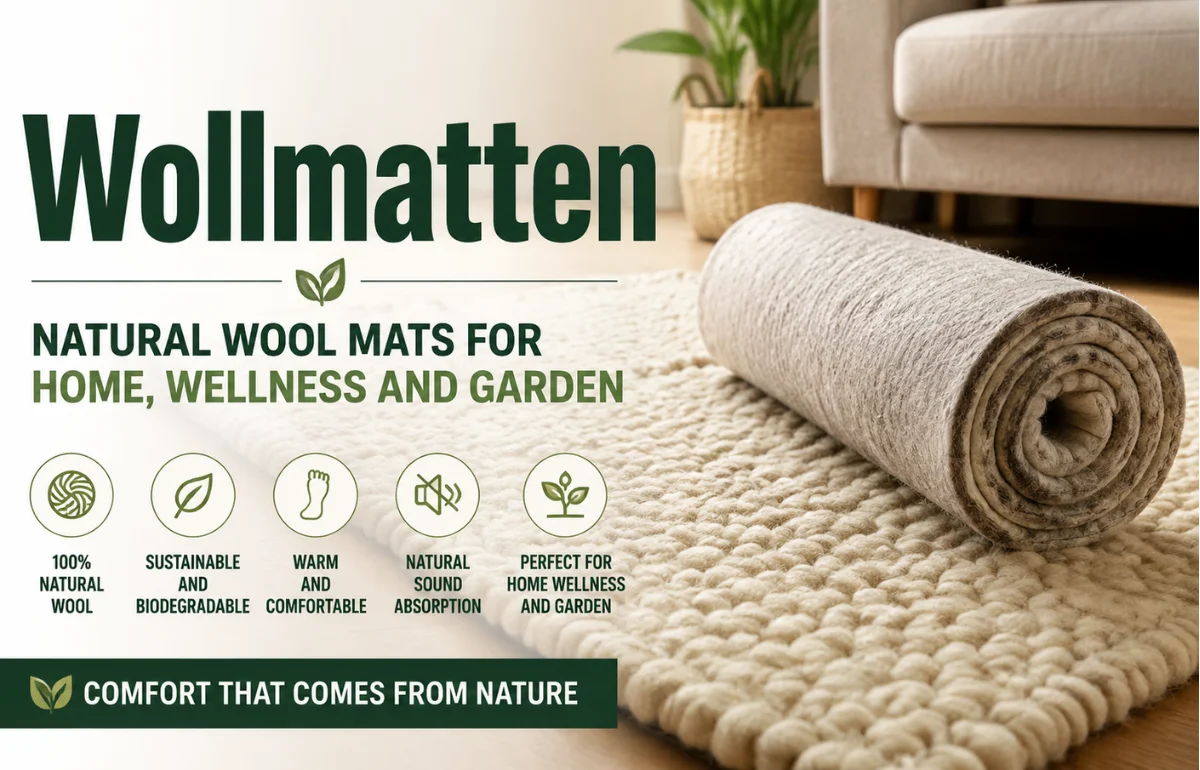
Wollmatten are mats made wholly or partly from wool. The word is German: “Wolle” means wool, while “Matten” is the plural of mat. In everyday use, however, Wollmatten does not describe one fixed product. It can refer to a felted floor mat, a soft yoga or meditation mat, a biodegradable garden mulch mat, or dense wool felt used for insulation and sound control. The construction matters as much as the fibre itself.
When I assess a Wollmatte, I look beyond the front surface. Thickness, density, backing, binders, edge finishing, intended use, and care instructions determine whether it will feel comfortable, stay in place, survive cleaning, or break down naturally. That distinction is the key to choosing the right mat rather than simply buying something labelled “wool.”
What Does Wollmatten Mean?
Wollmatten is the German plural form used for wool mats; the singular is Wollmatte. The term is descriptive rather than technical, so two products carrying the same name may have very different designs.
One may be a woven hallway rug. Another may be a fluffy virgin-wool surface for restorative yoga. A third may be a needle-punched sheet placed around plants to suppress weeds. Wool felt is also used in acoustic and insulation products. Current products sold under related German terms confirm that wool mats span home, wellness, garden, and technical applications.
I recommend starting with one question: what job must the mat perform? A warm sitting surface needs different qualities from an entrance mat, and neither should be judged by the same standards as a compostable garden mat.
How Wollmatten Are Made
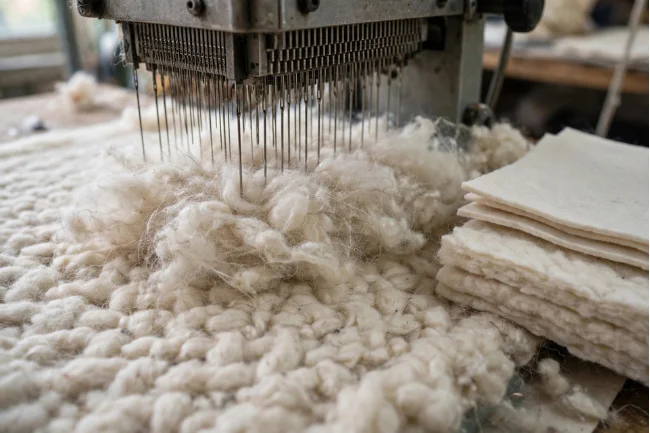
Felted wool mats
Felt is made by entangling wool fibres into a dense sheet through moisture, heat, pressure, agitation, or mechanical needling. Felted mats can be thin and firm or thick and cushioned.
They are common in utility mats, furniture protection, crafts, acoustic treatments, and garden products. Some are pure wool; others include synthetic fibres, resins, or backing for stability.
Woven, knotted, and tufted mats
Woven mats interlace wool yarns, while hand-knotted versions tie individual knots onto a foundation. Tufted mats insert yarn into a base fabric and commonly secure it at the back.
These methods create anything from low-pile rugs to plush floor coverings. A product may have a cotton foundation, latex coating, synthetic non-slip layer, or adhesive, so “100% wool pile” does not necessarily mean the entire mat is plastic-free.
Main Types of Wollmatten
The word identifies the main material, not a performance standard. I would never select technical insulation from home-decor advice, and I would not buy a fluffy relaxation mat for fast yoga without checking grip.
Why Wool Works Well in a Mat
Wool fibres have a naturally crimped structure that traps air. This contributes to insulation and gives many wool products a springy feel. Wool can also absorb moisture vapour and release it as conditions change. Woolmark describes the fibre as capable of temperature regulation, moisture management, stretch, recovery, and odour resistance.
For floor use, that combination can make a room feel warmer and less acoustically harsh. The result depends on thickness, density, floor construction, and room size, so I treat “sound absorbing” as a relative benefit rather than a promise of soundproofing.
Wool is also resilient. Its fibres can bend repeatedly, which helps well-made wool carpets and textiles remain useful for years. Construction still matters: weak backing, poor edge finishing, or loose tufts can shorten the life of a strong fibre surface.
Are Wollmatten Sustainable?
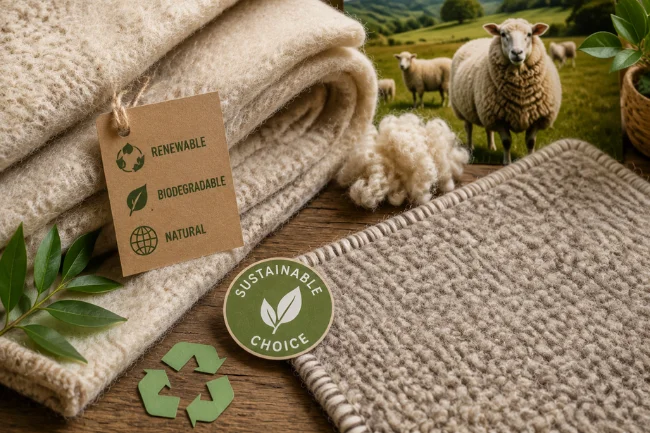
They can be a thoughtful material choice, but the answer is not automatic.
Wool is renewable because sheep regrow their fleece, and untreated wool fibre is biodegradable under suitable conditions. Research and industry guidance also show that wool can break down in soil and water rather than persisting as plastic microfibre.
The finished mat may be different. Synthetic backing, plastic mesh, coatings, dyes, moth treatments, or adhesive can prevent the whole product from being compostable. I look for a complete material declaration covering the face, backing, and binder—not just a large “natural wool” claim.
Environmental impact also includes farming, processing, transport, cleaning, longevity, and disposal. Current wool life-cycle guidance evaluates farm, manufacturing, use, and end of life. A durable mat kept for years may use resources more efficiently than a poorly made “eco” product replaced often.
Which Certifications Matter?
The Responsible Wool Standard covers sheep welfare, land management, social requirements, and chain-of-custody tracking. The Global Recycled Standard verifies recycled content and adds processing, chemical, environmental, and social requirements. They answer different questions.
For new wool, look for traceable sourcing and an appropriate wool standard. For recycled wool, recycled-content certification may be more relevant.
Wollmatten Compared With Synthetic Mats
Neither material wins every category. Wool suits warmth, comfort, natural texture, and long-term use. A synthetic mat may be more practical where frequent washing, heavy moisture, or aggressive traction is essential.
How to Choose the Right Wollmatte
Match the construction to the use
For a hallway, I prefer dense, low pile that will not catch shoes or hold excessive dirt. For a bedroom, softness may matter more than abrasion resistance.
For yoga, distinguish slow practices from active ones. Wool mats are widely sold for restorative yoga and relaxation, but soft pile can allow hands or feet to shift during faster sequences. Product descriptions should clearly state the intended practice.
Read the entire material label
Check the wool percentage, foundation fabric, backing, non-slip coating, adhesives, edge material, dyes, and surface treatments.
A label saying “100% wool” may describe only the visible pile. When biodegradability or material sensitivity matters, request the complete composition in writing.
Compare density, thickness, and weight
A thicker mat may feel warmer, but density indicates whether it will compress quickly or hold its form.
Garden mats should be dense enough to block light around weeds while remaining permeable to water and air. Research on natural mulches has found that nonwoven wool mats can reduce weed density, though results depend on crop, thickness, installation, and conditions.
Examine the backing
I consider backing the most overlooked feature of Wollmatten. It affects whether the mat slips, traps moisture, curls, tolerates washing, or can be composted.
On polished floors, a separate rug pad may be better than permanently bonded plastic backing because each component can be replaced independently.
Check care instructions before paying
Do not assume every wool mat is washable. Wet cleaning can cause shrinkage, distortion, dye movement, backing damage, or slow drying.
If a seller cannot explain how the product should be cleaned, I treat that as a warning sign.
Using Wollmatten in Different Settings
In living spaces
A wool floor mat works best where it adds warmth without constant wet traffic. Bedrooms, reading corners, offices, and living rooms are natural fits.
Measure the furniture layout, not only the empty floor. A mat reaching under the front legs of a sofa usually looks more intentional than a small piece floating in the centre.
For yoga and meditation
Wool is appealing for seated meditation, breathwork, Yin yoga, Yoga Nidra, and restorative positions because it feels warmer than many thin rubber mats.
For standing balances, transitions, or sweaty sessions, check traction carefully. Comfort does not automatically mean safe grip.
In gardens
Wool mulch mats can reduce light reaching weed seedlings and help moderate moisture loss. As wool biodegrades, it may release nutrients including nitrogen and sulphur, although the rate varies with moisture, temperature, thickness, soil contact, and treatment.
Leave space around stems and trunks, secure the mat against wind, and inspect it as it breaks down rather than expecting the same lifespan in every climate.
How to Clean and Maintain Wollmatten
For floor mats, vacuum with a setting suitable for the pile. Blot spills instead of scrubbing, then follow the manufacturer’s instructions.
WoolSafe recommends wool-suitable methods and pre-testing before wet cleaning. Woolmark likewise puts the care label first and recommends clean, protected storage.
Rotate floor mats if sunlight and traffic are uneven. Before storage, clean and dry the mat fully. Garden Wollmatten need no household cleaning; monitor them for movement, unwanted growth, and natural deterioration.
The Practical Rule I Use
I judge Wollmatten as layered products, not single fibres.
The wool surface suggests how the mat may feel. Construction predicts wear. Backing affects grip, cleaning, and disposal. Intended use decides whether those qualities are suitable.
That four-part check prevents most buying mistakes and gives a more honest picture than choosing by colour, softness, or an eco-friendly headline alone.
FAQs About Wollmatten
What are Wollmatten made from?
They are made wholly or partly from sheep’s wool in felted, woven, knotted, or tufted form; backing and binders may use other materials.
Can Wollmatten be washed?
Some small felt or yoga mats are washable, but many wool rugs are not. Follow the care label to avoid shrinkage or backing damage.
Are wool mats good for yoga?
They suit meditation, Yin, restorative yoga, and relaxation. For fast or sweaty practice, choose proven grip or pair the wool surface with a traction mat.
Do Wollmatten shed?
Some shedding is normal with new or loosely constructed mats. Excessive, continuing fibre loss can indicate weak construction or unsuitable cleaning.
Are all Wollmatten biodegradable?
No. Pure untreated wool can biodegrade, but synthetic backing, adhesives, coatings, dyes, and blended fibres may prevent whole-product biodegradability.
Choose by Purpose, Not by the Label
Wollmatten can be warm floor coverings, comfortable wellness surfaces, useful garden barriers, or dense technical felts. Their shared material does not make them interchangeable.
Define the use, inspect the full composition, compare density and backing, and confirm the care method before buying. Start with those details, and you are more likely to choose a wool mat that performs well and remains useful for years.

Olivia Parker is a home improvement research writer with 8+ years of experience covering home design, renovation ideas, maintenance tips, and practical living solutions. She creates easy-to-follow content to help readers make informed decisions about improving their homes.