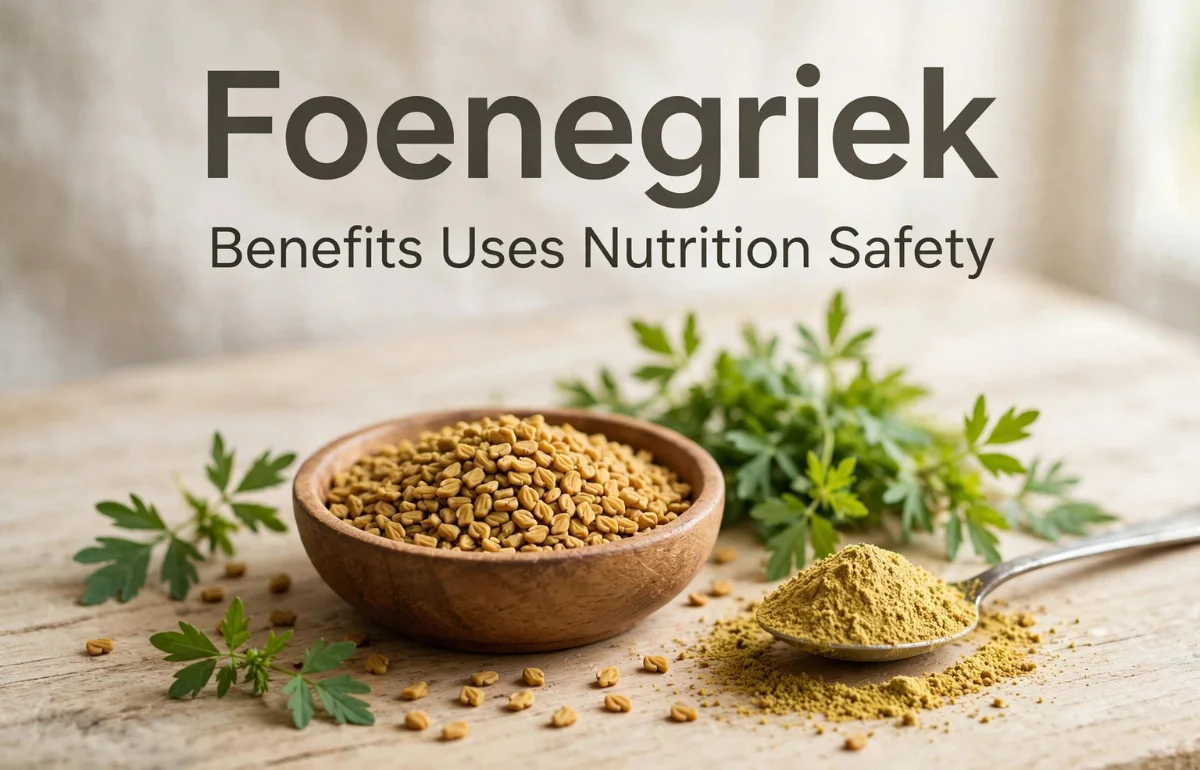
Foenegriek is another name for fenugreek, the aromatic herb botanically known as Trigonella foenum-graecum. In Dutch, “fenegriek” is the more commonly recognized spelling, while “foenegriek” is also used for the same plant. In English, it is called fenugreek, and in South Asian cooking you may know its leaves as methi. The plant belongs to the legume family, and both its seeds and leaves are used as food.
What makes Foenegriek especially interesting is that it sits somewhere between a kitchen spice and a traditional herbal remedy. Its firm, yellow-brown seeds have a distinctive bitter-sweet flavor, while the leaves are widely used in savory dishes. Fenugreek supplements are also marketed for blood sugar control, digestion, breastfeeding, menstrual discomfort, testosterone, and other purposes, although the evidence behind these claims varies considerably.
What Is Foenegriek?
Foenegriek, fenugreek, fenegriek, and methi can all refer to Trigonella foenum-graecum or culinary forms obtained from the same plant.
Fenugreek is a clover-like annual herb traditionally associated with the Mediterranean region, southern Europe, western Asia, North Africa, and South Asia. Its seeds have been used as both a spice and traditional medicine for thousands of years.
I find that the easiest way to understand Foenegriek is to separate its two roles: food and supplement.
As a food, it can be used in curries, vegetable dishes, spice blends, breads, sauces, and teas. As a supplement, concentrated seed extracts or powders may provide much larger amounts than someone would normally consume while cooking.
That distinction matters because evidence about a standardized fenugreek extract cannot automatically be applied to a teaspoon of seeds in dinner.
Foenegriek, Fenugreek, Fenegriek, and Methi: Are They Different?
The naming can make the subject seem more complicated than it is.
| Name | Where you may see it | What it usually means |
|---|---|---|
| Foenegriek | Dutch-language searches and product descriptions | Fenugreek |
| Fenegriek | Standard Dutch name | Fenugreek |
| Fenugreek | English | Trigonella foenum-graecum |
| Methi | Indian and South Asian cooking | Usually fenugreek leaves or seeds |
| Trigonella foenum-graecum | Scientific literature | Botanical name |
The Dutch botanical name is generally listed as fenegriek, although Foenegriek is also used as an alternative name.
So if you search for Foenegriek benefits and find an English scientific study discussing fenugreek, you are usually looking at research on the same species.
What Does Foenegriek Taste Like?
Fenugreek has one of those flavors that is difficult to mistake once you recognize it.
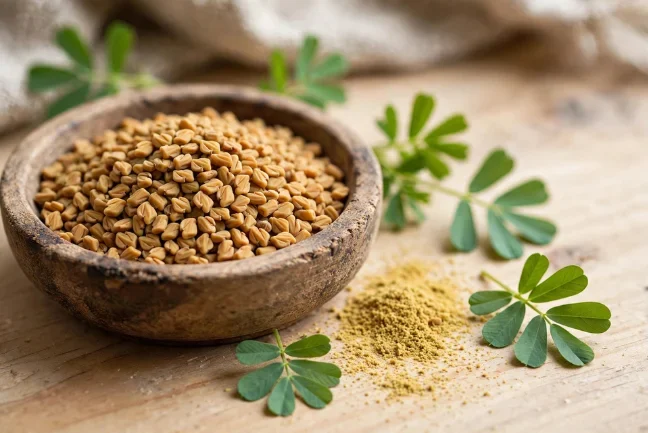
The seeds are aromatic with a bitter edge and a sweet smell often compared with maple syrup. That unusual combination explains why a small amount can add considerable depth to a dish.
Whole seeds tend to taste stronger and more bitter than cooked leaves. Ground fenugreek is easier to mix into sauces and spice blends but can quickly dominate a recipe.
I recommend treating it more like a strong seasoning than a neutral seed. Starting with a modest culinary amount is usually more useful than adding a large spoonful and trying to correct the bitterness afterward.
Different Forms of Foenegriek and How They Are Used
One overlooked point is that “taking fenugreek” can mean several very different things.
| Form | Common use | Practical difference |
|---|---|---|
| Whole fenugreek seeds | Cooking, soaking, spice blends | Strong flavor; easy to measure |
| Ground seed powder | Curries, drinks, food mixtures | Convenient but more intense |
| Fresh methi leaves | Curries and vegetable dishes | Used mainly as a leafy herb |
| Dried fenugreek leaves | Sauces, curries, finishing spice | Concentrated aroma |
| Fenugreek tea | Herbal beverage | Usually made from seeds |
| Capsules or extracts | Dietary supplementation | Concentration varies by product |
This is more than a culinary detail.
A study performed with a particular standardized extract does not prove that dried leaves, tea, seed powder, and every commercial capsule will produce the same effect. When I evaluate claims about herbal products, the first thing I look for is the actual preparation tested.
What Is in Fenugreek?
Fenugreek seeds contain dietary fiber along with protein, carbohydrates, fats, minerals, and several naturally occurring plant compounds.
Researchers have paid particular attention to soluble fiber and phytochemicals found in the seeds because these may help explain some of fenugreek’s metabolic effects.
That does not make Foenegriek a medicine by default. The nutritional value of a food and the clinical effectiveness of a supplement are two separate questions.
This distinction becomes especially useful when evaluating the long lists of supposed fenugreek benefits found online.
Foenegriek Benefits: What Does Research Support?
Fenugreek has been promoted for everything from diabetes to hair growth. The evidence is not equally convincing for every claim.
The U.S. National Center for Complementary and Integrative Health states that some research suggests fenugreek may lower blood sugar in people with type 2 diabetes, but also emphasizes that many studies have been limited in quality. For menstrual cramps and lactation, the evidence remains uncertain or mixed. Evidence for many other conditions is currently too limited to reach firm conclusions.
Here is a more useful way to view the popular claims:
| Form | Common use | Practical difference |
|---|---|---|
| Whole fenugreek seeds | Cooking, soaking, spice blends | Strong flavor; easy to measure |
| Ground seed powder | Curries, drinks, food mixtures | Convenient but more intense |
| Fresh methi leaves | Curries and vegetable dishes | Used mainly as a leafy herb |
| Dried fenugreek leaves | Sauces, curries, finishing spice | Concentrated aroma |
| Fenugreek tea | Herbal beverage | Usually made from seeds |
| Capsules or extracts | Dietary supplementation | Concentration varies by product |
May Help With Blood Sugar Control
Blood glucose is probably the most researched health claim associated with fenugreek.
Systematic reviews and clinical trials have reported improvements in measures such as fasting glucose and HbA1c in some people with type 2 diabetes or prediabetes. A 2024 meta-analysis also reported favorable changes in several glucose and metabolic markers.
There is still a major practical limitation: studies have used different doses, preparations, participant groups, and treatment periods.
I would therefore describe Foenegriek as an area of research interest for blood sugar management, not as an alternative to prescribed diabetes medication.
That distinction becomes even more important because large amounts of fenugreek can lower blood sugar too much, particularly when combined with medication.
May Support Satiety and Appetite Control
Fenugreek contains fiber, so researchers have investigated whether it could influence fullness and food intake.
One small human study found that 8 grams of fenugreek fiber increased satiety and reduced subsequent energy intake in participants with obesity. Other research has examined whether fenugreek extracts alter fat consumption.
That is interesting, but it does not justify calling Foenegriek a proven weight-loss supplement.
Body weight depends on overall calorie intake, diet quality, activity, sleep, health conditions, medications, and many other factors. A herb cannot replace those fundamentals.
Fenugreek and Cholesterol
Research has also examined fenugreek for cholesterol and other cardiometabolic markers.
Meta-analyses have reported improvements in some lipid measurements, particularly among people with diabetes, although results vary between studies and populations.
For general readers, the useful takeaway is modest: fenugreek may have metabolic effects worth studying, but it should not be presented as a proven treatment for high cholesterol.
Foenegriek for Menstrual Cramps
Traditional use of fenugreek for menstrual discomfort has attracted scientific attention.
Some randomized studies and later analyses have reported reductions in dysmenorrhea symptoms. However, NCCIH considers the overall evidence low quality and says the effect remains uncertain.
This is a good example of why I prefer to distinguish “promising” from “proven.” A positive study is not automatically enough to establish a reliable treatment.
Does Foenegriek Increase Breast Milk?
Fenugreek is frequently sold as a galactagogue—a substance intended to increase breast milk production.
This is one of its best-known traditional uses, but the evidence is surprisingly inconsistent.
NCCIH reports that available studies have produced mixed results. LactMed likewise describes uncertain effectiveness and reports side effects among some mothers using fenugreek products.
Breastfeeding difficulties can also have many causes. Anyone concerned about milk supply is better served by discussing feeding technique, infant weight gain, medication, health conditions, and milk production with an appropriate healthcare professional or lactation specialist rather than relying on an herbal supplement alone.
What About Testosterone and Exercise Performance?
Fenugreek extracts frequently appear in sports and men’s-health supplements.
Some clinical research has reported changes in testosterone levels, while reviews of exercise studies have found possible improvements in certain strength or performance outcomes.
The catch is that these studies often use specific extracts at controlled doses.
I would not assume that adding ordinary fenugreek powder to food produces the same effect as a standardized extract tested in a trial.
Foenegriek for Digestion
Fenugreek has a long history of traditional use for digestive complaints, and its seeds contain fiber.
However, more is not necessarily better.
Supplemental amounts may cause diarrhea, nausea, gas, or other digestive symptoms. NCCIH specifically lists gastrointestinal problems among the known potential adverse effects.
If someone wants to introduce fenugreek into their diet, culinary amounts are a very different starting point from immediately taking concentrated capsules.
Are the Hair, Skin, and “Detox” Benefits Proven?
This is where online claims often outrun the evidence.
You may see Foenegriek promoted for hair loss, dandruff, acne, glowing skin, liver cleansing, immune boosting, or removing toxins.
These claims may draw on traditional use, laboratory research, nutrient content, or individual experiences, but NCCIH currently says evidence for health conditions beyond the more commonly studied uses is too limited to support firm conclusions.
I would therefore avoid treating phrases such as “detoxifies the liver” or “boosts immunity” as established clinical facts unless a claim is tied to a clearly defined outcome and strong human research.
That level of precision is especially valuable when reading supplement marketing.
How to Use Foenegriek in Food
For most healthy adults, using fenugreek as a culinary ingredient is the simplest way to explore it.
You can use whole seeds in spice blends and savory dishes, grind the seeds into powder, add fresh methi leaves to vegetables or curries, or finish dishes with dried fenugreek leaves.
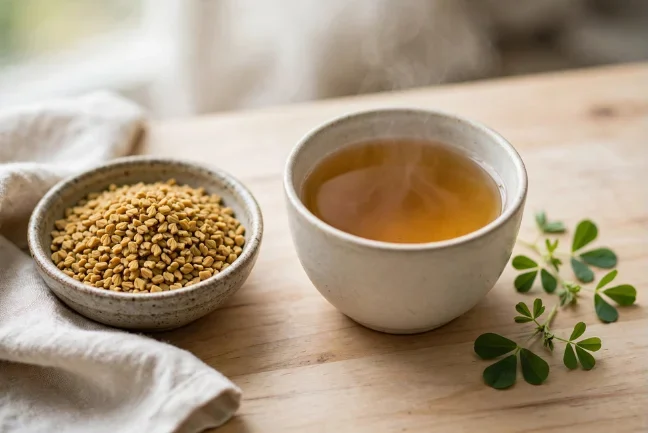
Fenugreek seeds can also be soaked or used to prepare herbal tea.
The best form depends on what you want from it. For cooking, flavor is the main consideration. For supplementation, concentration, safety, medications, and the actual evidence behind the product matter much more.
Foenegriek Supplements: What I Would Check Before Buying
I would not choose a fenugreek supplement simply because the front label promises “hormone balance,” “blood sugar support,” or “testosterone.”
I would check:
- Whether the product contains whole seed powder or a standardized extract
- The amount per serving
- Other active ingredients in the formula
- Recommended serving frequency
- Independent quality or purity testing where available
- Warnings and medication interactions
- Whether the claimed benefit matches research on that specific preparation
This helps avoid one of the most common problems in herbal supplementation: assuming all products called “fenugreek” are equivalent.
Foenegriek Side Effects and Safety
Fenugreek in ordinary food amounts is generally considered safe for adults and children. Supplemental or medicinal quantities require more caution.
Reported side effects include nausea, diarrhea, and other digestive symptoms. Large doses may cause an excessive drop in blood glucose, and serious allergic reactions can occur in some people.
People taking prescription medication should discuss fenugreek supplements with a healthcare professional because herbal products may interact with medicines.
Pregnancy
Pregnancy deserves particular caution.
NCCIH advises that fenugreek is not considered safe during pregnancy in amounts greater than those normally found in food, citing concerns about birth-defect risk.
That means culinary use and concentrated supplementation should not be treated as interchangeable.
Breastfeeding
Fenugreek is commonly marketed to breastfeeding women, but safety data for amounts above normal food use are limited, and evidence that it reliably increases milk production is mixed.
This is one situation where professional guidance is more useful than experimenting with progressively larger doses.
A Simple Way to Think About Foenegriek
The most useful distinction I can offer is this:
Food use asks, “How can I use fenugreek in my diet?”
Supplement use asks, “What biological effect am I trying to achieve, what preparation has actually been studied, and is it safe for me?”
Those are completely different questions.
Foenegriek is an interesting culinary herb with a long history and promising research in several areas. That does not mean every traditional use or supplement claim has been proven.
Treating that uncertainty clearly makes fenugreek more—not less—interesting because it separates what we know from what still needs better research.
FAQs About Foenegriek
What is Foenegriek used for?
Foenegriek is used as a spice and leafy herb in cooking, while supplements are marketed for blood sugar, lactation, menstrual symptoms, and metabolic health.
Is Foenegriek the same as fenugreek?
Yes. Foenegriek and fenugreek refer to Trigonella foenum-graecum; fenegriek is the standard Dutch name, while methi is commonly used in South Asian cuisine.
Can I take Foenegriek every day?
Culinary amounts are generally considered safe, but daily supplemental doses may not suit everyone, particularly people taking medication or managing blood sugar.
Does Foenegriek help with weight loss?
Small studies suggest fenugreek fiber may influence fullness or food intake, but current evidence is not strong enough to consider it a proven weight-loss treatment.
Who should avoid Foenegriek supplements?
Pregnant people should avoid amounts above normal food use, while people who take medicines, have diabetes, breastfeed, or have relevant allergies should seek professional advice before supplementation.
Final Takeaway
Foenegriek is far more than another fashionable supplement ingredient. It is fenugreek—a traditional food, aromatic spice, leafy herb, and extensively marketed botanical with some genuinely interesting research behind it.
The strongest human evidence currently centers on metabolic effects such as blood glucose, while claims involving lactation, menstrual symptoms, performance, hormones, hair, skin, and other benefits range from promising to uncertain.
If you are curious about Foenegriek, I would start by deciding whether you want it as food or as a supplement. Try the culinary forms for flavor and variety, and treat concentrated products like any other biologically active supplement: check the dose, evidence, ingredients, medications, and safety considerations before making them part of your routine.

Dr. Hannah Collins is a nutrition and diet specialist with 13+ years of experience helping people make informed food choices and develop healthier eating habits. She shares evidence-based nutrition guidance focused on balanced diets, meal planning, healthy lifestyles, and sustainable wellness.