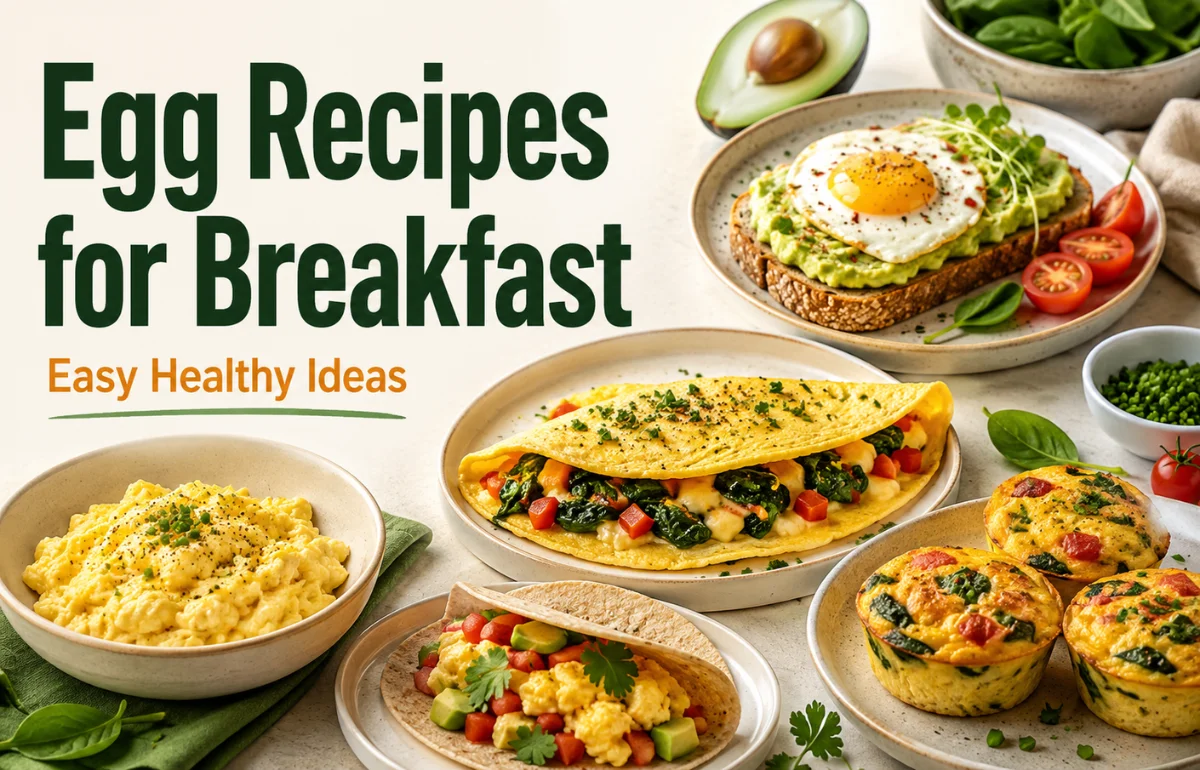
Egg recipes for breakfast are meals in which eggs serve as the main ingredient or a key source of protein, whether they are scrambled, boiled, baked, poached, fried, folded into an omelet, or combined with vegetables, grains, and other breakfast foods. They range from a two-minute egg toast to filling breakfast burritos and make-ahead egg muffins.
I like eggs for breakfast because one basic ingredient can become dozens of completely different meals without requiring complicated cooking skills. Eggs also provide high-quality protein along with nutrients such as choline and several vitamins. A large egg typically provides around 6 grams of protein, although the exact nutritional value varies by size and preparation.
The best egg recipes for breakfast, however, are not simply eggs cooked in different shapes. A satisfying breakfast works better when I pair eggs with vegetables, fruit, whole grains, beans, potatoes, avocado, or another ingredient that adds fiber, flavor, texture, or staying power.
Below are practical breakfast egg ideas I would actually consider for busy weekdays, relaxed weekends, meal prep, and higher-protein mornings.
Why Eggs Work So Well for Breakfast
Eggs solve several breakfast problems at once.
They cook quickly, work with inexpensive ingredients, and can be prepared using a frying pan, saucepan, oven, microwave, or air fryer. They also move easily between cuisines—you can turn the same carton of eggs into an omelet one morning, shakshuka the next, and a breakfast taco the day after that.
For me, versatility is their biggest advantage.
Instead of thinking, “What egg dish should I make?” I find it more useful to build breakfast around three parts:
Egg + plant ingredient + satisfying side
For example:
- Scrambled eggs + spinach + whole-grain toast
- Boiled eggs + tomatoes + fruit
- Omelet + mushrooms + roasted potatoes
- Fried egg + avocado + whole-grain bread
- Eggs + black beans + corn tortilla
This simple formula adds more variety than relying on eggs and toast every morning.
Best Egg Breakfast Recipes at a Glance
| Egg breakfast | Approx. prep time | Best for | Main additions |
|---|---|---|---|
| Creamy scrambled eggs | 5–7 minutes | Quick mornings | Herbs, vegetables |
| Egg and avocado toast | 8–10 minutes | Balanced breakfast | Avocado, whole-grain bread |
| Vegetable omelet | 10 minutes | Higher-protein meals | Peppers, spinach, mushrooms |
| Breakfast egg tacos | 10–12 minutes | Family breakfast | Beans, salsa, tortillas |
| Shakshuka | 20–25 minutes | Weekend breakfast | Tomatoes, peppers, spices |
| Egg muffins | 25 minutes | Meal prep | Vegetables, cheese |
| Breakfast burrito | 15 minutes | Filling breakfast | Beans, potatoes, vegetables |
| Baked eggs | 15–20 minutes | Hands-off cooking | Tomatoes, greens |
| Egg fried rice | 10 minutes | Using leftovers | Rice, vegetables |
| Hard-boiled egg bowl | 10 minutes | Make-ahead breakfast | Grains, vegetables |
12 Egg Recipes for Breakfast Worth Adding to Your Rotation
1. Soft and Creamy Scrambled Eggs
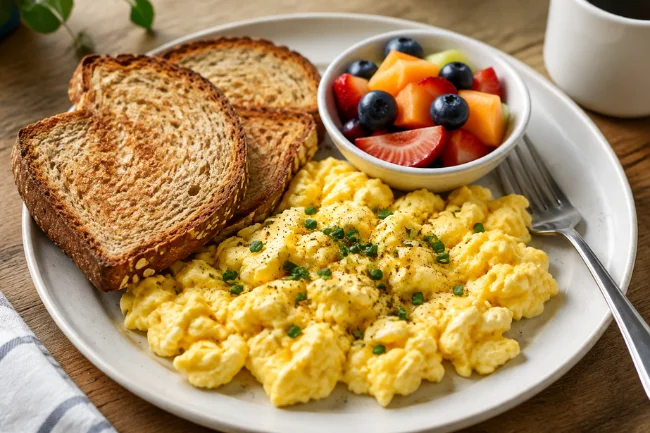
Scrambled eggs may be the simplest breakfast on this list, but technique makes a noticeable difference.
I prefer cooking beaten eggs over low to medium-low heat and stirring them regularly rather than blasting them over high heat. Slower cooking gives you softer curds and makes it easier to stop before the eggs become dry.
Add chopped chives, spinach, mushrooms, tomatoes, or a small amount of cheese.
For a fuller meal, serve your scrambled eggs with whole-grain toast and fresh fruit instead of treating the eggs as the entire breakfast.
2. Egg and Avocado Toast
Egg and avocado toast is useful when I want something that feels substantial without making several dishes.
Toast a slice of whole-grain bread and top it with mashed avocado, sliced tomato, and a cooked egg. A poached, boiled, scrambled, or fried egg can all work.
Finish it with black pepper, chili flakes, lemon juice, or fresh herbs.
The combination also solves a common breakfast problem: eggs provide protein while avocado and whole-grain bread add contrasting textures and make the meal more satisfying.
3. Vegetable Omelet
A vegetable omelet is one of my favorite ways to use small amounts of produce that are sitting in the refrigerator.
Bell peppers, mushrooms, spinach, onions, zucchini, tomatoes, broccoli, and fresh herbs can all work.
Cook vegetables that release a lot of moisture before adding them to the eggs. Otherwise, water from mushrooms, tomatoes, or spinach can leave the center of the omelet wet.
I also avoid stuffing an omelet with too many ingredients. A thin layer of filling folds more neatly and lets the egg remain the main part of the dish.
4. Breakfast Egg Tacos
Breakfast tacos are especially useful when ordinary scrambled eggs start feeling repetitive.
Scramble eggs with onion and peppers, then spoon them into warm corn or flour tortillas. Add black beans, tomato salsa, avocado, cilantro, or a little cheese.
For extra crunch, shredded cabbage works surprisingly well.
I consider this one of the easiest egg recipes for breakfast because everyone at the table can customize their own tacos without requiring several separate meals.
5. Tomato and Spinach Shakshuka
Shakshuka turns eggs into something much more substantial.
Start by simmering tomatoes with onions, bell peppers, garlic, paprika, cumin, and black pepper. Create small spaces in the sauce, crack the eggs into them, cover the pan, and cook until the eggs reach the desired doneness.
Spinach can be stirred into the tomato mixture near the end.
Serve it with whole-grain bread or pita for scooping up the sauce.
For food safety, FDA guidance recommends cooking eggs until both the white and yolk are firm; people using eggs in raw or undercooked preparations should use appropriately pasteurized eggs or egg products.
6. Make-Ahead Vegetable Egg Muffins
Egg muffins are essentially individual baked omelets, and they are one of the most practical options for meal prep.
Whisk eggs with cooked vegetables and seasonings, divide the mixture among a lightly greased muffin pan, and bake until the centers are set.
I like combinations such as:
- Spinach and feta
- Broccoli and cheddar
- Mushroom and pepper
- Tomato and basil
- Zucchini and onion
The key is removing excess moisture from cooked vegetables before mixing them into the eggs. That small detail gives egg muffins a firmer, less watery texture after reheating.
7. High-Protein Egg and Bean Breakfast Burrito
Eggs and beans work particularly well together because the filling feels substantial without needing large amounts of processed breakfast meat.
Scramble eggs and combine them with black beans, sautéed peppers, onions, salsa, and a small amount of cheese. Roll everything inside a whole-grain tortilla.
You can also add roasted sweet potato or regular potato.
For meal prep, I recommend letting hot ingredients cool slightly before wrapping the burrito. Trapping too much steam inside is one of the main reasons frozen breakfast burritos become soggy.
8. Mediterranean Egg Breakfast Bowl
Not every breakfast egg recipe needs bread.
Build a bowl with cooked eggs, cucumber, tomatoes, chickpeas, greens, olives, herbs, and a spoonful of plain Greek yogurt or hummus.
Add leftover quinoa, bulgur, or another grain if you want more carbohydrates.
I particularly like this format because ingredient quantities do not need to be exact. It works as a refrigerator-cleanout breakfast while still looking deliberate rather than thrown together.
9. Baked Eggs With Tomatoes and Greens
Baked eggs are useful when I would rather let the oven handle most of the cooking.
Place chopped tomatoes or a simple tomato sauce in a small baking dish, add spinach or kale, create spaces for the eggs, and bake until cooked through.
Garlic, oregano, basil, smoked paprika, or chili flakes can completely change the flavor profile without changing the basic method.
For egg casseroles and similar egg dishes, the FDA recommends cooking to 160°F.
10. Breakfast Egg Fried Rice
Leftover rice can become breakfast faster than most people expect.
Cook chopped vegetables such as carrots, peas, peppers, cabbage, or scallions in a skillet. Move them to one side, scramble the eggs in the same pan, and then stir in cooked rice.
Season lightly with soy sauce or another savory seasoning.
This is one of the egg breakfast ideas I recommend when reducing food waste matters. A small serving of vegetables or rice that might otherwise be forgotten becomes the foundation of breakfast.
11. Hard-Boiled Egg Breakfast Bowl
Hard-boiled eggs are a practical choice when there is almost no cooking time available in the morning.
Slice cooked eggs over greens, tomatoes, avocado, roasted vegetables, or a cooked whole grain. Add fruit on the side if you prefer something fresh and sweet with breakfast.
A small container of cooked ingredients can turn into several different bowls throughout the week simply by changing the vegetables or seasoning.
This is also a useful alternative for people who dislike reheated scrambled eggs.
12. Sweet Potato and Egg Breakfast Hash
For a hearty breakfast, sauté small cubes of sweet potato with onions and bell peppers until tender.
Add spinach near the end, then serve the vegetables with cooked eggs on top.
Paprika, cumin, garlic, chili powder, or fresh herbs can shift the flavor in different directions.
I find the best breakfast hash has contrast: crisp edges on the potatoes, tender vegetables, and eggs that have not been overcooked.
Which Cooking Method Should You Choose?
There is no single “best” way to cook breakfast eggs. The better choice depends on time, texture, added ingredients, and what else you are eating.
| Cooking method | Added fat needed? | Speed | Easy to meal prep? | Works best with |
|---|---|---|---|---|
| Boiled | No | Medium | Excellent | Bowls, toast, grab-and-go meals |
| Poached | No | Medium | Fair | Toast, vegetables |
| Scrambled | Optional | Fast | Good | Vegetables, tortillas |
| Fried | Usually some | Very fast | Poor | Toast, potatoes |
| Omelet | Optional | Fast | Fair | Vegetables, herbs |
| Baked | Optional | Medium | Excellent | Meal prep, family breakfasts |
The nutritional difference often comes less from the egg itself and more from what is added around it.
For example, eggs cooked with vegetables and whole grains create a very different overall meal from eggs regularly paired with large portions of processed meat, butter, and refined bread.
The American Heart Association notes that eggs can fit within a heart-healthy dietary pattern while also emphasizing the importance of the overall pattern of foods a person eats.
How I Make Egg Breakfasts More Filling
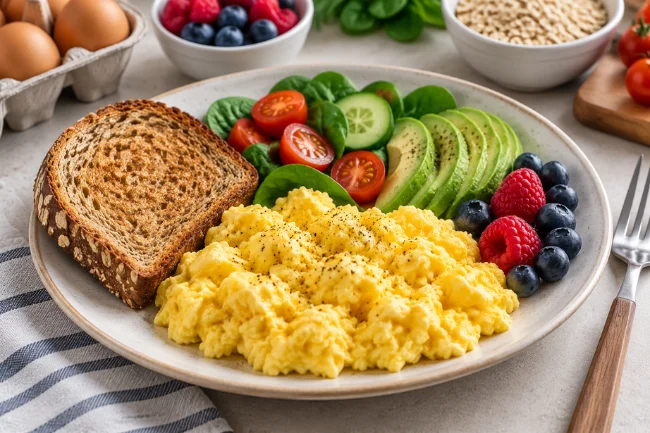
The most useful improvement I can make to an egg breakfast is not adding another egg. It is adding the food category that is missing.
If breakfast already contains eggs, I check for vegetables or fruit first. Then I look for a source of fiber-rich carbohydrates, such as whole-grain bread, beans, oats, potatoes with their skin, or whole grains.
This creates what I call the Protein-Produce-Fiber Check:
1. Protein: eggs, egg whites, yogurt, beans, or another protein source.
2. Produce: vegetables or fruit.
3. Fiber-rich food: beans, whole grains, vegetables, fruit, nuts, seeds, or another appropriate source.
It is a more useful way to evaluate breakfast than asking whether one individual ingredient is “healthy” or “unhealthy.”
A plate of eggs can be nutritious, but the quality of the complete breakfast still depends heavily on the foods surrounding them.
Common Mistakes That Ruin Breakfast Eggs
Cooking Eggs Too Hot
High heat can turn scrambled eggs tough before you realize what happened.
Moderate heat gives you more control and usually creates a better texture.
Adding Watery Vegetables Directly
Mushrooms, tomatoes, zucchini, and spinach contain plenty of moisture.
Cook them briefly first, especially when preparing omelets, egg muffins, breakfast casseroles, or burritos.
Depending Only on Cheese for Flavor
Cheese is useful, but it should not have to carry the entire dish.
Fresh herbs, garlic, onions, chili, paprika, cumin, pepper, salsa, lemon juice, and roasted vegetables can add considerably more variety.
Forgetting Texture
Soft eggs plus soft bread plus soft avocado can taste flat even when every ingredient is good.
Add toasted bread, crisp vegetables, seeds, roasted potatoes, or another contrasting texture.
That small change can make simple egg recipes feel much more complete.
How to Keep Egg Recipes for Breakfast Interesting
The easiest approach is to change the flavor profile rather than searching for an entirely new recipe every morning.
Use tomatoes, basil, and oregano for an Italian-inspired version.
Try beans, salsa, cilantro, avocado, and tortillas for Mexican-inspired breakfast eggs.
Use spinach, tomato, cucumber, herbs, olives, and hummus for Mediterranean flavors.
Or combine eggs with leftover rice, scallions, vegetables, and savory seasoning for an Asian-inspired breakfast bowl.
The base ingredient stays familiar, but breakfast no longer tastes identical every day.
FAQs About Egg Recipes for Breakfast
What can I make with eggs for breakfast?
You can make scrambled eggs, omelets, egg toast, breakfast tacos, shakshuka, egg muffins, burritos, breakfast bowls, baked eggs, or vegetable hashes.
What is the healthiest way to cook eggs for breakfast?
Boiling, poaching, baking, and scrambling with minimal added saturated fat can all work well; the overall meal and accompanying foods matter more than choosing one universal cooking method.
Is it healthy to eat eggs every day?
Eggs can fit into a healthy eating pattern for many people, but individual needs differ, particularly for people managing cholesterol or cardiovascular conditions.
What vegetables go well with scrambled eggs?
Spinach, tomatoes, mushrooms, onions, bell peppers, zucchini, broccoli, kale, scallions, and fresh herbs all pair naturally with scrambled eggs.
Can I prepare egg breakfasts ahead of time?
Yes. Hard-boiled eggs, egg muffins, breakfast burritos, frittatas, and baked egg dishes are especially convenient for make-ahead breakfasts.
Make Tomorrow’s Breakfast Easier
Good egg recipes for breakfast do not need long ingredient lists or complicated techniques. Start with eggs, add vegetables or fruit, include a satisfying fiber-rich food, and change your seasonings whenever the routine starts feeling repetitive.
If you need the fastest option, make eggs on whole-grain toast. For meal prep, bake vegetable egg muffins or breakfast burritos. When you have more time, try shakshuka, a vegetable omelet, or a sweet potato breakfast hash.
Pick one recipe from this list for tomorrow morning, then adjust it around the ingredients already in your kitchen. That is usually the easiest way to turn eggs from a repetitive breakfast into a meal you actually look forward to.

Dr. Hannah Collins is a nutrition and diet specialist with 13+ years of experience helping people make informed food choices and develop healthier eating habits. She shares evidence-based nutrition guidance focused on balanced diets, meal planning, healthy lifestyles, and sustainable wellness.