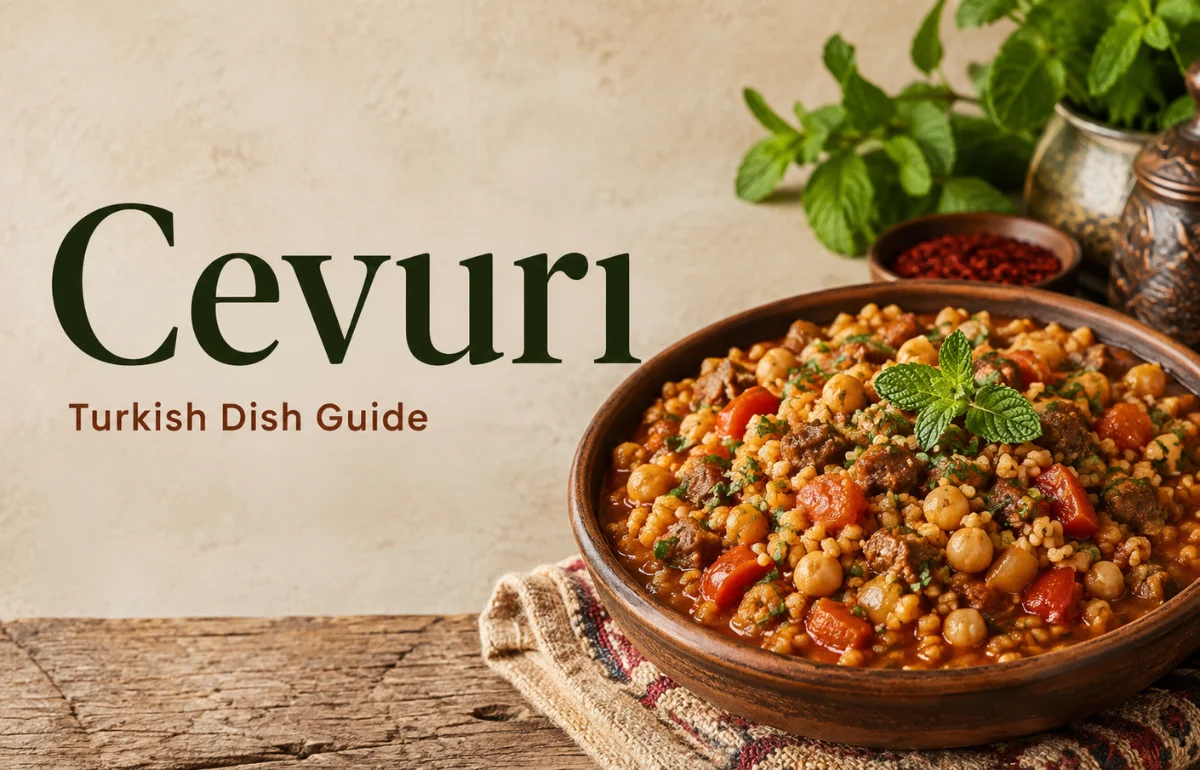
Cevurı is a name currently used online for a dish described as rustic Turkish or Anatolian comfort food, usually built around grains or legumes, vegetables, herbs, and sometimes meat. However, there is an important catch: I could not verify Cevurı as an established traditional dish name in the authoritative Turkish culinary sources I checked. The most accurate definition, therefore, is an emerging or internet-circulated culinary term associated with Turkish-style home cooking rather than a clearly documented regional recipe.
When I researched Cevurı, I found different websites giving it different identities. Some describe a slow-cooked grain-and-vegetable dish, while another presents it as a sizzling sautéed meat specialty. That inconsistency matters because a genuinely regional food normally has a more traceable name, place, technique, or family of recipes.
Why Is Cevurı So Difficult to Define?
The web gives a surprisingly confident answer before it gives reliable evidence.
Several recent English-language articles call Cevurı a traditional Turkish dish and connect it with rural Anatolia. One version emphasizes bulgur, cracked wheat, vegetables, herbs, lentils, chickpeas, and optional meat. Another recent food site describes Cevurı primarily as a sautéed meat dish. Those descriptions point to substantially different foods.
That was the first red flag I noticed. Regional cooking can vary from village to village, but the core identity of a named dish usually remains recognizable.
What I Could and Could Not Verify
I compared those search results with better-established Turkish culinary references. Turkey’s Culture Portal documents regional foods by province and commonly provides ingredients and preparation methods. UNESCO separately records the ceremonial keşkek tradition in Türkiye and its connection with major communal occasions.
I found that kind of traceable record for keşkek and many other Turkish dishes. During my searches, I did not find comparable authoritative documentation for Cevurı under that exact spelling.
For me, this is the most useful starting point. Instead of forcing certainty where the evidence is thin, I would treat Cevurı as a term that still needs cultural and linguistic context.
What Does Cevurı Mean in a Food Context?
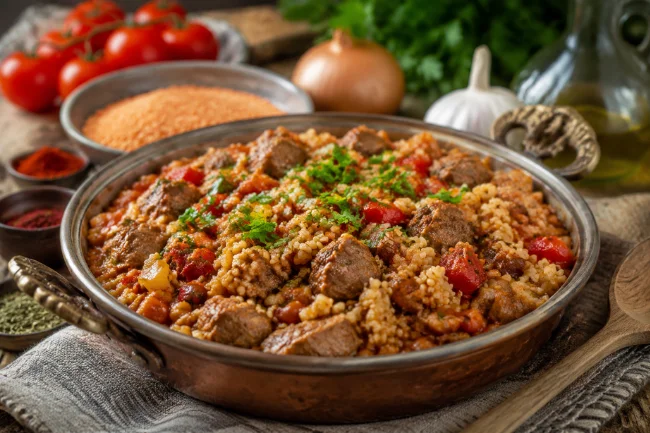
At the moment, Cevurı is best understood as a loosely defined label used online for rustic Turkish-style cooking rather than a recipe with one universally accepted formula.
The recurring ingredients are familiar within descriptions of Anatolian cuisine: bulgur or wheat, onions, tomatoes, peppers, legumes, meat, olive oil or animal fat, dried mint, black pepper, red pepper, and slow cooking. Current Cevurı articles combine these ingredients in noticeably different ways.
The unresolved question is whether that particular combination has historically been known as Cevurı.
If someone tells me Cevurı is “a Turkish stew made with bulgur, lentils, vegetables, and meat,” I would regard that as one current online description, not a settled culinary definition.
Ingredients Most Often Associated With Cevurı Online
Across current descriptions, these ingredient groups appear repeatedly:
- Bulgur, cracked wheat, rice, or another grain
- Lentils or chickpeas in some versions
- Onion, tomato, garlic, and peppers
- Lamb, beef, or chicken in meat-based versions
- Mint, parsley, black pepper, paprika, or red pepper
- Olive oil, butter, or animal fat
- Yogurt or bread as possible accompaniments
The broad ingredient pattern suggests a filling household meal designed around everyday staples. However, repeating these ingredients across modern websites does not by itself establish a historical Cevurı tradition.
Cevurı Compared With Documented Turkish Dishes
One of the best ways I found to make sense of Cevurı was to compare its online descriptions with Turkish foods that have a verifiable culinary record.
Keşkek is the clearest example. The Turkish Culture Portal documents Amasya keşkek using wheat, sheep meat, tail fat, chickpeas, fenugreek, and salt, followed by several hours of slow cooking. UNESCO separately recognizes Türkiye’s ceremonial keşkek tradition.
Bayburt’s eşki lahana provides another useful comparison. Its documented version combines preserved cabbage, meat or kavurma, bulgur, onion, tomato paste, and seasoning. Kilis tava likewise has a clearly identified regional name and a documented mixture of minced meat, onion, peppers, tomatoes, and spices.
This does not mean Cevurı is another name for any of these foods. I found no evidence supporting that conclusion.
What the comparison does show is what strong food documentation looks like: a stable name, identifiable ingredients, a place, and a preparation tradition.
How I Would Approach a Cevurı Recipe
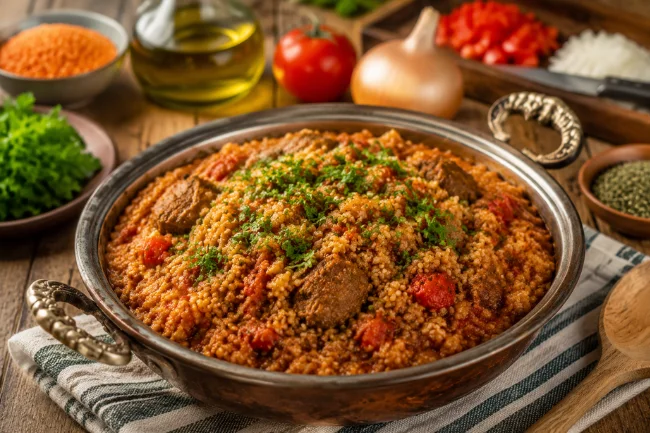
Because the term is not standardized, I would avoid publishing a recipe as “the authentic Cevurı” unless I had a primary source, family tradition, regional cook, or historical document to support it.
A more responsible approach is to call the recipe a Cevurı-inspired Anatolian grain stew.
That still gives a curious reader something practical to cook without turning a modern interpretation into invented culinary history.
A Practical Cevurı-Inspired Combination
For four servings, a sensible base would be:
- 1 cup coarse bulgur
- 1 cup cooked chickpeas or green lentils
- 1 medium onion
- 2 cloves garlic
- 1 green or red pepper
- 2 chopped tomatoes or a small amount of tomato paste
- 2 tablespoons olive oil
- About 3 cups broth or water
- Dried mint, red pepper, black pepper, and salt
- Optional diced lamb or beef
- Plain yogurt and flatbread for serving
I would soften the onion and pepper in olive oil, then add the garlic and tomato. If I were making the meat version, I would brown the meat before adding the grain and liquid.
The bulgur and legumes can then simmer gently until the grain is tender and the mixture is thick but still spoonable. I would adjust the mint, pepper, and salt near the end rather than overwhelming the dish early.
This produces a credible Anatolian-style comfort meal, but I would still label it clearly as an interpretation. Accuracy is more valuable than attaching the word “traditional” to a recipe that cannot yet be traced.
What Would Cevurı Taste Like?
A grain-and-vegetable interpretation would likely taste savory, earthy, and tomato-led, with some natural sweetness from cooked onion and peppers.
Bulgur gives the dish a nutty wheat character, while chickpeas or lentils create a heavier, more substantial texture. Dried mint can brighten the mixture, and red pepper introduces gentle warmth.
A meat version would naturally become richer and more savory, particularly when lamb or beef is used.
Texture also depends on the amount of liquid. With less broth, Cevurı can resemble a moist bulgur pilaf. With additional liquid and longer cooking, the same combination moves closer to a thick stew.
That flexibility may help explain why current web descriptions sound different, although I found no reliable source proving that all such versions belong to one historical recipe.
Is Cevurı Healthy?
Whether Cevurı is nutritious depends much more on its ingredients and portion size than on the dish name.
A version containing bulgur, lentils or chickpeas, vegetables, and moderate amounts of oil combines several nutrient-containing food groups. Adding meat changes the protein, mineral, calorie, and fat profile, which is why a meaningful nutrition analysis requires an actual standardized recipe. USDA FoodData Central likewise evaluates nutrition according to individual foods and defined food samples rather than vague dish names.
I would therefore avoid unsupported claims such as “Cevurı is a perfectly balanced Mediterranean diet food” unless nutritional values have been calculated from a specific ingredient list.
There simply cannot be one reliable Cevurı nutrition panel while the recipe itself remains undefined.
Dietary restrictions also depend on preparation. Bulgur is made from wheat, and wheat naturally contains gluten. Anyone who must avoid gluten should therefore check the actual grains used rather than relying on the dish name.
Why Is Cevurı Appearing Online Now?
Many of the easy-to-find English-language pages discussing Cevurı are recent, and several repeat similar themes: forgotten heritage, rural Anatolia, family cooking, simple ingredients, and cultural preservation.
At the same time, their recipe details drift. One page centers grains and vegetables, another allows several different grains and proteins, while another describes the food as a sautéed meat specialty.
That pattern makes me cautious. When a poorly documented term gets summarized repeatedly across websites, repetition can begin to look like independent confirmation even when the underlying evidence remains unclear.
There is also spelling ambiguity. Searches for Cevurı sometimes surface unrelated Turkish translation-related content containing the similar-looking word “çeviri.” That does not mean the two terms are identical; it simply shows why spelling and source checking matter when researching this keyword.
If Cevurı genuinely comes from a local dialect, family recipe, or highly regional culinary tradition, stronger evidence may eventually come from Turkish-language oral histories, regional cookbooks, municipal archives, ethnographic studies, or interviews with cooks from the relevant community.
How to Judge Whether a Cevurı Claim Is Reliable
When I evaluate an unfamiliar regional food, I look for five things: a precise location, traceable local spelling, a recognizable core recipe, credible regional or primary sources, and lived cultural context.
“Anatolia” alone is too broad to establish provenance. A named province, district, village, or community is much more useful.
I also want to know when the food is eaten and who traditionally prepares it. Is it an everyday meal, winter food, wedding dish, harvest dish, or festival food?
Keşkek shows why that context matters. UNESCO does not merely identify the food; its documentation connects preparation with specific ceremonies and communal participation.
Cevurı currently raises unanswered questions on several of those points.
Why This Uncertainty Makes Cevurı Interesting
I do not think an uncertain food term is useless. In fact, it shows how culinary information can change as it travels online.
A dish name can be misspelled, transliterated, localized, or separated from its original community. Once enough pages repeat one definition, readers may reasonably assume there is a settled history behind it.
That is why I prefer a transparent description: Cevurı is currently presented online as a rustic Turkish or Anatolian dish, but its exact origin, standard recipe, regional identity, and historical naming remain difficult to verify.
If stronger primary evidence appears, that definition should change with it.
That approach is more respectful to Turkish culinary history than filling the gaps with invented villages, unverifiable traditions, or precise origin stories that cannot be sourced.
Frequently Asked Questions About Cevurı
What is Cevurı?
Cevurı is currently described online as a rustic Turkish or Anatolian dish using grains, vegetables, legumes, and sometimes meat, although its historical identity remains poorly documented.
Is Cevurı a traditional Turkish dish?
Many recent websites describe it that way, but I could not verify a well-established regional or historical record under the exact spelling Cevurı in the authoritative sources I checked.
What ingredients are used in Cevurı?
Current versions mention bulgur or wheat, onions, tomatoes, peppers, herbs, lentils or chickpeas, with lamb, beef, or chicken appearing in some recipes.
Is Cevurı vegetarian?
It can be interpreted as a vegetarian grain-and-legume dish because some online descriptions make meat optional, while other versions include meat as a major ingredient.
What Turkish dish is most similar to Cevurı?
Descriptions involving slow-cooked wheat and meat may sound somewhat like keşkek, but the two should not be treated as the same dish without evidence connecting their names. Keşkek has its own well-documented Turkish tradition.
What to Take Away
Cevurı is a good example of why food research should go beyond the first page of search results. The name is increasingly associated online with Turkish-style rustic cooking, yet its origin, spelling, and traditional recipe remain uncertain.
If you want to cook it, I recommend using a clearly labeled Cevurı-inspired recipe rather than presenting one modern formula as ancient fact.
And if you have access to a family recipe, Turkish-language source, regional cookbook, or local name connected with Cevurı, that is where the story becomes genuinely valuable. The next useful step is not repeating what other websites say—it is documenting where the term actually comes from.

Dr. Hannah Collins is a nutrition and diet specialist with 13+ years of experience helping people make informed food choices and develop healthier eating habits. She shares evidence-based nutrition guidance focused on balanced diets, meal planning, healthy lifestyles, and sustainable wellness.