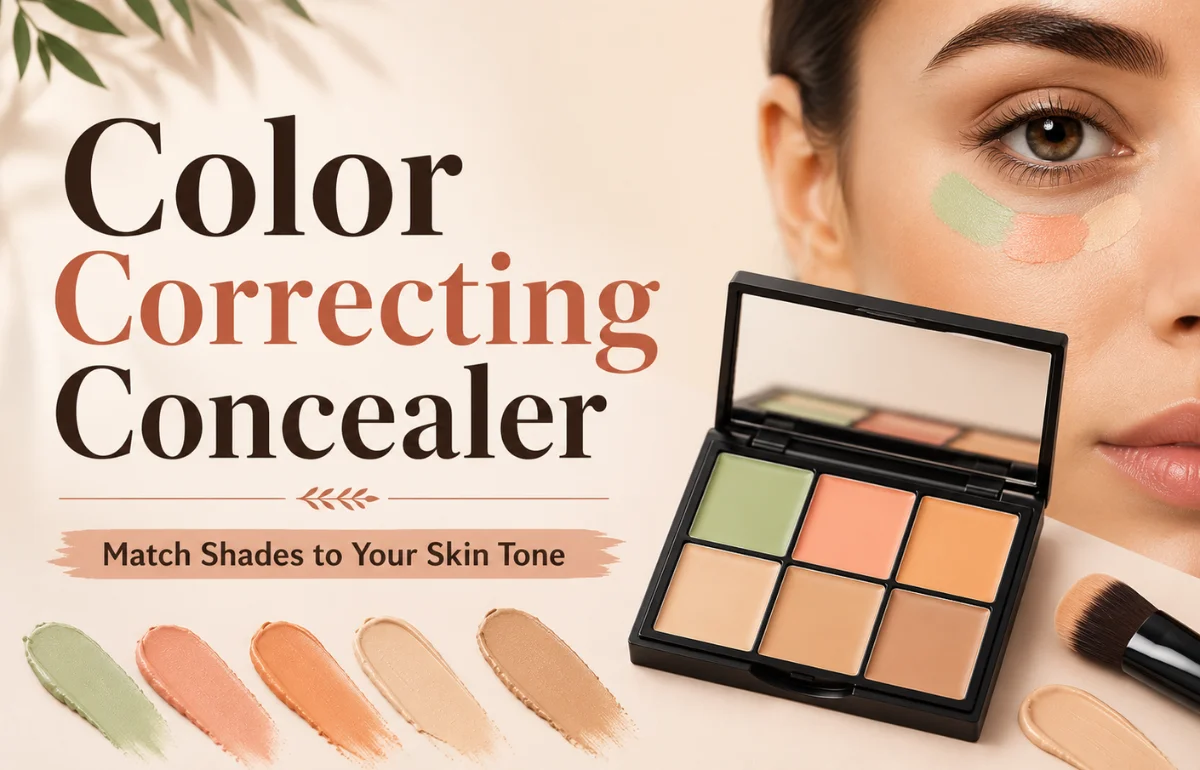
Color correcting can look intimidating with its rainbow of green, peach, and lavender shades, but the concept is actually simple once you understand basic color theory: opposite colors on the color wheel cancel each other out. Choosing the right corrector — and applying it in the right order — is what separates a flawless finish from a muddy, gray-toned mess.
Matching Corrector Shade to Your Skin Tone and Concern
The shade you reach for depends entirely on what you’re trying to neutralize. Dark circles typically read blue, purple, or gray, which means a peach or orange-based corrector works best to counteract that coolness — lighter peach tones for fair skin, and deeper orange or red-orange tones for medium to deep skin, since they have enough pigment to actually cancel out darkness rather than just brightening it. Redness, on Color Correcting Concealerthe other hand, calls for a green-based corrector, which neutralizes the red-orange tones in irritation, rosacea, or blemishes.
Once your corrector is chosen and neutralizes the issue underneath, your concealer should match your actual skin tone as closely as possible — this is the layer that blends you back into your natural complexion rather than correcting a specific issue. If your skin has a lot of natural warmth, look for a concealer with golden or peach undertones; for cooler or neutral skin, a more balanced or pink-toned formula will look most natural.
Application Order: Corrector, Concealer, Setting
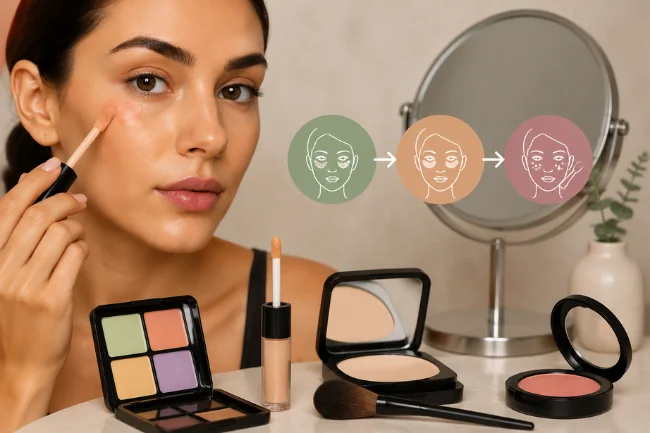
Order matters just as much as shade selection. Always apply a color corrector first, directly onto the area of concern, using a small amount and patting (not rubbing) it into place with a finger or small brush. Rubbing can spread the product beyond where you need it and thin it out too much to be effective.
Once the corrector has done its job, layer your skin-matching concealer directly on top, again using thin layers rather than one heavy application. This is also a great moment to bring in a bit of dimension — a soft wash of contour bronzer just under the cheekbone can help balance out brightness from your corrector and concealer with a touch of natural shadow.
Finally, set everything in place with a light dusting of powder, pressed rather than swiped, to lock in your work and prevent the corrector and concealer from creasing or fading throughout the day. For a finishing touch, sweep on a wash of transitional blush to add color back to the face — since color correction and concealing can sometimes leave skin looking a bit flat or washed out.
With the right shade, the right order, and a light hand throughout, color correcting stops being a guessing game and becomes one of the most reliable tools in your routine.

Isabella Hart is a beauty and self-care writer with 7 years of experience creating practical content about skincare routines, beauty habits, personal care, and confidence-building practices. She focuses on sharing simple, research-informed guidance to help readers make informed choices and develop routines that support healthy, natural beauty.