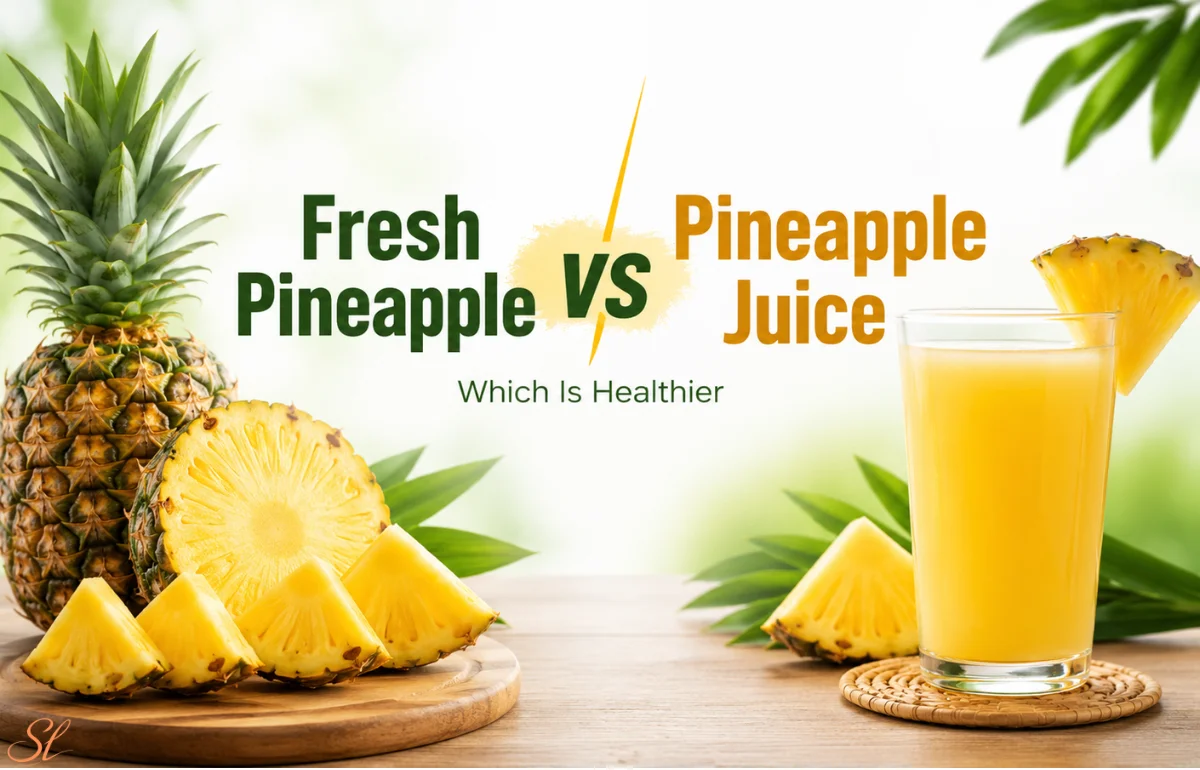
Pineapple is one of those tropical fruits that feels indulgent while still offering plenty of nutritional value. Whether you enjoy a chilled glass of pineapple juice or a bowl of freshly cut pineapple, your choice can affect your body in different ways.
Nutrition also plays an important role in overall health, including men’s wellness. Poor blood flow, oxidative stress, and hormonal imbalances may contribute to health concerns such as Erectile Dysfunction. What you eat can influence several factors associated with general well-being. While medications such as Fildena 100 may be used under a doctor’s guidance to manage certain conditions, following a nutrient-rich diet that includes fruits such as pineapple can also form part of a broader wellness routine.
So, when comparing fresh pineapple vs pineapple juice, which option provides greater health benefits? Although both contain useful nutrients, they are not nutritionally identical.
What Makes Pineapple So Nutritious?
Before comparing fresh pineapple with pineapple juice, it helps to understand why pineapple is considered a nutritious fruit.
Fresh pineapple contains vitamin C, manganese, B vitamins, dietary fiber, and several naturally occurring antioxidants. It also contains bromelain, a group of enzymes found primarily in pineapple that is commonly associated with digestion and anti-inflammatory properties.
Together, these nutrients can contribute to several aspects of a balanced diet, including immune function, digestive health, skin health, and general wellness.
However, the way pineapple is consumed can significantly affect how much fiber, sugar, and other components you receive.
Fresh Pineapple: The Whole-Food Advantage
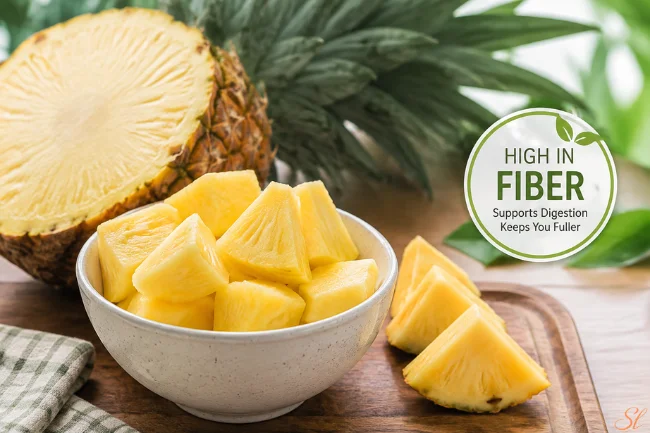
Eating fresh pineapple allows you to consume the fruit in a relatively natural and unprocessed form. Because the flesh and fiber remain intact, fresh pineapple offers several advantages compared with juice.
Higher Fiber Content
One of the biggest differences between fresh pineapple and pineapple juice is fiber.
A cup of fresh pineapple chunks contains approximately 2.3 grams of dietary fiber. Fiber supports healthy digestion, contributes to feelings of fullness, and helps slow the absorption of naturally occurring sugars.
This makes whole pineapple especially appealing for people who want a satisfying snack while paying attention to their overall calorie and sugar intake.
When pineapple is processed into juice, most of the fiber is removed. As a result, it becomes much easier to consume a larger amount of sugar without feeling as full.
More Naturally Occurring Bromelain
Fresh pineapple also retains more of its naturally occurring bromelain.
Bromelain is found in the flesh and particularly in the central portion of the pineapple. Processing and heat treatment may reduce the amount of active bromelain present in commercially prepared pineapple juice.
For people who specifically want pineapple as a whole-food source of bromelain, fresh fruit is therefore the more suitable choice.
A Lower Sugar Impact
Fresh pineapple naturally contains sugar, but its fiber changes the way the fruit is consumed and digested.
Because the fiber remains intact, the sugar is absorbed more gradually than it generally would be when drinking juice. Juice is easier to consume quickly and provides concentrated carbohydrates without much fiber.
Choosing whole pineapple can therefore be a more balanced option for people who are mindful of blood sugar levels or long-term metabolic health.
No Added Ingredients
Another advantage of buying a whole pineapple is simplicity.
Fresh pineapple is simply fruit. It does not require added sweeteners, flavor enhancers, or preservatives.
With packaged pineapple juice, however, it is important to read the label because ingredients can vary considerably between products.
Pineapple Juice: Convenient but More Concentrated
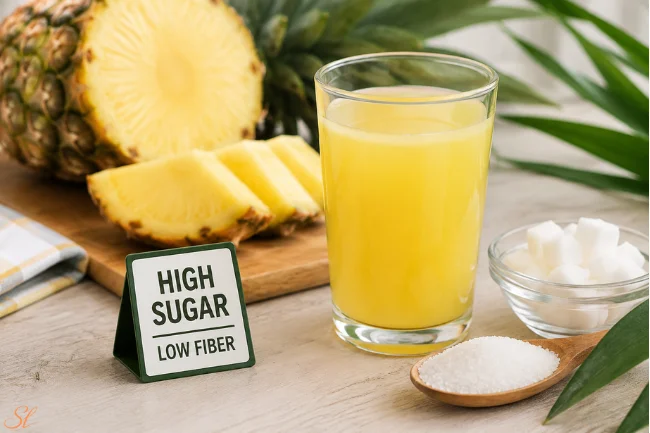
Pineapple juice is refreshing, convenient, and still contains valuable nutrients. However, processing changes its nutritional profile, creating several important differences compared with fresh pineapple.
Higher Sugar and Much Less Fiber
A typical eight-ounce serving of commercial pineapple juice may contain around 25 to 33 grams of sugar while providing very little dietary fiber.
Because the fiber has largely been removed, juice can be consumed quickly and may lead to a faster rise in blood glucose than eating the whole fruit.
This does not mean pineapple juice must always be avoided. Portion size simply becomes more important.
Less Bromelain After Processing
Commercial pineapple juices are commonly pasteurized to improve safety and shelf life.
Because bromelain is sensitive to processing and heat, commercially processed juice may contain less active bromelain than fresh pineapple.
Freshly pressed, unpasteurized pineapple juice may retain more of the fruit’s natural enzymes, although it still lacks much of the fiber found in whole pineapple.
More Concentrated Calories
Juice also makes it easier to consume more pineapple in a short period.
Several pieces of fruit may be required to produce a relatively small amount of juice, meaning calories and naturally occurring sugars become more concentrated. Drinking calories is also generally quicker than eating the equivalent amount of whole fruit.
For anyone watching total calorie intake, fresh pineapple may therefore be easier to fit into a balanced eating plan.
Pineapple Juice Still Provides Vitamins
Pineapple juice is not nutritionally empty.
It can still provide vitamin C, potassium, and other nutrients found naturally in pineapple. Freshly pressed juice may also retain more natural enzymes than heavily processed varieties.
The key is choosing an appropriate portion and, when possible, selecting 100% pineapple juice without added sugar.
Fresh Pineapple vs Pineapple Juice: Nutritional Comparison
The main differences become easier to understand when the two options are compared side by side.
| Nutrient Factor | Fresh Pineapple | Pineapple Juice |
|---|---|---|
| Dietary Fiber | High (2–3g per cup) | Very Low (0–1g) |
| Bromelain Enzyme | High | Low (pasteurization reduces it) |
| Natural Sugar | Moderate | High (concentrated) |
| Glycemic Impact | Lower | Higher |
| Vitamin C | High | High |
| Calories per Serving | ~80 kcal/cup | ~130–160 kcal/cup |
| Added Ingredients | None | Often present (commercial brands) |
The comparison shows that both forms of pineapple provide nutritional value, but fresh pineapple has a clear advantage in fiber and whole-food benefits.
Which Is Better for Your Health Goals?
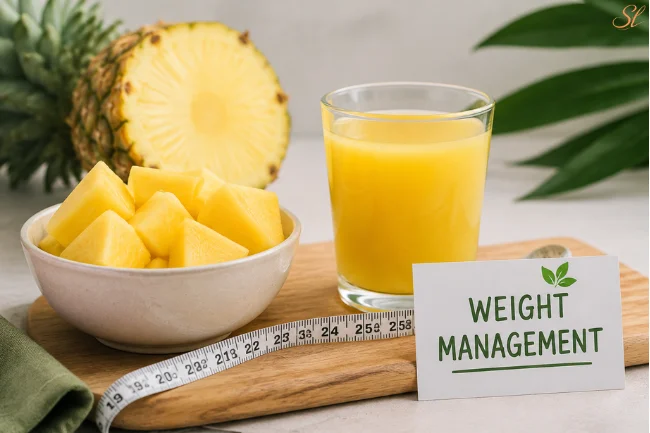
The better choice ultimately depends on what you are trying to achieve. In most everyday situations, however, fresh pineapple offers the more balanced nutritional profile.
For Weight Management
Fresh pineapple is usually the better option.
Its fiber can help you feel satisfied for longer, while eating the fruit makes it harder to consume large quantities as quickly as you might with juice. Fresh pineapple is also generally less calorie-dense per serving.
For Digestive Support
Fresh pineapple may be preferable when you want both dietary fiber and naturally occurring bromelain.
Because commercially processed juice contains very little fiber and may have reduced bromelain levels, whole fruit provides a more complete package.
For a Quick Source of Vitamin C
Pineapple juice can still be a convenient option when you want something easy to drink.
If you choose juice, look for a product labeled 100% pineapple juice and avoid versions with unnecessary added sugars. Keeping the serving relatively small can also help control total sugar intake.
For Post-Exercise Nutrition
Fresh pineapple or freshly pressed pineapple juice may fit into a post-workout meal or snack.
Fresh fruit has the added advantage of fiber, while freshly pressed juice offers convenience. The original article also highlights bromelain as one reason pineapple may be of interest following exercise.
For Blood Sugar Management
Whole pineapple is generally the more sensible choice because it contains fiber and is less concentrated than juice.
People with diabetes, prediabetes, or other blood sugar concerns should be particularly mindful of juice portions because liquid carbohydrates can be consumed quickly.
Moderation Still Matters
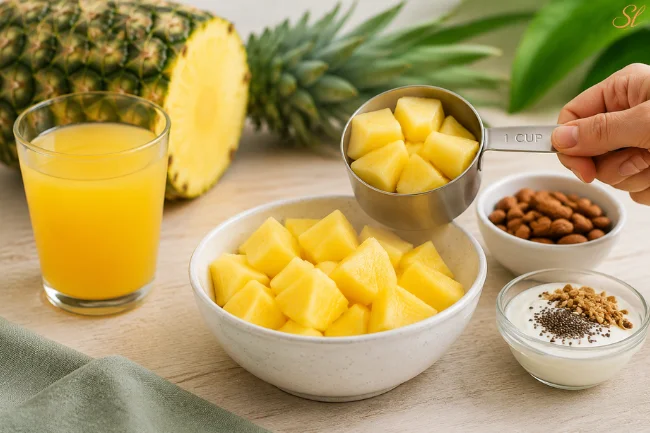
Fresh pineapple may be the healthier choice in this comparison, but portion size still matters.
Pineapple naturally contains sugar, so consuming very large quantities can significantly increase total carbohydrate and calorie intake. The original article suggests approximately one to two cups per day as a reasonable amount for many healthy adults when pineapple is included as part of a balanced diet.
Pairing fruit with foods that provide protein or healthy fats can also create a more filling meal or snack.
If you prefer pineapple juice, treat it as a smaller part of your diet rather than your main way of eating fruit. Choose 100% juice without added sugar and pay close attention to serving size.
Fresh Pineapple vs Pineapple Juice: The Bottom Line
When comparing fresh pineapple vs pineapple juice, fresh pineapple is generally the better everyday choice.
Both options contain vitamins and can be included in a balanced diet, but whole pineapple provides more fiber, retains more of its natural structure, and delivers its sugar in a less concentrated form. It also avoids the added ingredients that may be present in some commercial juices.
Pineapple juice can still be enjoyed occasionally, particularly when you choose 100% juice and keep portions moderate. However, if your goal is to get the most nutritional value from pineapple while supporting digestion, managing calorie intake, and reducing concentrated sugar consumption, fresh pineapple is the stronger option.
Making whole foods the foundation of your diet is a simple approach to balanced nutrition, and choosing fresh pineapple over juice most of the time can be one easy step in that direction.

Dr. Hannah Collins is a nutrition and diet specialist with 13+ years of experience helping people make informed food choices and develop healthier eating habits. She shares evidence-based nutrition guidance focused on balanced diets, meal planning, healthy lifestyles, and sustainable wellness.