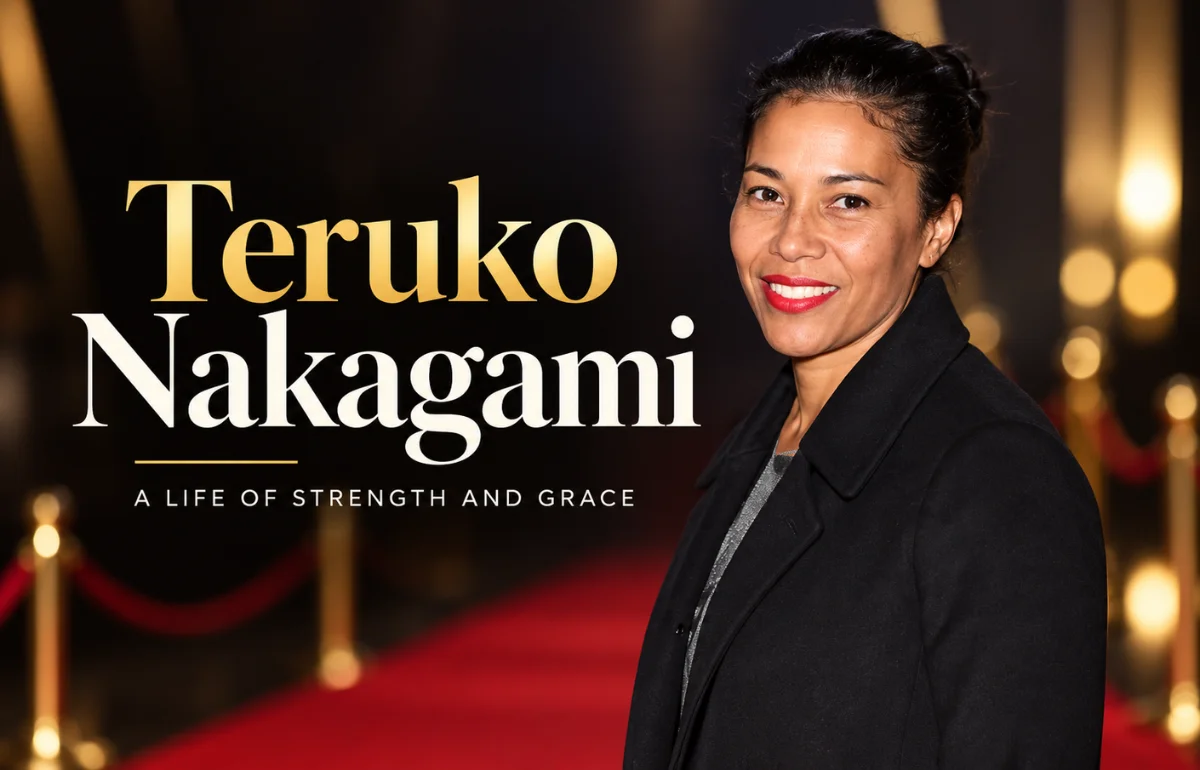
Teruko Nakagami is a Japanese American woman known for her marriages to jazz composer Wayne Shorter and actor Billy Dee Williams. She and Shorter have a daughter, Miyako; she and Williams have a daughter, Hanako. Although Nakagami appears in accounts of both men’s lives, she has rarely spoken publicly about her own. The clearest way to understand her story is through the records that do exist: Shorter’s music and album artwork, contemporary reporting about the Williams family, and Williams’s later interviews. Those sources answer many common questions, while leaving parts of her early life and current circumstances private.
That distinction matters. Search for Nakagami and you will find exact ages, childhood stories, and confident claims about whether she and Williams divorced. I found that some of those details become less certain when traced back to a named source. Here is what the evidence supports, where accounts differ, and why her connection to jazz history deserves more than a passing mention.
Teruko Nakagami at a glance
| Question | What the available sources support |
|---|---|
| Who is she? | A Japanese American woman whose first husband was Wayne Shorter and whose later husband is Billy Dee Williams. |
| Who are her children? | Miyako, her daughter with Shorter, and Hanako, her daughter with Williams. |
| Is she on an album cover? | Yes. A music-industry account identifies Nakagami beside Shorter on Speak No Evil. |
| Did she and Williams separate? | Yes. People reported a 1993 separation in its 2024 interview with Williams. |
| Did they divorce? | People reported that they remained legally married as of its 2024 account. That does not establish their day-to-day relationship today. |
The family relationships are supported by Blue Note’s account of Shorter’s surviving family and Williams’s remarks about Hanako to People. The album-cover identification comes from uDiscover Music’s account of Blue Note artwork.
What do we know about her early life?
Less than many online biographies suggest. A 1976 Time profile described Nakagami as Japanese American, and a 2023 New Yorker account of Wayne Shorter’s life referred to her as Irene (Teruko) Nakagami. Those are useful details from identifiable publications. They do not, by themselves, establish an exact birth date, a Chicago birthplace, her parents’ identities, or the circumstances in which she used each given name.
I would be especially careful with the story that Nakagami and a twin sister were held in a California camp during World War II. It appears in online biographies, sometimes beside a claimed birth year of 1946. The chronology does not work as those accounts present it: the forced removal of Japanese Americans from the West Coast began in 1942. The National Park Service says the last of the War Relocation Authority camps closed in 1946. That leaves open the possibility of a different family story, but it is no basis for describing her as a wartime child internees without a reliable record.
The same caution applies to claims about her exact age and childhood home. If an article cannot show where a birth year came from, calculating an age only makes an uncertain detail look precise. For now, her Japanese American identity is documented more clearly than the personal history often attached to it.
Her marriage to Wayne Shorter
Before she became associated with Hollywood, Nakagami was part of Wayne Shorter’s life during a remarkable period in jazz. Shorter joined Art Blakey’s Jazz Messengers in 1959, moved into Miles Davis’s group in 1964, and recorded a run of influential albums for Blue Note. Those dates help place the marriage in context: his career was expanding rapidly while the couple was raising their young daughter.
A New Yorker discussion of the documentary Wayne Shorter: Zero Gravity dates Shorter’s first marriage to Irene (Teruko) Nakagami to 1961 and their separation to 1966. It describes a difficult relationship from Shorter’s perspective. I would not turn that account into a diagnosis of either person’s character. A public account of a marriage, especially one centered on a famous artist, gives readers only part of what happened inside it.
Their daughter Miyako is a more enduring and clearly documented connection. When Blue Note announced Shorter’s death in 2023, it named Miyako among his surviving daughters. That later family notice also makes the relationships easier to follow: Miyako is Shorter and Nakagami’s daughter; Hanako is Nakagami and Williams’s daughter.
The Speak No Evil cover
One detail sometimes presented as a rumor is well supported: Teruko Nakagami appears with Wayne Shorter on the cover of Speak No Evil. In an account of notable Blue Note covers, uDiscover Music identifies the pair in a tightly cropped photograph taken by designer Reid Miles. Their faces sit beneath the album title, washed in blue, with a red lip print above it.
That is an unusually direct visual record of her place in this chapter of Shorter’s life. It also gives readers a way to recognize her connection to jazz without claiming that she composed, performed, or directed the music. The photograph documents her presence on the artwork. It cannot tell us what she thought of the album or how much she influenced its creation.
Shorter recorded Speak No Evil in 1964, and “Infant Eyes” is among its best-known compositions. A published music-theory study cites Shorter describing the piece as written when his daughter was an infant. The connection between the composition and fatherhood is therefore stronger than a vague claim that the entire album was inspired by Nakagami.
Readers may also encounter claims linking her personally to Native Dancer or assigning a precise meaning to every Shorter title from that era. I would separate those interpretations from documented credits and Shorter’s own words. An album can reflect a musician’s life without every detail having a provable, one-to-one biographical explanation.
Marriage to Billy Dee Williams
Nakagami married Billy Dee Williams in 1972, according to People’s account of his three marriages. It was a pivotal year for Williams: Lady Sings the Blues, opposite Diana Ross, brought him wider recognition before later roles made his face familiar to Star Wars audiences. Nakagami’s marriage to him thus began before his portrayal of Lando Calrissian in The Empire Strikes Back.
This was Williams’s third marriage. His son Corey was born during his marriage to Audrey Sellers; his second wife was Marlene Clark. Nakagami brought Miyako into the family, and she and Williams later had Hanako. Calling Miyako Williams’s biological daughter, or Corey Nakagami’s biological son, would blur relationships that are straightforward once each parent is identified.
There is a useful snapshot of their shared life in a 1976 Time profile. It described Williams living in a modest three-bedroom house in Laurel Canyon with his Japanese American wife Teruko and three children. The description is valuable because it was published while the family was living through that period; it is more grounded than later articles imagining what their household must have been like.
Even so, the profile is principally about Williams. It gives us a glimpse of the family’s circumstances, not Nakagami’s own account of marriage or parenting. I would resist filling that silence with claims that she managed his career, gave up a particular profession, or preferred certain routines unless an interview or record supports them.
How the blended family fits together
A simple family map helps because the same names appear across jazz, film, and later family photographs.
| Person | Relationship to Teruko Nakagami | Connection readers may recognize |
|---|---|---|
| Wayne Shorter | First husband | Jazz saxophonist and composer; father of Miyako. |
| Miyako | Daughter with Shorter | Named among Shorter’s surviving family by Blue Note. |
| Billy Dee Williams | Husband from 1972; separated in 1993 | Actor known for Lando Calrissian and Lady Sings the Blues. |
| Hanako | Daughter with Williams | Williams spoke about her in his 2024 People interview. |
| Corey | Williams’s son with Audrey Sellers | Nakagami’s stepson through her marriage to Williams. |
Time’s reference to three children in the household is consistent with this blended-family picture. It does not tell us exactly where each child lived at every point or how the children describe their relationships now. Those are their stories to tell.
In 2024, Williams told People that he valued family and spoke warmly of the births of Corey and Hanako. His comments offer direct evidence of how he described fatherhood at that time. They should not be treated as an interview with Nakagami or proof that every year of family life was uncomplicated.
Did Teruko Nakagami and Billy Dee Williams divorce?
The most careful short answer is this: they separated in 1993, and People reported in 2024 that they remained legally married. That is different from saying they had lived together continuously, and it is different from stating a divorce as an established fact.
The distinction is easy to lose because older reports discussed divorce proceedings, while later biographies sometimes describe a reconciliation. A plan to divorce, a filing, a separation, and a completed divorce are separate events. When I compare those accounts, the 2024 People interview is the clearest dated source I can point readers to for their legal status. I cannot use it to establish every detail of their relationship after the interview.
Williams spoke candidly in that interview, published ahead of his memoir What Have We Here?, about his difficulty with monogamy and his past as a husband. Those are his reflections. They do not provide Nakagami’s explanation of the separation, and she should not be assigned feelings or motives on the strength of his words alone.
What does their 2015 appearance show?
A Getty Images caption identifies Williams, Nakagami, and their grandson Finnegan arriving together at the Hollywood premiere of Star Wars: The Force Awakens on December 14, 2015. That confirms a public family appearance years after the reported separation.
A photograph cannot settle whether two people had reconciled romantically, shared a home, or considered themselves a couple. It shows that they attended the event together with a family member. For readers asking “Are they still together?”, the honest answer needs both pieces: the documented separation and later legal-marriage reporting, without inventing a private relationship status.
What remains private
Nakagami is often described as someone who “chose a quiet life.” She has certainly maintained a far lower public profile than Shorter or Williams. But that familiar phrase can suggest we know more about her preferences than she has told us. Her limited presence in interviews is a fact about the available record; it is not an invitation to write her personality for her.
I have not found reliable public documentation establishing her exact birth date, education, independent career, or present residence. Nor would I assume that a lack of widely known professional credits means she never worked outside the home. These details are frequently supplied by celebrity-profile sites without a clear route back to an interview, public record, or contemporary report.
The wartime incarceration claim deserves particular care because it concerns a serious part of Japanese American history. The National Park Service documents the mass removal and incarceration that began in 1942. An article about Nakagami can acknowledge that history while being precise about the missing link: I cannot verify from the sources cited here that she herself experienced it. Respect for that history calls for evidence, not a dramatic anecdote attached to the wrong chronology.
Her story also illustrates a common problem in celebrity biography. Records tend to preserve what a famous spouse said, where a couple appeared, and which relatives were named in a caption. They may reveal far less about the person readers actually searched for. I think the fair response is to make those limits visible, then give the available details their proper context.
Why people still search for Teruko Nakagami
Some readers arrive through Billy Dee Williams and want to know about his wife, children, or marriage status. Others see the Speak No Evil sleeve, learn about “Infant Eyes,” and follow the connection back to Wayne Shorter’s family. Both routes lead to Nakagami, but they reveal different parts of her life.
The strongest account does not need to choose between them. It can show that she was present in Shorter’s jazz years, later formed a family with Williams, and appeared alongside him decades after their separation. It can also say plainly when the public record stops. That leaves readers with a clearer biography than a long list of unsupported birth dates, personality traits, and supposed secrets.
Frequently asked questions
Who is Teruko Nakagami?
She is a Japanese American woman known for her marriages to Wayne Shorter and Billy Dee Williams and as the mother of Miyako and Hanako.
Was Teruko Nakagami Wayne Shorter’s wife?
Yes. A New Yorker account dates their marriage to 1961 and their separation to 1966.
Is Teruko Nakagami on the Speak No Evil cover?
Yes. uDiscover Music identifies her with Shorter in Reid Miles’s cover photograph.
How many children does Teruko Nakagami have?
She has two daughters identified in the available reporting: Miyako with Wayne Shorter and Hanako with Billy Dee Williams.
Are Teruko Nakagami and Billy Dee Williams still married?
People reported in 2024 that they separated in 1993 but remained legally married. Their current private relationship is not established by that report.
A life worth describing accurately
Teruko Nakagami’s public story reaches from a celebrated jazz album cover to a Hollywood family, but much of her life belongs outside the available record. The documented connections are interesting enough without embellishment. If you want to explore the music behind her story, look at the Speak No Evil artwork, listen to Shorter’s “Infant Eyes,” and follow the cited interviews and family accounts for the details that can be checked.

Evelyn Hartwell is a biography writer and historical researcher with over 5 years of experience exploring the lives, achievements, and personal journeys of notable individuals. She focuses on creating well-researched, engaging biographies by analyzing reliable sources and presenting accurate life stories with meaningful context.