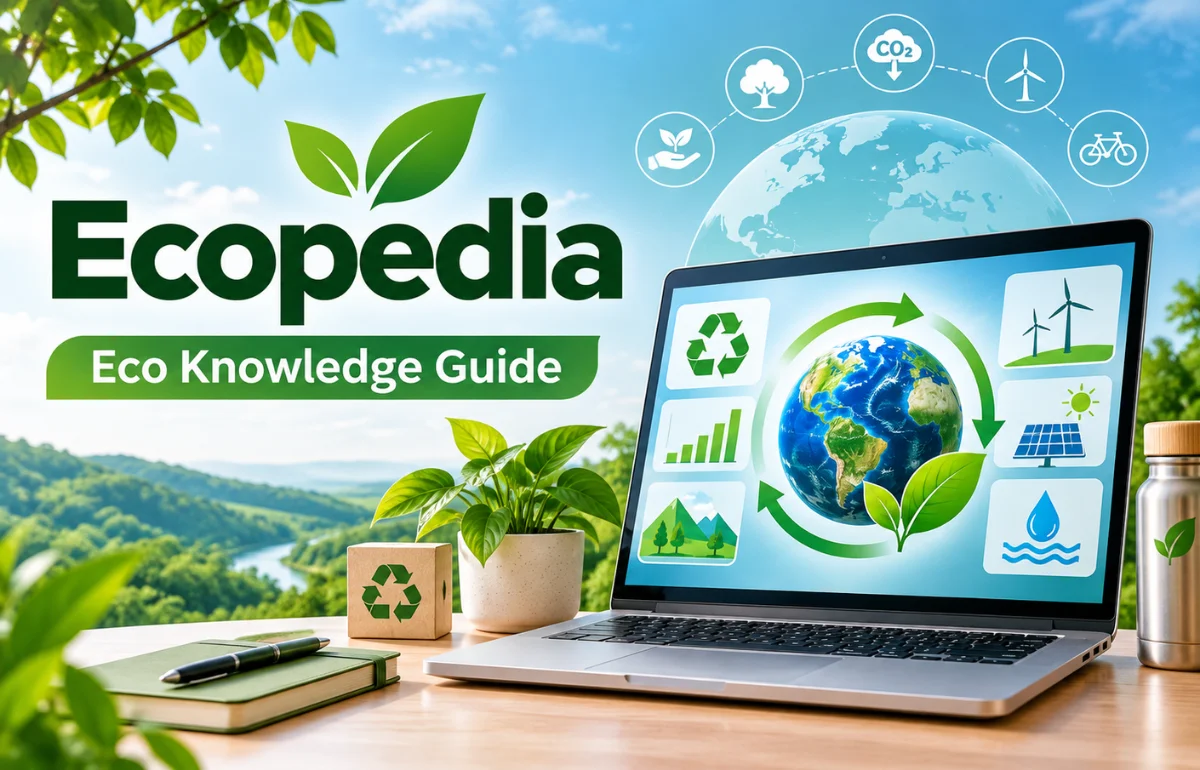
Ecopedia is a name used by digital resources that help people understand the environment and make more sustainable decisions. Depending on the platform, it may be an environmental knowledge library, a nature-management education website, or an AI-assisted tool for sorting household waste.
In simple terms, Ecopedia connects environmental information with practical action: learning about biodiversity, finding reliable conservation guidance, or deciding how to handle an unwanted item.
There is no single worldwide Ecopedia service with every feature described under the name. That distinction matters because a Belgian nature-management platform, a Colombian environmental archive, and a US-focused recycling application serve different audiences.
I find it more useful to identify the specific project first, then judge how well its information answers a real question.
What Does Ecopedia Actually Refer To?
The word combines an ecological theme with the familiar idea of an encyclopedia. Yet it is not the registered name of one universal environmental database. Several organizations use it for separate initiatives, and their missions should not be mixed together.
For example, Ecopedia in Belgium brings together knowledge about nature, green spaces, and forest management. Its material covers ecological concepts, management practices, equipment, and relevant policy.
Ecopedia from Colombia’s CVC is a digital environmental library preserving regional photographs, research, maps, videos, and institutional history.
Meanwhile, EcoPedia associated with One Earth One Chance describes an AI-powered web application focused on waste identification and greener everyday choices.
| Project | Main focus | Most relevant audience |
|---|---|---|
| Ecopedia Belgium | Nature, forests, land management, and training | Land managers, students, conservation workers |
| Ecopedia CVC, Colombia | Regional environmental history and knowledge | Researchers, teachers, residents |
| EcoPedia / One Earth One Chance | Waste sorting, local resources, sustainable choices | Households and community users |
These are examples, not interchangeable branches of one company. Even the similarly named Ekopedia, a collaborative sustainability wiki, is a separate project.
Checking the website address and publisher prevents many misunderstandings.
How Does an Ecopedia Platform Work?
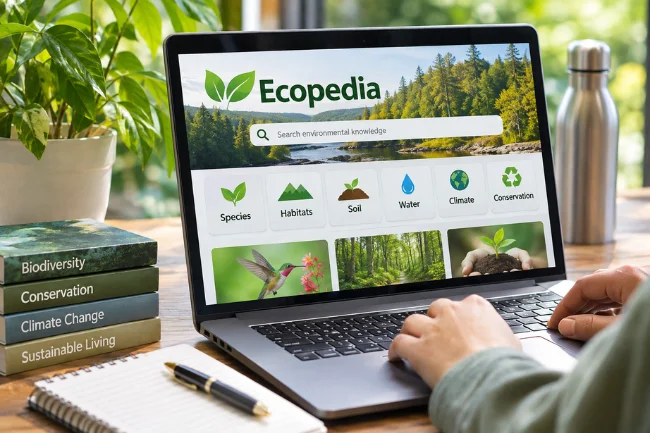
Most environmental knowledge platforms begin with a common idea: turn complex information into something a person can search, understand, and use.
Their tools, however, depend on the organization behind them.
Searchable Environmental Knowledge
An educational version organizes information into topics such as species, habitats, soil, water, climate, and conservation methods. Readers might consult explanations, illustrations, training materials, or relevant regulations.
For a student, this can provide context for an assignment. For a landscape professional, the useful result may be a field-management technique rather than a general definition.
Location-Specific Guidance
Environmental advice is rarely universal. A plant considered suitable in one region may threaten ecosystems elsewhere. Likewise, a plastic container accepted by one recycling program may be rejected by another.
This is where local archives, regional conservation guidance, and collection-point directories become valuable.
I would treat location as a basic part of an answer, not a minor detail added at the end.
Digital Recognition and Interactive Features
Some modern tools add image recognition, searchable maps, digital checklists, and virtual assistants.
The One Earth One Chance project describes six waste categories: recyclable, compostable, organic waste, e-waste, non-recyclable, and store drop-off.
These labels help organize decisions, but an AI classification is a suggestion, not proof that a nearby facility accepts the item.
The final disposal choice still depends on the material, its condition, and local rules.
Why Environmental Knowledge Platforms Matter
The value of an environmental encyclopedia is not the number of articles it stores. It is whether those articles help prevent avoidable mistakes.
The United Nations Environment Programme’s Global Waste Management Outlook 2024 projects municipal solid waste to increase from approximately 2.1 billion tonnes in 2023 to 3.8 billion tonnes by 2050.
This is a forecast, not a fixed outcome, but it shows why practical knowledge about waste prevention and materials management matters.
Information also affects biodiversity. A land manager who understands local habitats can make better-informed restoration decisions.
A household that knows how to store batteries safely can avoid putting dangerous materials into ordinary recycling.
Still, education does not replace infrastructure. People need access to collection services, affordable alternatives, sensible policies, and trustworthy guidance before an intention becomes a workable habit.
What Can You Learn Through Ecopedia?
Recycling and Waste Reduction
Recycling questions often begin with a deceptively simple object: a takeaway box, a shopping bag, or a broken charger.
A useful resource explains the material, the likely handling options, and why local acceptance rules matter.
The US Environmental Protection Agency advises checking community programs before putting items into a recycling bin.
For example, plastic bags and film generally require separate drop-off arrangements rather than regular curbside collection in the United States.
A strong resource should go further than asking, “Can this be recycled?” It should also ask whether an item can be repaired, refilled, shared, or avoided in the first place.
Biodiversity and Nature Conservation
Nature-focused content can cover native species, invasive organisms, tree selection, habitat restoration, soil health, and water management.
These subjects connect everyday decisions with the larger ecological picture.
Belgium’s Ecopedia demonstrates this specialized approach with sections dedicated to forests, grasslands, ecological knowledge, management equipment, and nature-related rules.
It is particularly relevant when someone needs more than basic eco-lifestyle advice.
One caution matters here: wildlife and planting recommendations need regional context. A “pollinator-friendly” species is not automatically appropriate in every country or ecosystem.
Sustainable Homes and Daily Habits
A sustainability hub may help readers explore home composting, lower-waste shopping, reusable containers, community gardens, repair options, and secondhand purchases.
I prefer advice that starts with what a household already owns.
Replacing a working bottle, bag, or appliance just to purchase a product labeled sustainable can create unnecessary consumption.
The more useful question is whether a different habit actually reduces waste over time.
For home composting, readers also need to distinguish backyard methods from industrial composting. A package advertised as compostable does not necessarily break down safely in a garden compost pile.
Environmental Education and Community Projects
Teachers can use environmental libraries to introduce ecosystems, recycling systems, and local conservation history.
Community groups may use them to identify practical activities such as repair events, litter audits, or habitat surveys.
Colombia’s CVC project is especially interesting because it treats photographs, maps, technical documents, and past conservation work as educational resources.
That allows readers to ask not only what a landscape looks like today, but also how it has changed.
Ecopedia Compared With Other Online Resources
An environmental portal should not be judged as if it were a general search engine.
The most useful choice depends on whether the reader needs background information, a local service, or a decision about one material.
| Resource type | Best for | Main limitation |
|---|---|---|
| Ecopedia-style knowledge platform | Organized ecological learning and practical context | Coverage varies by publisher and region |
| General online encyclopedia | Broad definitions and starting points | May lack local procedures and current rules |
| Municipal recycling website | Accepted materials, collection schedules, local restrictions | Usually limited to one service area |
| AI waste-identification tool | Quick preliminary identification of an unfamiliar item | Recognition can be wrong; acceptance requires verification |
I would not pick one source to replace all the others.
A short explanation from an educational portal, followed by confirmation from a local authority, is often a stronger combination than either alone.
How to Use Ecopedia for Better Everyday Decisions
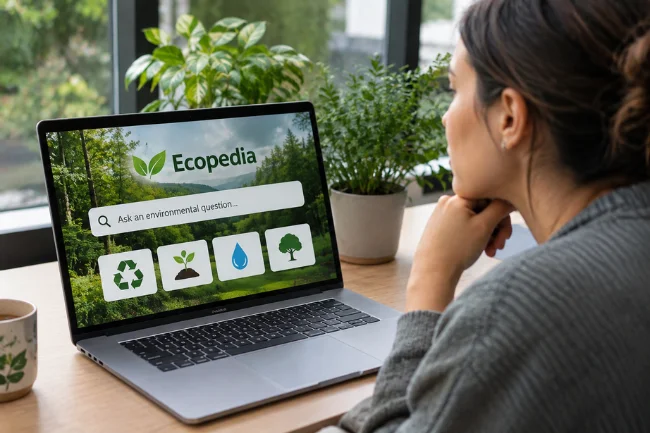
Start With a Specific Question
Broad searches such as “how to be eco-friendly” can produce endless advice.
A question like “Where should I take a swollen phone battery?” or “Which trees suit my local soil?” gives the resource a practical job to do.
Before searching, identify the object or issue, your location, and the decision you need to make.
Those three details make the answer easier to evaluate.
Check the Publisher and Geographic Scope
Look for an About page, named institutional partners, subject expertise, and the region covered.
For waste disposal, pay particular attention to whether a service list applies to your city.
A platform describing Dallas–Fort Worth resources, for instance, should not be assumed to provide equally complete options in another country.
A Belgian land-management article may offer excellent ecological context without explaining laws elsewhere.
Verify the Action Before Taking It
Suppose an image tool identifies an item as recyclable. Check whether your local recycler accepts its actual material and form.
If it contains electronics, liquid chemicals, or a battery, seek the relevant specialized instructions instead.
The EPA warns that lithium-ion batteries should not go into household trash or ordinary recycling bins because they can cause fires.
The recommended route is separate battery recycling or hazardous-waste collection, with care taken to protect terminals. EPA battery guidance explains the details.
Keep a Small Record of What Works
I suggest saving a few confirmed local answers rather than collecting hundreds of eco tips.
Record where you can repair electronics, return difficult packaging, refill household products, or donate usable goods.
This turns online research into a personal directory.
Review it occasionally because operating hours, collection rules, and accepted materials can change.
How Can You Tell Whether Ecopedia Information Is Trustworthy?
A polished website is not enough. Good environmental information should show who published it, what evidence supports it, which area it applies to, and when it was last reviewed.
I use four questions to evaluate a sustainability claim: Who says this? What is the evidence? Where is it valid? What action does it recommend?
If one answer is missing, I look for an independent source.
For product claims, I pay special attention to words such as recyclable, biodegradable, carbon-neutral, and compostable.
The US Federal Trade Commission’s Green Guides explain why vague claims can mislead and why availability of proper facilities matters.
Sources also have different roles. Scientific research explains environmental effects; local authorities tell residents what their collection systems accept; manufacturers describe product composition; independent testing may check a manufacturer’s claim.
No single source automatically answers every question.
The Limits of AI-Powered Environmental Advice
Image recognition can reduce the effort of identifying everyday items.
But a photograph may not reveal a multilayer plastic film, chemical residue, an internal battery, or whether an object is contaminated by food.
An AI model may recognize a cup while missing the coating that makes it unsuitable for a particular recycling process.
It may also provide a category without knowing that the nearest collection point has stopped accepting that material.
For this reason, a responsible system should show uncertainty, allow users to correct a result, and direct them to local authorities for high-risk items.
It should never present a confident-sounding guess as a verified disposal instruction.
Privacy deserves attention too. A location-enabled app may request geographic access to suggest nearby services.
Users should understand what data is collected, whether location sharing is optional, and how long information is retained.
These are evaluation criteria, not claims about any one Ecopedia product.
A Practical Framework: From Information to Verified Action
I think environmental platforms can become substantially more useful by treating each answer as a four-part chain: identify, check, act, and confirm.
This is a proposed evaluation framework rather than an advertised feature of every Ecopedia platform.
First, identify the item or ecological problem accurately. Second, check local guidance and any relevant safety conditions.
Third, choose the least wasteful practical option, preferably avoiding disposal when repair or reuse is reasonable.
Fourth, confirm the outcome: did the receiving facility actually accept the material, or did the conservation action suit the location?
Consider a broken electric kettle. An image classifier may say “e-waste,” but that label is only the beginning.
Repair could extend its life. If repair is not reasonable, a verified electronics collector may be appropriate.
Simply placing it in a household recycling bin would skip the local check.
This approach also provides a useful test for platform quality: does the resource help users complete a decision, or does it stop at a broad label?
The distinction is easy to overlook and often more meaningful than the number of features on a homepage.
Common Mistakes to Avoid
One mistake is treating every green recommendation as universally applicable.
Collection systems, climates, habitats, and local laws differ. Advice without geographic context can be incomplete or inappropriate.
Another is assuming recycling is always the best first choice.
The EPA waste-management hierarchy prioritizes reducing waste and reusing materials before recycling or composting.
Buying less, maintaining products, and repairing equipment may achieve more than constantly sorting replacements.
A third mistake is equating “natural” with safe or “compostable” with suitable for a backyard compost bin. Such terms need clear definitions and supporting evidence.
Finally, do not confuse Ecopedia with Ekopedia simply because their names look alike.
Verify the URL, the organization responsible, and the type of resource before quoting it in a school assignment or professional report.
What Could Ecopedia Platforms Offer in the Future?
The greatest future improvements would not necessarily involve more complicated AI.
I would prioritize better links between educational content, verified local services, and evidence of real outcomes.
An ideal environmental resource could display the date of a recycling rule, identify the responsible authority, distinguish confirmed facts from AI suggestions, and warn when local data is missing.
Nature-management content could connect recommendations to habitat conditions, legal boundaries, and monitoring results.
Accessibility matters just as much.
Plain-language summaries, multilingual explanations, low-bandwidth pages, and printable guidance would help more people use reliable information.
When platforms make room for community corrections without sacrificing expert review, they can improve both relevance and accountability.
Frequently Asked Questions About Ecopedia
What is Ecopedia used for?
Ecopedia is used for environmental learning and, in some versions, practical support with recycling, conservation, and sustainable living. Its features depend on the specific platform.
Is Ecopedia a website or an app?
Both forms exist. Some Ecopedia projects are educational websites or digital libraries; another describes an AI-powered progressive web application.
Is Ecopedia free to use?
Access depends on the provider. Some public environmental information is openly accessible, while any app-specific pricing or paid services should be checked on its official site.
Can Ecopedia identify recyclable waste?
The EcoPedia project associated with One Earth One Chance describes AI-based waste classification. Always verify local collection rules before disposing of an item.
Is Ecopedia the same as Wikipedia or Ekopedia?
No. Ecopedia is used by independent environmental projects, while Wikipedia is a general encyclopedia and Ekopedia is a separate sustainability-focused wiki.
Final Thoughts
Ecopedia is best understood as a family of independently operated environmental knowledge initiatives, not one all-purpose website.
Its real value lies in helping people connect information with a decision they can safely carry out.
Start with the Ecopedia project that matches your question, verify its sources and local relevance, and choose one practical improvement you can sustain.
In environmental action, a well-informed small change is more useful than an impressive list of tips never put into practice.

Noah Sterling is a technology research writer with 8+ years of experience covering emerging technologies, software trends, digital tools, and innovation. He creates practical, research-based articles to help readers understand the evolving technology landscape.