FintechZoom.com is a financial news and information website covering markets, cryptocurrencies, banking, personal finance, business, and financial technology. It publishes articles and market reference pages that help readers follow developments and understand the terms behind them. You can read its public content at fintech-zoom.com; it is not where you open a brokerage account or execute a trade.
If you came here wondering whether the site is useful, my short answer is yes, as a starting point for learning or finding a story. For a price-sensitive decision, I would check the date, identify the underlying data source, and confirm the number with my broker, exchange, lender, or an official release. The distinction between reading about a market and acting in one shapes everything else in this review.
What can you find on FintechZoom.com?
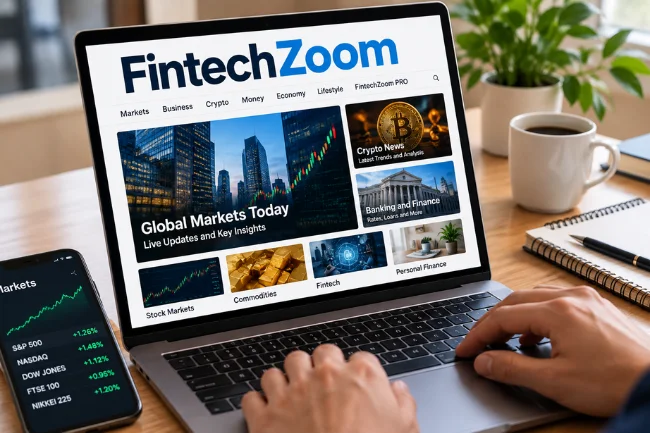
When I reviewed the site’s public navigation and recent pages, I found a much wider publication than the name alone suggests. The main menu groups content under Markets, Business, Crypto, Money, Economy, and Lifestyle. Some areas explain an event; others help you locate a price or learn a concept.
The homepage also mixes market reports with articles on topics such as retirement and banking. That variety is useful if you want context, although it means you should choose a section before treating the homepage as a focused market briefing.
That table describes a reading route, not a promise that every page supplies every detail. The site’s public menu includes stock markets, forex, bonds and rates, commodities, ETFs, and global indices. Crypto subcategories include Bitcoin, Ethereum, stablecoins, blockchain, tokens, and altcoins.
Money covers loans, insurance, banking, mortgages, and cards. Business and technology coverage reaches artificial intelligence and cybersecurity, while Economy includes taxes, jobs, and inflation.
Markets and world indices
Market coverage is where I would go to orient myself quickly. A headline about the Dow Jones or Nasdaq tells you what moved; an index guide should tell you what the benchmark measures. That distinction matters. An index can rise while many individual shares fall, and a dramatic one-day move may look ordinary on a longer chart.
The navigation also points to the S&P 500, FTSE 100, DAX, Nikkei 225, Hang Seng, and other regional benchmarks. If you follow a market outside the United States, check the exchange’s local time before comparing two daily articles. A European close and a U.S. midday update do not describe the same moment.
Crypto and blockchain
The crypto section covers more than a Bitcoin price. Its categories include Ethereum, stablecoins, digital tokens, blockchain, and guides about buying Bitcoin. That makes it useful for learning the vocabulary around an event such as an ETF launch or a change in payment infrastructure.
I read crypto news with two separate questions in mind: What happened on the network or at a company? And what happened to the asset’s quoted price? The first may be documented in a filing or announcement; the second varies across trading venues. A headline that answers one question does not automatically answer the other.
Banking, money, and the wider economy
The Money section is relevant even if you never buy a stock. It contains banking, loan, insurance, mortgage, card, and interest-rate topics. An explainer can make a rate change understandable, but it cannot establish the offer available to you today. Eligibility, fees, currency, and local law can change the answer.
The site also covers payments and digital banks, alongside inflation, employment, and taxes. These connections are worth following: a central bank decision may affect bond yields, borrowing costs, and household budgets at different speeds. Read the underlying announcement when a decision affects your own finances.
How I would use the site without getting lost
Start with a question rather than an endless homepage scroll. If I wanted to understand a market move, I would find the relevant news item, check its date and the session it describes, then open a guide for any unfamiliar term. Only after that would I look for a current price or an official document. This order keeps a headline from doing more work than it can support.
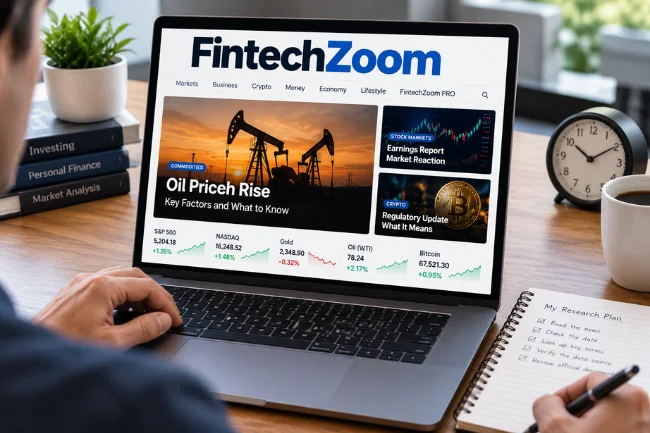
For example, suppose I see a story saying oil prices rose. I would ask whether the story discusses Brent or West Texas Intermediate, which contract month it means, and whether it is reporting a current move or explaining an earlier one. Then I would check the release or event cited as the cause. The same habit applies to a stock after an earnings report or a cryptocurrency after a regulatory announcement.
There is a practical way to judge freshness that I find more useful than calling an entire website “real time.” Look for three different clocks:
- Publication time: When was the article written or updated?
- Data time: When was the displayed quote, chart, or statistic last refreshed, and by whom?
- Decision time: When will you actually use the information?
An article can be freshly published while quoting yesterday’s closing price. A live-looking chart can update while the explanation beside it describes last week’s event. Neither is necessarily an error. The problem arises when a reader assumes the clocks match. If a page does not show one of them clearly, I would treat that part of its information as background rather than a trade-ready figure.
Check the unit before you compare numbers
A quote needs a label to mean anything. For a stock, check its listing exchange and currency. For an index, check whether you are seeing the index level or a fund that tracks it. For gold, distinguish a spot price from a futures contract and identify the unit. For crypto, note whether the pair is BTC/USD, BTC/USDT, or another market.
This small check prevents surprisingly common misunderstandings. Two reputable pages can show different figures because they track different instruments or refresh on different schedules. FintechZoom.com’s own terms caution that figures may not be complete or current when viewed and advise verifying time-sensitive prices and rates with an official source.
Is FintechZoom.com free, and can you trade there?
The site’s public articles and guides can be read without paying a subscription. Its own overview describes the platform as free to read. That describes access to the publication; it says nothing about the fees of an exchange, broker, card provider, or lender linked from an article. Always read the third party’s terms before signing up.
FintechZoom.com identifies itself as a media and information platform, not a bank, brokerage, or cryptocurrency exchange. It says it does not hold client funds or execute trades. I would not treat a “buy Bitcoin” guide as evidence that the publisher itself sells Bitcoin. A guide can explain a transaction while the transaction takes place on a separate service.
The navigation does include a link labelled FintechZoom PRO. I would check any particular product page for its current terms before making a claim about paid tools or memberships. The clear point for an ordinary reader is that reading a public article and buying a financial product are different activities, with different providers and potential costs.
Is FintechZoom.com reliable?
My answer depends on what you want to rely on. To learn what a bond yield is or find a topic to investigate, a readable explainer may be enough. To cite a specific unemployment figure, compare a mortgage, or place a trade, I want the originating source and the relevant date. Reliability is a property of the particular claim and page, not a blanket rating I can assign to every article on a large site.
The publication describes its sourcing, corrections, and commercial policies in its site overview and provides a contact route for corrections. Those are useful transparency signals, but they are statements of policy. I would still inspect the sourcing of the individual article I plan to use. Is an earnings number linked to a company filing? Is a rate attributed to a central bank? Does an analysis separate reported facts from a forecast?
Here is the quick test I use when a financial claim could affect a decision:
- Identify the named author, date, and any update notice.
- Follow the source link for the central fact rather than stopping at the headline.
- Check whether a numerical claim names its instrument, currency, unit, and period.
- Separate what happened from what the writer thinks may happen next.
- Look for advertising, sponsorship, or an affiliate relationship where a product is recommended.
- Confirm the final figure and transaction terms with the institution that will actually handle your money.
This is especially valuable when an article has a confident price target. A forecast is an opinion about an uncertain future, even when it appears beside accurate historical numbers. I would never give the forecast the same status as an exchange notice or a company’s filed results.
Watch the domain, particularly around crypto
I also check the web address. The official domain is fintechzoom.com. A search result can display a familiar brand name while linking to a different spelling or extension. That does not prove the other site is malicious, but it does mean I should identify who runs it before sharing information or following a financial instruction.
The publisher says it does not solicit deposits, operate giveaways, or ask for a crypto wallet’s recovery phrase. If a message bearing its name asks for any of those, do not use the message’s reply link as your verification route. Type the official address yourself and use its published contact details. This advice matters more than a vague claim that reading a website is “safe”: the costly mistake is often trusting an impersonator or a third-party offer.
Where FintechZoom.com fits beside other finance websites
I do not think one site has to answer every financial question. These alternatives serve different jobs, so the comparison below is about fit rather than an overall winner. Features and access terms can change; verify the current product before relying on a specific tool.
Consider a company earnings story. I might discover it through FintechZoom.com, view its price history on a market tool, then read the company’s investor-relations release or regulatory filing. For a mortgage, I might begin with an explainer but finish with a lender’s written offer and the rules that apply where I live. The final source changes with the decision.
The geographic distinction matters. Global market news can help explain why interest rates are moving, but a credit-card fee, tax rule, deposit guarantee, or investment restriction is usually jurisdiction-specific. A reader in Pakistan, the United Kingdom, or the United States should not assume that a general English-language article describes their local protections. Where money changes hands, check the relevant local regulator and provider.
Who will get the most from it?
For a beginner, the useful pairing is an educational guide and a current news story. Learn what an ETF or bond yield means, then see why the term appears in today’s coverage. Resist making the current headline your entire lesson; breaking news rarely has room to explain every assumption.
For someone following markets regularly, the site can work as a broad scan across stocks, rates, commodities, and crypto. I would still keep a separate source for instrument-specific prices and official releases. For a banking or fintech professional, its payments, technology, and business sections can surface themes worth investigating at the regulator or company level.
For someone who needs a trading terminal, a verified execution price, personalized investment advice, or a binding loan offer, the publication cannot finish the job. Its own description draws that boundary. The more consequential your next action, the closer you should move to the original data and the provider responsible for the transaction.
My verdict
FintechZoom.com is useful as a broad doorway into finance: it brings market news, educational writing, price pages, banking topics, and fintech coverage into one place. Its range is also the reason I would use it selectively. I would start with a specific question, follow the most relevant section, and check the three clocks and original source before acting on a figure.
If you are new to the site, open the official homepage, choose one topic you actually follow, and compare its latest article with the underlying announcement. You will learn both the story and how much confidence to place in it.
Frequently asked questions
What is FintechZoom.com used for?
It is used to read financial news, market commentary, educational guides, and selected market reference pages across stocks, crypto, banking, and fintech.
Is FintechZoom.com a trading platform?
No. It publishes information; a separate broker or exchange handles any actual trade.
Is FintechZoom.com free to read?
Its public articles are free to read. Check any linked third-party service or specific product for its own fees and terms.
Can I trust FintechZoom.com prices for a trade?
Check the quote’s source and timestamp, then confirm an executable price with your broker or exchange before placing an order.
What is the official FintechZoom.com website?
The publisher’s website is https://fintechzoom.com/. Check the spelling carefully before entering information on a similar-looking site.
Disclaimer
This article is for general information, not personal financial, legal, or tax advice. Prices and terms can change. Verify details with the original provider before acting, and seek professional advice when needed. External links do not imply endorsement.

Ethan Caldwell is a business research writer with 9+ years of experience covering entrepreneurship, market trends, business strategies, and industry insights. He focuses on creating clear, data-informed articles that help readers understand modern business concepts.