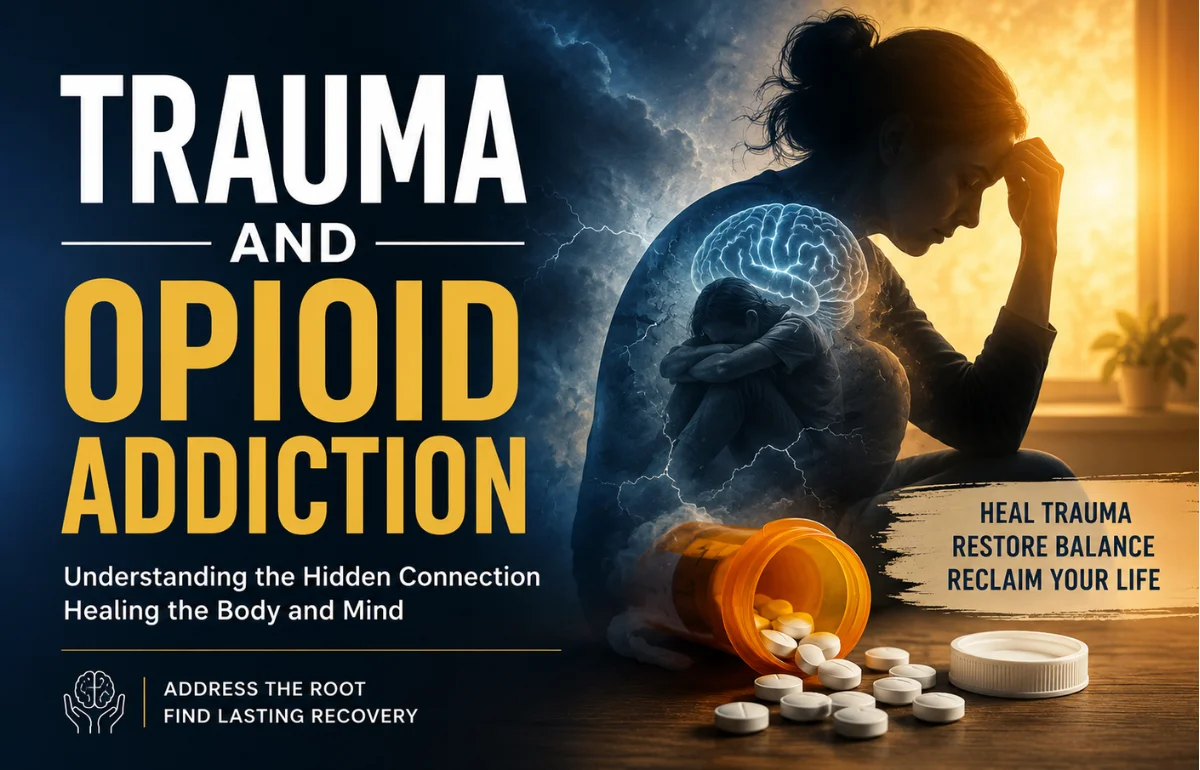
She couldn’t explain why the pills felt necessary in ways that exceeded pain relief. The warmth that spread through her body brought something beyond analgesia. It brought quiet. The constant low-level dread she’d carried so long she no longer noticed it suddenly lifted. Her shoulders dropped from positions they’d held for decades. For the first time she could remember, her body felt safe. She didn’t have words for what the opioids were treating because she didn’t have conscious memory of what had created the need. Her body remembered what her mind had forgotten.
The relationship between unresolved trauma and opioid addiction operates through channels that conventional addiction treatment rarely addresses. The trauma stored in bodies, held in nervous system patterns established before conscious memory or during experiences too overwhelming to process, creates states of chronic dysregulation that opioids pharmacologically resolve. Treatment that addresses only the addiction while ignoring the somatic trauma leaves the underlying driver untouched.
The Somatic Storage
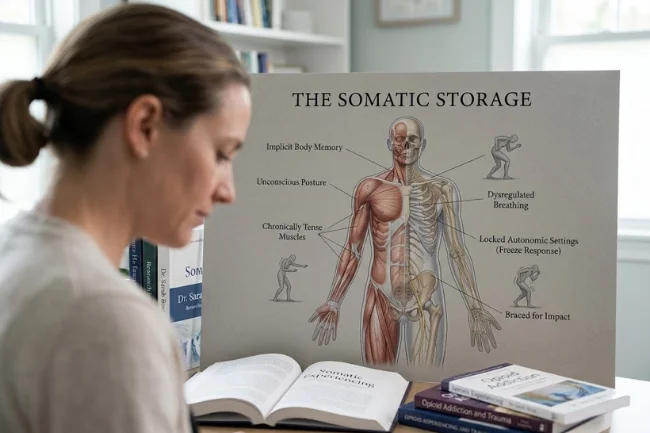
Trauma doesn’t reside only in explicit memory. The body encodes overwhelming experience in posture, muscle tension, breathing patterns, and autonomic nervous system settings that persist long after conscious recollection fades. This implicit memory operates outside awareness, shaping experience without being recognized as memory at all.
The child who learned to freeze during abuse carries that freeze response into adulthood. The accident survivor whose body braced for impact remains braced decades later. The combat veteran whose nervous system calibrated for constant threat cannot recalibrate for peacetime safety. These patterns aren’t chosen or consciously maintained. They’re automatic, wired into neurobiology through experiences the body cannot forget.
The resulting states feel like simply who one is rather than consequences of what one experienced. The chronic anxiety seems like personality. The inability to relax seems like a character flaw. The persistent sense that something is wrong seems like pessimism. The somatic residue of trauma is invisible to those who carry it, indistinguishable from baseline until something provides contrast.
Opioids provide that contrast. The pharmacological calm they induce reveals by comparison the chronic activation that preceded it. The relief goes beyond pain reduction because what’s being relieved goes beyond pain. The nervous system finally down-regulates in ways that trauma made impossible without chemical intervention.
“Opioids provide pharmacological access to nervous system states that trauma survivors cannot achieve through their own neurobiology,” explains Dr. Sarah Boss, a Vienna-trained psychiatrist, psychotherapist, and Clinical Director at The Balance, who specializes in functional medicine, neuromodulation, and trauma treatment through Somatic Experiencing. “The dysregulation installed by overwhelming experience persists because the nervous system learned that danger is constant. Opioids temporarily override that learning, producing safety feelings the traumatized nervous system cannot generate independently. This is why opioid addiction in trauma survivors is so refractory to conventional treatment. You’re not just treating drug dependence. You’re treating the only effective regulation strategy someone has ever found.”
The Treatment Gap

Conventional addiction treatment separates substance use from its underlying drivers. The focus on abstinence, on changing thoughts and behaviors around drug use, on building recovery skills addresses important dimensions while potentially ignoring the most fundamental one.
Trauma screening in addiction treatment settings is inconsistent. Programs may not ask about trauma history or may ask in ways that surface only what patients consciously remember and are willing to disclose. The somatic trauma that operates below conscious awareness doesn’t emerge through questionnaires.
Even when trauma is identified, treatment resources may be inadequate. The addiction counselor trained in motivational interviewing and relapse prevention may lack trauma therapy competence. The trauma therapist may be uncomfortable treating active addiction. The integration that patients need encounters specialty silos that fragment care.
Body-based trauma treatment remains rare in addiction settings. Somatic Experiencing, sensorimotor psychotherapy, and similar approaches that address what the body holds require training most addiction treatment staff don’t have. The talking therapies that dominate treatment cannot reach what exists below the level of language.
“We’ve built addiction treatment systems that don’t address why people become addicted in ways they couldn’t control,” explains Rab Nawaz Khan, M.D., medical writer at MyOpioidRecoveryTeam. “For trauma survivors, opioids solve a problem that treatment has to solve differently if recovery is going to last. The nervous system dysregulation that made opioids so effective doesn’t resolve through detox, through CBT, through twelve-step work alone. It requires treatment that reaches the body level where trauma is stored. That treatment exists but rarely appears in standard addiction care.”
The Regulation Alternative

Recovery from opioid addiction intertwined with somatic trauma requires developing internal regulation capacity that can eventually replace chemical regulation. This is different from simply removing drugs and expecting the nervous system to normalize.
Somatic approaches teach awareness of body states that trauma made intolerable to notice. The gradual, titrated attention to physical sensation builds tolerance for what was previously overwhelming. The freeze that the body held for decades can begin to thaw when approached safely.
Nervous system regulation can be trained through practices that shift autonomic tone. Breathwork influences the balance between sympathetic and parasympathetic activity. Gentle movement practices rebuild body awareness without overwhelm. Co-regulation with safe others provides what dysregulated systems couldn’t provide themselves.
The polyvagal understanding of nervous system states illuminates what opioids provide and what alternatives must replace. The ventral vagal state of social engagement and safety is what trauma impairs and what recovery must restore. The states below, fight-or-flight and freeze, are where traumatized nervous systems default.
The Safe and Sound Protocol uses specially filtered music to stimulate vagal pathways that support safety states. By strengthening the neural infrastructure of regulation, it may help create capacity that makes opioid-dependent regulation unnecessary.
The Timeline Reality

Building internal regulation capacity takes time that acute treatment models don’t accommodate. The neural pathways established over decades don’t rewire in weeks. The body that learned danger doesn’t learn safety quickly, regardless of how compelling the cognitive arguments for recovery are.
Early recovery for trauma survivors often involves medication that provides stability while slower change proceeds. Buprenorphine not only manages opioid dependence but provides a degree of nervous system regulation that supports the trauma work that produces bigger change.
The expectation that trauma treatment should be completed before or during addiction treatment misunderstands the timelines involved. Trauma work may continue for years after addiction stabilization. The integration happens gradually as the nervous system develops alternatives to what opioids provided.
Recovery benchmarks appropriate for non-traumatized populations may be inappropriate for trauma survivors. The milestones that mark progress differ when underlying dysregulation is being addressed alongside addiction.
The Integration Imperative
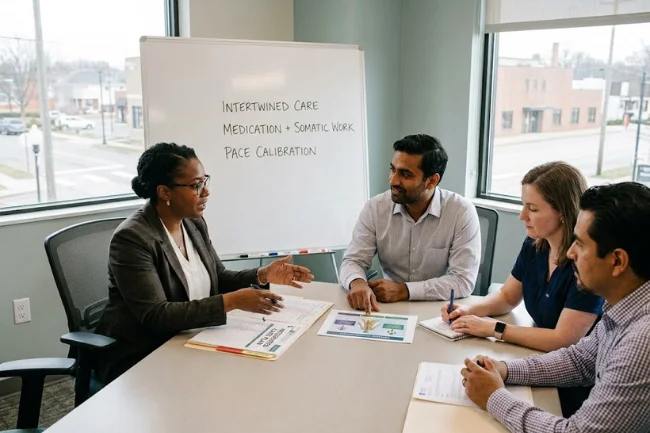
Effective treatment for opioid addiction in trauma survivors requires integration that few treatment systems provide. The addiction specialist and the trauma specialist must communicate, coordinate, and conceptualize treatment as addressing a single intertwined problem rather than two separate ones.
Medication decisions should account for trauma symptoms alongside addiction symptoms. Psychiatric medication addressing anxiety, depression, or PTSD may be as important as medication addressing opioid use disorder.
The pace of trauma work must be calibrated to what fragile early recovery can tolerate. Moving too fast risks overwhelming coping capacity and triggering relapse. Moving too slowly leaves the underlying driver unaddressed. The clinical judgment involved requires expertise that standard treatment may lack.
She eventually found treatment that understood her body’s memory was driving her addiction. Somatic work, approached slowly over months, began releasing what decades had held. The nervous system that had only known opioid-induced calm gradually learned to produce its own. Recovery felt different than she’d expected. It wasn’t just not using. It was finally inhabiting a body that no longer required chemical silence to feel survivable.
Disclaimer: This content is for informational and educational purposes only and should not be considered medical advice. Always consult a qualified healthcare professional for diagnosis, treatment, or guidance related to trauma, opioid use, addiction, or mental health conditions.

Sophia Bennett is a mental health writer with 8 years of experience creating thoughtful, research-informed content about emotional wellbeing, stress management, mindfulness, self-care, and healthy coping strategies. She focuses on making mental wellness topics easier to understand while encouraging readers to seek support from qualified mental health professionals when needed.