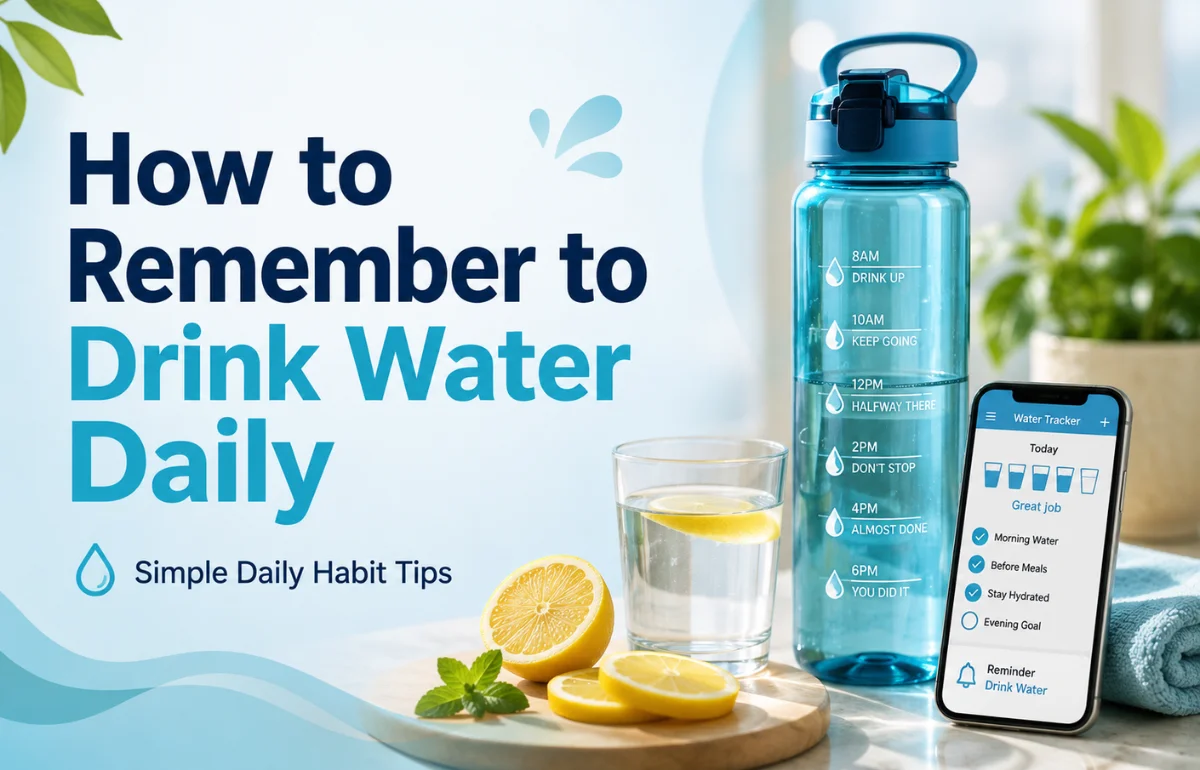
Learning how to remember to drink water daily is less about trying harder and more about making water visible, convenient, and connected to things you already do. The simplest method is to choose a realistic fluid target, keep one bottle within reach, drink at reliable cues such as waking, meals, and work breaks, and use a few checkpoints instead of constant alarms.
I think of this as a hydration memory system: cue, sip, check, refill. It works because you are no longer depending on thirst or memory alone. You are giving your brain repeatable signals while still adjusting for exercise, weather, illness, pregnancy, medications, and personal health needs.
Why You Keep Forgetting to Drink Water
Most people do not forget water because they are lazy. They forget because drinking has no strong place in their routine.
A busy morning begins, messages pile up, and the bottle stays in another room. By the time thirst gets your attention, hours may have passed.
I treat hydration as a design problem. Health-habit research shows that repeating a simple action in a stable setting and linking it to a clear cue can make the action more automatic over time. Missing one occasion does not ruin the habit; returning to the cue matters more.
Common reasons include an out-of-sight bottle, an unclear target, badly timed reminders, inconvenient refills, or waiting for strong thirst. The solution is not ten alarms. It is less friction and better triggers.
Decide How Much Fluid You Actually Need
There is no single water target that fits every adult.
The familiar “eight glasses” rule can be a useful memory shortcut, but needs vary with body size, activity, climate, diet, pregnancy or breastfeeding, illness, and health conditions.
The U.S. National Academies reference values commonly cited by Mayo Clinic and MedlinePlus are about 2.7 liters of total water per day for women and 3.7 liters for men. That includes water from food and all beverages, not only plain water.
The NHS gives a simpler starting point of six to eight cups or glasses of fluid daily and advises more during prolonged activity, hot weather, pregnancy, breastfeeding, or illness.
Pale-yellow urine can be a practical clue for many people, although medicines, vitamins, and medical conditions may affect color.
Set a Useful Starting Target
Use a three-part estimate:
- Notice what you currently drink.
- Add one or two manageable servings.
- Review thirst, urine color, activity, and heat exposure.
If you finish one 24-ounce bottle now, aiming for two is clearer than promising to “drink a gallon.” A target should guide you, not pressure you to drink beyond comfort.
Build a Hydration Memory System
My preferred system has four parts: a visible cue, an easy action, a checkpoint, and a recovery rule.
Most advice covers bottles and apps but misses the recovery rule—the piece that stops one forgotten morning from becoming an abandoned week.
1. Attach Water to Existing Routines
Connect drinking to actions that already happen:
- After turning off your alarm
- While coffee or tea is brewing
- When you open your laptop
- At the beginning or end of a meeting
- With meals
- After using the restroom
- When you return from a walk or workout
Use an “after X, I drink Y” sentence: “After I open my laptop, I drink six comfortable sips.” That is easier to remember than “I should drink more today.”
Choose three or four cues, not twelve. A small system survives busy days.
2. Keep Water in Your Line of Sight
Place the bottle beside the object that gets your attention: your keyboard, phone, lunch container, car keys, or gym bag.
The CDC recommends carrying a reusable bottle, serving water with meals, choosing water when eating out, and adding lemon or lime when plain water feels unappealing.
I also like “location duplicates” when practical: one bottle at the desk and another in the usual bag.
The goal is to remove the moment when water is available but inconvenient enough to ignore.
3. Use a Bottle You Can Read at a Glance
A useful bottle gives immediate feedback. A clear body, measurement marks, or known capacity lets you see whether you are roughly on track.
Avoid buying a giant bottle only to reduce refills. If it is heavy, awkward, hard to clean, or unpleasant to drink from, it adds friction.
The best bottle is the one you willingly keep nearby and use.
4. Set Checkpoints, Not Endless Notifications
Frequent phone alarms quickly become background noise. Use two or three meaningful checkpoints instead:
- Mid-morning: Has the first portion gone?
- Lunch: Is the bottle ready for a refill?
- Late afternoon: What remains before dinner?
A checkpoint asks you to assess progress; it does not order you to drink a large amount immediately.
Research on cue-behavior planning supports repeating an action in response to a consistent cue. Routine-based cues can also move with your day more naturally than exact clock times.
Match the Reminder to the Real Problem
A reminder works only when it addresses why you forget.
If you see the bottle but dislike the taste, another alarm will not help. If you enjoy water but leave it downstairs, flavor is not the issue.
Fix the exact point where the routine breaks.
Make Water Easier to Want
Experiment with temperature and drinking style. Some people naturally drink more from a straw or insulated bottle; others prefer a light glass and room-temperature water.
For flavor, try lemon, lime, cucumber, mint, berries, or a small splash of juice.
Tea, coffee, milk, and other drinks can contribute to fluid intake, although water remains an easy calorie-free choice. The NHS includes water, lower-fat milk, and sugar-free drinks, including tea and coffee, within fluid guidance.
Water-rich foods such as soups, yogurt, melon, oranges, cucumbers, and tomatoes also contribute. They can support hydration without replacing regular drinking.
Use the Two-Minute Evening Reset
A reliable morning often begins the night before.
Wash the bottle, fill it, and place it where your day starts. Put it beside your keys if you leave early or on the desk if you work from home.
This tiny reset prevents three common failures: the bottle is dirty, empty, or forgotten.
I would rather see someone repeat this for a month than download a detailed tracker they stop opening after four days.
What to Do When You Fall Behind
Do not punish yourself by drinking a huge amount at once.
Use a recovery rule: “At the next normal cue, I resume my usual amount.” If you notice at 3 p.m. that you barely drank, have a comfortable serving, refill, and continue steadily.
Then identify the failure point. Was the bottle unavailable? Did travel disrupt your cues? Did meetings erase lunch?
Adjust tomorrow’s environment rather than relying on guilt.
Remembering Water at Work, While Traveling, and During Exercise
At Work
Start with water already on the desk. Use meeting transitions as cues and refill during lunch rather than waiting until the bottle is completely empty.
For jobs that limit restroom access, discuss realistic break timing with an employer or healthcare professional instead of avoiding fluids for an entire shift.
While Traveling
Carry an empty reusable bottle through airport security and fill it afterward where permitted. On road trips, connect water with planned rest stops.
Travel weakens normal routines, so visible bottles and meal-based cues become more useful. By the way, if you’re balancing hydration with finding safe food options on the road, this Albania guide has practical tips and curated routes.
During Exercise or Hot Weather
Needs rise when you sweat more. Adjust for workout intensity, duration, heat, humidity, and personal sweat rate.
More is not always better. Excessive water can disturb fluid and electrolyte balance, and the CDC’s heat guidance warns against very high hourly intake.
When Standard Hydration Advice Does Not Apply
Speak with a healthcare professional before increasing fluids aggressively if you have heart, kidney, or liver disease; take medicines that affect fluid balance; or have been prescribed fluid restriction.
People receiving dialysis, for example, may need to limit fluids because the body cannot remove excess water normally.
Seek medical help for confusion, fainting, severe weakness, inability to keep fluids down, very little urination, or symptoms that do not improve.
Persistent excessive thirst can have medical causes and should not be handled only with reminder apps.
A Simple Daily Hydration Template
Try this flexible pattern for one week:
- Morning cue: Drink after waking or with breakfast.
- Work cue: Keep water visible and sip when starting a task block.
- Meal cue: Serve a drink with lunch and dinner.
- Movement cue: Refill when you stand for a break.
- Afternoon checkpoint: Check progress without forcing a catch-up.
- Evening reset: Clean, fill, and position tomorrow’s bottle.
Track only one question at first: Did the system run today?
Refine the quantity after the routine becomes dependable.
FAQs About Remembering to Drink Water
How can I remind myself to drink water every day?
Keep a filled bottle visible, connect drinking to meals or other routines, and use two or three checkpoints instead of constant alarms.
Is it better to sip water throughout the day?
For most people, regular drinking is easier and more comfortable than trying to catch up with a large amount at once.
Does coffee count toward daily water intake?
Coffee contributes to total fluid intake, although plain water remains a simple calorie-free option and may suit you better if caffeine causes problems.
How do I know whether I am drinking enough water?
Thirst, activity, weather, and urine color offer clues; pale-yellow urine is a common guide, but medicines and health conditions can affect it.
Why do I rarely feel thirsty?
Thirst varies and may become less noticeable with age. Use routine cues and seek medical advice if low thirst comes with other symptoms or health concerns.
Make the Habit Easier Tomorrow
The most reliable answer to how to remember to drink water daily is to stop asking memory to do all the work.
Choose a realistic target, attach water to routines, keep it visible, and recover calmly when a cue is missed.
Tonight, fill one bottle and place it where your morning starts. That single action gives tomorrow’s habit a clear first cue.

Claire Morgan is a health and wellness writer with 7 years of experience creating clear, research-informed content on nutrition, sleep, movement, preventive habits, and everyday wellbeing. She focuses on making reliable health information practical and easy to understand. Her articles are educational and do not replace professional medical advice.