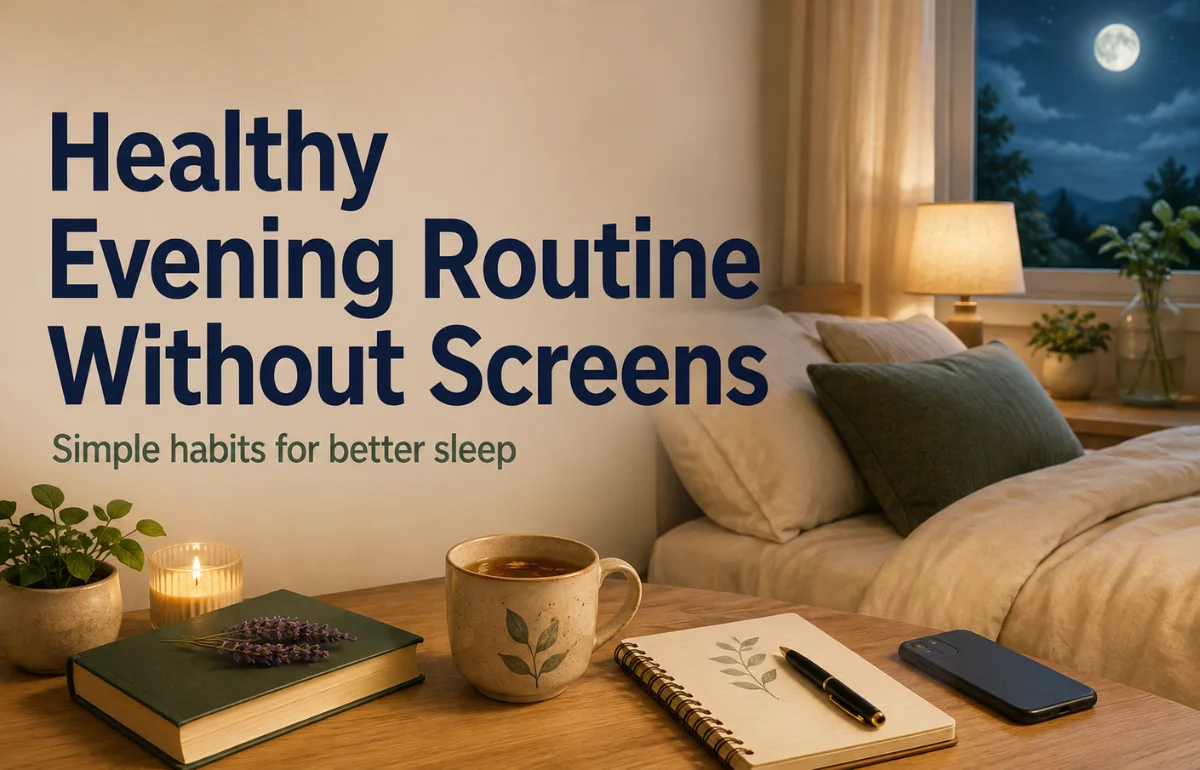
A healthy evening routine without screens is a repeatable set of calming, offline activities that helps the body and mind move from daytime alertness toward sleep. In practical terms, it means putting away phones, tablets, televisions, and laptops for at least the final 30 to 60 minutes before bed, then replacing them with low-stimulation habits such as light tidying, reading a paper book, stretching, journaling, preparing for tomorrow, or having a quiet conversation.
The purpose is not to create a perfect wellness ritual. It is to reduce bright light, mental stimulation, emotional interruptions, and bedtime delay while giving the brain consistent signals that the day is ending. The CDC recommends turning off electronic devices at least 30 minutes before bedtime, while the NHLBI suggests using the final hour for quiet time and avoiding bright artificial light.
Why a Screen-Free Evening Routine Works
Screens can interfere with sleep through light, stimulation, and displacement. Bright evening light can reinforce alertness, while work messages, news, short videos, and emotionally charged content can keep the mind active.
Ten minutes of checking a phone can also become 40 minutes and quietly push bedtime later.
A 2025 adult study associated daily screen use with later bedtimes and about 50 fewer minutes of sleep per week, with stronger links among evening chronotypes. The study does not prove that every screen minute causes sleep loss, but it highlights bedtime delay as a practical concern.
I think of a good evening routine as a runway, not an off switch. Most people cannot move directly from email, entertainment, or problem-solving into deep rest. A screen-free buffer creates a gradual descent.
The Three-Part Routine Most People Are Missing
Many bedtime articles provide a long list of relaxing activities but do not explain the order. I use a simpler structure: closure, downshift, and sleep cue.
1. Closure: Tell the Brain the Day Is Finished
Unfinished tasks often follow us into bed. Spend five to ten minutes closing open loops: write tomorrow’s top three priorities, put away work materials, set out clothes, and prepare essential morning items.
The aim is not nighttime productivity. It is reducing what the brain feels responsible for remembering.
2. Downshift: Lower Physical and Mental Intensity
The next phase should feel quieter. Dim unnecessary lights and choose an activity with a clear stopping point: a warm shower, gentle mobility, skincare, a paper puzzle, knitting, prayer, breathing, or light reading.
The best option is the one that leaves you less alert than when you started.
3. Sleep Cue: Repeat the Same Final Signal
Choose one small action that always comes immediately before bed. It might be brushing your teeth, reading five pages, writing one sentence of gratitude, or taking six slow breaths.
Consistency matters because repeated routines can become cues associated with sleep. Research on bedtime routines suggests that healthy routines may help adults who struggle to deactivate at bedtime, while public-health guidance consistently emphasizes regular sleep and wake times.
Screen Habits and Better Offline Replacements
The easiest way to stop using a screen is not to rely on discipline. Replace the function the screen was serving.
| Common screen habit | What it is really providing | Screen-free replacement |
|---|---|---|
| Scrolling social media | Novelty and escape | Magazine, short stories or a photo album |
| Watching television | Passive decompression | Bath, easy fiction or a quiet hobby |
| Checking tomorrow’s schedule | Reassurance and control | Printed calendar or paper planner |
| Messaging friends | Connection | Earlier phone call, in-person conversation or handwritten note |
| Using a meditation app | Guided calming | Memorized breathing count or printed meditation card |
| Reading news | Sense of being informed | Daytime news window and a list of topics to check tomorrow |
| Falling asleep to videos | Background distraction | Fan, white-noise machine or another non-digital sound source |
Removing a habit without replacing its benefit creates a vacuum. I ask, “What was the phone doing for me?” The answer is usually comfort, escape, connection, stimulation, or reassurance.
Match the replacement to that need.
A Realistic Healthy Evening Routine Without Screens
A practical routine can begin 60 minutes before bed, but it should also work on busy nights. The following version is flexible rather than rigid.
60 Minutes Before Bed: Create Distance From Devices
Plug the phone in outside the bedroom or place it across the room on Do Not Disturb. Finish essential messages, set the alarm, and make the screen physically inconvenient to reach.
Then lower the lighting. You do not need to sit in darkness, but moving from bright overhead lighting to softer, indirect light creates a clearer contrast between daytime and bedtime.
Public-health guidance recommends limiting bright light in the evening and keeping the bedroom dark, quiet, relaxing, and comfortably cool.
45 Minutes Before Bed: Complete a Short Closing Shift
Spend 10 or 15 minutes resetting the environment: wash a few dishes, clear one surface, prepare morning items, and write tomorrow’s priorities.
Keep it small. Deep cleaning, reorganizing, or reviewing finances can increase alertness and turn the routine into another performance standard.
30 Minutes Before Bed: Choose One Body-Calming Activity
Try gentle stretching, a warm shower, slow breathing, or a brief body scan. Avoid turning this into an intense workout.
The NHLBI advises using the hour before bed for quiet time and avoiding intense exercise and bright artificial light.
A useful breathing pattern is to inhale comfortably, then make the exhale slightly longer. There is no need to chase a perfect count. The goal is to stop treating relaxation as a test.
20 Minutes Before Bed: Empty Mental Clutter Onto Paper
Use a notebook with three prompts:
- What is still on my mind?
- What can wait until tomorrow?
- What is one thing I handled well today?
This brief “mental checkout” gives worries and reminders a place to land without inviting late-night analysis.
If journaling increases rumination, write a neutral list of completed tasks and one plan for morning.
10 Minutes Before Bed: Read Something That Has an Ending
Paper reading is one of the easiest screen-free evening activities, but choose the material carefully. Work documents, upsetting news, and highly suspenseful novels may keep the mind active.
I prefer a chapter, essay, poem, or a fixed number of pages because the stopping point is built in. The aim is to become pleasantly less interested in staying awake.
Bedtime: Make Sleep the Only Remaining Activity
Once in bed, avoid starting a second routine. Do not reopen the day by checking messages “one last time.”
Keep the room dark and quiet, and use the bed mainly for sleep. Most adults need at least seven hours of sleep, although individual needs vary.
Choose a Routine Length You Can Maintain
A long routine is not automatically healthier. Reliability matters more than complexity.
| Time available | Closure | Downshift | Final sleep cue |
|---|---|---|---|
| 15 minutes | Write tomorrow’s top task | Wash up and stretch gently | Read two pages |
| 30 minutes | Prepare clothes and make a short list | Shower or journal | Take six slow breaths |
| 60 minutes | Reset the kitchen and plan tomorrow | Stretch, read or do a quiet hobby | Repeat the same five-minute ritual |
| 90 minutes | Complete a light household close-down | Bath, conversation, reading or hobby | Dim the room and keep a consistent lights-out time |
On difficult evenings, use the minimum version rather than abandoning the routine.
My “floor” routine is a useful model: devices away, teeth brushed, tomorrow’s first task written down, and five quiet minutes. A routine survives because it has a small version.
How to Make the Habit Stick Without Willpower
Give the Phone a Bedtime Before You Have One
Set a device cutoff tied to an existing event, such as finishing dinner, starting the dishwasher, or brushing your teeth. Event-based cues are easier to remember than a vague promise to stop scrolling “later.”
A physical charging location matters. Beside the bed, the phone remains the easiest answer to boredom or worry.
Build a Screen-Free Kit
Keep the alternatives visible and ready: a book, notebook, pen, hand cream, puzzle, stretching strap, or printed breathing card.
A phone offers dozens of activities instantly. Offline options compete better when their tools are already within reach.
Use a Parking Page for Digital Urges
Keep one sheet of paper nearby. When you remember something to search, buy, message, or check, write it down rather than reopening the phone.
The thought is not dismissed; it is parked until morning, reducing the fear of forgetting an idea or responsibility.
Protect the Routine From Perfectionism
A healthy evening routine without screens should not become another source of guilt.
Measure success by whether you created a calmer transition, not whether every step happened on schedule.
Common Mistakes That Make Screen-Free Nights Harder
The first mistake is removing screens too early. A two-hour digital curfew may sound impressive, but it can fail if it clashes with work, family, or social responsibilities.
Start with 30 minutes, which aligns with CDC guidance, and extend it only when the shorter version feels natural.
The second mistake is replacing the phone with stimulating offline activity. Heated conversations, demanding paperwork, intense exercise, or complicated planning can keep the brain activated even without a screen.
The third mistake is keeping the phone visible “for emergencies.” Use emergency bypass settings for selected contacts, then place the device out of reach.
The fourth mistake is expecting the routine to cure persistent insomnia. A bedtime routine can support sleep, but ongoing difficulty falling asleep, frequent waking, loud snoring, gasping, or severe daytime sleepiness deserves professional evaluation.
What to Do When You Cannot Avoid Screens
Some evenings require late work, caregiving communication, or urgent messages. Reduce the impact rather than treating the routine as ruined.
Finish activating tasks first, lower brightness, avoid rapid-fire content, and stop when the essential task is complete. Then use a five- to ten-minute offline transition before sleep.
A screen-free routine is a direction, not a purity rule.
Frequently Asked Questions
How long should I avoid screens before bed?
Start with at least 30 minutes; many people prefer 60 minutes when their schedule allows. CDC guidance recommends turning devices off at least 30 minutes before bedtime.
What can I do at night instead of using my phone?
Read a paper book, stretch gently, journal, prepare for tomorrow, take a warm shower, do a quiet hobby, or have an unhurried conversation.
Will avoiding screens before bed help me sleep faster?
It may help by reducing bright light, stimulation, and bedtime delay, but results vary. Persistent sleep problems may need medical or behavioral sleep support.
Is television better than a phone before bed?
A television is usually farther from the eyes, but it can still expose you to light, stimulating content, and delayed bedtime. Offline activities are the cleaner choice.
What is the healthiest evening routine?
The healthiest routine is consistent, calming, realistic, and supportive of enough sleep. It usually includes a regular bedtime, dimmer light, minimal late caffeine or heavy meals, and a screen-free wind-down.
Make Tonight Easier, Not Perfect
A healthy evening routine without screens works best when it is simple enough to repeat. Put the phone away, close tomorrow’s open loops on paper, choose one calming activity, and finish with the same small sleep cue each night.
Start tonight with a 30-minute screen-free window. Keep what helps, remove what feels forced, and build a routine that makes the end of the day feel quieter.

Claire Morgan is a health and wellness writer with 7 years of experience creating clear, research-informed content on nutrition, sleep, movement, preventive habits, and everyday wellbeing. She focuses on making reliable health information practical and easy to understand. Her articles are educational and do not replace professional medical advice.