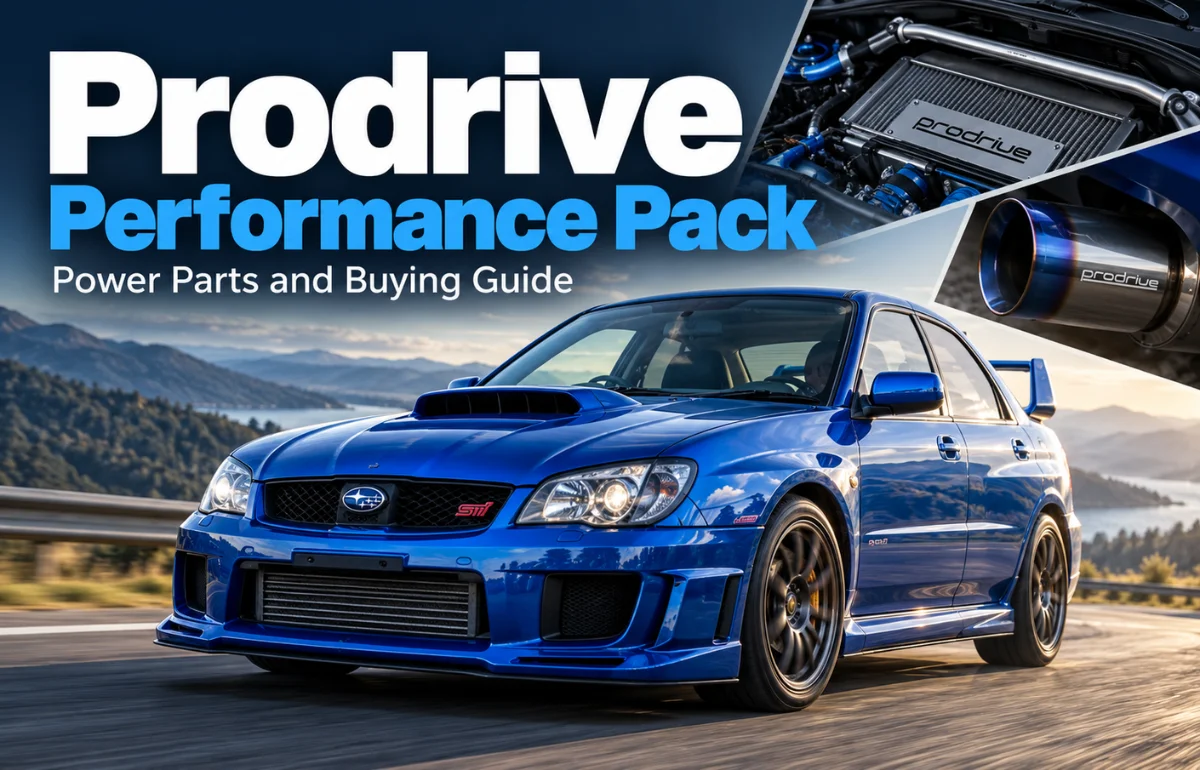
The Prodrive Performance Pack (PPP) is a model-specific set of engine and exhaust upgrades developed by British motorsport engineering company Prodrive for certain Subaru Impreza Turbo, WRX and WRX STI models. Offered through Subaru’s UK dealer network, these approved packages typically combined revised engine management with selected hardware to increase horsepower and, more noticeably, mid-range torque. A PPP-equipped Subaru isn’t a separate engine or a universal trim level: its exact specification depends on the model year and whether it’s a WRX or STI.
If you’re looking at an older Impreza advertised as “PPP,” the real questions are what was fitted, whether it’s still there and how much difference it makes. I’ve compared the original Prodrive brochures to separate documented facts from the assumptions that often follow these cars around.
Why Subaru and Prodrive Created the PPP
Prodrive’s association with Subaru grew out of its work preparing the marque’s World Rally Championship cars. The road-car packages borrowed that engineering reputation, but they were designed for everyday use, not to turn a family saloon into a competition car.
By the late 1990s, a UK Impreza buyer could choose a Prodrive-developed upgrade that delivered stronger performance without assembling unrelated aftermarket parts. The packages were supplied as matched combinations, with installation arranged through the dealer or Prodrive according to the programme and period.
That’s a meaningful distinction. PPP was a period-approved upgrade route, not merely a sticker, an exhaust tip or a generic software file labelled “Prodrive.” Some paperwork carried WR Sport branding, which is why you’ll see that name alongside PPP in old advertisements.
What’s Included in a Prodrive Performance Pack?
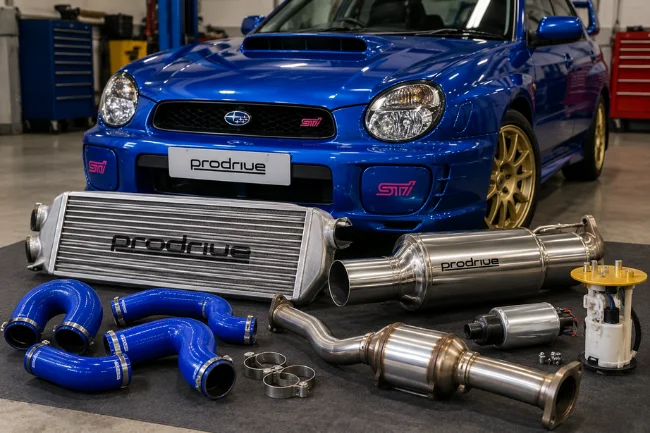
There isn’t one parts list covering every Subaru PPP. The 1999 Impreza Turbo brochure highlights intercooler piping and centre and rear exhaust silencers. The 2003 WRX lists an intercooler hose; the 2003 STI instead specifies a high-capacity fuel pump and high-flow catalyst. Treat the model’s own brochure as the authority.
Recalibrated ECU or Engine Management
The electronic control unit controls decisions affecting boost, ignition and fuelling. Prodrive revised the engine calibration to work with the corresponding hardware and deliver a broader torque curve.
I wouldn’t judge a claimed PPP solely by how hard the turbo pulls. A standard car can feel quick, and a later aftermarket remap can completely change the original calibration. An ECU inspection by a Subaru specialist, supported by paperwork, tells you more than a spirited test drive.
Sports Exhaust and Backbox
Stainless steel sports silencers were common features. Depending on the package, the exhaust changes could include more than the rear backbox. The aim was to complement the engine calibration while creating a distinctive exhaust note.
A branded silencer isn’t proof that the entire package survives. Exhausts rust, get damaged or are swapped for louder systems. Equally, a genuine PPP car may now have a replacement exhaust, leaving its history authentic but its present mechanical specification incomplete.
High-Flow Catalyst
Some STI packages included a high-flow catalytic converter to reduce exhaust restriction while retaining emissions-control equipment. The 2003 STI brochure lists one explicitly, whereas the contemporary WRX brochure doesn’t.
That difference matters when buying parts. Don’t assume every PPP had the same catalyst, or that fitting an unrestricted pipe is equivalent. Road legality and emissions compliance depend on the vehicle and the equipment currently installed.
Fuel Pump and Intercooler Hose
The 2003 and 2006 STI specifications include a high-capacity fuel pump. The WRX packages of those years instead identify a high-flow intercooler hose among their principal components.
You’ll occasionally see a particular pump brand or a red silicone hose claimed as universal PPP equipment. I would verify the part against period documents and the actual car before accepting that description. Colour alone proves very little.
Prodrive Performance Pack Horsepower and Torque by Model
Here’s the comparison I’d want in front of me when checking an advertisement. All figures below use metric horsepower (PS), not mechanical bhp, and come from period Prodrive literature for the specified UK-era packages.
The 2002 STI literature also quotes 305 PS and 405 Nm, but sharing headline figures doesn’t mean every component is identical. Check the correct version before ordering parts.
Notice something else: the numbers aren’t a simple progression from one generation to the next. A 2006 WRX PPP’s 420 Nm figure is higher than the 2003 STI PPP’s 405 Nm, even though the STI makes more peak power. Torque, power and engine speed describe different parts of the driving experience.
For primary records, see the 1999 Turbo brochure, 2003 WRX, 2003 STI, 2006 WRX, 2006 STI and 2008 STI documents.
How Much Faster Does PPP Make a Subaru?
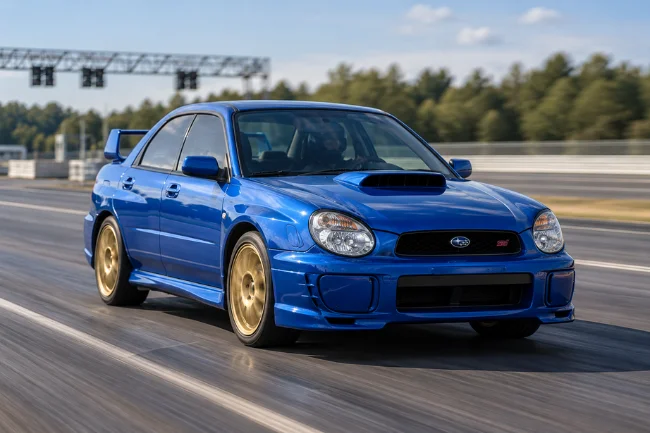
The headline horsepower gain tells only half the story. Prodrive designed these packs to increase usable torque through much of the rev range, where an everyday driver accelerates out of corners or overtakes without waiting for the engine to reach peak power.
Take the 2003 STI: the brochure reports a 0–60 mph improvement from 5.17 to 4.62 seconds and a 0–100 mph improvement from 13.69 to 12.20 seconds. Those are Prodrive’s controlled-period test results, not promises for a twenty-year-old car on modern tyres.
I pay closer attention to the shape of the torque curve than an isolated sprint figure. Tyre condition, clutch health, road surface and engine condition can change acceleration considerably. A healthy standard STI may be a better drive than a poorly maintained PPP example.
Which Subaru Models Had PPP, and Which Didn’t?
The documented range covers selected UK-market Impreza Turbo, WRX and STI variants from the late 1990s into the late 2000s. Enthusiasts often call the generations Classic, Bugeye, Blobeye, Hawkeye and hatchback, but those nicknames aren’t reliable enough to identify a package on their own.
Nor should you assume every imported WRX, Japanese-market STI or Forester accepted the same kit. Different ECUs, engines, emissions equipment and market specifications can make seemingly similar cars mechanically incompatible. A Prodrive-branded accessory for another Subaru is not automatically an Impreza PPP.
One easily missed detail: the brochures for the 2003 WRX and STI recommend 18-inch wheels and tyres to make the most of the additional torque. That’s a recommendation, not evidence that every PPP installation included new wheels.
PPP, WR Sport and Other Prodrive Upgrades: What’s the Difference?
PPP generally refers to the matched performance enhancement package. WR Sport appeared as branding on official material and across other Prodrive-associated accessories. Prodrive wheels, springs, styling pieces and exhausts could be fitted separately or appear on special editions.
So a car with Prodrive wheels and red suspension springs isn’t necessarily PPP-equipped. The reverse also applies: a genuine performance pack doesn’t require every accessory in the Prodrive catalogue.
I separate three claims when reading an advert: the car originally received PPP, the car still has its original PPP components, and the car has additional Prodrive accessories. They can all be true, but they’re not interchangeable.
How Can You Tell Whether a Subaru Has Genuine PPP?
The best evidence is a chain connecting the particular car, the historical fitment and the equipment still installed. No single badge, tailpipe or dyno printout can settle all three questions.
My preferred order is paperwork first, component inspection second and diagnostics third. Compare the certificate and invoice details with the vehicle identity, then check the installed parts against the brochure for that exact model year.
If the paperwork is missing, describe the vehicle accurately: “fitted with Prodrive parts” is more defensible than “genuine factory PPP” without supporting evidence. A skilled specialist may build a convincing mechanical picture, but missing provenance remains missing provenance.
What Should You Inspect Before Buying a PPP Subaru?
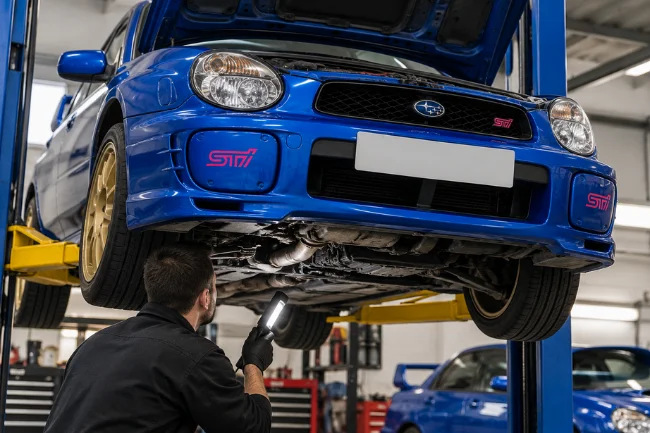
Start with the condition you’d examine on any older turbocharged Impreza: documented servicing, correct timing-belt history where applicable, cooling-system health, corrosion, signs of oil leaks and clutch or gearbox problems. A performance badge doesn’t cancel normal ageing.
Next, ask whether the engine is still in the specification covered by its calibration. Changes to injectors, turbochargers, intake arrangements or exhaust hardware can affect how well the original tune suits the car. An ECU described as “Prodrive” isn’t reassuring if the hardware has changed significantly since installation.
I would budget for a Subaru specialist’s pre-purchase inspection rather than paying extra based on the seller’s claimed power figure. Compression or leak-down testing, sensible diagnostic checks and a close look at the underbody can reveal issues no brochure ever will.
Reliability, Servicing and Fuel Requirements
A period Prodrive brochure isn’t a lifetime reliability guarantee. It does show that the parts were engineered as a coordinated package. The 1999 and early-2000s documents said routine servicing could continue with standard Subaru service parts, but that statement doesn’t replace today’s condition assessment.
Use the fuel recommendation for the correct package. The 1999 Turbo literature recommends 98 RON for maximum benefit, while the 2003 STI and 2006 models specify 97 RON. The 2006 WRX document says 95 RON could be used safely but might reduce performance. Those historical notes are model-specific, not permission to ignore the needs of a car with a later remap.
Keep the cooling system, spark plugs, fuel delivery and boost-control plumbing in good order. If the car hesitates under load, knocks, overheats or shows inconsistent boost, resolve the fault instead of assuming extra power is normal PPP behaviour.
For UK road use, disclose relevant modifications to your insurer and ensure the exhaust and emissions equipment remain legal. Current MOT inspection guidance still applies to modified cars, even where the original package met the standards of its day.
Is a Genuine PPP Worth More Than a Standard WRX or STI?
Potentially, but I wouldn’t assign a fixed premium. Provenance, overall originality, corrosion, mileage, maintenance records and local buyer demand all affect the value. Two otherwise similar cars can have very different repair bills ahead of them.
A complete certificate, invoices and period-correct parts may appeal to someone seeking a documented UK specification. A missing backbox or later remap may matter less to a driver who wants performance than to a collector seeking originality.
There isn’t a reliable universal 2026 price for the pack as a loose kit, either. The original packages were sold as complete upgrades, and modern sellers may offer individual used components of uncertain condition. Judge the asking price against the actual parts and verification available, not an unsupported “rare PPP” label.
Should You Choose PPP or a Modern Aftermarket Remap?
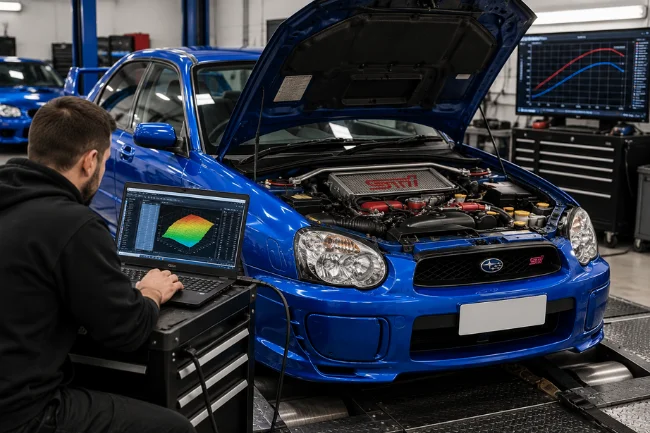
If I wanted a period-correct road car, I’d favour retaining a genuine, well-documented PPP configuration. It preserves a specific chapter of Subaru and Prodrive history, and a matched, original calibration may be more attractive to some future buyers.
If the priority were maximum performance or supporting non-standard engine hardware, I’d speak to a reputable Subaru tuner about a calibration tailored to the actual setup. That route offers flexibility but isn’t automatically safer, faster or better value. Competence, fuel quality, hardware condition and testing matter more than the name on the invoice.
Most importantly, don’t combine an original PPP calibration with random hardware upgrades and assume the result remains matched. Document every change so the next owner understands what the engine is really running.
Final Thoughts
The Prodrive Performance Pack is worth understanding because it’s more than a horsepower claim. It combines period Subaru-approved engineering, measurable torque gains and a history that matters to enthusiasts. Yet the details change from one Impreza to another.
Before buying, modifying or valuing a PPP car, find its exact model-year brochure, check the paperwork and have a knowledgeable specialist assess the current specification. That’s a stronger starting point than a badge on the boot.
Frequently Asked Questions
What does PPP stand for on a Subaru?
PPP stands for Prodrive Performance Pack, a model-specific set of performance upgrades developed by Prodrive for selected Subaru models.
How much horsepower does a Prodrive Performance Pack add?
It varies: the 2003 WRX rose from 225 to 265 PS, while the 2008 STI package raised output from 300 to 330 PS.
Does every PPP include a high-flow fuel pump?
No. Some STI packages specified an upgraded fuel pump, while several WRX packages focused on engine management, exhaust and intercooler-hose changes.
Can I still buy a new Prodrive Performance Pack?
The original period packages aren’t generally available as new dealer-fit kits. Used components may appear, but their suitability and condition need checking.
How do I verify a genuine Subaru PPP?
Start with a fitment certificate and dealer records, then compare the car’s parts and ECU configuration with the correct Prodrive brochure.

Noah Sterling is a technology research writer with 8+ years of experience covering emerging technologies, software trends, digital tools, and innovation. He creates practical, research-based articles to help readers understand the evolving technology landscape.