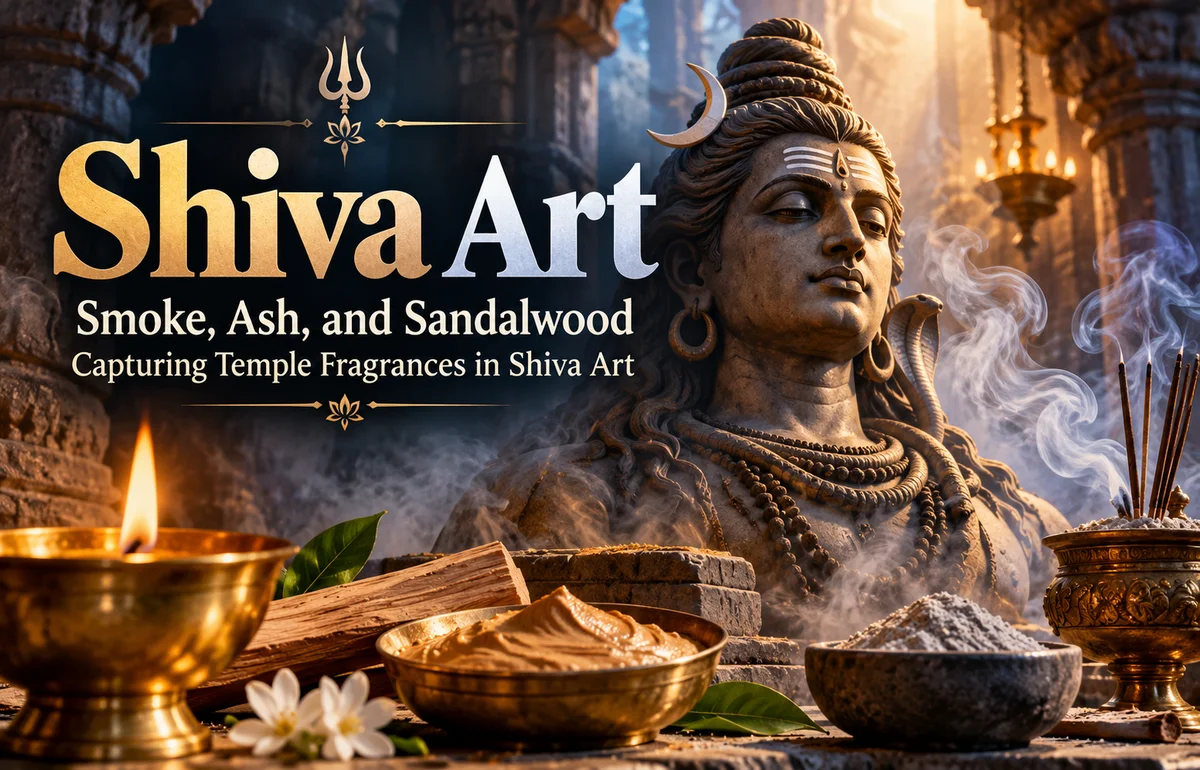
If you have ever stepped inside an ancient stone temple early in the morning, you probably remember the smell before anything else.
It hits you at the doorway: the crisp, woody scent of freshly ground sandalwood paste, the dry, earthy warmth of sacred ash (bhasma), the sharp sweetness of burning camphor, and the heavy trails of dhoop incense floating toward the rafters. It is an aroma that instantly slows your racing thoughts and tells your brain that you are standing in a sacred space.
As artists, designers, and creators who work with Lord Shiva iconography, we face an interesting challenge. Shiva is deeply tied to these sensory rituals, yet visual art only speaks to the eyes. How do we take something as invisible and emotional as scent and paint it onto a canvas or screen?
Capturing the mood of temple aromas in visual artwork is about more than just drawing smoke curves—it is about atmosphere, lighting, and texture. Here is a look at how scent inspires sacred art and how you can translate those quiet temple smells into striking visual pieces.
The Olfactory Language of Shiva Worship
To visually capture fragrance, it helps to understand what each scent represents in traditional Shiva iconography. Every ingredient offered during worship carries a specific mood and visual identity:
- Sandalwood (Chandan): Sandalwood represents calmness, cooling balance, and purity. Visually, it brings soft yellow and cream tones, matte textures, and clean lighting. When you think of sandalwood, imagine smooth surfaces bathed in soft, early-morning sunlight.
- Sacred Ash (Bhasma or Vibhuti): Ash is all about impermanence, focus, and detachment from the material world. Its visual language is monochrome, dusty, and raw. Think gray textures, fine grain, high contrast, and muted color palettes.
- Dhoop & Resin Smoke: Smoke is the bridge between the physical ground and the open sky. It carries prayers upward and creates depth. Visually, smoke gives us volumetric rays of light, soft focus, and layered haze.
Fragrance is one of the strongest triggers of memory and emotion we have. Whether you are lighting a simple stick of agarbatti at home or wearing fine luxury fragrances, aroma has an incredible power to change how a room feels and bring back specific moments in time. In Shiva art, our job is to trigger that exact same emotional response using light, shadow, and visual depth instead of scent molecules.
Translating Scent into Sight: The Artist’s Challenge
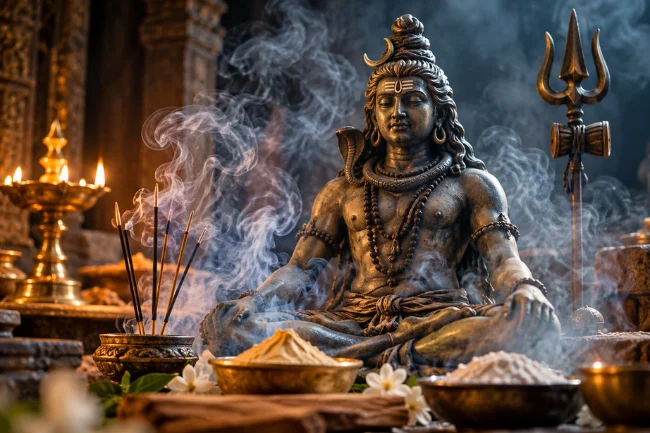
When you sit down to create a digital portrait, desktop wallpaper, or physical painting of Lord Shiva, how do you make the viewer almost smell the incense burning through the image?
Here are three key design techniques that turn flat pictures into atmospheric art:
1. Layering Depth (Background, Subject, Foreground)
In a real shrine, incense smoke does not just sit behind an idol; it weaves around it. Smoke drifts in front of the bronze or stone surface, catches the candlelight, and partially obscures the background.
To achieve this digitally, you need clean control over your main subject. For example, if you start with a photo of a carved stone sculpture or brass idol, you need to isolate it from its original setting so you can place atmospheric elements both behind and in front of it.
If you have a photo of a Shiva idol taken against a cluttered altar or brick wall, you can run it through the Adobe Express image background remover to instantly clean away the distracting background. Once you have a clean cutout of the deity, you can drop it onto a dark, moody canvas and build smoky, textured layers both behind the figure and floating lightly over the foreground. That separation of layers is what creates the illusion of real 3D air filled with floating incense.
2. Temperature Contrast (Camphor Glow vs. Sandalwood Coolness)
Temples are defined by color temperature contrasts. The cool gray of stone walls and the pale yellow of sandalwood paste contrast sharply with the fiery orange flicker of a camphor flame (aarti).
When working on your art:
- Use warm gold and amber hues around points of light (like lamps or glowing incense tips).
- Use cool slate gray, deep indigo, and muted teal in the shadow areas to mimic cool stone and lingering ash.
- The tension between warm light and cool shadow naturally suggests the atmosphere of a quiet, candlelit sanctuary.
3. Soft Lighting and Volumetric Dust
Smoke breaks up direct light. Instead of using hard shadows and sharp highlights, soften your light sources. Add subtle light beams (god rays) breaking through dark backgrounds. Adding a tiny bit of film grain or noise to your final image gives the air a dusty, tactile quality—resembling the fine powder of sacred ash floating in the air.
A Practical Step-by-Step Workflow for Creators
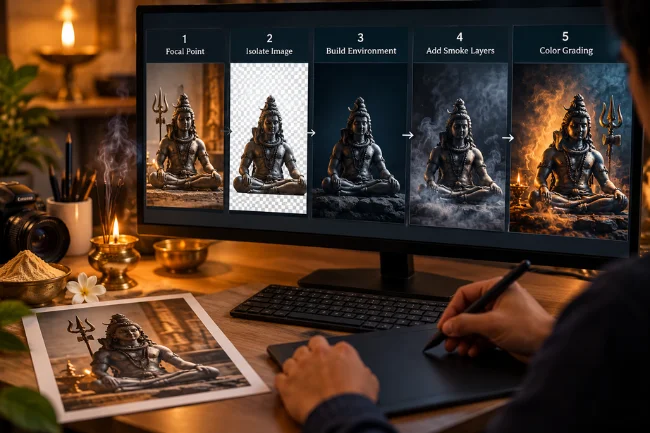
If you want to create your own atmospheric Shiva artwork—whether for a digital wallpaper, social media graphic, or framed print—here is a simple workflow you can follow:
- Step 1: Choose a Strong Central Focal Point
Start with a clear, high-resolution image of a Shiva statue, a Trishul, or a meditating silhouette. - Step 2: Isolate the Main Image
Remove any busy or unwanted backgrounds, so you have complete creative freedom over the mood. Using a quick online tool to isolate the focal point gives you a clean PNG with a transparent backdrop to build upon. - Step 3: Build the Environment
Place your isolated subject onto a dark background—dark charcoal gray, deep midnight blue, or warm chocolate brown work best. Avoid pure pitch black, as natural dark spaces always have some warmth or cool color in them. - Step 4: Add Smoke and Atmosphere Layers
Search for free smoke overlays or brush subtle white and light gray swirls into your composition. Reduce the opacity so the smoke looks light and translucent. Place one smoke layer behind the deity and a lighter, softer smoke layer over the front. - Step 5: Apply Color Grading
Warm up the highlights with a soft golden orange tint near the base (suggesting brass lamps or incense embers) while keeping the top and outer edges cool and dark.
Bringing It All Together
Art is at its best when it speaks to more than one sense. While a picture cannot literally release the scent of sandalwood or dhoop, thoughtful composition, warm lighting contrasts, and layered atmospheric effects can trick the mind into remembering those scents instantly.
By focusing on depth, clean subject isolation, and the interplay between light and smoke, you can turn a simple graphic into a serene, meditative experience that transports readers straight to the quiet heart of a temple.
What techniques do you use to bring mood and atmosphere into your creative work? Give these layering steps a try on your next piece and see how much richer the final image feels.

Noah Sterling is a technology research writer with 8+ years of experience covering emerging technologies, software trends, digital tools, and innovation. He creates practical, research-based articles to help readers understand the evolving technology landscape.