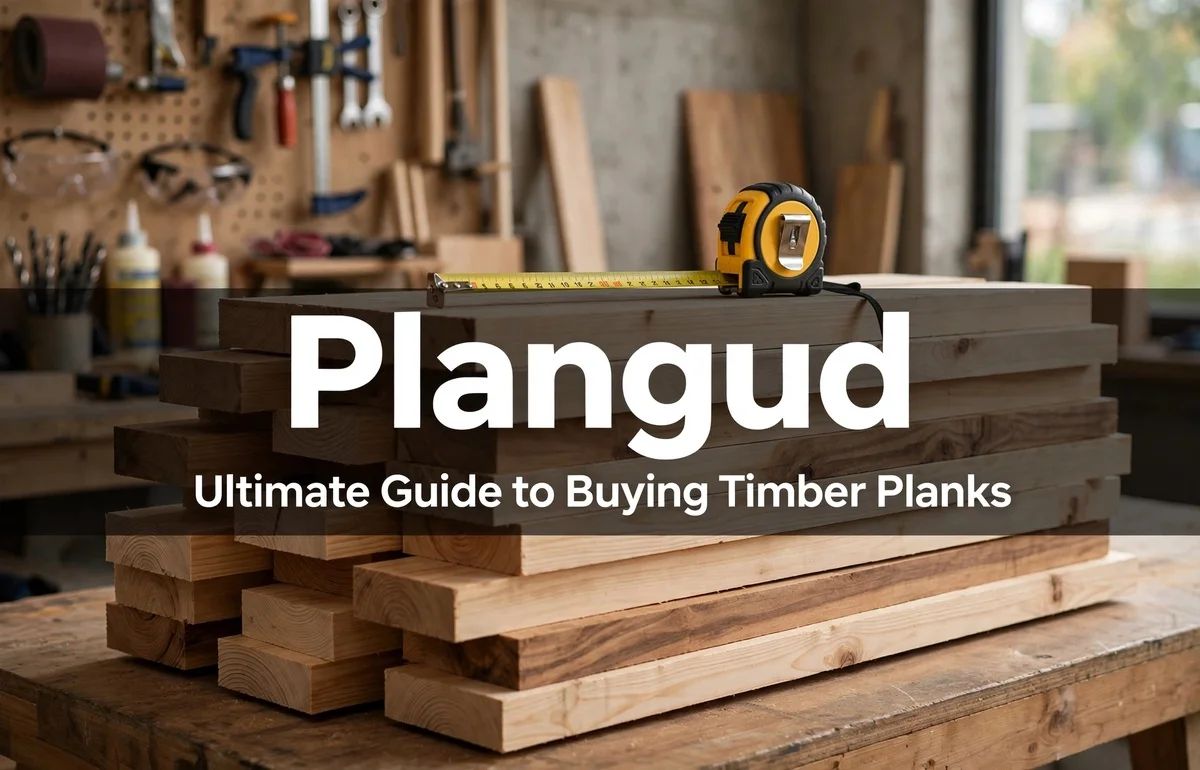
Plangud is an Estonian word meaning “planks,” the plural of plank in its timber sense. It refers to substantial wooden boards used in building, joinery, and related work. The word identifies a form of wood; it does not, by itself, specify the tree species, strength, treatment, or suitability for a particular project. The Estonian Language Institute records this meaning and examples of its use.
When I researched the term, I found conflicting explanations online. That made checking a dictionary more useful than collecting another set of unsupported definitions.
If you came here to understand a timber listing or plan a home project, the next question is practical: which planks do you actually need? I’ll explain the terminology, the buying decisions that matter, and a simple way to compare costs without overlooking waste.
What Plangud Means in Context
The dictionary describes a plank as a relatively thick board, approximately 5–10 centimetres thick in that particular definition. It also records a fence-related meaning for the singular word. Context therefore matters when translating a sentence.
I would not turn that dictionary description into a universal purchasing specification. A translation explains a word; a supplier’s product sheet tells you what will arrive.
For buying purposes, ask for measurements in millimetres and confirmation of whether they describe the sawn stock or the finished piece. A photograph beside a tape measure is helpful, but written dimensions belong on the quotation.
An Estonian name also does not establish where the timber was grown or processed. If origin matters to your purchase, ask for that information separately.
Is Plangud a Planning App or Productivity Method?

I could verify the timber meaning through an established dictionary. The productivity interpretation in the competing article I reviewed did not come with an identifiable creator, official product documentation, or evidence of a defined methodology.
A business could use the same word as a brand name. However, that would need verification through the specific business and its documentation. I would treat a claimed app as a separate research question rather than attach software features to an ordinary timber term.
What the Word Does Not Tell You About the Wood
Two products described as plangud can require very different preparation. My first buying question would be, “What condition is this material supplied in?”
The following descriptions answer different questions. They can overlap: a plank might be both kiln-dried and planed, for example.
| Description | What it tells you | What you still need to check |
|---|---|---|
| Rough-sawn | Surfaces retain the sawing texture | Allowance for flattening and finishing |
| Planed | Surfaces have been machined smoother | Actual dimensions and remaining defects |
| Kiln-dried | A controlled drying process was used | Present moisture content and storage history |
| Preservative-treated | A preservation treatment was applied | Approved exposure and intended use |
| Reclaimed | The timber has had a previous use | Previous coatings, contamination, and concealed metal |
Keep these descriptions in separate fields when comparing quotations. Otherwise, a cheap rough-sawn offer can appear equivalent to material that already includes substantial preparation.
The same applies to photographs. Attractive grain helps you judge appearance, but it cannot establish moisture content, a structural grade, or the suitability of a preservative treatment.
Where Wooden Planks Can Be Used
Furniture and Interior Joinery
Tabletops, benches, and shelving are possible destinations for solid timber, but the finished design determines the requirements. Start with the dimensions of each component and identify which faces will remain visible.
For a painted shelf, I would give more attention to preparation and the finished surface than to dramatic grain. For a clear-finished tabletop, I would ask to see the actual boards because colour and grain become part of the design.
This is also where a cutting list helps. Four short components may fit around an appearance defect that would make the same board unsuitable for one long, uninterrupted piece.
Floors and Wall Finishes
If your project involves flooring or wall lining, establish whether you are buying raw timber or a manufactured installation product. Ask about the profile, usable face width, fixing method, and supporting installation instructions.
A rectangular plank should not be assumed ready to install as flooring. The product description needs to address that use, and the project needs an appropriate substrate and installation specification.
For a visible wall, request a sample with your intended finish. Reviewing it under the room’s lighting is more informative than choosing from a small online photograph.
Outdoor Projects
Garden structures, fencing, and exterior seating introduce exposure questions. Describe the location clearly to the supplier: sheltered or exposed, well ventilated or enclosed, above ground or in contact with soil.
For preservative-treated wood in the United States, AWPA use categories distinguish exposure conditions. UC3B concerns exterior above-ground exposure, while UC4A covers general ground-contact conditions; some demanding above-ground situations also require ground-contact treatment. Follow the application details rather than selecting from the category name alone.
These are US designations. For an Estonian or other European purchase, request the applicable local specification instead of assuming identical labels.
How I Would Compare Plangud Before Buying
Begin With the Intended Use
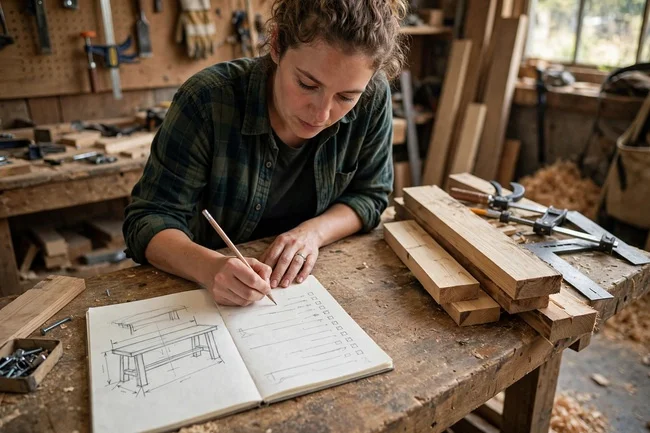
Write a short description of the job before contacting suppliers. “Wood for a bench” leaves too much open. Include its location, component dimensions, expected loading, finish, and whether you need machining.
For anything load-bearing, request an appropriate structural specification from the designer or qualified professional. I would not select a beam or walking surface from appearance, thickness, or a general article alone.
A useful quotation answers your specification point by point. If a seller proposes a substitute, ask which characteristics change and why the alternative remains suitable.
Ask for the Species and Actual Size
“Wooden planks” is too broad for a meaningful comparison. Request the named species, actual thickness and width, available lengths, and acceptable dimensional variation.
Then ask what happens between the quoted size and your finished component. Does the price include planing? Will trimming remove defective ends? Are all pieces the same width?
Confirm how mixed-length packs are supplied, too. A pack containing enough total metres can still leave you short if too few pieces meet your minimum cutting length.
Inspect the Pieces You Will Receive
An inspection should cover both faces, both edges, and the ends. Record visible splits, loose knots, uneven edges, and obvious distortion, then discuss their acceptability for the intended cuts.
Where possible, ask the supplier to identify the actual batch rather than show a representative display board. For remote orders, agree on the rejection and replacement policy before payment.
Keep the distinction between appearance and performance clear. A visible feature may be acceptable in decorative work but require a different assessment in a structural component.
Why Moisture Content Deserves Its Own Check
Wood exchanges moisture with the surrounding air. Changes in moisture can change its dimensions, which is why a board’s condition at installation matters. The USDA Forest Products Laboratory recommends matching wood moisture content as closely as practical to the conditions it will experience in service.
“Kiln-dried” tells you about processing, not a permanent moisture level. Storage and transport still matter. I would ask for a recent reading, how it was taken, and the manufacturer’s installation requirements.
Avoid assuming every project needs the same moisture percentage or the same acclimation period. Indoor humidity, outdoor exposure, board thickness, and the product itself affect the decision.
A moisture meter needs correct use and appropriate settings. One convenient reading should not become proof that an entire delivery is ready. Coatings can slow moisture-related changes, but they do not eliminate them.
For a home project, include a storage plan in the order discussion: where the wood will wait, how it will be supported, and what checks are needed before cutting or installation.
How to Compare Prices Without Being Misled
There is no useful universal price for plangud. Request current quotations for the same species, dimensions, preparation, quantity, and delivery destination.
First, identify the pricing unit. Suppliers may quote per piece, linear metre, square metre, or cubic metre. Those figures cannot be compared directly without conversion.
For a rectangular piece, the basic calculations are:
- Face area in square metres = width in metres × length in metres.
- Volume in cubic metres = thickness × width × length, all in metres.
- Material cost per usable square metre = purchase cost ÷ usable face area.
Face area is not automatically installed coverage. Profile overlaps, trimming, and the layout may change how much finished surface an order provides.
A Worked Comparison With Hypothetical Prices
Suppose two offers have the same species, thickness, grade, and preparation. The following dollar amounts are invented to illustrate the calculation, not current market prices.
| Measure | Offer A | Offer B |
|---|---|---|
| Width | 150 mm | 120 mm |
| Length | 3 m | 3 m |
| Price per board | $18 | $15 |
| Gross face area | 0.45 m² | 0.36 m² |
| Price per gross square metre | $40.00 | $41.67 |
| Assumed usable yield | 90% | 95% |
| Price per usable square metre | $44.44 | $43.86 |
Offer B costs less per board but more per gross square metre. Under the stated yield assumptions, it becomes slightly cheaper per usable square metre.
That reversal is why I would compare a cutting plan alongside the price. The yield percentages are assumptions for this example; your measurements and required components must determine your own allowance.
Finally, add delivery, machining, finishing materials, fixings, and disposal where relevant. An inexpensive board that needs paid preparation may produce a more expensive finished project.
Buying Responsibly Without Relying on Vague Claims
I would ask what a sustainability claim actually covers. A seller describing timber as “natural” or “eco-friendly” has not yet explained its sourcing.
FSC distinguishes three labels: FSC 100% identifies material from FSC-certified forests; FSC Recycled identifies recycled material; and FSC Mix permits a combination of certified, recycled, and controlled sources. These labels communicate different sourcing claims.
For your purchase, ask which claim applies to the specific product and what documentation accompanies it. A certification logo on a supplier’s homepage is a starting point for questions about the item you are ordering.
I also recommend reviewing the cutting list before placing the order. Can shorter stock satisfy the cutting list? Can offcuts serve another part of the project? Am I ordering a decorative grade for faces that will never be seen?
Those questions provide practical ways to reduce unnecessary purchasing. They also keep sustainability connected to the actual job rather than leaving it as a marketing adjective.
A Better Enquiry to Send Your Supplier
Before requesting a price, prepare one page containing:
- The intended use and whether it is indoors or outdoors.
- The species or performance requirements already specified.
- Finished component dimensions and quantities.
- Minimum usable lengths and acceptable visible features.
- Required machining, treatment, and finish preparation.
- Moisture and installation requirements for the selected product.
- Delivery access, timing, and storage arrangements.
Ask the supplier to identify anything they cannot confirm. An explicit “not included” is more useful than an assumption discovered after delivery.
Keep the quotation, product information, and delivery photographs together. If the material differs from what was agreed, you then have a clear record for resolving the issue.
Choosing Planks With Confidence
Understanding plangud starts with its timber meaning. Choosing well requires a more specific conversation about the material, the finished dimensions, the environment, and the work needed before installation.
My next step would be to make a cutting list and send the same specification to two suppliers. Compare usable material and total project cost, then resolve any unanswered technical questions before ordering.
Frequently Asked Questions
What does Plangud mean in English?
In a timber context, plangud means “planks” in Estonian. It is the plural of plank.
Is Plangud a particular type of wood?
No. The word does not identify a species; ask the supplier which timber the product contains.
Can plangud be used outdoors?
Suitable planks can be used outdoors, but the species, treatment, exposure, and installation specification must match the project.
What is the difference between rough-sawn and planed planks?
Rough-sawn planks retain their sawn surfaces. Planed planks have smoother machined surfaces; confirm their actual finished dimensions.
How much do plangud cost?
Prices depend on the timber and order specification. Compare current quotations using the same dimensions, preparation, quantity, and pricing unit.

Olivia Parker is a home improvement research writer with 8+ years of experience covering home design, renovation ideas, maintenance tips, and practical living solutions. She creates easy-to-follow content to help readers make informed decisions about improving their homes.