
MagazinePanda.com is an online magazine that publishes informational content across multiple subjects. Its indexed homepage description highlights digital life, technology, artificial intelligence, online culture, and product reviews. In simple terms, it is a web publication where readers can explore articles rather than a service for creating or downloading magazines.
When I researched the name, I found that the useful questions went beyond its topic list. Readers also need to know which website they are visiting, how to judge an article, and whether a particular explanation deserves their trust.
This review looks at the publication’s publicly described focus and offers practical ways to evaluate its content. I also explain where the available evidence leaves questions unanswered, so you can make a sensible decision without relying on promotional claims.
What Kind of Website Is MagazinePanda.com?
The clearest way to understand the platform is as an online publication with a magazine-style identity. Its indexed About page describes a publication covering a broad range of subjects, while the homepage emphasizes technology and digital culture.
A digital magazine can bring different interests into one place. You might arrive through a search about a digital tool, then explore an internet trend. Its usefulness depends heavily on the quality of individual articles.
I would distinguish that format from a magazine subscription marketplace. The name alone does not establish that the website sells print editions, provides downloadable issues, or gives access to other publishers’ magazines.
If you want a subscription service or magazine-reading app, check the site’s actual offerings before assuming it serves that purpose.
What Topics Does MagazinePanda.com Cover?
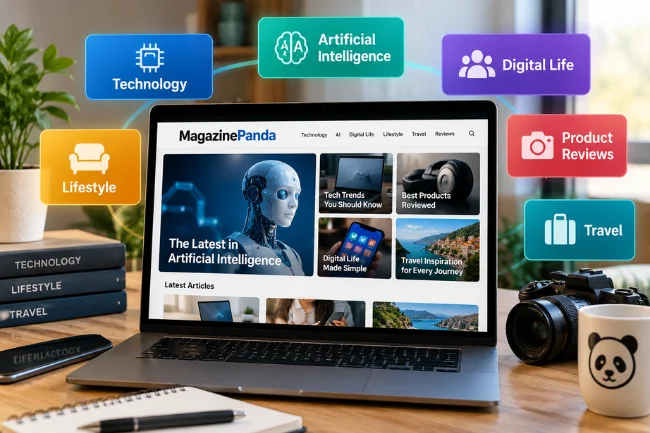
Its indexed homepage points to a focus on digital life and technology. Broader descriptions also refer to lifestyle and other general-interest coverage, and a travel category appears in search results.
These signals establish an editorial direction without showing how active each category is.
Technology and Artificial Intelligence
Technology coverage is useful when it explains what a tool does and the circumstances in which someone would use it. An article about an AI application, for example, should help you understand its capabilities, limitations, access conditions, and handling of your information.
I look for details that affect an actual decision. Does a review identify the version being discussed? Does it explain whether a feature requires payment? Can I tell which observations came from testing and which came from the manufacturer’s description?
Those questions help you assess the technology articles you encounter.
Digital Life and Online Culture
Digital life covers how people use internet services, apps, connected devices, and online communities. Online culture adds the language, behaviors, and trends that develop around those activities.
A useful explanation should give enough context for someone unfamiliar with the subject. If an article discusses a viral trend, I want to understand where it came from, what the term means, and whether the explanation describes a temporary moment or an established practice.
The date matters here. A description of a social platform can become less useful after the platform changes its interface or rules.
Product Reviews and Consumer Information
Product reviews are part of the website’s indexed positioning. That tells me what the publication intends to cover, but it does not establish how its reviews are produced.
For any review, I would check whether the writer used the product, identifies a testing period, and explains disadvantages. A useful review also tells you who would benefit and who might prefer an alternative.
For illustration, someone buying a budget accessory needs different information from someone replacing professional equipment. Price, compatibility, durability, and support can matter more than an enthusiastic description of features.
Lifestyle and Travel
The broader publishing identity leaves room for subjects outside technology. An indexed travel category provides one concrete sign of that range.
I would evaluate practical lifestyle content by how well it accounts for the reader’s circumstances. A travel article should make its location clear and distinguish general inspiration from information that requires current checking, such as opening hours or entry requirements.
These are evaluation standards; I have not verified every article on the website.
Check the Domain Before You Read
One useful finding from my research was the presence of similarly named websites. Search results included magazine-panda.com, magazinepanda.net, and themagazinepanda.com alongside pages on www.magazinepanda.com.
These are distinct domain names. Similar branding does not, by itself, establish shared ownership or an official relationship.
If you are researching MagazinePanda.com, pay attention to the address attached to each result. A hyphen, an added word, or a different ending can send you to another website. Information about one domain should not automatically be applied to another.
The www version and the version without www are hostname variations within the same domain. That is a different situation from replacing .com with .net or adding a word before the name.
I would check the final address after opening a result, especially before contacting an editor, submitting work, or sharing account information. This simple check also prevents confusion when comparing reviews or publishing offers.
What My Research Confirmed and What Remains Unclear
I checked public search results and attempted to open the website’s homepage and supporting pages on October 13, 2026. Direct requests returned access errors, including a 403 response.
That limited my ability to test the live interface. An access error in a research environment does not establish that the site is unavailable to ordinary visitors, unsafe, or permanently closed.
I could verify its indexed descriptions and the existence of several indexed page addresses. I could not independently confirm its ownership, current payment conditions, publication schedule, or live mobile experience.
A claim that a publication is convenient or trustworthy needs supporting evidence. Screenshots, named articles, and a dated testing method would make that judgment easier to assess.
How I Would Evaluate Its Articles
Rather than judging the whole publication from its homepage, I would compare a small sample of articles. My suggested approach is to choose one recent article, one practical explanation, and one review or opinion piece.
This is a proposed evaluation method, not a claim that I completed a full editorial audit. It gives you a manageable way to see how the publication handles different kinds of content.
Start With the Question You Need Answered
Write down what brought you to the page. If you searched for a product’s compatibility, the article should answer that question clearly before discussing broader trends.
I find this a useful editorial test: after reading the opening sections, can I explain what I learned that I did not know before? If the answer is only that a topic is popular or useful, the page may need more substance.
Look for Evidence You Can Follow
Check whether factual claims connect to identifiable sources. Product specifications should trace back to the manufacturer. A reported announcement should connect to the original statement where possible.
Original reporting can be valuable too. Named interviewees, clearly described testing, and photographs that document an actual experience help you understand how the writer reached a conclusion.
Source links should support identifiable claims, so readers can follow the evidence.
Separate Facts From Interpretation
A writer can reasonably have an opinion about a product, trend, or publication. I want that opinion explained through observations rather than presented as a universal fact.
For example, saying an app feels convenient is an assessment. Saying it supports a particular file type is a factual claim that can be checked. Good writing makes the difference easy to recognize.
How a Broad Digital Magazine Compares With Other Sources
MagazinePanda.com is described as a broad online publication. The table below compares that format with other information sources; it is not a performance ranking of the website.
| Reading need | Broad digital magazine | Specialist publication | Primary source |
|---|---|---|---|
| Discover an unfamiliar subject | Can provide an accessible introduction | May assume some prior knowledge | May require more background |
| Understand a technical detail | Depth varies by article and author | Often offers narrower subject coverage | Useful for official specifications |
| Compare products | Helpful when testing is explained | Can provide detailed specialist comparisons | Usually describes one provider’s product |
| Explore several interests | Convenient for browsing across subjects | Focuses on a defined field | Focuses on its own remit |
| Verify a significant claim | Follow the article’s supporting evidence | Check sourcing and methodology | Consult the relevant original document |
I use these formats for different parts of the same task. A magazine article can introduce a subject, a specialist source can add depth, and an original document can confirm a key detail.
That approach keeps an engaging explanation connected to the evidence behind it.
What Makes a Publication Worth Trusting?
I assess credibility at both the website and article level. A publication’s identity matters, but individual pages still need to show why their information deserves confidence.
Clear Authorship and Relevant Experience
A byline helps readers identify responsibility for an article. An author profile becomes more useful when it explains experience relevant to the subject being discussed.
For product coverage, evidence of actual use can matter. For an interview, the writer should explain who supplied the information. Credentials and experience should be described specifically enough that readers can understand their relevance.
I do not assume expertise simply because a site covers many topics. Broad coverage makes clear authorship and appropriate sourcing especially valuable.
Dates That Explain What Changed
A recent date tells you when a page was published or updated. It does not automatically show that all its claims were checked again.
For a software review, a useful update might identify a new version, changed pricing, or a revised feature. For travel content, it might record a change to local arrangements.
I look for evidence that an update reflects a meaningful change. That makes the date useful rather than decorative.
Transparent Commercial Relationships
Advertising, sponsorship, and affiliate links can support a publication. Readers still benefit from knowing when a commercial relationship may influence what appears on a page.
A disclosure should be easy to find and relevant to the content. Editorial judgments are easier to assess when the article explains how products were selected and whether anything was supplied by a company.
These are checks I would apply to MagazinePanda.com and any comparable publication. They do not imply that a particular commercial arrangement has been verified here.
Is MagazinePanda.com Free and Does It Require Registration?
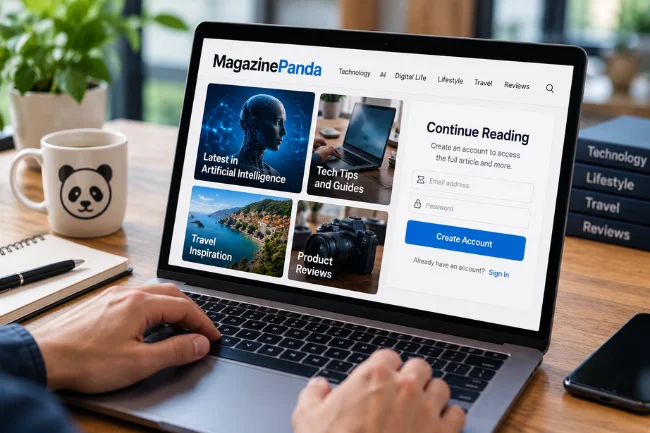
I could not verify the site’s current subscription, payment, or registration conditions. An indexed page can show that content exists without revealing every condition for accessing it.
If you can open an article, check whether the complete text is available and whether a prompt appears before further reading. If a subscription is offered, read what it includes and how renewal and cancellation work before paying.
The same principle applies to newsletters or accounts. Check which information is requested and whether an account adds a feature you actually want.
I would avoid describing the publication as completely free or subscription-based without current confirmation. A useful review should leave a question open when the evidence cannot answer it.
What Bloggers and Businesses Should Check Before Contacting the Site
The indexed contact-page description mentions editorial feedback, story pitches, support, and business queries. That suggests a route for inquiries, but it does not confirm acceptance of guest posts, sponsored articles, or paid placements.
If you want to contribute, begin by asking about the editorial requirements. Clarify subject fit, authorship, review procedures, disclosure, and whether you retain rights to reuse your work.
For a paid arrangement, obtain written terms before committing. Those terms should explain what will be published and what happens if the agreed service is not delivered.
I would judge a publishing opportunity by its relevant readership and editorial quality. Claims about authority scores or guaranteed search visibility deserve independent checking.
Google’s spam policies address buying or selling links for ranking purposes. Its guidance allows advertising and sponsorship links when they are appropriately qualified with attributes such as rel="sponsored" or rel="nofollow". A paid article should therefore be evaluated as a publishing arrangement, without assuming it guarantees SEO gains.
Who Might Find MagazinePanda.com Useful?
Based on its publicly described focus, the publication may appeal to readers who want introductions to digital topics and enjoy browsing across interests.
I would start with a specific article rather than committing to an opinion about the whole site. Read it, check its evidence, and decide whether it answers your question well enough to justify exploring further.
For detailed technical work or consequential decisions, use the article as an entry point and verify the relevant information with an appropriate original source. The amount of checking should match the importance of the decision.
That is a practical way to use a broad digital magazine: appreciate a clear explanation while keeping control over how you assess its claims.
My Final Take
MagazinePanda.com presents itself as a broad online magazine with a focus on digital life, technology, and culture. Its usefulness for you depends on the specific articles you find and the evidence they provide.
My next move would be simple: confirm the domain, choose one article that matches your question, and follow its strongest factual claim back to its source. If the explanation holds up and leaves you better informed, explore another subject.
Frequently Asked Questions
What is MagazinePanda.com?
MagazinePanda.com is an online magazine whose indexed descriptions emphasize digital life, technology, AI, culture, and product reviews, with broader general-interest coverage.
What topics does MagazinePanda.com cover?
Public descriptions highlight technology and digital culture. Broader lifestyle coverage and an indexed travel category also appear, although current category activity was not fully verified.
Is MagazinePanda.com free to read?
I could not confirm its current access or subscription conditions. Check the article page and any payment terms before assuming all content is free.
Is MagazinePanda.com a reliable website?
Assess each article’s author, sources, dates, and disclosures. My research did not establish a site-wide reliability verdict.
Can I submit a guest post to MagazinePanda.com?
Its indexed contact description mentions story pitches and business inquiries. Ask the publication directly about contributions; guest-post acceptance and pricing remain unverified.

Noah Sterling is a technology research writer with 8+ years of experience covering emerging technologies, software trends, digital tools, and innovation. He creates practical, research-based articles to help readers understand the evolving technology landscape.