Transjoaimo is listed as the trading name of Joaimo Silva Rodrigues – Transportes Ltda, a Brazilian road freight business associated with Barueri, São Paulo, and CNPJ 10.385.087/0001-16. In plain English, the clearest documented use of the name points to a transport company. The connection appears in Econodata’s company listing.
When I researched the name, I found that identifying the business was only part of the task. Readers also need to distinguish company information from assumptions about services, websites, and reliability.
I’ll explain what the available evidence supports, how to check the details yourself, and what to ask if you’re considering a freight booking. My perspective here comes from reviewing public sources, rather than using the company’s services.
What the Transjoaimo Name Refers To
The most useful starting point is the relationship between the short trading name and the longer legal company name. Someone might encounter one on a directory page and the other on a document, then wonder whether they describe the same business.
For this particular listing, the registration number provides the connection. I would use it as the reference point when comparing records, rather than relying on matching logos or similar wording.
Reading the Portuguese Business Terms
On Brazilian company pages, “nome fantasia” refers to the trading name, while “razão social” identifies the registered legal name. CNPJ refers to Brazil’s national register of legal entities and the identification number associated with a registered entity.
You don’t need to become familiar with every administrative term to research a supplier. Start by checking whether the trading name, legal name, and registration details agree across the documents relevant to your enquiry.
Brazil’s official CNPJ consultation service provides access to company registration information and registration-status documents.
A Name Is Not a Verified Origin Story
It might be tempting to interpret the spelling or construct a story about how the name developed. I haven’t found a company statement explaining its origin, so I wouldn’t present an etymology as fact.
For most readers, the useful question is what the name identifies. A documented business connection answers that more effectively than an imaginative explanation of its syllables.
What Public Listings Say About the Business
Econodata places the company in Barueri, São Paulo, and records a principal activity involving municipal road freight, excluding dangerous goods and household removals. Its listing also contains secondary activities involving wider freight transport, removals, storage, and logistics-related work.
Those entries help describe the registered business profile. They don’t tell me which routes are available this week, what vehicles can be booked, or whether a particular consignment will be accepted.
I would also avoid turning a registered location into a service-area claim. A business address answers where an entity is listed; it doesn’t establish every destination it serves.
If you need to visit a premises, collect goods, or arrange a delivery, confirm the operational address first. Ask whether it is an office, warehouse, loading point, or correspondence address, and obtain the relevant opening hours.
Why Online Explanations Can Be Confusing
During my research, I encountered an article framing Transjoaimo as an unfamiliar digital term with no settled definition. That discussion focuses on online language and branding rather than identifying a specific business.
This creates an awkward experience for someone who simply wants to understand a name on a quotation or search for a transport provider. The page may discuss the keyword extensively without answering the practical question behind the search.
My approach is to separate each claim and ask what would establish it. A company listing can support an identification. A product page would be needed to support a software claim. A description of internet culture doesn’t establish either one.
The comparison below shows how I would assess those different interpretations.
| Interpretation | Evidence I would look for | How I would treat it |
|---|---|---|
| A transport business | Matching legal name, registration number, and business records | A supported identification, subject to current checks |
| A software product or platform | Identifiable operator, product documentation, and an official service | Unestablished without product-specific evidence |
| A cultural or linguistic term | Independent examples showing consistent usage | A possible separate usage requiring its own sources |
| An official website or social account | A demonstrable connection to the registered business | Unverified until ownership is established |
One interpretation doesn’t automatically exclude every other use of the same word. However, a separate meaning needs separate evidence. I wouldn’t combine unrelated claims into one definition just because they share a spelling.
How I Would Verify Transjoaimo Before Making Contact
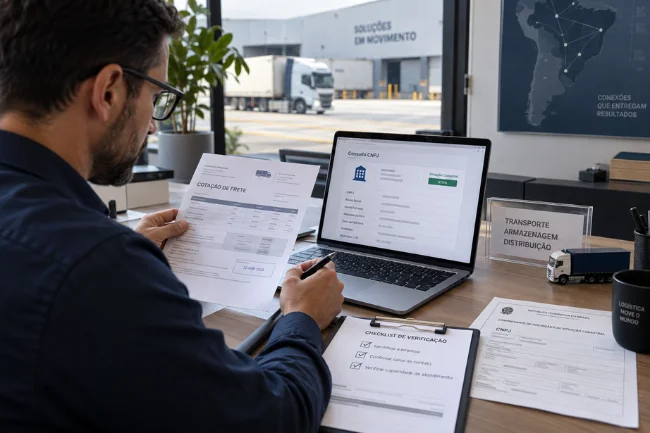
There are three questions I would answer independently: which entity is involved, whether the contact channel belongs to it, and whether it can provide the service I need.
Check the Company Record
Start with the official CNPJ service and compare the result with the details on your quotation or correspondence. The government service includes access to registration status and information about partners and administrators.
I would record the date of the check and retain the result alongside the quotation. That gives me a reference if someone later changes an address, business name, or other detail in the booking paperwork.
An apparent mismatch deserves an explanation. It may have an ordinary cause, such as outdated directory information, but I would resolve it before proceeding.
Check the Relevant Transport Registration
Brazil’s National Land Transport Agency, ANTT, maintains the RNTRC register for paid road freight carriers. Its official guidance describes the registration requirement and carrier categories.
ANTT also offers a public RNTRC consultation page. I would use the applicable identifiers to check the intended carrier rather than treating a business-directory entry as a substitute.
This article does not establish Transjoaimo’s current RNTRC status. A reader arranging transport should obtain a current result and clarify which company will actually carry the goods.
Verify the Communication Channel
I haven’t established a company-controlled website or customer-service number from the sources reviewed. That limitation matters when choosing where to send documents or booking requests.
A search result containing the company name may belong to a directory, an intermediary, or an unrelated publisher. Check who operates the page before assuming that its enquiry form reaches the business directly.
For any carrier, I would ask the contact to identify the contracting entity and explain its relationship to the named business. The same details should appear consistently in the written quotation and subsequent correspondence.
Which Freight Services Should You Ask About
Once the identity checks are complete, the next question is whether the provider can handle your particular shipment. I wouldn’t use a broad description such as “logistics services” as the basis for a booking.
Instead, I would describe the job and ask for written confirmation of the service offered. This avoids turning a registered activity into an assumed promise.
Route and Delivery Arrangements
Give the collection and delivery locations, including postal codes and access restrictions. Ask whether the quoted service covers the full journey and whether another carrier will handle any part of it.
I would also distinguish the pickup appointment from the delivery estimate. A confirmed collection date does not answer when the recipient should expect the goods or whether a delivery appointment is included.
If the destination has limited receiving hours, tell the provider before requesting a price. Ask what happens if the vehicle arrives outside that window and who coordinates a revised appointment.
Cargo Type and Handling
Describe the goods clearly, including packaging, dimensions, weight, quantity, and declared value. Mention fragility, temperature requirements, hazardous characteristics, or unusual handling needs where relevant.
For example, imagine two hypothetical shipments of equal weight: compact metal components on a pallet and delicate display panels in oversized crates. I would not assume that the same vehicle, loading method, or price would suit both.
Ask who provides loading equipment and who is responsible for preparing the goods. If the shipment requires specialist handling, request specific confirmation that the proposed service can accommodate it.
Storage and Transfers
If your shipment needs storage between collection and delivery, ask where it will be held and how that arrangement appears in the quote. Clarify access, handling, release procedures, and any additional charges.
I would also ask whether the goods remain on one vehicle or move through intermediate locations. The answer helps me plan packaging, communication, and the information the recipient needs.
How to Compare a Transjoaimo Quote With Alternatives
I would compare the scope of each offer before comparing the total price. A lower headline figure is difficult to evaluate when one quotation includes services that another leaves undecided.
Use the same shipment description for every provider. If the dimensions, collection conditions, or delivery requirements change between enquiries, the resulting prices may describe different jobs.
The following table is a comparison checklist, not a statement of services currently offered by Transjoaimo.
| Comparison point | What I would request | Why it helps |
|---|---|---|
| Contracting entity | Legal name and registration details | Identifies who is making the offer |
| Service scope | Collection, transport, unloading, and any storage | Reveals what the quoted price includes |
| Timing | Pickup window and delivery commitment | Makes scheduling assumptions visible |
| Additional charges | Conditions for waiting, redelivery, or handling fees | Supports a meaningful total-cost comparison |
| Cargo protection | Written explanation of applicable cover and exclusions | Clarifies questions to resolve before booking |
| Communication | Named contact and update arrangements | Establishes how queries will be handled |
| Completion | Agreed delivery evidence | Defines how the job will be closed |
Consider a hypothetical quotation that includes unloading and another that assumes the recipient supplies equipment. Before choosing between them, I would ask whether that equipment is actually available at the destination.
I’d then request any revised price in writing. A small clarification before booking is more useful than discovering a missing service when a loaded vehicle arrives.
Keep the comparison focused on your shipment. A feature that sounds impressive may have little value if you don’t need it, while a clear delivery appointment could be essential for your recipient.
Tracking and Delivery Questions to Resolve Early
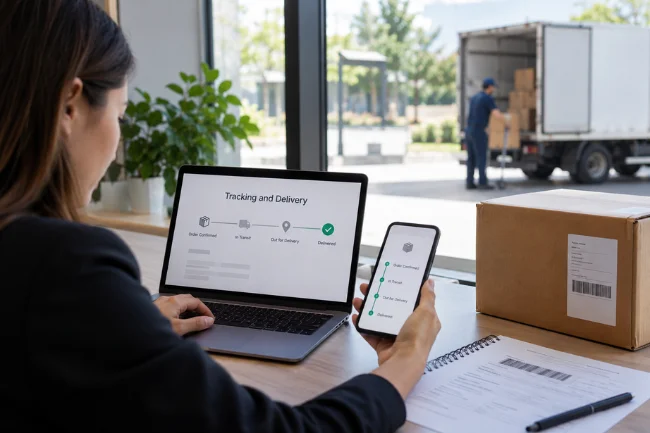
If you already have a shipment associated with Transjoaimo, start with the sender’s booking confirmation. Ask which carrier accepted the consignment and which reference number that carrier recognizes.
I haven’t verified a public tracking portal for the business. I would therefore obtain tracking instructions through an established booking contact instead of guessing a website address or entering shipment details into an unfamiliar page.
Before dispatch, ask how updates will arrive and what they will describe. An estimated delivery date, a vehicle location, and confirmation of completed delivery answer different questions.
I would also agree on an escalation contact for a missed pickup or delayed delivery. The recipient should know whom to reach, what reference to quote, and when another update is expected.
At completion, retain the agreed delivery evidence alongside the original booking. If something differs from the instructions, document the discrepancy promptly and raise it through the established contact channel.
How I Would Assess Reliability
I wouldn’t give a carrier a blanket endorsement based on a registration entry. My assessment would combine identity checks with recent evidence relevant to the proposed job.
I would ask for references involving similar cargo or routes, then look for specific accounts of communication, handling, delivery, and problem resolution. A detailed account is more useful to me than a rating without context.
Any complaint also needs context. I would consider its date, the issue described, the company’s response, and whether there is evidence of resolution rather than treating a single allegation as a complete picture.
For an ongoing business relationship, I would consider beginning with a manageable shipment and agreed performance criteria. Record whether collection, communication, and delivery matched the written offer before deciding on a larger commitment.
That is a proposed evaluation method, not a claim that I have tested Transjoaimo. A fair review should make that distinction clear.
A Practical Next Step
The documented business connection gives your search a useful starting point. The next decision depends on your purpose: identifying a name, contacting a provider, checking a shipment, or comparing a freight quotation.
I would begin with the company record, verify the communication channel, and request written answers about the exact service needed. If you’re preparing a booking, gather your route, cargo details, and delivery requirements before making the enquiry.
Frequently Asked Questions
What is Transjoaimo?
Transjoaimo is listed as the trading name of a Brazilian road freight business. The company connection is documented in the Econodata source linked above.
Where is Transjoaimo located?
The public listing places it in Barueri, São Paulo, Brazil. Confirm the operational address before visiting or arranging a collection.
Is Transjoaimo a technology platform?
I found a documented transport-business connection, but no verified product documentation establishing it as a technology platform.
How can I check Transjoaimo’s registration?
Use the official CNPJ consultation service linked above. For a freight booking, also check the intended carrier through ANTT’s RNTRC consultation service.
Does Transjoaimo offer online shipment tracking?
I haven’t verified a public tracking portal. Ask the sender or established booking contact for the correct tracking method and shipment reference.

Ethan Caldwell is a business research writer with 9+ years of experience covering entrepreneurship, market trends, business strategies, and industry insights. He focuses on creating clear, data-informed articles that help readers understand modern business concepts.