InternetChicks is an ambiguous online term with two very different uses. Most exact-match searches point to InternetChicks.com, an adult-content website that presents itself as a source of free or “leaked” creator media. Elsewhere, bloggers use “internet chicks” as an informal label for women who build audiences through social media, streaming, subscriptions, or digital businesses. It is not a recognized professional title, a single verified women-in-tech movement, or a universal social platform.
When I researched the term, I found that this distinction was often buried or ignored. That creates confusion for people who simply want to know what the website contains, whether it is safe, or why the phrase appears in articles about online creators.
The clearest answer is to separate the domain from the broader cultural label.
What Is InternetChicks?
InternetChicks most commonly refers to the website InternetChicks.com. Its public homepage describes adult media associated with subscription platforms and uses language suggesting that some material is “leaked.” Because the site is adult-oriented, it is unsuitable for minors and may lead to content that some visitors do not expect.
The name also appears in a looser, non-official sense. Some publishers use it to describe female influencers, streamers, models, educators, gamers, founders, and other women with a visible online presence.
I would not treat those two meanings as interchangeable. One is a specific domain and content brand. The other is an informal phrase that different writers define in different ways.
The Four Meanings People May Encounter
The forum is real in the limited sense that a public subdomain exists, offers registration and login options, and uses XenForo community software.
That does not prove that it is a large mentoring network, professional association, or verified creator community. Its public pages provide only basic forum and contact functions.
Why InternetChicks Creates So Much Confusion
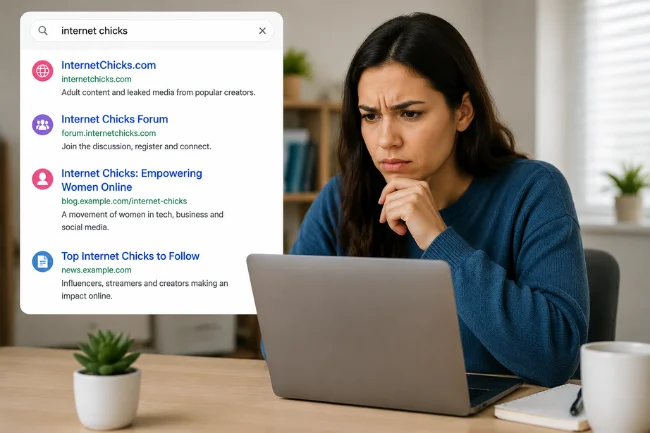
The name looks like an ordinary phrase, which makes it easy to detach from the exact website. Capitalization also changes from one result to another: InternetChicks, Internet Chicks, internet chicks, and internetchicks.com may all appear on the same search page.
A second source of confusion is content written mainly to rank for the keyword. Some articles redefine InternetChicks as a movement for women in technology, a creator aesthetic, or a professional identity.
Those interpretations may be useful as cultural commentary, but I found little evidence that InternetChicks is a widely accepted industry category.
The current domain tells a more specific story. Its homepage is adult-oriented, and third-party traffic data places it among other adult-media websites rather than professional networking or women-in-tech communities.
Semrush’s June 2026 data also classifies its closest competitors within that same adult-content market.
For readers, the practical lesson is simple: always check whether a writer is discussing the exact domain or merely using the phrase as a label.
Is InternetChicks Safe?
No responsible review should give a one-word safety verdict. Website safety can involve several separate questions:
- Does the domain use an encrypted connection?
- Is the operator clearly identified?
- Does the site trigger security warnings?
- Does it redirect visitors to third-party pages?
- Does it request payment or personal information?
- Are downloads, pop-ups, or browser notifications involved?
- Is the content legally and ethically sourced?
Current assessments are mixed. ScamAdviser reports a valid SSL certificate and describes the domain as likely legitimate, while also noting hidden ownership, adult content, and a registrar associated with a comparatively high percentage of questionable sites.
Malwarebytes says it blocks the domain because of an association with riskware, potentially unwanted programs, adware, and fraudulent destinations.
That disagreement does not automatically prove that every visit causes harm. It does mean I would use greater caution than I would on a transparent, well-known publisher with clear ownership and a consistent security reputation.
A Practical Safety Check
I also avoid assuming that a padlock icon means a website is trustworthy. HTTPS encrypts data while it travels between the browser and the site; it does not guarantee that the operator, advertisements, links, or downloads are safe.
The FTC similarly advises people to verify that they have reached the correct website and to avoid handing personal or financial information to an unconfirmed destination.
How I Would Browse More Carefully
I would type the address manually instead of following an unexpected message or shortened link. I would keep the browser and operating system updated, block unwanted notifications, and close any page that demands a special video player or software download.
I would not create an account with a password used elsewhere. I would also avoid entering payment details unless the operator, billing terms, cancellation process, and privacy policy were clear.
These habits matter on any unfamiliar website, not only InternetChicks.
The Consent and Copyright Question
The word “leaked” deserves more attention than most competing explanations give it. When a website promotes media that may have come from paid creator accounts, visitors should ask whether the person shown agreed to that distribution and whether the uploader had permission to share it.
A creator may choose to publish adult material behind a subscription without consenting to free redistribution on unrelated websites. Payment for access does not normally transfer ownership of the work or create permission to republish it.
The U.S. Copyright Office confirms that copyright can protect material distributed online and that online services may face claims involving unauthorized content. Exact rights and remedies depend on the work, jurisdiction, platform, and circumstances.
For me, this is not a minor side issue. A useful review of InternetChicks should address digital consent, creator ownership, impersonation, takedown options, and the possibility that labels or thumbnails may misrepresent the source of a file.
InternetChicks as a Creator-Culture Label
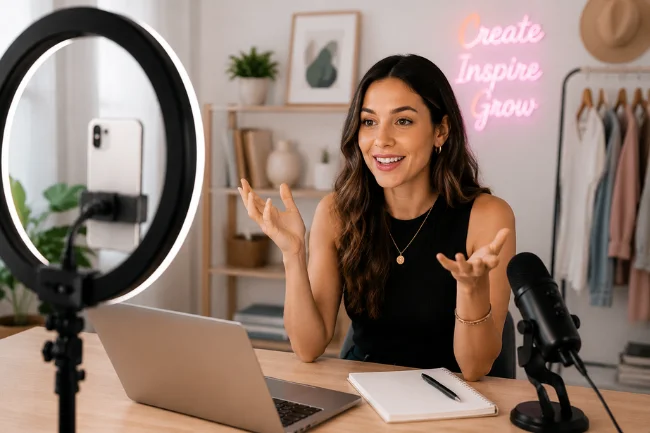
Away from the domain, “internet chicks” can describe women who have built recognizable digital identities. The phrase may include fashion influencers, gaming streamers, video essayists, online educators, fitness creators, podcasters, artists, founders, and subscription-based personalities.
That broader meaning reflects a real shift in media. A person no longer needs a television contract or magazine profile to develop public influence.
She can publish directly, build a community, test products, sell memberships, or turn specialized knowledge into a digital business.
Still, I prefer more precise terms such as female content creators, women influencers, digital entrepreneurs, or online personalities. They explain what a person actually does and avoid presenting every woman online as part of one invented group.
What Makes an Online Creator Credible?
A large follower count is only one signal, and often not the most useful one. I look for five qualities:
- A clear subject or creative point of view
- Consistent original content rather than copied material
- Transparent sponsorship and affiliate disclosures
- Respect for audience privacy and community boundaries
- Evidence that the creator understands the topic she discusses
This distinction matters because online visibility and expertise are not identical. A creator can be entertaining without being qualified to give medical, legal, financial, or technical advice.
How InternetChicks Fits the Creator Economy

The broader creator interpretation connects naturally with the creator economy: people earning through content, communities, knowledge, entertainment, or access to their work.
Common income models include brand partnerships, advertising, affiliate links, memberships, digital products, consulting, merchandise, live events, and platform subscriptions.
Many creators combine several models so they are not dependent on one algorithm or platform.
The strongest creator businesses usually own part of the relationship with their audience. An email list, independent website, customer database, or paid community can provide more stability than relying entirely on social-media reach.
That is the useful business lesson behind the broader InternetChicks idea. The value is not simply being visible online. It is building trust, controlling original work, understanding distribution, and creating a sustainable connection with an audience.
What Are People Really Searching For?
I see four main search intentions behind InternetChicks.
1. Finding the Website
Some people already know the name and want the correct domain. This is navigational intent.
2. Checking Legitimacy or Safety
Others see the site in a link, browser history, pop-up, or search result and want to know whether it is safe. They need a balanced security explanation, not promotional language.
3. Understanding the Name
Some searchers are unsure whether InternetChicks is an app, forum, adult website, influencer community, or slang term. They need disambiguation in the opening paragraph.
4. Learning About Female Online Creators
A smaller group may use the phrase while looking for influencer trends, digital careers, personal branding, or ways women monetize content.
A page satisfies search intent only when it acknowledges all four possibilities and clearly states which one it is covering.
How to Evaluate Similar Websites
I use a simple identity, safety, and ethics test.
First, I confirm what the website actually is by reading its homepage, policies, and contact information rather than relying on articles that repeat one another.
Second, I review security warnings, redirects, download requests, ownership transparency, and data collection. A high traffic estimate is not proof of safety, and a valid certificate is not proof of honest conduct.
Third, I consider where the content came from. If a platform markets private, leaked, or copied media, I look for consent, copyright, takedown, and moderation policies before treating it as a normal entertainment source.
This three-part test is useful because it separates popularity from trustworthiness. A website can be popular yet opaque, technically functional yet ethically questionable, or legitimate as a domain while still exposing users to risky third-party advertising.
Frequently Asked Questions
What is InternetChicks?
InternetChicks usually refers to an adult-content website, although some writers use the phrase more broadly for female online creators and influencers.
Is InternetChicks an adult website?
Yes. The current InternetChicks.com homepage identifies itself with adult media and references content from subscription-based creator platforms.
Is InternetChicks safe to use?
Security assessments conflict, and Malwarebytes reports a riskware association. Avoid downloads, redirects, reused passwords, and sharing personal or payment information.
Is InternetChicks a social media platform?
The main domain is not a mainstream social network. A connected forum exists, but that is different from platforms such as Instagram, TikTok, or YouTube.
Why is InternetChicks popular?
The exact domain attracts navigational and adult-content searches, while the phrase also gains attention through articles about influencers, women creators, and internet culture.
A Clearer Way to Approach InternetChicks
InternetChicks is best understood as an ambiguous keyword, not a single digital movement. The exact domain is adult-oriented; the wider phrase is sometimes used for women who create, influence, or run businesses online.
Before visiting or writing about it, identify which meaning applies, check current security information, and consider whether the content respects creator consent and ownership.
For a safer next step, verify the exact domain independently and use established creator platforms when you want to support someone’s original work.

Ava Bennett is a social media strategy writer with 7+ years of experience covering social platforms, content trends, audience engagement, and digital communication strategies. She creates practical insights to help readers understand the evolving social media landscape.