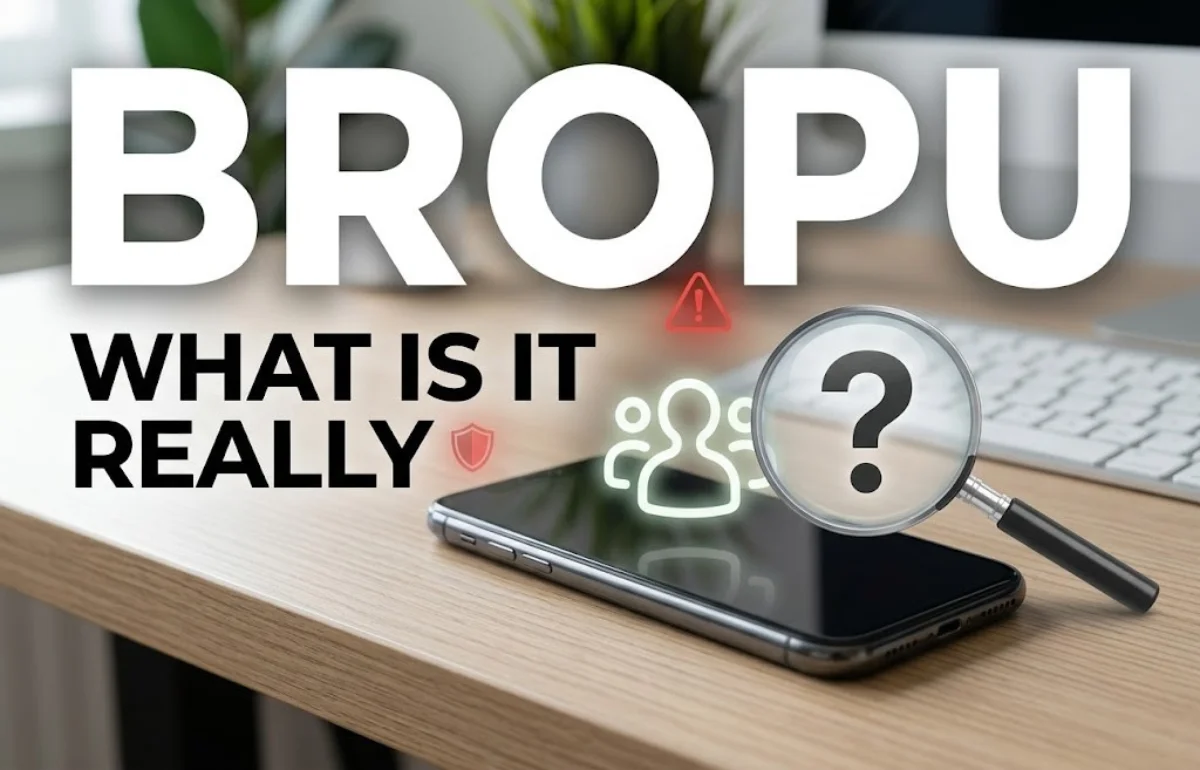
Bropu is an emerging but poorly verified online term that several third-party websites describe as a community-focused social platform built around genuine conversation, shared interests, and meaningful relationships. The clearest factual answer, however, is that Bropu does not yet have a consistently documented public identity. As of August 2026, I could not verify a single official website, recognized app-store listing, company profile, privacy policy, or product document tying all those claims to one operating service.
That distinction matters. Bropu may be the name of a new or private project, an early-stage concept, a username, or simply a keyword being amplified by online articles.
I would therefore describe it as an unverified digital-community concept rather than confidently calling it an established social network.
Why Is Bropu Appearing in Search Results?
People usually encounter Bropu after seeing the word in a blog post, social feed, suggested search, or unfamiliar link. They then search for a definition, an official website, an app download, or proof that the platform is legitimate.
The available explanations do not form a reliable product record. One article emphasizes authentic profiles, matchmaking, safe spaces, and deeper conversations. Another describes forums, messaging, profiles, events, and a sign-up process, yet provides no working official link or independent confirmation.
When I reviewed these pages side by side, I found confident product language but little supporting evidence.
There were no original interface screenshots, named founders, public release notes, verified user numbers, or links to formal safety and privacy documentation.
That is the central fact a useful Bropu article should explain rather than hide.
What Is Bropu Supposed to Be?
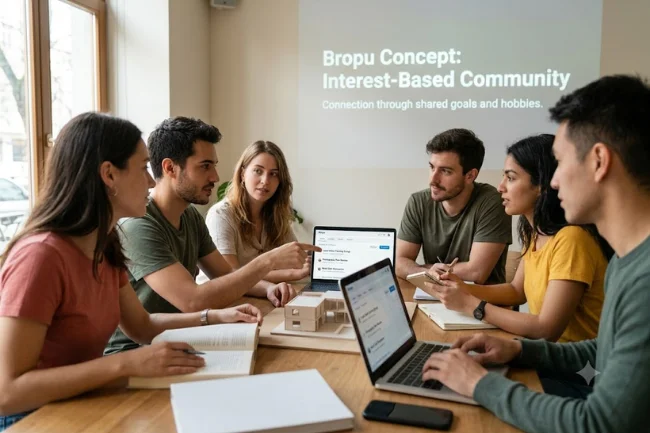
Based on current online descriptions, Bropu is supposed to be an interest-based online community that values conversation over popularity.
The proposed idea is simple: users would meet through shared goals, hobbies, experiences, or values instead of chasing followers and viral reach.
Commonly claimed elements include:
- Interest groups and discussion forums
- Private or direct messaging
- Customizable member profiles
- Community events or meetups
- Supportive niche communities
- Reduced emphasis on likes and follower counts
- Moderation intended to limit trolling and toxic behavior
- Opportunities for friendship, networking, mentoring, or collaboration
These ideas are plausible because many existing online communities already use some combination of groups, forums, messaging, events, and moderation.
Plausibility is not the same as verification, though. I found no primary source confirming that every feature above belongs to a functioning Bropu product.
Bropu Claims Versus What Can Be Verified
This table does not prove that Bropu is fake. It shows that the claims currently outrun the available public evidence.
My First-Hand Research Check
I approached Bropu the same way I would evaluate any unfamiliar platform before recommending it.
I looked for five basic trust signals: an official domain, an identifiable operator, a genuine app listing, legal policies, and independent user evidence.
The trail was unusually weak.
The articles describing Bropu did not consistently link to a central service. Searches aimed at major app stores and company directories did not surface an obvious matching product.
I also found no clear support center, terms, privacy policy, or account-deletion page tied to the social-platform claims.
I did find the word Bropu in unrelated contexts, including a dairy sire directory. That does not explain the social-media meaning, but it demonstrates why the keyword cannot automatically be treated as one recognized brand or product.
My practical conclusion is straightforward: readers should separate descriptions of what Bropu could be from evidence of what it currently is.
Is Bropu a Platform, a Concept, or a Search Trend?

At this stage, Bropu fits three possible interpretations.
An Early or Private Platform
Bropu could be a new service operating quietly, testing in a limited region, using invitation-only access, or preparing for a wider launch.
Early products sometimes have weak search visibility and incomplete public documentation.
Even an early platform should eventually provide ownership details, contact information, legal policies, and a secure official access point.
Without those details, users cannot reliably determine who controls the product or what happens to the information they submit.
A Community-First Social Concept
Bropu may function more as a label for a type of digital community than as a specific app.
In this interpretation, it represents slower, more intentional online interaction: smaller groups, thoughtful replies, shared interests, and fewer public popularity metrics.
That concept is understandable and potentially useful. Websites should still describe it as a concept rather than inventing product features or registration instructions that cannot be verified.
A Keyword-Driven Online Trend
The third possibility is that Bropu is gaining visibility because publishers are producing pages around an unusual, low-competition keyword.
When several websites repeat similar claims without linking to a primary source, the search results can create the appearance of an established entity.
This is why source tracing matters. Repetition across blogs does not become proof merely because the same description appears more than once.
How a Bropu-Style Community Would Differ From Traditional Social Media
The strongest idea associated with Bropu is not a specific technical feature. It is the promise of less performative communication.
Traditional social platforms commonly combine public profiles, engagement counts, recommendation systems, creator content, advertising, and broad audience reach.
A Bropu-style community would supposedly narrow that experience around belonging and active participation.
I find the community-first model appealing, especially for people exhausted by endless feeds.
Good intentions do not automatically create a healthy community, however. Design choices, moderation resources, privacy protections, and member behavior determine whether the experience is genuinely supportive.
Potential Benefits of a Bropu-Style Platform
If a verified Bropu service eventually matches the descriptions appearing online, it could address several real user needs.
More Relevant Relationships
Interest-based discovery can make conversations easier because people begin with common ground.
Someone learning a language, changing careers, starting a business, moving to a new city, or managing a niche hobby may gain more from a focused group than from a broad public feed.
Instead of introducing yourself to an undefined mass audience, you would enter a conversation in which participants already understand the subject.
Less Pressure to Perform
Removing visible popularity counts may reduce the temptation to polish every post for approval.
Members could ask ordinary questions, share incomplete ideas, discuss setbacks, and participate without trying to build a personal brand.
This would not remove social comparison completely, but thoughtful product design could make it less central to the experience.
Better Support for Small Communities
Large networks are useful for reach, but small groups often create stronger continuity.
People recognize one another, remember earlier conversations, develop shared language, and gradually establish community norms.
A smaller network can also make it easier to identify knowledgeable contributors instead of relying only on follower counts.
A Bridge Between Online and Offline Life
Community events could turn digital introductions into local friendships, study groups, professional collaborations, volunteer projects, or hobby meetups.
This benefit also creates safety responsibilities, especially when strangers exchange personal details or agree to meet in person.
The Main Risks Readers Should Consider
An unclear platform identity creates risks that polished promotional language may overlook.
Data and Privacy Risk
Do not submit your full name, phone number, precise location, identity documents, payment details, or complete contact list until you have verified who operates the service.
A legitimate platform should explain what it collects, why it collects it, who receives it, how long the information is retained, and how users can delete their accounts.
For Android apps, Google Play’s Data safety section is designed to show how developers say they collect, share, and handle user data. A missing or unclear disclosure should encourage closer examination rather than blind trust.
Impersonation and Scam Risk
Unfamiliar brand names are easy to copy. A fake sign-up page can imitate a community platform and collect passwords, contact information, or financial details.
The Federal Trade Commission advises people not to click links or download attachments from unexpected messages and not to provide personal or financial information in response to them.
I recommend typing a verified domain yourself rather than joining through a random private message, shortened link, pop-up, or unsolicited invitation.
Weak Moderation
Claims about “safe spaces” mean little without reporting tools, trained moderators, appeal procedures, transparent enforcement, and published community rules.
Small communities can still experience harassment, misinformation, manipulation, identity fraud, or predatory behavior.
A trustworthy service should explain how users can report content, block accounts, appeal decisions, and contact support during a serious incident.
Unsafe Offline Meetings
Anyone using a community service to meet people locally should choose a public place, tell a trusted person where they are going, and arrange independent transport.
Avoid sharing a home address or financial information early in a relationship. Requests for money from someone known only through an online community should be treated as a major warning sign; the FTC warns that scammers often build trust through fake profiles before asking for funds.
How to Verify Bropu Before Joining
Before creating an account, I would complete the following checks:
- Confirm the exact official domain through more than one reliable source.
- Look for a named company, founder, or operating organization.
- Check whether the app-store developer name matches the website owner.
- Read the privacy policy, terms, community standards, and account-deletion process.
- Review requested permissions before granting access to contacts, the camera, microphone, photos, or location.
- Search for independent reporting and detailed user reviews rather than repeated promotional summaries.
- Confirm that customer support uses an address connected to the official domain.
- Avoid reusing a password from an email, banking, or established social-media account.
A real product should make verification easier. It should not force prospective users to guess which website, app, or social profile is genuine.
What Bropu Would Need to Become Credible
For Bropu to earn trust as a serious social platform, its operators would need to publish a clear product identity and maintain it consistently.
I would expect an official website with an about page, leadership information, contact details, security practices, legal policies, feature documentation, and visible product access.
A credible launch should also include authentic screenshots, transparent app-store listings, specific moderation rules, and a realistic explanation of how the business makes money.
Independent reviews, named community partners, and public updates would add further credibility. Until those signals appear, writers should avoid presenting assumptions as established facts.
Why the Bropu Idea Still Matters
Even if Bropu remains unverified, the interest around it reveals a genuine frustration with modern social media.
Many users want smaller communities, calmer conversations, stronger privacy, greater control over recommendations, and relationships built around shared purpose.
That demand is real whether the eventual solution is called Bropu or something else.
A useful page should help readers identify the term, evaluate its legitimacy, protect their information, and find safer alternatives instead of repeating vague promises about authentic connection.
Final Takeaway
Bropu is best understood as an emerging, ambiguous digital-community term that is often described as a relationship-focused social platform but is not yet supported by a clear, unified public record.
My next step would be to wait for verifiable ownership, an official access point, transparent policies, and independent user evidence before registering or sharing personal information.
Readers who encounter a website or app using the name should confirm who operates it, examine its privacy practices, and avoid unofficial downloads.
Frequently Asked Questions
What does Bropu mean?
Bropu has no single verified public definition; online articles mainly use it to describe a community-focused social-networking concept.
Is Bropu a real social-media app?
I could not verify a clearly official Bropu app, developer listing, or operating company as of August 2026.
Where can I download Bropu?
No confirmed official download source was identified, so avoid unofficial APK files, unknown installers, and unfamiliar sign-up links.
Is Bropu safe to use?
Its safety cannot be established without verified ownership, privacy terms, moderation rules, security details, and an official product source.
What are the best alternatives to Bropu?
Consider established interest forums, moderated group-chat communities, professional networks, or local event platforms with verified apps and transparent policies.

Ava Bennett is a social media strategy writer with 7+ years of experience covering social platforms, content trends, audience engagement, and digital communication strategies. She creates practical insights to help readers understand the evolving social media landscape.