UA Week, short for Utility Analytics Week, is an annual three-day conference that brings together utility professionals, data scientists, technology providers, and industry leaders to explore how data analytics and artificial intelligence can improve electric, gas, and water utilities. Organized by the Utility Analytics Institute (UAI), the event focuses on practical solutions for grid reliability, operational efficiency, customer service, and energy innovation.
Unlike general technology conferences, UA Week concentrates on the challenges utility companies face in their daily operations. Participants exchange real-world experiences, discuss successful projects, and learn how emerging technologies can support better decisions.
The 2026 conference takes place October 20–22 in Glendale, Arizona, with a renewed emphasis on AI adoption, collaborative problem-solving, and measurable business results.
What Is UA Week and Who Organizes It?
Utility Analytics Week is the flagship in-person event of the Utility Analytics Institute, a membership-based organization dedicated to advancing analytics across the utilities industry.
The institute connects professionals who work with operational data, digital infrastructure, artificial intelligence, and business intelligence systems. Its broader mission involves helping utility organizations learn from one another rather than solving every technical challenge independently.
UA Week turns that ongoing collaboration into a face-to-face experience.
Attendees participate in technical discussions, practical presentations, industry networking, and activities focused on emerging utility technologies.
The event is produced by Endeavor Business Media, while the conference program emphasizes utility-led discussions and experiences.
How Has the Conference Grown?
UA Week has developed into a recognized gathering for professionals interested in utility data analytics and digital transformation.
According to the organizer’s published figures, the 2025 conference recorded:
- More than 600 professionals in attendance
- Representation from 86 utility companies
- Approximately 58% attendance from utility organizations
- 35 exhibitors showcasing industry solutions
- 34 educational and discussion sessions
These figures reveal something valuable about the event’s audience.
It is not exclusively a gathering of technology vendors. A substantial proportion of participants work directly within utility organizations, creating opportunities for conversations about operational challenges.
For me, that distinction matters because learning from someone responsible for maintaining a utility system can be more useful than hearing an impressive product demonstration.
UA Week 2026: Dates, Location, and Essential Details
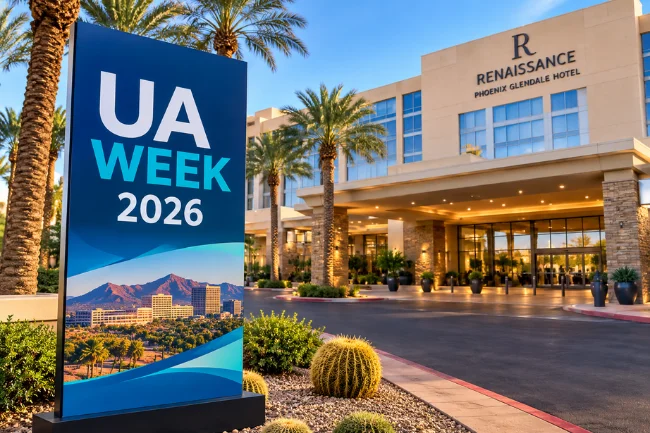
The 2026 edition is scheduled for October 20–22 at the Renaissance Phoenix-Glendale Hotel in Glendale, Arizona.
Salt River Project (SRP), a major Arizona utility organization, serves as the host utility.
The conference takes place over three days, although the official program also includes certain advisory meetings and invitation-only activities on October 19.
The program covers keynote presentations, specialized breakout sessions, networking opportunities, collaborative workshops, and recognition events.
Glendale’s location within the Phoenix metropolitan area provides access to regional transportation and hospitality services.
The conference hotel is situated at 9495 Entertainment Boulevard, close to the Westgate Entertainment District.
Anyone planning to attend should consult the official UA Week website for the most recent schedule, registration availability, and travel information.
Why UA Week Matters to the Utilities Industry
Modern utilities handle enormous amounts of information.
Smart meters record electricity consumption, grid sensors monitor equipment conditions, and customer management platforms track service requests.
However, collecting information and using it effectively are different challenges.
A utility might possess years of equipment records without having a reliable method for predicting which assets are most likely to fail.
Another organization might use advanced metering infrastructure but struggle to convert consumption patterns into meaningful customer insights.
This is where conferences focused on utility analytics become useful.
They create opportunities to understand how other organizations approach similar problems.
Turning Utility Data Into Better Decisions
One of the conference’s central themes is the movement from traditional reporting toward predictive and prescriptive analytics.
Traditional reports explain what happened.
Predictive analytics estimates what may happen next, while prescriptive analytics helps organizations evaluate possible actions.
For example, a utility could analyze transformer temperatures, loading patterns, and maintenance history to identify equipment requiring closer inspection.
The value comes not simply from producing a prediction but from helping an operations team decide what to inspect, repair, or replace.
Building Industry Collaboration
Utilities frequently encounter similar challenges involving cybersecurity, aging infrastructure, extreme weather, regulatory obligations, and rising energy demand.
Yet their technical environments, budgets, and organizational structures can differ considerably.
UA Week gives professionals a setting to compare approaches and discuss what worked under particular conditions.
I find this emphasis on practical experience especially valuable. A successful solution at a large utility may require significant adjustments before it becomes realistic for a smaller organization.
Who Should Attend UA Week?
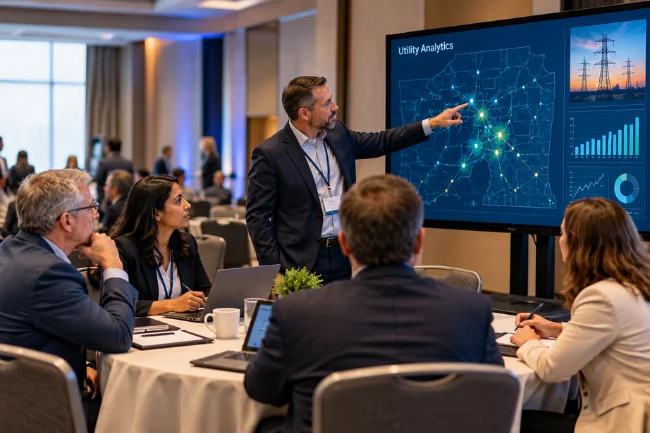
The conference serves multiple professional groups rather than focusing exclusively on executives or software developers.
Utility Executives and Decision-Makers
Executives can explore how analytics investments contribute to business priorities such as reliability, safety, operational performance, and customer satisfaction.
Discussions about budgeting, organizational change, AI governance, and technology strategy may be particularly relevant.
Data Scientists and Analytics Professionals
Data scientists, data engineers, business intelligence specialists, and analytics managers can benefit from technical case studies.
Their interests may include machine learning, data integration, forecasting, visualization, data quality, and analytical model deployment.
Grid Operations and Engineering Teams
Engineers and operational specialists can examine applications involving asset monitoring, outage management, grid optimization, and maintenance planning.
These professionals play an essential role in connecting analytical insights with physical infrastructure.
Technology Providers and Consultants
Software companies, analytics vendors, consultants, and infrastructure technology providers also participate.
For them, the conference offers opportunities to understand utility requirements and develop relationships with organizations considering technology improvements.
Students, researchers, and academic professionals working in relevant fields may also find the discussions useful, particularly when exploring careers in utility data science.
Understanding the Five Conference Tracks for 2026
One of the most notable changes to the 2026 program is its redesigned track structure.
The organizers introduced five focused tracks to help attendees identify sessions suited to their responsibilities and levels of analytics experience.
| Conference track | Main focus | Best suited for |
|---|---|---|
| Quick Wins & Practical Impact | Achieving measurable results with existing resources | Analysts and operational managers |
| Technical Foundations & Hands-On | Data engineering, architecture, and technical implementation | Engineers, developers, and data scientists |
| Advanced Analytics & AI at Scale | Predictive models, optimization, and enterprise AI | Advanced analytics professionals |
| Analytics Leadership, Strategy & Transformation | Governance, business strategy, and organizational change | Executives and analytics leaders |
| Innovation Stories & What’s Emerging | Experimental projects, emerging technologies, and lessons learned | Innovation teams and technology researchers |
The structure makes it easier to choose sessions based on practical needs.
For example, someone working on data pipelines may benefit more from technical foundation sessions than from high-level discussions about digital transformation.
Meanwhile, a utility executive preparing an enterprise AI strategy might prioritize governance and leadership sessions.
My suggestion is to select sessions according to the problems an organization needs to solve, rather than choosing presentations solely because they feature popular technologies.
What to Expect From the UA Week 2026 Program
The 2026 agenda includes a combination of practical case studies, discussions about AI adoption, collaborative activities, and opportunities to recognize industry achievements.
Several program elements deserve particular attention.
Real-World AI and Analytics Case Studies
The official agenda includes presentations involving organizations such as Entergy, National Grid, Exelon, Salt River Project, and Arizona Public Service.
One scheduled Entergy session examines a rapid demonstration involving more than 100 AI agents across multiple business use cases.
Another explores National Grid’s GridGPT platform and its approach to supporting utility employees through multi-agent AI.
Additional sessions address advanced metering infrastructure, outage prediction, data governance, and grid visibility.
These presentations give attendees opportunities to investigate how technologies are designed, implemented, and evaluated in real utility environments.
However, a compelling project description does not automatically establish long-term success.
I would pay particular attention to deployment challenges, maintenance requirements, data reliability, and measurable outcomes.
UAI Innovation Labs
The 2026 program introduces an interactive Innovation Labs experience.
Participants collaborate around ten challenge areas that include enterprise AI adoption, responsible governance, intelligent asset management, workforce readiness, and demonstrating business value.
Teams develop ideas and present proposed actions for consideration.
This format differs from traditional conference presentations because attendees contribute directly to problem-solving discussions.
It also encourages collaboration between professionals who may approach the same problem from different technical or operational perspectives.
The UAI Innovators Hackathon
Another distinctive element is the UAI Innovators Hackathon.
The 2026 competition involves teams developing solutions to utility challenges using the Awesense Sandbox digital twin platform.
Its focus includes exploring how distributed energy resources, demand flexibility, and related approaches might help address electricity capacity pressures associated with data center growth.
The project development phase took place before the conference, with the winner scheduled for recognition on October 21.
The hackathon demonstrates how utility analytics can connect technical experimentation with emerging infrastructure challenges.
UAI Excellence Awards
The event also recognizes individuals and organizations contributing to utility analytics.
The 2026 UAI Excellence Awards ceremony is scheduled for October 22.
Recognition highlights professional leadership, innovation, collaboration, and contributions to the wider analytics community.
Such recognition can encourage organizations to share successful methods rather than keeping useful knowledge within individual departments.
Major Technology Trends Highlighted at UA Week
Although the conference covers numerous subjects, several themes illustrate the direction of modern utility analytics.
Artificial Intelligence and Predictive Maintenance
Predictive maintenance uses operational records and analytical models to identify equipment that may need attention before failure occurs.
Potential applications include transformers, underground cables, distribution infrastructure, and other critical assets.
Machine learning can uncover patterns that conventional inspection schedules may overlook.
However, utilities must still evaluate predictions against engineering judgment, safety requirements, and maintenance costs.
A model that produces too many false alarms could create unnecessary inspections rather than improving efficiency.
Smart Meters and Grid Analytics
Advanced metering infrastructure, commonly known as AMI, provides consumption and operational information that can support multiple utility functions.
These include demand forecasting, outage detection, customer analysis, and electricity distribution planning.
By combining AMI information with other operational systems, utilities can develop a more detailed understanding of grid conditions.
The 2026 agenda includes discussions exploring how organizations can extract additional value from existing AMI investments.
Generative AI and Data Governance
Generative AI is becoming a prominent topic in utility technology discussions.
Potential applications include document analysis, employee knowledge assistance, reporting, and technical workflow support.
However, utilities operate within environments where privacy, reliability, security, and regulatory compliance matter considerably.
I believe responsible adoption requires attention to human oversight, access permissions, auditability, and the quality of underlying information.
The conference’s emphasis on governance reflects the need to treat AI as an operational capability rather than simply another software feature.
Customer Experience and Service Reliability
Utility analytics also affects customers directly.
Predictive tools may support storm preparation, restoration planning, and outage communication.
Customer analytics can help organizations understand service patterns and identify opportunities for more effective engagement.
The strongest applications connect technical performance with outcomes customers actually experience, such as fewer interruptions and clearer communication.
UA Week 2026 Registration Fees and Attendance Costs
Registration prices depend on whether attendees work for a utility and whether their organization belongs to the Utility Analytics Institute.
The published general registration prices for 2026 are:
| Attendee category | General registration price |
|---|---|
| UAI utility member | $1,200 |
| Utility non-member | $1,500 |
| UAI solution provider member | $2,000 |
| Non-utility, non-member | $2,500 |
These are the organizer’s listed standard rates in US dollars, before any applicable discounts.
UAI utility membership also includes three complimentary event registrations as an organizational benefit.
The organizers advertise group discounts for eligible paid utility registrations, with savings varying according to group size.
Participants should verify eligibility and current pricing before registering.
What About Travel and Accommodation?
Conference registration is only one part of the total attendance cost.
Visitors should also consider flights, accommodation, transportation, and meals not included in their registration package.
The organizer’s venue information currently identifies the Renaissance Phoenix-Glendale conference hotel as sold out.
Attendees requiring accommodation may need to explore nearby alternatives.
The official venue page also states that Phoenix Sky Harbor International Airport is approximately 20 miles from the hotel and that the hotel does not provide an airport shuttle.
I recommend checking the venue and travel information before finalizing arrangements.
How to Get the Most Value From Attending UA Week
Attending a conference is an investment. The real benefit depends on what participants take back to their organizations.
Simply attending numerous sessions does not guarantee meaningful results.
Identify a Specific Business Problem
Before choosing sessions, I would identify one or two problems that deserve attention.
These might involve improving outage predictions, reducing manual reporting, establishing data governance, or evaluating an AI solution.
A clearly defined problem makes it easier to distinguish useful discussions from interesting but unrelated presentations.
It also helps participants ask targeted questions when meeting speakers and technology providers.
Use a Five-Question Evaluation Test
One approach I recommend is a simple field-to-decision evaluation framework.
For every promising use case, ask five questions: Where does the data originate? How reliable and current is it? Who owns the decision? What operational action follows the analysis? How will success be measured?
Consider a hypothetical predictive maintenance system.
A model might identify 200 potentially vulnerable assets, but the organization may only have capacity to inspect 40.
The critical question is whether the analysis helps prioritize those 40 assets effectively.
If there is no clear decision process, even sophisticated analytics may have limited operational value.
This framework is my suggested evaluation method, not an official UAI assessment tool.
Build Relationships Beyond Formal Sessions
Some of the most useful conference conversations happen outside presentations.
A brief discussion with someone who has already implemented a comparable project can reveal practical details about staffing, data preparation, procurement, or implementation challenges.
Instead of asking whether a platform works, I would ask what the team found unexpectedly difficult.
Those answers often expose the difference between a promising prototype and a sustainable operational system.
Create an Action Plan After the Event
Within the first week after returning, participants should review their notes and identify practical opportunities.
I would prioritize ideas according to expected business value, implementation effort, data readiness, and organizational risk.
One manageable pilot with a defined owner and measurable outcome is often more realistic than launching several ambitious initiatives simultaneously.
Is UA Week Worth Attending?
The value of the conference depends on professional goals, organizational needs, and available resources.
For a utility professional responsible for analytics implementation, the specialized discussions and industry relationships may offer substantial value.
For executives, the greatest benefit may come from comparing organizational strategies and learning how other utilities manage technological change.
Technology providers may find opportunities to better understand customer problems and establish business relationships.
However, attendance is not necessarily the best investment for everyone.
Someone seeking introductory programming instruction or general consumer technology news might benefit more from specialized courses or broader technology events.
UA Week is especially relevant when utility operations, analytics strategy, and real-world implementation are central to the attendee’s work.
The Future of Utility Analytics Beyond UA Week
Utility analytics will continue evolving as infrastructure becomes more connected and energy systems face new operational demands.
Increasing electricity consumption, distributed energy resources, electrification, and extreme weather all create additional planning challenges.
Artificial intelligence may help utilities respond, but technology alone cannot resolve issues involving inconsistent data, disconnected systems, and unclear responsibilities.
In my view, the next stage of utility transformation will depend as much on organizational discipline as on model sophistication.
Utilities need trustworthy information, clearly defined business processes, skilled employees, and appropriate governance.
UA Week provides a setting where professionals can compare progress across these areas and explore how new approaches may translate into practical improvements.
Its broader significance comes from encouraging sustained collaboration rather than treating innovation as a single annual event.
Frequently Asked Questions About UA Week
1. What does UA Week stand for?
UA Week stands for Utility Analytics Week, an annual industry conference focused on data analytics, artificial intelligence, and innovation in electric, gas, and water utilities.
2. When and where is UA Week 2026?
UA Week 2026 is scheduled for October 20–22 at the Renaissance Phoenix-Glendale Hotel in Glendale, Arizona, United States.
3. Who can attend UA Week?
Utility employees, executives, data scientists, technology providers, consultants, and other professionals interested in utility analytics can attend, subject to registration requirements.
4. Is UA Week free to attend?
Generally, no. Paid registration is required, although eligible UAI utility members may use complimentary passes included with their organization’s membership.
5. What topics are covered at UA Week?
The conference covers AI in utilities, predictive maintenance, grid analytics, data governance, smart meters, operational efficiency, customer experience, and emerging energy technologies.
Final Thoughts
UA Week is more than a conventional technology conference. It is a specialized gathering where utility professionals explore how reliable data, responsible AI, and practical analytics can improve essential services.
The 2026 event’s redesigned educational tracks, interactive Innovation Labs, and utility-led case studies offer opportunities to connect new ideas with real operational needs.
For anyone working in utility analytics or planning a digital transformation initiative, reviewing the conference program is a worthwhile next step.
Visit the official UA Week website, identify sessions relevant to your work, and consider how the lessons could support measurable improvements within your organization.
Source: https://www.utilityanalyticsweek.com/2026

Noah Sterling is a technology research writer with 8+ years of experience covering emerging technologies, software trends, digital tools, and innovation. He creates practical, research-based articles to help readers understand the evolving technology landscape.