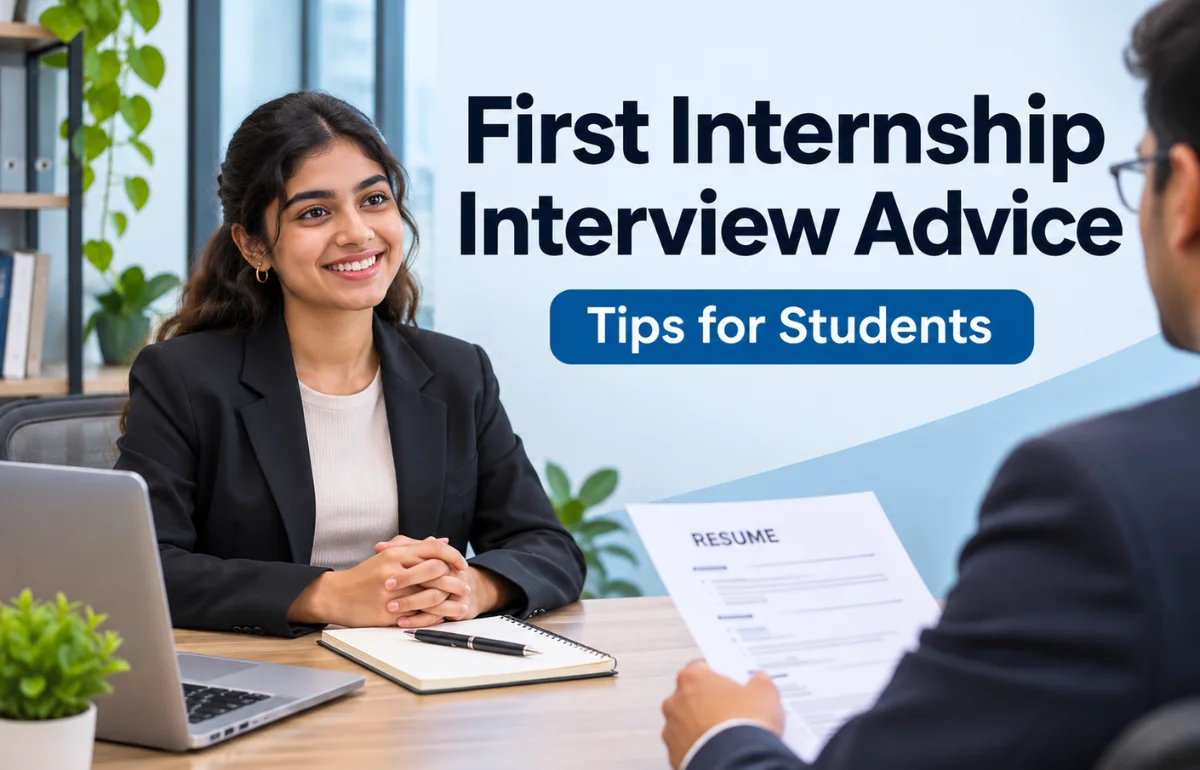
First Internship Interview Advice is practical guidance that helps students and first-time applicants prepare for an internship interview, explain their abilities, answer common questions, and make a professional impression without needing previous full-time work experience. It covers researching the employer, choosing examples from classes or personal projects, practicing clear answers, asking useful questions, and following up afterward.
The central idea is simple: an internship interview is not a test of how many jobs you have held. It is a conversation about what you can already do, how you approach unfamiliar work, and whether you are ready to learn.
I recommend preparing evidence of your curiosity, reliability, and problem-solving rather than memorizing impressive-sounding sentences.
What Employers Actually Look For in a First-Time Intern
Most interviewers do not expect a first-time intern to know everything. They want to see role awareness, clear communication, and willingness to learn.
I think of the interview as three questions hiding behind all the others: Can you contribute something useful? Can you learn what you do not know? And will you be dependable when work gets difficult?
That view aligns with the National Association of Colleges and Employers’ career-readiness framework, which highlights abilities such as communication, teamwork, critical thinking, professionalism, and technology.
Coursework, volunteering, student clubs, and independent learning can all provide evidence.
Prepare Before the Interview, Not Just the Night Before
Research the Company Beyond Its Homepage
Start with the company’s products or services, its customers, and the team you hope to join. Read the internship description again and look at one recent company announcement or project, if available.
I would aim to finish my research with three sentences: what the organization does, why this particular internship interests me, and which part of my background connects to the work.
For example, a marketing student might connect a brand’s community campaigns with a student-club social media project.
A “business” internship might involve data entry, market research, or client communication. Each calls for different examples.
Turn the Job Description Into an Evidence Map
Here is a preparation exercise I find more useful than rereading your résumé ten times: take the requirements from the job advertisement and attach one honest example to each.
If you cannot show direct experience, identify a closely related activity or explain how you would start learning.
| Requirement in the listing | Evidence you could discuss | What it demonstrates |
|---|---|---|
| Communication | Presenting a class project | Clear explanations and preparation |
| Teamwork | Resolving a disagreement in a group assignment | Listening and cooperation |
| Organization | Managing exams alongside volunteer duties | Prioritization and follow-through |
| Data or technical skills | Building a spreadsheet or small coding project | Practical application and initiative |
| Creativity | Designing a student event or campaign | Generating and testing ideas |
This is a practical form of First Internship Interview Advice: it changes the question from “Do I have experience?” to “Where have I already used this skill?”
Build a Small Bank of Real Stories
Prepare four short examples: a problem you solved, a time you worked with others, a mistake you learned from, and something you completed independently. Your examples do not have to be dramatic.
Suppose your group presentation fell behind schedule. You reorganized the tasks, checked in with teammates, and delivered on time. That story demonstrates organization and teamwork, provided you describe your own contribution accurately.
I recommend writing only keywords for each story, not a full script. Memorized answers can sound stiff; a few prompts help you stay conversational while remembering the facts.
Check the Interview Details Early
Confirm the time zone, interview format, names or roles of interviewers if provided, and whether you need a portfolio, résumé, or identification.
For in-person interviews, map the route and plan to arrive roughly ten minutes early. For video calls, test the meeting link, microphone, camera, and internet connection.
Keep a backup contact method available in case a train is delayed or the connection fails. If you need an accessibility accommodation, ask through the employer’s stated process early.
How to Answer Internship Interview Questions Without Work Experience

Give a Focused Answer to “Tell Me About Yourself”
This question is usually an invitation to connect your background to the role, not to narrate your life story. I suggest a simple three-part answer: where you are now, one relevant thing you have done, and why you want this internship.
For example:
“I’m studying computer science, and I’ve enjoyed building small web applications outside class. Recently, I created a scheduling tool for a student group, which taught me how to handle user feedback. I’m interested in this internship because I want to learn how a professional development team turns requirements into reliable software.”
The answer is honest and invites a useful follow-up.
Use STAR for Questions About Past Behavior
When an interviewer says, “Tell me about a time…,” use the STAR structure: Situation, Task, Action, Result. The University of Michigan’s interview resources also recommend explaining what you personally did and what you learned.
Imagine being asked about a difficult deadline. You might answer:
“Two teammates were unavailable just before our presentation (Situation). I needed to keep the project on track (Task). I divided the remaining work into essentials, contacted the group, and completed the slides I could own (Action). We submitted on time, and I learned to check progress earlier instead of waiting until the last day (Result).”
I would spend the most time on the Action section. “We worked hard” offers little detail; “I created a shared checklist and confirmed deadlines” shows how you operate.
If you have measurable results, use them, but never invent numbers.
Be Honest About Skills You Have Not Learned Yet
You may hear, “Have you used this software?” or “Do you have experience with client calls?” If the answer is no, say so without apologizing repeatedly.
Try:
“I haven’t used that platform yet. I have worked with a similar tool for a class project, and I usually learn new software by following documentation and testing a small task first. I’d be glad to build that skill here.”
Honesty gives the interviewer a realistic picture of your readiness.
Common First Internship Interview Questions and What They Test
Internship interviews often explore motivation, learning, teamwork, and judgment. Practice aloud rather than predicting exact wording.
| Interview question | What the interviewer may be assessing | Strong direction for your answer |
|---|---|---|
| Why do you want this internship? | Motivation and role awareness | Connect one specific responsibility to a genuine interest |
| What is your greatest strength? | Self-awareness | Name a useful strength and prove it with a brief example |
| What is your biggest weakness? | Honesty and growth | Choose a real improvement area and explain your current action |
| Tell me about a challenge you faced. | Problem-solving | Explain your decisions, result, and lesson |
| How do you handle feedback? | Coachability | Describe feedback you applied and what changed |
| How will you manage your studies and work? | Availability and reliability | Share a realistic schedule and how you track commitments |
For a weakness, avoid the familiar claim that you “work too hard.” A more credible response is: “I used to delay asking questions when instructions were unclear. Now I summarize what I understand and confirm the missing details early.”
That is specific and shows progress.
For “Why should we hire you?”, do not compete with imaginary applicants. State two relevant strengths, support one with evidence, and explain how you would contribute while learning. It is fine to say you are at the beginning of your career.
How to Make a Good Impression During the Interview

Treat the First Two Minutes as a Chance to Settle In
Choose clean, appropriate clothing that fits the workplace’s norms. You do not need expensive formalwear. Greet the interviewer, check how to pronounce their name if necessary, and listen carefully to the first question.
I suggest speaking slightly slower than you do with friends, especially when answering a complicated question.
If the interviewer is taking notes, a brief silence does not mean your answer went badly.
Manage Nerves Without Hiding Them
Feeling nervous is common, particularly when you are interviewing for your first internship. Before answering, pause long enough to identify what the person actually asked.
You can say, “That’s a good question. Let me think of a specific example.”
If your mind goes blank, restate the question in your own words or ask for a moment. If you start answering the wrong thing, correct yourself: “I think the more relevant example is…”
Interviewers usually gain more insight from a thoughtful correction than from a rushed, confusing answer.
A mock interview with a friend or career adviser can reveal overly long answers or missing details.
Adjust for Video, Panel, and Technical Interviews
For a video interview, choose a quiet space, position the camera near eye level, and keep notifications off. Have your notes nearby, but avoid reading answers from the screen.
If the connection cuts out, explain what you missed and ask for the question again.
In a panel interview, begin your answer with the person who asked, then naturally include the others.
For technical or case questions, explain your assumptions and reasoning. You may not reach the perfect answer; showing a structured approach can still help the interviewer evaluate your thinking.
For recorded interviews, check time limits and retake rules, then make a practice recording.
Ask Questions That Reveal What the Internship Will Really Be Like
When the interviewer invites questions, I would avoid saying, “No, I think you’ve covered everything.” Asking thoughtful questions shows interest, and it helps you judge the opportunity too.
My preferred questions are: “What would a successful intern accomplish in the first month?” “How does the team provide feedback?” and “What kind of project could an intern take ownership of?”
If time is limited, choose the one that matters most to your decision.
You can also ask who supervises interns, what training is available, how performance is evaluated, and whether the schedule fits academic commitments.
Compensation and working arrangements are legitimate topics; discuss them respectfully when appropriate, rather than assuming you must avoid them.
Pay attention to the answers. An interviewer who can describe actual tasks, mentoring, and expectations is giving you more useful information than someone offering only vague promises of “exposure.”
Mistakes I Would Avoid in a First Internship Interview
The biggest mistake is trying to sound experienced instead of showing readiness to learn. Inflated project claims can fall apart when the interviewer asks what you personally contributed.
Speak accurately about what was yours and what belonged to the team.
Replace “I’m a fast learner” with an example of something you learned and applied.
I would also avoid criticizing classmates, former supervisors, or other applicants. When discussing a group conflict, focus on what you did to improve the situation.
And if you do not understand a question, ask for clarification rather than guessing what the interviewer wants.
Finally, be alert to warning signs. Requests to pay an upfront hiring fee, share sensitive financial details before a legitimate hiring stage, or accept an undefined role without supervision deserve careful scrutiny.
An internship should offer identifiable work and a credible organization behind it.
What to Do After Your First Internship Interview
Send a short, personalized thank-you email within about 24 hours when you have the interviewer’s contact details. This timing is also recommended by the University of Michigan Career Center.
Mention a specific discussion, express interest, and offer to provide additional information.
For example:
“Thank you for speaking with me today about the research internship. I especially enjoyed hearing how the team evaluates customer feedback. Our discussion strengthened my interest in contributing my survey-analysis experience. I appreciate your time and look forward to hearing about the next steps.”
Write down which questions went well and which need more practice.
If the interviewer gave a decision date, wait until that date passes before following up. If no timeline was offered, a polite check-in after around two weeks is generally reasonable.
Keep applying elsewhere; an interview is not an offer.
My 30-Minute Practice Routine Before Interview Day
If preparation feels overwhelming, I prefer a short rehearsal with an actual outcome. Spend five minutes explaining why the company and role interest you.
Use the next ten to answer “Tell me about yourself” and two behavioral questions aloud.
Spend another ten minutes testing your four story examples against different prompts.
Could the same group-project story explain teamwork, time management, and a lesson learned without changing the facts? That flexibility matters more than memorizing twenty separate answers.
Use the final five minutes to select two questions for the interviewer and check practical details.
Stop editing your answers endlessly. Rest, a working interview link, and a clear understanding of your experiences will do more for you than another page of rehearsed phrases.
Final Thoughts
The best First Internship Interview Advice I can offer is to prepare examples, not a performance. Research the organization, understand the role, explain what you have actually done, and show how you respond when something is new or difficult.
You do not need a flawless answer to every question. You need a credible account of your potential.
Before your next interview, choose one project or responsibility you are proud of and practice explaining your contribution in sixty seconds. That single exercise is a useful place to start.
Frequently Asked Questions
How do I prepare for my first internship interview with no experience?
Research the role, prepare examples from coursework or volunteering, practice common questions aloud, and plan two questions to ask the interviewer.
What should I wear to a first internship interview?
Choose neat clothing appropriate to the organization’s culture. If unsure, slightly more polished than everyday workplace attire is a safe choice.
How long should my internship interview answers be?
Aim for roughly 30–90 seconds for most questions; longer behavioral stories may need about two minutes. Follow the interviewer’s cues.
Is it okay to say “I don’t know” in an internship interview?
Yes. Acknowledge the gap honestly, explain how you would find the answer, and share related knowledge if it helps.
What questions should I ask at the end of an internship interview?
Ask about intern responsibilities, support from supervisors, success measures, or the next hiring steps. Choose questions you genuinely want answered.

Emily Carter is a personal growth writer with 9 years of experience creating practical content about confidence, mindset, productivity, habits, goal setting, and self-improvement. She focuses on helping readers build positive routines, develop self-awareness, and make meaningful changes through simple, actionable strategies.