
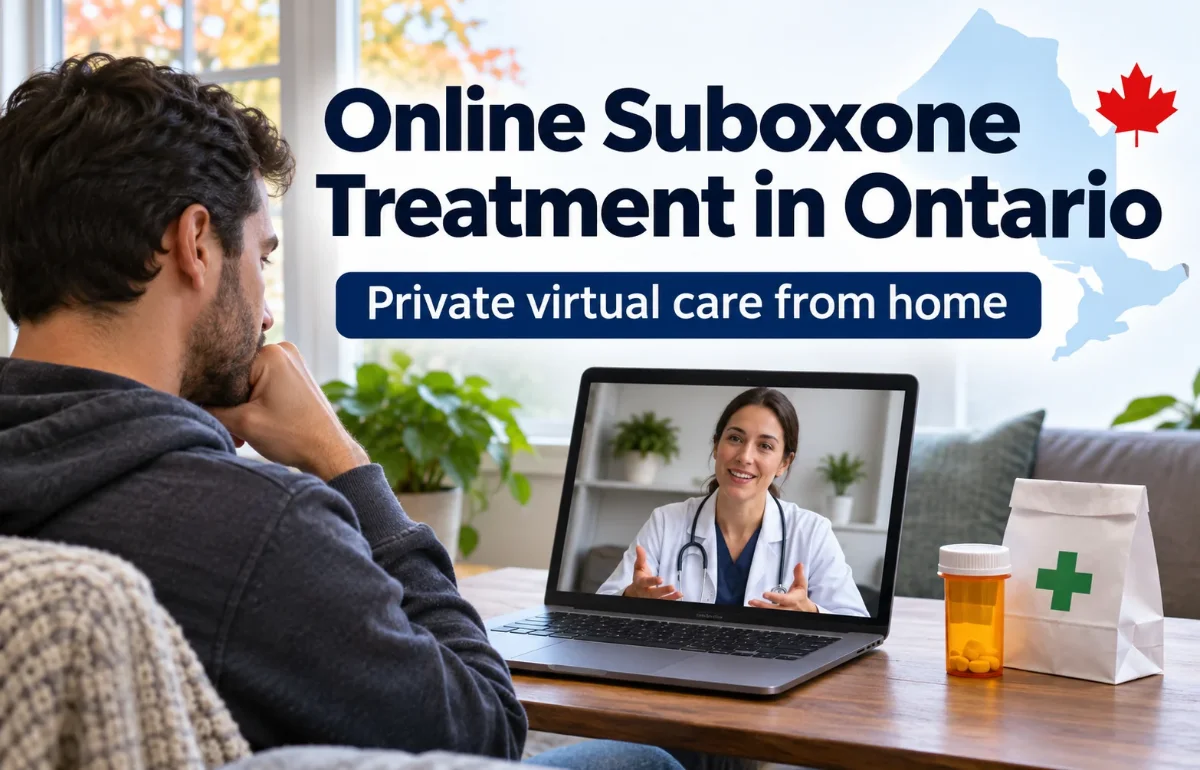
Long waitlists. Judgmental looks at the pharmacy counter. Clinics that only run during the hours people are supposed to be at work. That’s the wall a lot of Ontarians hit when they finally decide to deal with opioid use, and for many, the fear of being seen walking into an addiction clinic is enough to talk themselves out of the call.
Here’s how online Suboxone treatment in Ontario gets around that problem, and what actually happens from the first appointment through long-term care.
What Suboxone Actually Does in the Body
Suboxone isn’t a substitute high. It works on the same receptors as opioids, just in a way that’s built for stability instead of escape.
The medication is made of two ingredients, and they don’t do the same job.
- Buprenorphine dulls cravings and withdrawal symptoms without producing the intense high associated with full opioids.
- Naloxone is there as a safeguard. If someone tries to inject the medication rather than take it as prescribed, naloxone blocks the opioid effect.
That combination is why Suboxone carries a lower overdose risk than the substances it replaces. Plenty of patients notice relief within hours of that first properly managed dose, which tends to be the moment recovery starts to feel possible instead of theoretical.
Why Online Treatment Removes the Biggest Barrier

The hardest part of getting help usually isn’t the medication itself.
It’s the door. Walking into a clinic where a coworker might spot you, or a former neighbor, or someone from your kid’s school. Online treatment sidesteps that entirely — appointments happen over private video calls, and the prescription goes straight to a local pharmacy without anyone at the office needing to know where you disappeared to for twenty minutes.
That matters most for people who can’t just take an afternoon off, or who live an hour and a half from the nearest clinic that treats opioid use disorder. A shift worker outside Kitchener or a single parent in Kingston ends up with the same level of care as someone a ten-minute walk from a downtown Toronto office.
How the Treatment Process Works
There are three phases to Suboxone treatment, and every patient goes through all of them, though the timing shifts depending on the person.
Initial Assessment
A licensed physician sits down with the patient over video to go through their opioid use history and health background.
This is where the treatment plan actually gets built. Some patients walk away from that first call with a same-day prescription.
Induction and Stabilization
Induction starts low. The goal at this stage is simply to take the edge off withdrawal without overshooting into discomfort or sedation.
From there, the care team fine-tunes the dose over the following days or weeks until cravings settle and side effects stop being a factor. Follow-up calls during this window are frequent, because getting the dose right takes some back-and-forth.
Maintenance
Once things stabilize, the real work of recovery happens in the maintenance phase, and it’s usually the longest stretch of treatment.
It typically involves:
- Staying on a consistent daily dose
- Regular check-ins with the care team, virtually
- Coordination with other providers when it’s needed — counsellors, primary care doctors, that sort of thing
Some patients are done with this phase in a few months. Others stay on it well over a year, and there’s no single right timeline.
Cost and Coverage in Ontario
This is a medical condition, and money shouldn’t be the reason someone doesn’t get treated for one.
OHIP covers the physician consultations tied to Suboxone treatment in Ontario — the assessment, the induction, the ongoing check-ins. Medication itself may also be covered through a provincial drug plan or private insurance, depending on what coverage a patient already has.
Who Benefits Most From This Approach
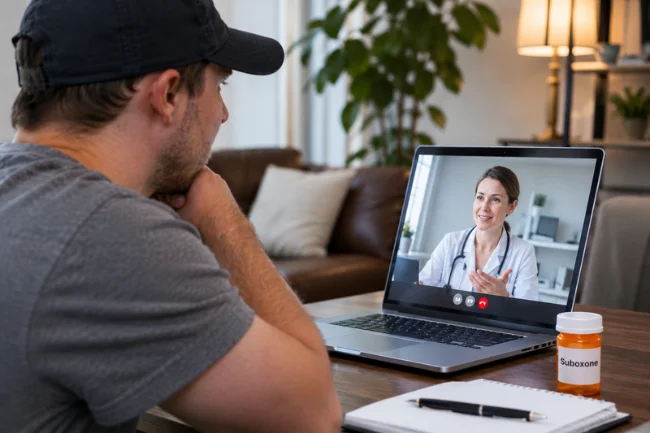
There’s no single profile of who ends up in Suboxone treatment. It works for anyone whose life has narrowed down to managing opioid use, regardless of what got them there:
- Prescription painkillers
- Fentanyl
- Heroin
People in smaller or more remote parts of Ontario tend to benefit the most, simply because the alternative is driving hours for in-person care that may not even be available locally.
Working professionals get something out of it too — the flexibility of a video visit is often the difference between treatment that’s consistent and treatment that quietly falls apart after a few weeks.
Addressing Common Doubts About Virtual Care
One question comes up more than any other: can a video call actually match what happens in a physical clinic?
Yes, and this isn’t a hedge. Patients get the same physician oversight, the same medication management, the same access to follow-up support. The only real difference is geography — the visit happens from a couch instead of a waiting room chair.
Speed is the other worry. Most people can start treatment within a few days of that first consultation, and same-day prescriptions aren’t unusual once the assessment wraps up.
Taking the First Step
Opioid addiction is a medical condition. It isn’t a character flaw, and treating it like one rarely helps anyone actually get better.
For Ontario residents ready to look into Suboxone treatment, the first move is a confidential virtual consultation with Aegis Medical CA — no clinic waiting room, no explaining anything to a pharmacist. The whole process is OHIP-covered and built around each patient’s own pace, not a fixed schedule that assumes everyone recovers the same way.
Willpower alone rarely gets someone through opioid withdrawal. The right medical support, delivered in a way that actually fits into someone’s life, usually does.
🩺 Medical Disclaimer
This article is for informational purposes only and does not replace professional medical advice. Suboxone treatment requires medical supervision, and OHIP coverage may vary. Always consult a licensed healthcare provider before making treatment decisions.

Sophia Bennett is a mental health writer with 8 years of experience creating thoughtful, research-informed content about emotional wellbeing, stress management, mindfulness, self-care, and healthy coping strategies. She focuses on making mental wellness topics easier to understand while encouraging readers to seek support from qualified mental health professionals when needed.