KeyFood is a U.S. supermarket brand associated with Key Food Stores Co-Operative, a network of independently owned neighborhood grocery stores. KeyFoods is also a common search variation, although the official name is Key Food. Founded in Brooklyn in 1937, the cooperative helps local supermarket operators work together while allowing individual owners to serve the shopping habits of their communities.
Shoppers visit these stores for fresh produce, meat, pantry essentials, household supplies, weekly grocery deals, and, at participating locations, online delivery. Unlike a single centrally operated chain, KeyFood can feel different from one neighborhood to the next.
That distinction explains why store hours, product selection, promotions, and services should always be checked for the specific location you plan to use.
What Is KeyFood, and Who Owns It?
Key Food Stores Co-Operative was created on April 20, 1937, when independent grocers joined forces to gain some of the purchasing and marketing advantages enjoyed by larger competitors. Its roots are in Brooklyn, New York, but its reach has expanded far beyond one borough.
The cooperative’s structure is its defining feature. Member retailers own and operate their supermarkets rather than having every shop run directly by one corporate office.
Cooperation can support purchasing, merchandising, promotional programs, and recognizable store banners. Local ownership, meanwhile, gives an operator room to respond to neighborhood preferences.
In an October 27, 2026, company announcement distributed by Uber, Key Food described a family of more than 480 independently owned and operated supermarkets and annual sales of $5.7 billion.
Those are network-wide figures, not the number of shops using the Key Food sign alone. The same announcement said more than 300 member locations were joining Uber Eats, a separate figure that should not be confused with the total store count.
Is Key Food a Franchise?
I find it more accurate to describe Key Food as a retailer cooperative than as a conventional franchise.
Both arrangements can share a recognizable identity, but a cooperative is built around independently owned members working together.
For customers, the practical result is that two nearby Key Food stores may stock different regional foods or offer different services.
Where Are KeyFood Stores Located?
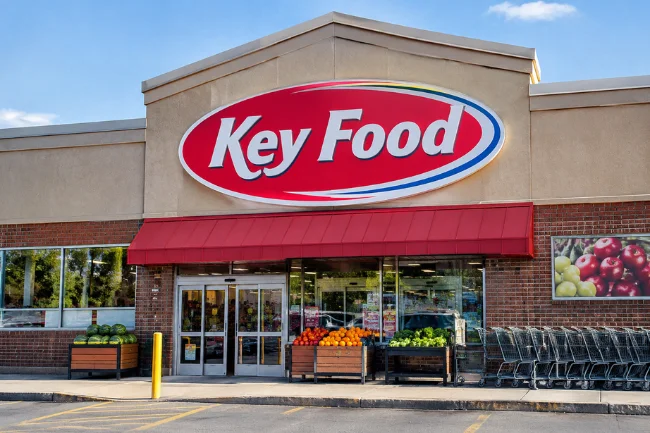
The brand began in New York City and remains strongly associated with the city’s five boroughs, Long Island, and surrounding communities.
The cooperative’s October 2026 description also lists stores in upstate New York, New Jersey, Connecticut, Massachusetts, Pennsylvania, Rhode Island, Maryland, and Florida.
That does not mean every area in those states has a Key Food supermarket. Coverage is uneven, and some member stores operate under different names.
The simplest way to find a KeyFood near you is to visit the official Key Food website, select the locations option, and search for your neighborhood or ZIP code. Check the address, opening hours, and available services before leaving home.
Why Do Some Affiliated Supermarkets Have Different Names?
The cooperative includes several retail banners. They share a business connection, but a store’s name does not guarantee identical pricing, promotions, or product availability.
| Store banner | What shoppers should know |
|---|---|
| Key Food | The namesake neighborhood supermarket banner |
| Food Universe | Another banner within the cooperative’s supermarket family |
| SuperFresh | An affiliated grocery banner with its own store experience |
| The Food Emporium | A separate banner in the same cooperative family |
| Food Dynasty | Another affiliated supermarket name |
The list isn’t exhaustive. Sister banners may have separate websites and promotions, so check the site for your actual store.
What Can You Buy at KeyFood?
A typical store covers the essentials of a full grocery trip: fruits and vegetables, meat and seafood, milk and cheese, frozen food, bread, breakfast items, snacks, drinks, canned goods, and cleaning supplies.
Some locations also provide deli counters, prepared foods, or more specialized selections.
I like how this business model can reflect local food preferences. A store serving Caribbean households may have a different assortment from one where shoppers seek Italian staples or Latin American pantry goods.
None of those selections is guaranteed at every location.
Fresh Produce, Meat, and Deli Departments
I judge perishables on freshness rather than the store logo. Look for undamaged produce, properly refrigerated meat, clear date labels, and tidy counters.
For seafood or specialty cuts, ask the department about availability and preparation.
Selection can change with season, supplier deliveries, and neighborhood demand. Checking your particular location is more reliable than treating an online catalog as a guarantee of what is on its shelves today.
Urban Meadow: Key Food’s Private-Label Products
Urban Meadow is a private-label range associated with the Key Food supermarket family.
The company’s online catalog has listed products such as bread, oats, rice, beans, frozen vegetables, cheese, and household supplies, alongside products under the Urban Meadow Green name.
A store brand is worth considering because it gives you another option besides heavily advertised national labels.
However, cheaper is not automatic, and quality varies by item. I compare the ingredient list, package size, nutrition label, and unit price before deciding whether to switch.
Start with an inexpensive staple such as oats or beans, then try others if you’re satisfied. An online catalog listing still doesn’t guarantee local stock.
How to Save Money at KeyFood
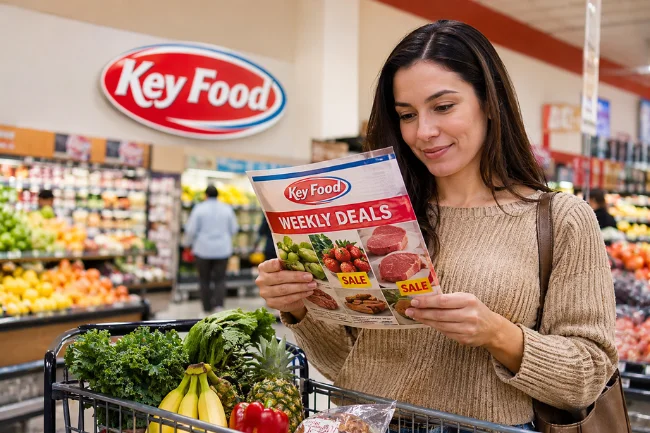
The most useful KeyFood deals usually come from combining a little advance planning with careful reading of the actual offer.
A bright sale tag does not necessarily mean the item is the lowest-priced choice.
Start With the Weekly Circular
Key Food publishes weekly ads tied to participating locations.
Select your store before reviewing the circular, because prices and featured products may differ. I would build my menu around items I genuinely need that week, especially produce or protein on promotion.
Read dates, size restrictions, purchase limits, and conditions such as “must buy two.”
If an offer requires multiple units, compare the effective per-unit cost with a single item from another brand. Buying excess food simply to qualify for a deal can erase the savings if some of it goes unused.
Use Loyalty Savings and Digital Coupons
The Key Food app and digital coupon page support store-based savings.
The app description explains that shoppers can clip eligible offers to a loyalty card for redemption at checkout. Traditional Savings Club Card materials also describe card-linked promotional prices.
Check participation, link the correct card, and read size and quantity restrictions.
Some coupons have redemption limits or cannot be combined. If a discount fails, keep the receipt and contact the store.
Compare the Price That Actually Matters
Imagine one box of cereal costs $3.50 for 12 ounces while another costs $4.20 for 18 ounces.
The smaller box looks cheaper at the register, but its unit cost is about 29 cents per ounce; the larger one is about 23 cents per ounce.
That difference matters when you’re buying an item you’ll finish before it expires.
I compare unit prices, then factor in coupons, eligibility, and how much I’ll actually use. Sale tags alone cannot establish value.
Does KeyFood Offer Online Ordering and Grocery Delivery?
Yes, online grocery shopping is available through participating Key Food locations, although the channel and service area depend on the store.
One option is the Key Food shopping site powered by Instacart, where customers can enter a ZIP code to check delivery availability.
Some independently operated stores may also maintain their own ordering systems.
A notable 2026 development was Key Food’s partnership with Uber Eats.
Announced on October 27, it brought more than 300 affiliated locations into the delivery marketplace, with participating stores offering groceries through the app.
The rollout allows member retailers to opt in, so the announcement should not be read as a guarantee that every store already delivers through Uber Eats.
What Can the Key Food App Do?
The official app’s published features include location-based weekly circulars, digital coupons, shopping lists, product searches, a barcode scanner, and store details.
For regular shoppers, the biggest advantage may be keeping the grocery list and available discounts together rather than switching between paper flyers and screenshots.
When using KeyFoods search results, make sure you’re downloading an app published by the actual supermarket operator.
Similarly named applications or unrelated sites may not provide the offers linked to your chosen store.
Delivery Versus Pickup Versus Shopping in Person
| Shopping method | Main advantage | What to check before choosing |
|---|---|---|
| In-store shopping | You select your own fresh items and compare shelf labels | Travel time, store hours, and checkout conditions |
| Home delivery | Saves a trip and may offer scheduled delivery | Delivery area, service fees, tips, substitutions, and final total |
| Store pickup, where offered | Lets you collect a prepared order | Pickup window, minimum spend, and any service charge |
Online prices and promotions may differ from shelf prices.
Delivery charges, platform service fees, substitutions, and tips can change the final cost, so I compare the complete checkout total with an equivalent in-store basket instead of looking only at the advertised product price.
Is KeyFood Expensive Compared With Other Supermarkets?
There is no reliable universal answer.
Because stores are independently operated and compete in different neighborhoods, one Key Food location may be especially competitive on produce while another stands out for deli items, culturally specific groceries, or convenience.
A fair comparison uses an identical basket: the same milk size, comparable eggs, the same weight of fruit, and equivalent meat cuts.
Include loyalty-card prices only when you qualify for them. Compare sale and regular prices separately, because a single exceptionally good weekly offer doesn’t tell you what your normal grocery bill will be.
I count transportation and delivery costs too. A nearby store may offer better overall value even when some shelf prices are higher.
Payment Options, SNAP, WIC, and Store Policies
Payment methods and benefit acceptance should be verified at the individual location.
Some Key Food stores advertise SNAP EBT or WIC acceptance, but participation and eligible purchases depend on the store and program rules.
Credit cards, debit cards, digital payment options, and cash handling can also vary.
For online SNAP orders, the ordering platform and participating retailer determine whether EBT payment is available.
SNAP generally covers eligible food, not delivery tips, platform fees, or other ineligible charges. Check the payment screen before you commit to a purchase rather than assuming an in-store benefit automatically works online.
The same store-specific principle applies to refunds, returns, senior discounts, bag policies, and delivery minimums.
Keep the receipt and review the posted policy if you need an exchange or refund, particularly for perishable items.
Who Gets the Most Value From Shopping at KeyFood?
I see three particularly useful shopping scenarios.
First, people living near a participating store may appreciate being able to buy everyday ingredients without planning a longer supermarket trip.
Second, households that cook cuisines requiring specific regional products may benefit from a locally tailored assortment.
Third, shoppers who regularly review circulars and use valid coupons can find targeted discounts.
It won’t win every comparison. Warehouse clubs may be better for bulk purchases, and another grocer may offer a cheaper staple. I choose according to my actual basket.
My Practical Checklist for a Better KeyFood Shopping Trip
Before Leaving Home
I start with three pieces of information: what is already in the kitchen, what meals I expect to cook, and which advertised deals genuinely support those meals.
I check my store’s flyer and coupon availability, then make a list organized by produce, protein, dairy, pantry, and household products.
I avoid building meals around a discount if the remaining ingredients are unusually expensive. I also check holiday hours.
While Walking the Aisles
I look at the price per ounce, pound, or count, not just the large sale number.
For produce, I compare loose and packaged options. For discounted perishables, I ask whether I can use or freeze them safely before quality declines.
I check coupon conditions before the register, especially if a promotion requires a loyalty account, multiple purchases, or a particular package size.
A quick receipt review afterward helps catch pricing mistakes while the trip is still fresh in my mind.
When Ordering Online
I choose acceptable substitutions in advance and leave clear notes when ripeness, size, or brand really matters.
Then I examine the estimated total, fees, and delivery window.
If I’m buying frozen foods or meat, I arrange to receive the order promptly so those products aren’t sitting unattended.
Why the Cooperative Model Matters to Communities
Local ownership can help retailers respond to food traditions, household sizes, and seasonal demand.
One neighborhood may need smaller packages; another may prefer family-size options.
Still, I would avoid assuming independent ownership automatically guarantees lower prices, better labor conditions, or superior freshness.
Those outcomes depend on how each store is managed. The cooperative model creates room for local decisions; customers should judge the results through actual service, product quality, and value.
What to Watch as Key Food Expands Its Digital Services
The October 2026 Uber Eats partnership shows how a neighborhood-focused supermarket group can broaden access without making every location identical.
More ways to order are useful, but they also make price transparency and store identification more important.
For the best experience, I would keep three details connected: the precise store, the channel used to shop, and the offer’s terms.
A coupon seen on one banner’s website may not apply to another, and a delivery listing may show a different assortment from the in-store shelves.
Final Thoughts
KeyFood combines the familiarity of a neighborhood grocery store with the purchasing and promotional resources of a larger cooperative.
Its biggest strength is also the reason to research your specific location: independent stores can differ in selection, deals, and services.
Visit Key Food’s official website, select your nearest store, check its current circular, and compare a few regular purchases before deciding where your next grocery trip makes the most sense.
Frequently Asked Questions About KeyFood
1. What Is KeyFood?
KeyFood is a supermarket brand within an independently owned grocery cooperative founded in Brooklyn in 1937.
2. Is Key Food the Same as KeyFoods?
KeyFoods is a common search variation; the retailer’s established name is Key Food.
3. Does KeyFood Have Weekly Sales and Digital Coupons?
Yes. Participating stores feature weekly ads and eligible digital offers, with details varying by location.
4. Can I Order Key Food Groceries Online?
Yes, at participating locations through services such as Instacart-powered ordering or Uber Eats; check your ZIP code.
5. Does KeyFood Accept EBT or SNAP?
Some locations accept SNAP EBT. Confirm store participation and online payment eligibility before shopping.

Ethan Caldwell is a business research writer with 9+ years of experience covering entrepreneurship, market trends, business strategies, and industry insights. He focuses on creating clear, data-informed articles that help readers understand modern business concepts.