RedRover is a U.S.-based nonprofit animal-welfare organization that helps animals in crisis while protecting the bond between pets and the people who love them. Founded in 1987, it provides emergency animal sheltering, limited financial assistance for urgent veterinary treatment, support for people escaping domestic violence with pets, and humane education for children. Its work is organized through programs such as RedRover Relief, RedRover Responders, and RedRover Readers.
RedRover steps in during medical emergencies, disasters, cruelty cases, and family housing crises. It is neither an ordinary adoption shelter nor pet insurance. That distinction matters because eligibility depends on the problem and the program.
What Is RedRover, and How Did It Begin?
RedRover began in Sacramento, California, in 1987 as United Animal Nations. Its early animal-protection work led to an emergency rescue service in 1990 and, later, programs for crisis response, financial relief, and education.
In June 2011, United Animal Nations adopted the RedRover name. The change reflected a clearer focus: moving animals from dangerous circumstances into care, often by helping the humans responsible for them at the same time. The organization’s history traces that development.
Today, RedRover is a 501(c)(3) charity. Some response volunteers are based in Canada, but Urgent Care and Safe Escape grants have U.S.-specific eligibility requirements.
I appreciate its practical logic: an injured animal may need a veterinarian while its owner needs a little money. Helping the animal can mean removing a barrier in the person’s life.
What Does RedRover Actually Do?
Its programs address urgent danger, organizational preparedness, and prevention through education.
| RedRover program | Who it serves | Main type of support |
|---|---|---|
| Relief Urgent Care | Eligible pet guardians facing a veterinary emergency | Small grants toward approved treatment |
| Relief Safe Escape | Domestic violence survivors with pets | Temporary boarding arranged through an advocate |
| Safe Housing | Eligible shelters and animal organizations | Grants to create or expand pet-friendly services |
| Responders | Communities and animal agencies facing large-scale need | Trained volunteers and emergency sheltering support |
| Readers | Children, educators, and volunteers | Story-based empathy education and resources |
Shelter grants are not individual emergency funds. And prospective adopters generally need a local animal shelter, not RedRover’s crisis-response team.
RedRover Relief: Financial Help for Emergency Veterinary Care
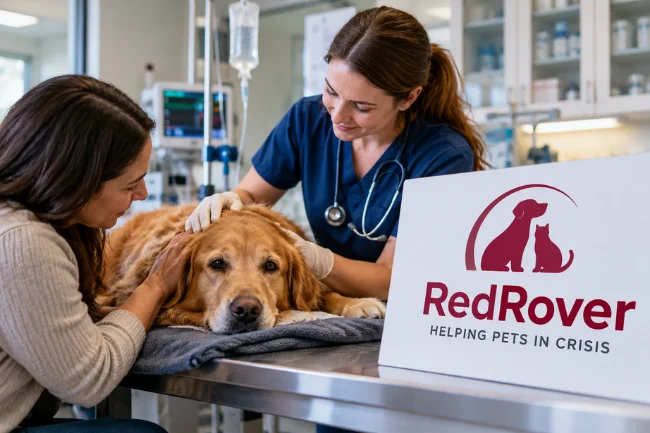
A pet’s sudden illness raises two questions: What treatment is needed, and how will I pay? RedRover Relief Urgent Care grants address relatively small funding shortages preventing necessary treatment.
The average grant is around $250. This is gap funding, not a promise to cover an entire operation. It works best when most costs are already arranged.
Who Qualifies for an Urgent Care Grant?
According to the current official guidelines, an application generally requires:
- One animal with an urgent injury or illness needing specific treatment.
- A current veterinary diagnosis, proposed treatment plan, and cost estimate.
- A favorable expected outcome from treatment.
- A household income no higher than $60,000 per year.
- Both the applicant and the animal residing in the United States.
The remaining gap matters: RedRover says it cannot assist if $500 or more is still needed to begin or continue treatment. Check the latest wording before applying.
It does not cover initial exams, diagnostic tests, routine vaccinations, ongoing conditions, or completed treatment. Households that previously received an Urgent Care grant are also excluded.
How to Apply Without Losing Valuable Time
I would start with the veterinarian. Get a diagnosis, treatment plan, prognosis, and estimate; then calculate what savings, payment arrangements, or other support can cover.
Next, review RedRover’s eligibility list and pre-application questions. The online application currently closes Friday at 4 p.m. Pacific and reopens Monday at 9 a.m. Pacific; replies can take one to two business days.
If waiting could endanger the animal, seek veterinary care immediately. RedRover explicitly warns that funding is not guaranteed. Ask the clinic what safe options are available while financial assistance is being explored, rather than postponing necessary treatment for an uncertain grant.
RedRover Safe Escape: Helping Survivors Keep Their Pets Safe
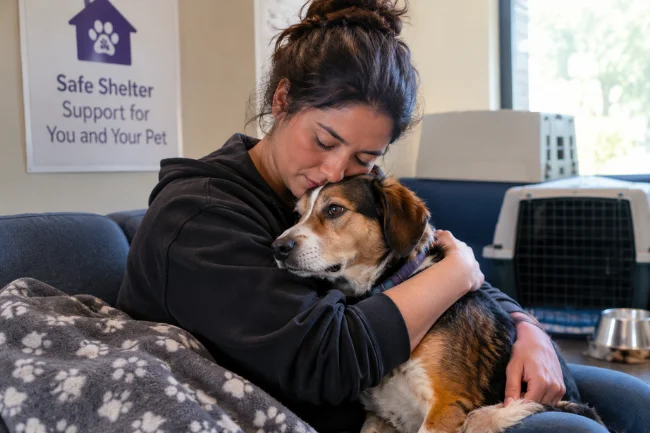
For someone experiencing domestic violence, leaving can mean fearing for a pet’s safety. Many emergency shelters cannot house animals, which creates another barrier to escape.
The Safe Escape program addresses this specific problem. It can help cover temporary boarding for pets while a survivor stays in a domestic violence shelter. Under the published rules, assistance is primarily for up to 45 days, with certain boarding-related vaccination costs considered.
A domestic violence shelter advocate—not the survivor—must apply, helping coordinate safe boarding. Together, they should identify a provider and obtain an estimate first.
The listed maximum is $40 per animal daily, typically for no more than three pets, subject to conditions and exceptions. Funding is not guaranteed.
If someone is in immediate danger, grant research should not delay a safety plan. In the United States, the National Domestic Violence Hotline can help people explore confidential support and safe options. RedRover also points readers toward directories of pet-friendly domestic violence services.
Safe Housing Grants: Changing What Shelters Can Offer
Safe Escape helps with a particular boarding need. RedRover’s Safe Housing grants address the bigger structural problem: too few shelters can welcome people and pets together.
Eligible U.S. nonprofit domestic violence and animal organizations can seek grants of up to $60,000 to build or renovate pet spaces, establish foster arrangements, cover temporary boarding, or support certain veterinary and pet-related costs. RedRover also offers a Safe Housing grant track for homeless shelters, with specific partnership requirements and similar maximum funding.
I see this as helping one family today versus preparing a shelter to help many more. A pet room or reliable rescue partnership can remove the same barrier repeatedly.
The nonprofit encourages applicants to document local demand, preferably with at least six months of information, and develop a plan to sustain services beyond the grant. Its Safe Housing information explains the eligible costs and application requirements.
One recent measure of that work is the $404,311 RedRover announced in its second 2026 Safe Housing grant round for nine domestic violence, homeless, and animal shelters. Those funds were intended for practical improvements including pet housing, veterinary care, boarding, and animal-care equipment.
Where the Purple Leash Project Fits
The Purple Leash Project is a partnership between RedRover and Purina that raises awareness and supports pet-friendly domestic violence shelters. It is connected to RedRover’s Safe Housing work, not a separate general-purpose veterinary fund.
For readers comparing names found online, that distinction can prevent a frustrating search for the wrong application.
RedRover Responders: Emergency Sheltering After Disasters and Cruelty Cases
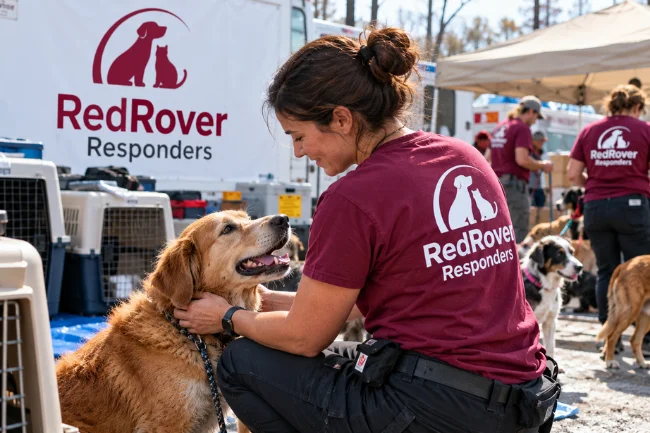
When hurricanes, wildfires, floods, or major cruelty investigations displace large numbers of animals, local agencies can become overwhelmed. RedRover Responders supplies trained volunteers who help establish and operate temporary shelters, provide daily animal care, and support partner organizations.
The official Responders program page reports more than 4,800 trained volunteers, 3,369 animals sheltered during 2025, and 312 deployments to date. These are reported program figures, not an estimate of all animals affected by every incident.
Temporary care requires feeding, sanitation, identification, safe handling, supplies, and coordination for reunification or longer-term placement.
RedRover also offers community projects and operational guidance when local resources are strained.
Can Anyone Volunteer as a Responder?
Not immediately. RedRover lists requirements that include being at least 18, having a current tetanus vaccination, completing its volunteer training, and finishing FEMA’s IS-100.c introductory incident-command course before deployment. Animal-handling experience is strongly recommended.
The volunteer training page describes a free, self-paced course lasting roughly two to three hours. Training does not mean a deployment is guaranteed, and availability depends on actual requests for help.
RedRover Readers: Teaching Compassion Before a Crisis Happens
Not all animal-welfare work happens in an emergency. RedRover Readers uses children’s literature, guided questions, and discussion to encourage empathy for both animals and people.
Instead of simply telling students to be kind, an educator might ask what a frightened animal could be feeling, which clues reveal its needs, or how a character could respond more responsibly. This invites children to think rather than memorize a moral slogan.
I like that observation is central: recognizing that a nervous dog needs space is more useful than assuming it wants a hug.
RedRover provides educator resources, book recommendations, and training. Its eight-page Kind News magazine adds accessible animal-related reading for elementary-age children. The Readers program and its curated humane book lists give teachers a practical starting point.
Is RedRover a Rescue Shelter, a Grant Provider, or Both?
The phrase “animal rescue” can describe very different services. RedRover assists rescue efforts and temporary sheltering, but it does not function like a typical local adoption center with a regular list of pets available for new homes.
| Need | Most appropriate first contact | How RedRover may fit |
|---|---|---|
| Adopt a pet | Local shelter or adoption rescue | Usually not the direct adoption source |
| Pet needs emergency surgery | Veterinarian and funding resources | Possible limited Urgent Care grant |
| Escape abuse with a pet | Domestic violence advocate or hotline | Possible Safe Escape boarding assistance |
| Shelter wants to welcome pets | Shelter management and animal partner | Possible Safe Housing grant |
| Large animal crisis | Responsible local agency | Potential coordinated responder support |
The underlying lesson is simple: find the decision-maker for the specific problem first. A veterinarian establishes medical need; an advocate coordinates a survivor’s safety; a shelter director plans a facility program; and emergency authorities coordinate disaster operations.
How I Would Decide Whether RedRover Is the Right Resource

I suggest three questions before filling out forms.
First, what needs to happen within the next few hours? If an animal needs emergency treatment or a person is unsafe, contact the relevant professional service now. Financial aid can be explored alongside the immediate response.
Second, who is authorized to make the request? An individual may submit an Urgent Care application, whereas Safe Escape requires a domestic violence advocate. Organizational Safe Housing grants require eligible organizations, not individual pet owners.
Third, what exact gap is preventing progress? Is it $250 toward a planned veterinary procedure, a documented boarding arrangement, or money to build a pet-friendly shelter? The more precisely the need matches the program, the less time is spent pursuing assistance that cannot apply.
For a veterinary case, I would keep the diagnosis, itemized estimate, clinic contact, household income information, and a record of other funding sources together. For an organizational grant, I would document community demand, partner responsibilities, projected costs, and a longer-term funding plan.
This is my planning framework, not additional RedRover eligibility criteria.
Is RedRover Legitimate, and How Can Donors Evaluate It?
Yes. RedRover is an established U.S. 501(c)(3) nonprofit with published program information, organizational history, financial statements, and IRS Form 990 filings. Donors can examine those records instead of relying solely on testimonials or emotionally powerful photographs.
On its financials page, the charity reports that 78% of its 2025 expenses supported direct programs and 22% supported services. That ratio describes expenditure allocation; it should not be mistaken for a direct measurement of lives saved or the quality of every individual program.
When I assess charities, I look for transparent accounts, defined services, and evidence of activity. I would still review the latest filings and independent assessments before a substantial donation.
For safety, give through the official RedRover website rather than a donation link in an unsolicited message. If a request claims to represent the charity, verify it using contact information independently obtained from its official site.
Practical Pet Emergency Preparation Inspired by RedRover
The best crisis response begins before the crisis. RedRover recommends identification, an evacuation destination, and supplies for each animal. A simple plan can reduce the risk of a pet being left behind when a family must leave quickly.
Prepare a carrier or secure transport option, a leash where appropriate, food and water, medication, vaccination records, current photographs, and temporary identification tags. Make sure microchip information is current and identify a pet-friendly place to stay outside the immediate area.
I would also choose a trusted backup caregiver and keep digital copies of records accessible by phone.
RedRover’s pet disaster preparedness resources include species-specific guidance. Planning is especially valuable for households with several animals, pets that need medication, or animals that are difficult to transport.
Frequently Asked Questions About RedRover
What is RedRover best known for?
RedRover is known for emergency animal sheltering, limited urgent veterinary grants, pet-safe domestic violence support, and humane education.
Does RedRover pay veterinary bills?
It may award a small grant for eligible, not-yet-completed urgent treatment; it does not cover routine care or previously completed treatment bills.
How much money can I get from RedRover?
Urgent Care grants average around $250, while eligible organizations can apply for certain Safe Housing grants of up to $60,000.
Is RedRover available outside the United States?
Some responder volunteers are in Canada, but Urgent Care and Safe Escape grants require qualifying U.S. circumstances; check each program’s rules.
How do I contact RedRover for help?
Start with the relevant program page at RedRover.org, where you can review eligibility and access the correct application or resources.
Final Thoughts
RedRover addresses needs ranging from urgent veterinary funding to temporary pet boarding, trained disaster response, and pet-friendly shelter capacity. Its strength is matching specific problems with specific support.
Start with the appropriate RedRover program and check its current criteria. To help others, consider donating, volunteering, sharing preparedness advice, or forming a local pet-safety partnership.

Claire Morgan is a health and wellness writer with 7 years of experience creating clear, research-informed content on nutrition, sleep, movement, preventive habits, and everyday wellbeing. She focuses on making reliable health information practical and easy to understand. Her articles are educational and do not replace professional medical advice.