
Viator Tours are travel experiences you can discover and book through Viator, an online marketplace for sightseeing tours, attraction tickets, day trips, food experiences, and outdoor activities. Viator connects travelers with independent tour operators rather than running most of the activities itself. You choose a destination, compare listings and traveler reviews, check availability, and book an experience for a particular date. The operator then delivers the tour or activity.
That distinction matters. A good booking platform can make planning easier, but the quality of your day still depends heavily on the individual provider. I find the smartest way to use Viator is to treat it as a comparison tool first and a checkout page second. Here’s what I would check before committing money or a precious vacation day.
What Is Viator, and How Does It Work?
Viator is a Tripadvisor company and describes its catalog as having more than 400,000 travel experiences. Its listings range from short city walks to full-day excursions, cooking classes, boat trips, and tickets to major attractions.
When you book, Viator supplies the marketplace, payment process, booking information, and customer-support channel. The supplier—usually a local tour company or activity provider—is responsible for delivering what you purchased. Viator explains this division of responsibility in its How Viator works disclosure.
Viator earns commissions from suppliers after completed experiences. That doesn’t automatically make a listing more expensive than booking directly, but it does mean you’re dealing with an intermediary. If a guide changes the meeting point or weather disrupts an outing, communication may involve both the operator and the booking platform.
Another detail worth knowing: the default “Featured” search order is not simply a leaderboard of the happiest customers. Viator says its ranking system considers several factors, including relevance, quality, bookings, and its revenue. Paid promotional visibility can also influence placement. I never assume the first result is the best match.
What Types of Tours Can You Book on Viator?
The variety is Viator’s biggest practical strength. Instead of researching dozens of separate companies, I can compare very different ways to experience the same destination in one place.
| Experience type | Typical appeal | What I check before booking |
|---|---|---|
| Guided walking tours | Local stories and neighborhood context | Walking distance, language, group size |
| Attraction tickets | Convenient entry to popular sights | Timed admission, what “skip-the-line” actually covers |
| Day trips | Destinations beyond the city center | Total driving time, stops, return time |
| Food and cooking tours | Regional dishes and hands-on experiences | Dietary options, portions, drinks included |
| Boat and outdoor adventures | Scenery and active exploration | Weather rules, fitness needs, safety equipment |
| Private tours | Flexible pacing for a family or group | Whether pricing is per person or per group |
Popular Destinations and Experiences
Travelers commonly browse Viator for Rome and Vatican-area sightseeing, Paris museums and river cruises, London day trips, Tokyo food walks, Dubai desert experiences, and New York harbor activities. These are examples of the kinds of trips available, not endorsements of any particular provider.
A label such as “private tour” also deserves a closer look. It may mean exclusive transport and a dedicated guide, or simply that your group has a private reservation for a fixed itinerary.
Similarly, a “small-group tour” should specify its maximum capacity. Marketing labels are less useful than the actual numbers.
How to Book Viator Tours Without Missing Important Details
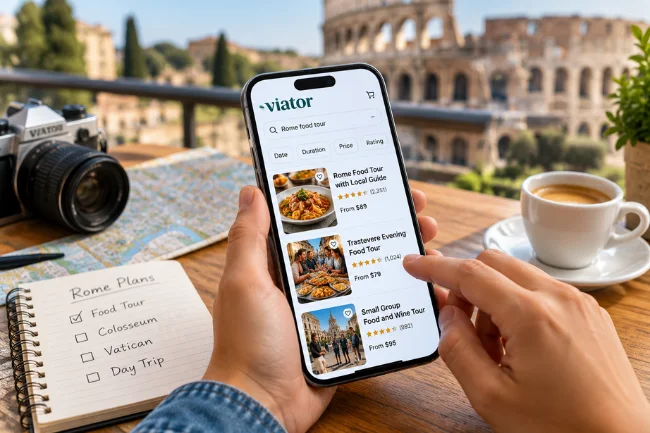
1. Search for the Activity, Not Just the Destination
Start with Viator’s website or app, enter the city, and narrow results by date, duration, budget, and interests. Searching for “evening food tour” instead of only “Rome,” for example, produces a more manageable set of choices.
I then change the sort order and examine a few listings beyond the featured results. A slightly lower-rated activity with a smaller group or better departure location may suit my day better.
2. Read the Entire Listing
The headline rarely tells the whole story. I inspect the itinerary, included admissions, transportation, meeting point, ending location, accessibility information, and minimum age or fitness requirements.
One common misunderstanding involves “skip-the-line” tickets. They may bypass the ticket-purchase queue without avoiding security screening or every entry queue. I look for the exact access promised, not the phrase alone.
3. Select Your Date and Check the Final Price
A price shown in search results may change when you enter the date, group size, age categories, or booking option. Compare the final checkout total and the inclusions, not just the number that first caught your eye.
Check whether the reservation confirms immediately or requires supplier confirmation. Save the booking reference and follow any instructions about identification, ticket redemption, or contacting the operator.
4. Keep the Voucher Accessible
Many experiences accept mobile tickets, but requirements vary. I would save an offline copy of the voucher and meeting-point details before leaving hotel Wi-Fi.
If the listing requires a separate exchange for physical admission tickets, allow time for that stop.
How I Judge Whether a Viator Tour Is Worth Booking
Star ratings are useful for narrowing a shortlist, not settling the decision. A five-star tour that runs for eight hours may be the wrong choice for someone who wants a relaxed afternoon.
Read Recent Reviews for Repeated Details
I scan recent positive, mixed, and negative comments to identify patterns: punctual pickups, rushed stops, unexpected sales pitches, knowledgeable guides, or a lunch break that never materialized.
One complaint can be an outlier. Several reports describing the same issue deserve attention.
Viator says reviews submitted directly to its platform come from customers who booked through it, and that it moderates submissions. Tripadvisor reviews can also appear in relevant contexts.
That’s reassuring, but reviews remain individual accounts rather than guarantees of what your departure will be like.
Match the Itinerary to Your Travel Style
If I were choosing a full-day excursion, I’d ask how much of the advertised duration is actually spent at the attraction.
An eleven-hour tour with seven hours of road travel is a very different purchase from an eleven-hour guided experience on site.
I also look closely at group size, walking terrain, restroom availability, seating, child policies, and language.
For travelers with mobility needs, it is worth contacting the provider about the specific route and vehicle rather than relying on a broad accessibility label.
Check the Operator, Not Just the Product Title
Where the operator’s name is available, I compare its website and contact details with the listing.
This helps identify whether apparently similar products are run by different companies—or are effectively the same excursion sold through different channels.
The aim isn’t to distrust every listing. It’s to understand who will actually be responsible for your experience.
How Much Do Viator Tours Cost?
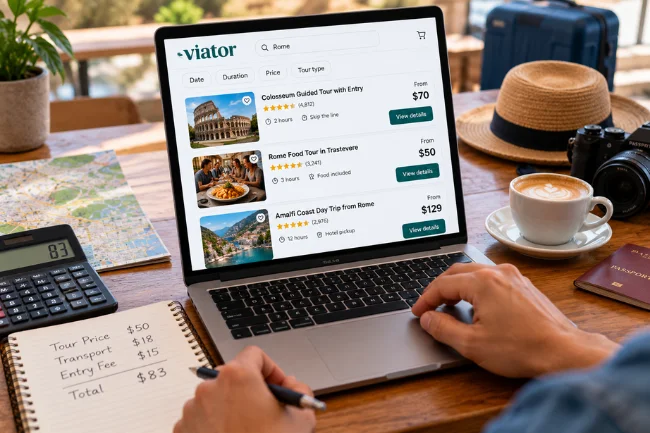
There is no standard Viator tour price. A self-guided ticket, a shared walking tour, and a private vehicle excursion have completely different cost structures.
Destination, season, availability, group size, and inclusions all influence the amount you pay.
I use a “true trip cost” check rather than comparing ticket prices alone. Suppose one experience costs $70 and includes hotel pickup and admission, while another costs $50 but requires $18 in transport and $15 for entry.
The apparently cheaper tour now costs $83, even before considering your time. These numbers are illustrative, not live Viator prices.
Look for mandatory on-site charges, optional upgrades, meals, gratuities, and pickup surcharges.
Viator says suppliers must disclose required third-party fees and extra charges in their listings, but I still confirm the details before paying.
Currency matters too. Compare prices using the same currency and check possible foreign-transaction or conversion charges from your card provider.
A discount is only a bargain if it applies to the departure you want and doesn’t remove useful inclusions.
Cancellation Policies, Refunds, and Pay-Later Options
Many Viator experiences offer free cancellation if you cancel at least 24 hours before the scheduled start, calculated using the tour’s local time.
However, this is not universal. Some tours have custom deadlines or nonrefundable terms. Read the policy on the specific booking before paying.
I pay special attention to the difference between “the day before” and “24 hours before.”
If a tour begins at 8 a.m. on Friday, a 24-hour cutoff generally means 8 a.m. Thursday in the experience’s local time zone—not Thursday night.
Eligible listings may offer Reserve Now & Pay Later, letting you secure a place without paying immediately.
The payment date and cancellation window depend on the booking, so I would verify both rather than assuming they match every other tour. Viator also promotes 24/7 customer support.
Bad weather does not automatically qualify every canceled-by-traveler booking for a refund.
Outdoor experiences may have weather-related operator-cancellation provisions. If the provider cancels, save the notice and contact support through your booking for the applicable resolution.
Viator vs. Booking Directly: Which Is Better?
Neither option wins every time. I compare them based on the service and the actual terms offered for the same date.
| Factor | Booking through Viator | Booking with the tour operator |
|---|---|---|
| Comparing options | Convenient side-by-side browsing and reviews | Usually limited to one company’s offerings |
| Price | Competitive on some dates; must check final total | May offer a different rate or package |
| Customer support | Marketplace support plus supplier involvement | Typically direct communication with provider |
| Cancellation | Listing-specific policy shown before checkout | Operator’s own terms may differ |
| Loyalty benefits | Eligible direct Viator bookings can earn rewards | Depends on operator’s own program |
One less-obvious detail is the Viator Rewards program. Eligible bookings made directly through Viator can earn rewards for future purchases, but bookings traced to some affiliate links and bookings using promo codes may be excluded.
Rewards also have an expiration period. I would check the current program terms rather than treating rewards as cash back on every purchase.
For a complex private itinerary, direct booking can simplify coordination.
For travelers comparing multiple attractions across a new city, Viator’s selection and booking interface may be more convenient.
Advantages and Limitations of Using Viator
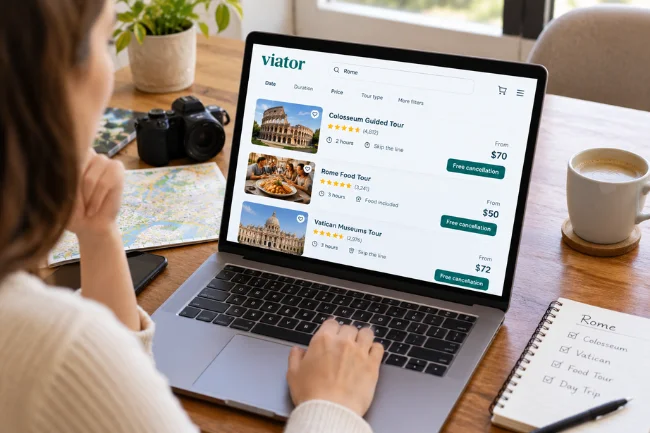
The strongest reasons to use Viator are choice, convenience, searchable traveler feedback, and the ability to assemble several activities without opening a new booking system for every provider.
Flexible cancellation on many listings can also reduce the risk of locking in plans too early.
The limitations are equally real. Quality varies by operator, and two similar-looking tours may include very different services.
Customer support can help with disputes, but it cannot recreate a missed sunset cruise or return a lost holiday afternoon. Viator itself states that it does not guarantee the performance of individual suppliers.
I also wouldn’t rely exclusively on the default rankings. Search positioning can reflect commercial considerations.
Using filters, reading the itinerary, and checking independent operator information offer a more balanced picture.
The Four Checks I Make Before Committing a Vacation Day
My most useful planning rule is to look beyond price and reviews. I ask four practical questions about the friction a tour can add to a trip.
The Location Check
Where does the tour actually start, and where does it finish? “City center pickup” is not the same as hotel pickup.
Put both addresses into your map and account for local transport.
The Time Check
Consider the meeting deadline, not only the advertised start. Add travel time, check-in time, the activity itself, and a buffer for traffic or queues.
A two-hour cruise can occupy most of a morning.
The Inclusions Check
Separate essential costs from optional extras. Tickets, taxes, equipment, food, transportation, and gratuities deserve individual scrutiny when comparing two experiences.
The Exit Check
Know the last moment you can cancel, the procedure for changing a booking, and what happens if the supplier changes the schedule.
Screenshot the relevant terms when you book so you’re not searching for them during a disruption.
This quick audit is especially useful for shore excursions, tightly scheduled city breaks, and trips involving children.
In those situations, a conveniently located $90 tour may deliver better value than a $75 alternative with an awkward transfer.
What to Do If Something Goes Wrong
If the operator is late or the meeting point seems unclear, use the contact information on your voucher first, and document the time and location.
If you cannot reach the supplier, contact Viator through your booking.
For a cancellation, disputed inclusion, or no-show by the operator, keep your booking confirmation, relevant messages, and any receipts for unexpected expenses.
Explain the problem factually and request the remedy supported by your booking terms. A refund or reimbursement is not automatic in every circumstance, so clear evidence matters.
Travel insurance may address certain disruptions that the tour’s cancellation policy does not, depending on the policy you purchased.
Who Should Use Viator Tours?

Viator is especially practical for first-time visitors who want guided context, travelers who prefer one place to compare tours, and people trying to fit a special experience into a short vacation.
It can also be useful for families who need to filter by duration, accessibility, and departure time before making plans.
It may be less compelling for someone who already knows a trusted local guide, wants a heavily customized multi-day itinerary, or prefers to handle every detail directly with a supplier.
Independent travelers who only need a standard museum ticket should compare the attraction’s official ticket site as well.
My rule is straightforward: use Viator when its convenience, availability, or booking terms add genuine value—not merely because the listing looks popular.
Frequently Asked Questions About Viator Tours
Is Viator a legitimate website for booking tours?
Yes. Viator is an established Tripadvisor company that offers bookings with independent tour providers. Still, assess the specific operator and booking terms before purchasing.
Are Viator Tours cheaper than booking directly?
Not necessarily. Prices and inclusions vary, so compare the same tour, date, group size, and final checkout cost on both websites.
Can I cancel a Viator tour and get a refund?
Many experiences offer a full refund when canceled at least 24 hours before departure, but some have different or nonrefundable policies. Check your booking.
Does Viator operate the tours itself?
Generally, no. Viator provides the marketplace and booking support, while independent suppliers run the tours and activities.
Can I book Viator Tours at the last minute?
Often, yes, when inventory remains available. Check the listing’s confirmation status, ticket requirements, meeting time, and cancellation terms before paying.
Final Thoughts: Book the Experience, Not the Headline
Viator Tours can make travel planning easier, particularly when you’re comparing unfamiliar operators and want to see a broad range of things to do.
But a smooth booking is only part of a worthwhile experience. The operator, itinerary, true cost, and cancellation terms matter more than a flashy title.
Before reserving, shortlist two or three tours, compare the complete details, and choose the one that fits your actual day. That’s how I would turn an attractive listing into a decision I can feel good about.

Liam Anderson is a travel research writer with 9+ years of experience covering destinations, travel planning, cultural experiences, and practical travel guides. He creates informative content to help readers discover places with better insights and preparation.