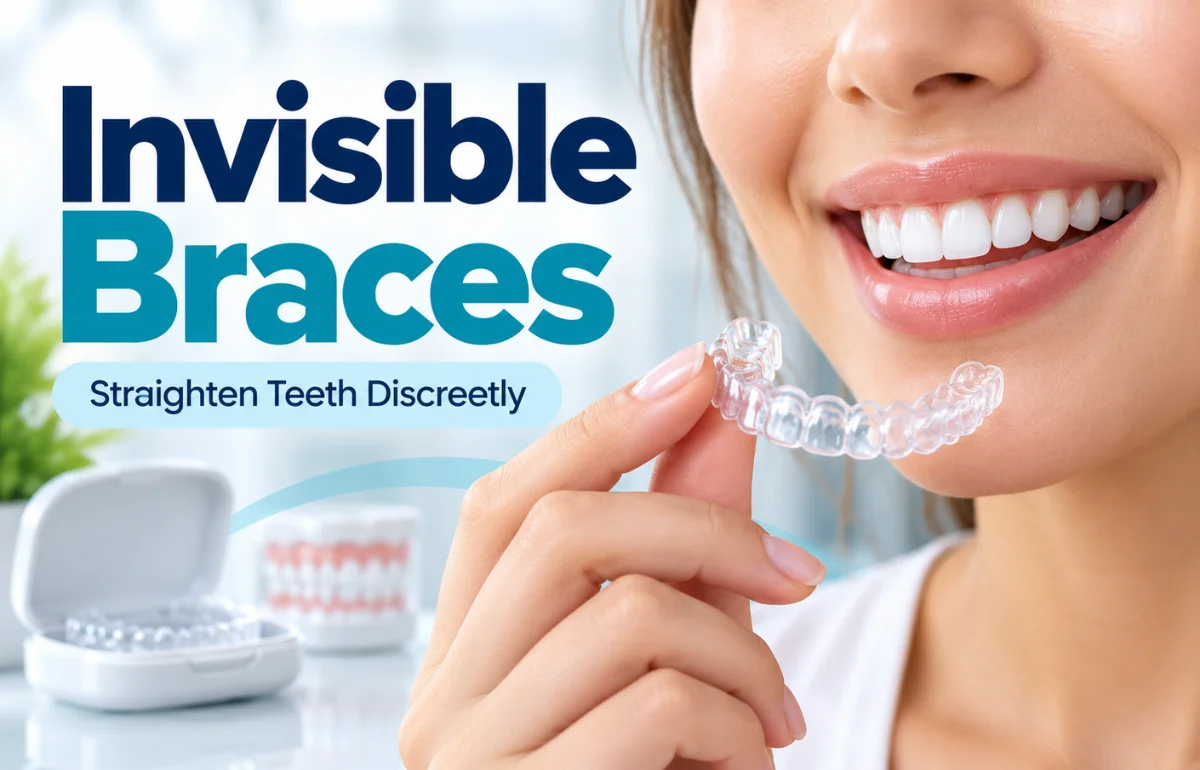
Invisible braces refer to various teeth-straightening treatments designed to improve your smile while remaining barely noticeable in everyday situations. It’s a group of options, each with its own balance of benefits and compromises.
This guide explores different ways to achieve straighter teeth without the discomfort and noticeable appearance of conventional metal braces. This guide provides an overview of the key differences between them to help you decide which is right for you.
What Are “Invisible” Braces?
Invisible braces include several orthodontic solutions designed to align teeth while keeping the treatment less noticeable. The options generally include:
- Clear Aligners: transparent, removable plastic trays
- Ceramic braces: fixed braces with tooth-colored brackets
- Lingual braces: fixed braces glued to the back side of your teeth.
Although clear aligners are often the first choice for people seeking invisible braces, other discreet orthodontic treatments may be better suited to their specific dental needs.
Comparison of the Different Invisible Braces Options
| Clear Aligners | Ceramic Braces | Lingual Braces | |
|---|---|---|---|
| How do they look? | Transparent trays | Tooth-colored, thin wire | Hidden behind teeth |
| Removable? | Yes | No | No |
| Eating | Can be removed; no restrictions | Avoid sticky and hard foods | Avoid sticky and hard foods |
| Cleaning | No special considerations | Relatively hard | Tricky to clean |
| Best for | Mild to moderate cases | Wider range, including complex | Wider range, for those who want zero visibility |
| Comfort | Smooth; mild pressure | Brackets can rub cheeks | Can irritate the tongue at first |
Takeaway: If you want maximum visibility control and an easy routine, aligners win. If your bite is complicated or you’d struggle to wear trays consistently, fixed options are more dependable.
What “Invisible” Doesn’t Really Mean?
Here’s what you can expect:
- You may lisp briefly. It can affect your speech pattern for a while. Many individuals develop a lisp and get adjusted within a few days as the tongue gets used to the trays/ braces.
- You’ll feel a slight pressure. You might find new trays uncomfortable at first. Each set of aligners exerts gentle pressure to move the teeth, but this is a sign that they are working correctly.
- Trays only work when they’re in. This is the big one. If you opt for clear aligners, you’ll need to keep them in place for approximately 20 to 22 hours each day to achieve the desired results. So, if you’ll be tempted to leave them in, in that case, be honest with yourself before choosing them.
How Invisible Braces Fit into Everyday Life
Most of the questions people have about invisible braces relate to social concerns.
| Moment | What to expect | Tip |
|---|---|---|
| Job interview | Barely visible for most; a slight lisp may be noticeable in the first week. | Start the treatment well in advance of any big interviews. |
| At a photoshoot | Barely visible on camera | Smile naturally— no need to hide your teeth or overthink your smile |
| At a presentation | Speech normalizes fast | Rehearse aloud in the first week |
| During sports or workouts | Fine for most workouts; remove for contact sports | Use a mouthguard and store the trays safely |
| During Travel | Easy to lose trays in unfamiliar places | Pack the previous tray set as a backup |
| During Sleep | You wear them overnight | Keep water by the bed for dry mouth |
Real Differences Between Aligners and Other Invisible Braces
Choose aligners if you
- If you want removable braces that let you eat whatever you want and clean your teeth easily
- Have a relatively straightforward case
- Can reliably wear trays around 20 to 22 hours a day
- Want the most discreet look with the least daily hassle
Choose fixed invisible braces if you
- If you have a more complex case
- Prefer a fixed orthodontic option that doesn’t require you to remember to reinsert aligners after every meal
- Don’t mind a bit more cleaning effort and some food limits
- Don’t mind occasional orthodontic appointments to adjust brackets or wires
Takeaway: No single invisible braces option works best for everyone, as the ideal choice depends on individual dental needs and treatment preferences. The most important consideration is finding an appropriate level of discretion and a suitable fit for your dental needs.
Choosing the Right Provider for Invisible Braces
One of the biggest considerations when choosing an invisible brace is finding an orthodontic provider that offers appropriate care. Look for providers that have:
- An in-person consultation and X-rays before starting treatment
- A clear, easily reviewable treatment plan
- Ongoing support from a dentist or orthodontist
- Offers clear, unbiased guidance on which orthodontic treatment—clear aligners, discreet braces, or traditional metal braces—is most suitable for your dental needs
In fact, some brands are built around this model. For example, Illusion Aligners partners with dental professionals, with its in-house orthodontists assessing each case and developing personalized treatment plans before qualified dentists oversee the treatment process. Thereby, whichever brand you consider, that kind of supervision matters more than any marketing claim.
Note: Be cautious with unsupervised, mail-order approaches. Moving teeth without proper exams can harm roots, gums, and bones.
Conclusion
Invisible braces encompass a variety of different treatment options for straightening the teeth, each with its own advantages and considerations.
Clear Aligners tend to be the most versatile and convenient option for most people, but fixed invisible braces are better for some cases.
Finding the right fit is essential. Discussing your options with a dentist is the best way to get started on the road to a straighter, healthier smile. In due course, someone will notice how good your teeth look and ask you when it happened.
ⓘ Disclaimer
This article is for general informational purposes only and should not replace professional dental advice. Consult a qualified dentist or orthodontist before choosing any teeth-straightening treatment.

Daniel Reed is a dental health writer with 6 years of experience creating clear, research-informed content about oral hygiene, gum care, preventive habits, and everyday dental wellness. He focuses on making reliable information easy to understand while encouraging readers to seek professional dental care for diagnosis and treatment.