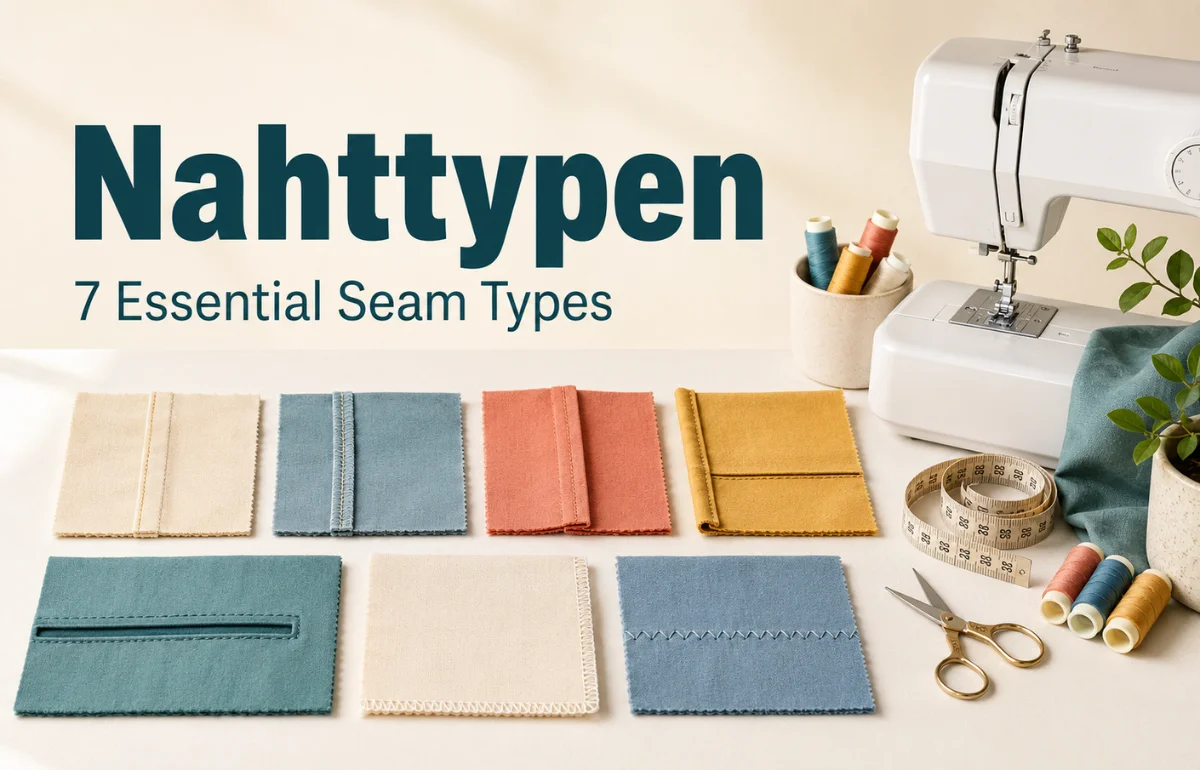
Nahttypen is the German word for seam types, and it refers to the different ways two pieces of fabric can be joined together in sewing. Each seam type serves a different purpose. Some are built for strength, some for a clean finish on the inside of a garment, and some purely for decoration. Knowing which one to use is one of the fastest ways to take a handmade project from looking homemade to looking properly made.
I sew almost every week, and I still remember the first time a seam actually failed on me. It was a tote bag, plain cotton, sewn with a single straight line and nothing else. Three weeks later, the whole thing split open at the bottom seam because I’d used the wrong seam for a bag that needed to carry weight. That mistake taught me more about nahttypen than any tutorial ever did.
What Nahttypen Actually Means in Sewing
In German, “Naht” means seam and “Typen” means types, so nahttypen is simply the umbrella term for the different seam constructions used in garment and textile work. English speakers usually just say “seam types,” but if you’ve come across the German term in a pattern book or a European sewing course, this is exactly what it’s talking about.
There isn’t one single nahttypen that works for everything. A wedding dress, a pair of jeans, and a linen tea towel each need a completely different seam, and that’s really the whole point of learning this stuff. It’s not decoration for its own sake. It’s about matching the construction to the job the fabric has to do.
Why the Seam You Choose Actually Matters
I used to think a seam was just a seam. Sew two pieces together, move on. Then I started making garments that people actually wore and washed repeatedly, and I noticed something: the seams were always the first thing to give out.
A seam has three jobs, sometimes all at once. It holds the fabric together under stress, it finishes the raw edge so the fabric doesn’t fray apart in the wash, and in some cases it becomes part of the visual design of the piece. When you pick the wrong nahttypen, you’re usually only solving one of those three problems and ignoring the other two.
Fast fashion garments often use the cheapest, fastest seam possible, which is one of the reasons they don’t last. Once you start choosing seams deliberately, you notice the difference in your own makes almost immediately, both in how long they hold up and in how they look from the inside.
The Main Nahttypen You’ll Actually Use
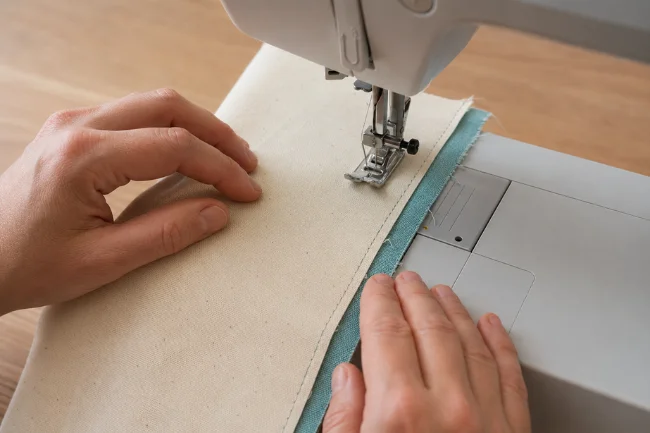
There are far more than a handful of seam variations out there, but most sewists rely on the same seven or eight for the vast majority of projects. Here’s what each one does, when I reach for it, and roughly what to expect.
Plain Seam (Steppnaht)
This is the seam almost everyone learns first. Two pieces of fabric, right sides together, stitched with a straight line, usually at a 1.5cm or 5/8 inch allowance for commercial patterns.
It’s fast and it works fine for anything that won’t get much stress or won’t fray badly, like a lined jacket panel or a quilt block. On its own, though, the raw edge is exposed, so it usually needs a finish like an overlock stitch, pinking shears, or a zigzag pass.
French Seam
This is the one I reach for on anything sheer, delicate, or unlined, like chiffon blouses or lightweight linen. You sew wrong sides together first with a narrow allowance, trim it close, then fold right sides together and sew a second line that encases the raw edge completely.
The result is a seam that looks clean from both the outside and the inside, with no visible stitching or fraying at all. The trade-off is that it only works well on straight or gently curved seams, not on tight curves like armholes.
Flat-Fell Seam (Kappnaht)
If you’ve ever looked inside a pair of jeans, you’ve seen a flat-fell seam. Both raw edges get folded and stitched flat against the fabric, so there’s nothing left exposed and no bulk sticking out.
It’s the strongest seam on this list, which is exactly why it shows up on denim, workwear, and anything that gets pulled or stressed repeatedly. It takes more steps than a plain seam, but for durability, nothing else on this list beats it.
Bound Seam (Hong Kong Seam)
Instead of folding the raw edges over, a bound seam wraps them in a strip of bias tape or lightweight fabric. It’s common in tailoring and on unlined jackets where the inside of the garment is visible when worn or hung open.
It takes a bit of patience with the bias binding, but it gives a beautifully finished look and works on fabrics that are too thick for a French seam.
Welt Seam
A welt seam starts like a plain seam, then one seam allowance is trimmed shorter than the other and the longer one is folded over and topstitched down. You’ll see this a lot on outerwear and structured jackets, where you want strength plus a defined line on the outside.
Overlocked or Serged Seam
This is the seam type most ready-to-wear clothing actually uses. A serger sews and trims the fabric in one pass, wrapping the edge in thread so it can’t fray. It’s fast, strong, and works on almost any fabric, including knits.
The downside is that it needs a separate machine, so home sewists without a serger usually substitute a plain seam finished with a zigzag stitch instead.
Zigzag or Stretch Seam
For knit and stretch fabrics, a straight stitch alone will snap the moment the fabric stretches. A zigzag stitch, or a stretch stitch if your machine has one, flexes with the fabric instead of fighting it. This is the seam I always default to for t-shirts, leggings, and anything with spandex or elastane in the fibre content.
Nahttypen Comparison Table
A German-to-English Nahttypen Glossary
If you’ve picked up a German sewing pattern or you’re translating instructions, these are the terms you’ll run into most often.
This is something I couldn’t find compiled anywhere when I first needed it, and I had to piece it together from pattern instructions over several projects, so I’m including it here in case it saves someone else the trouble.
Choosing the Right Seam for Your Fabric
Wovens
For quilting cotton, linen, and denim, plain seams, flat-fell seams, and bound seams all work well. The fabric doesn’t stretch, so you have the most freedom here.
Knits and Stretch Fabric
Stick with a zigzag stitch, an overlocker, or your machine’s dedicated stretch stitch. A plain straight stitch on knit fabric almost always ends in popped seams the first time it’s worn.
Delicate or Sheer Fabric
French seams and bound seams both hide the raw edge well without adding bulk, which matters a lot on chiffon, silk, and voile where a heavy seam finish shows through the fabric.
Mistakes I See Most Often With Nahttypen
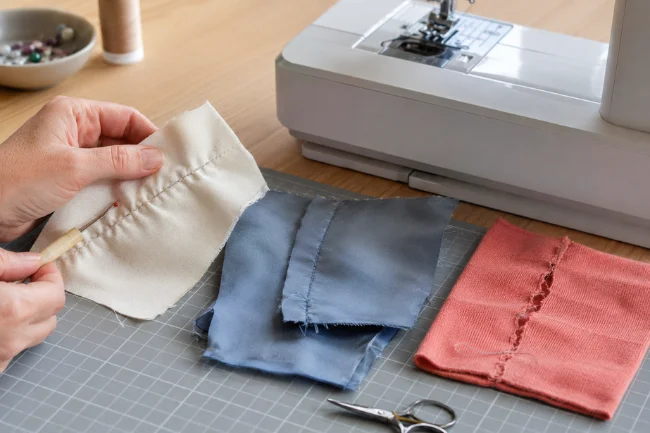
Puckering is the big one. Almost every time I’ve seen a seam pucker, it’s either the tension setting being slightly off or the needle being too heavy for the fabric weight. Swapping to a finer needle solves it more often than people expect.
Fabric creep is another common issue, especially on silky or slippery fabric where one layer slides further than the other while sewing. A walking foot fixes this almost every time by feeding both layers through at the same rate.
The third mistake is choosing a seam based on habit instead of the fabric in front of you. Just because a plain seam worked on your last three projects doesn’t mean it’s right for a stretch fabric or a sheer one.
Tools That Make This Easier
A walking foot, a seam ripper you actually enjoy using, and a good iron matter more than people expect. Pressing a seam flat before moving to the next step isn’t optional if you want a professional-looking result. I press after almost every seam now, and it’s the single habit that’s improved my finished projects the most.
Frequently Asked Questions
What does nahttypen mean in English?
Nahttypen is the German word for seam types, referring to the different ways fabric edges can be joined and finished in sewing.
What is the strongest seam type for clothing?
The flat-fell seam is generally the strongest, which is why it’s used on jeans, workwear, and other garments that face regular stress.
Which seam is best for stretchy fabric?
A zigzag stitch or a dedicated stretch stitch works best for knits, since a plain straight stitch will snap once the fabric is pulled.
What’s the difference between a French seam and a flat-fell seam?
A French seam encases the raw edge inside a fold and suits lightweight fabric, while a flat-fell seam is stitched flat against the fabric and suits heavier, hard-wearing material.
Do I need a serger to finish seams properly?
No, a plain seam finished with a zigzag stitch or pinking shears gives a similar fray-resistant result without needing a serger.
Where to Go From Here
Nahttypen sounds like a technical, intimidating word, but it really just comes down to picking the right seam for the fabric and the job it needs to do. Start by identifying whether you’re working with a woven or a knit, then match it to one of the seam types above.
Grab two scraps of fabric from your stash and try a seam you’ve never done before. It’s the fastest way to actually understand the difference, and it’s a lot less pressure than testing it out on a finished garment for the first time.

Olivia Parker is a home improvement research writer with 8+ years of experience covering home design, renovation ideas, maintenance tips, and practical living solutions. She creates easy-to-follow content to help readers make informed decisions about improving their homes.