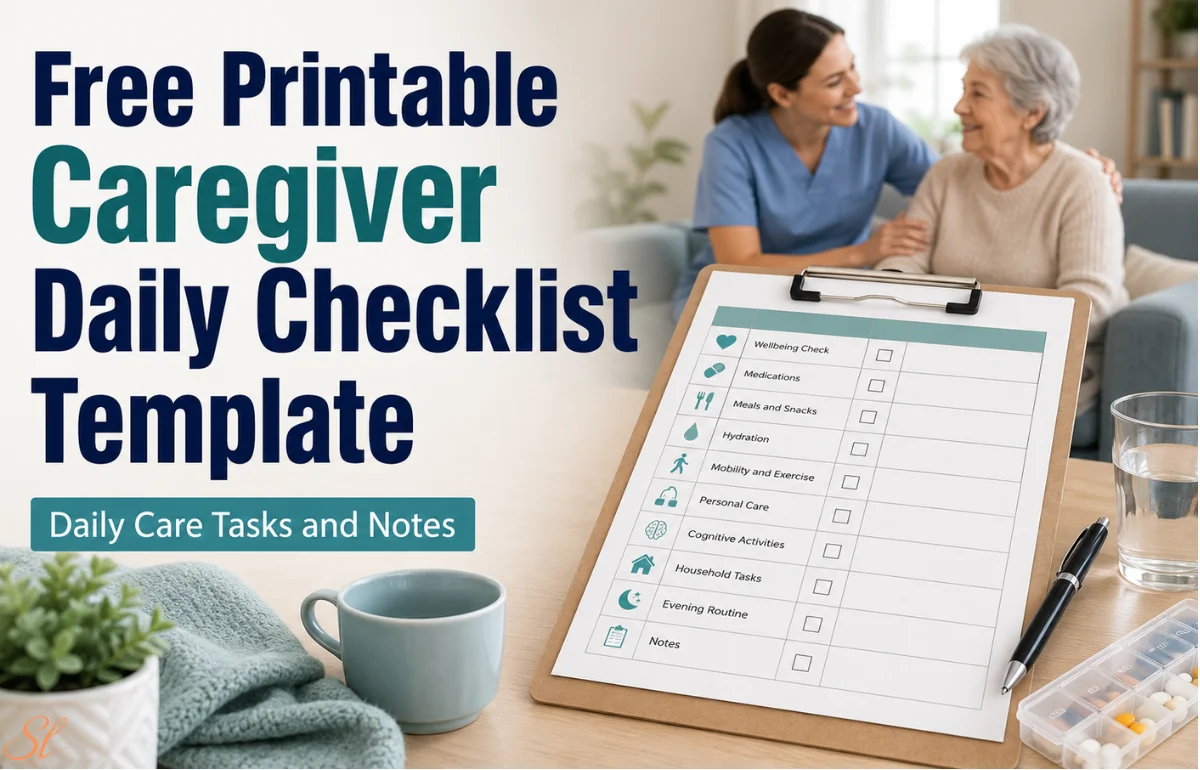
A free printable caregiver daily checklist template is a simple document used to organize, complete, and record the everyday care tasks of an older adult or another person who needs assistance. It can track medications, meals, hydration, personal hygiene, mobility, appointments, activities, mood changes, safety concerns, and notes for the next caregiver.
I recommend thinking of the checklist as more than a to-do list. A well-designed caregiver daily checklist also creates a record of what happened during the day, what changed, and what another family member or professional caregiver needs to know.
That distinction matters when several people share caregiving responsibilities. Instead of relying on memory, text messages, or scattered notes, everyone can work from one consistent daily record.
What Should a Caregiver Daily Checklist Include?
There is no single checklist that fits every person. Someone who needs occasional help with meals and transportation will have a very different routine from someone living with dementia, diabetes, limited mobility, or recovering after hospitalization.
Still, I look for several core sections whenever I evaluate a caregiver checklist:
- Date and caregiver name
- Morning, afternoon, and evening tasks
- Personal hygiene and grooming
- Dressing
- Toileting or continence care when needed
- Meals, snacks, and hydration
- Medication reminders or medication documentation
- Mobility and transfers
- Exercise or prescribed therapy
- Appointments
- Social and mental activities
- Mood, behavior, and general observations
- Safety checks
- Notes for family members or the next caregiver
- Emergency and healthcare contacts
These categories reflect many of the practical needs associated with aging at home. The National Institute on Aging identifies areas such as medications, meals, personal care, transportation, home safety, and healthcare assistance as common forms of support older adults may require.
Free Printable Caregiver Daily Checklist Template
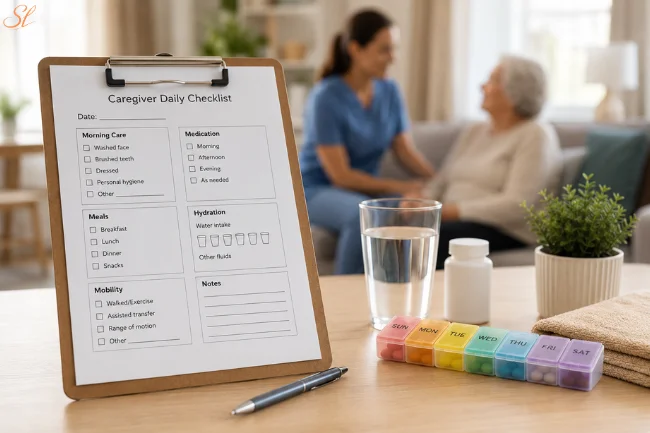
Here is a simple caregiver daily checklist that can be copied into a document, printed, or adapted to match an individual care plan.
Basic Information
- Date: ______________________
- Caregiver name: ______________________
- Care recipient: ______________________
- Shift/start time: ______________________
- Shift/end time: ______________________
Morning Care
- Wake-up assistance provided
- Toileting/continence care completed
- Teeth brushed/oral care completed
- Face washed/bathing completed as scheduled
- Hair/grooming completed
- Dressed in appropriate clothing
- Mobility aid available and in safe condition
- Breakfast prepared/served
- Morning fluids offered
- Scheduled medication task completed according to care plan
- Morning health observations recorded
- Bed and immediate living area checked for safety
Afternoon Care
- Lunch prepared/served
- Fluids offered
- Toileting/continence care completed as needed
- Walk, movement, or prescribed exercise completed
- Physical/occupational/speech therapy completed if scheduled
- Appointment or transportation needs completed
- Social or recreational activity offered
- Household task completed if required
- Mood or behavior changes recorded
- Afternoon medication task completed according to care plan
Evening Care
- Dinner prepared/served
- Fluids offered
- Evening medication task completed according to care plan
- Toileting/continence care completed
- Teeth brushed/oral care completed
- Changed into sleepwear
- Mobility equipment placed within reach
- Bedroom and pathway checked for fall hazards
- Nighttime items placed within reach
- Final observations recorded
- Handoff notes completed
Daily Notes
Meals/appetite: ______________________________________________
Fluid intake concerns: _______________________________________
Mood/behavior: ______________________________________________
Mobility or balance changes: _________________________________
Pain/discomfort reported: ___________________________________
Skin concerns: ______________________________________________
Bowel/bladder observations when relevant: ____________________
Appointments/therapy: _______________________________________
Other changes or concerns: __________________________________
Information to pass to the next caregiver: ____________________
This format intentionally separates completed tasks from observations. I find that distinction especially useful: “Lunch served” is a completed task, while “ate only a few bites and reported nausea” is information that may need follow-up.
Daily Checklist vs. Care Plan vs. Medication List
These documents are related, but they should not be treated as interchangeable.
The National Institute on Aging specifically recommends maintaining a current list of prescription medicines, over-the-counter products, and supplements and making that information available to caregivers and healthcare providers.
A daily checklist should support the person’s established care plan rather than replace it.
The Sections Most Printable Caregiver Checklists Miss
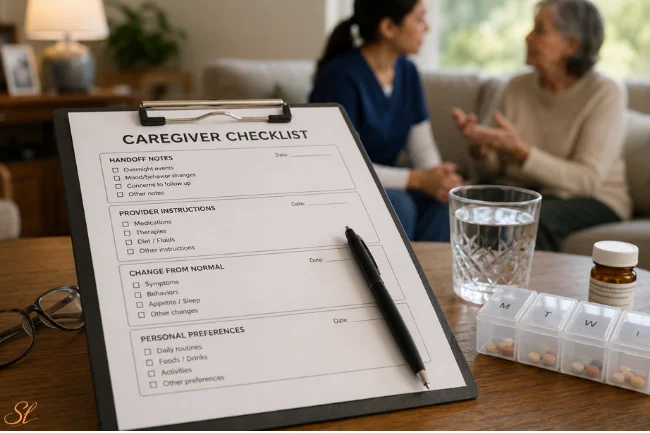
Many caregiver forms cover meals, medication, and hygiene and stop there. I would add four sections that make the document considerably more useful in real-life shared care.
1. Caregiver Handoff Notes
A good checklist should tell the next person what they need to know.
Instead of writing:
“Dad was tired.”
A more useful note would be:
“More tired than usual after lunch; declined afternoon walk and rested from 1:30 to 3:00.”
The goal is not to diagnose a problem. It is to record a clear observation so changes can be recognized and communicated.
For homes with several family caregivers, I recommend including:
- Caregiver name or initials
- Shift times
- Tasks not completed
- Reason a task was not completed
- New symptoms or behavior
- Supplies that need replacing
- Questions for family or healthcare providers
2. Individual Alert Instructions
I would avoid putting generic blood pressure, blood sugar, temperature, or other medical thresholds onto a universal printable.
Instead, include a section labeled:
“Healthcare provider instructions: Call/report if…”
The person’s clinician can then provide thresholds or symptoms that are appropriate for that individual’s medical history and treatment plan.
That approach makes the checklist safer and more personal than copying a generic number from the internet.
3. “Change From Normal” Tracking
One of the most valuable pieces of information a regular caregiver can provide is whether something is different from the person’s usual routine.
Consider recording changes in:
- Appetite
- Fluid intake
- Sleep
- Walking or balance
- Toileting
- Mood
- Memory or confusion
- Energy
- Pain
- Skin condition
- Participation in normal activities
You do not need to turn every observation into a medical conclusion. Accurate descriptions are often more useful than guessing at the cause.
4. Personal Preferences
Caregiving involves more than completing physical tasks. A checklist should leave room for the person’s preferences and independence.
That might include:
- Preferred wake-up time
- Favorite breakfast foods
- Clothing preferences
- Preferred bathing routine
- Religious or cultural routines
- Favorite music or television programs
- Hobbies
- Preferred exercise
- Foods the person dislikes
- Topics or activities that improve engagement
Including preferences helps prevent the checklist from becoming a rigid schedule that treats the person as a collection of tasks.
How to Organize a Caregiver Checklist by Time of Day
I prefer a morning-afternoon-evening structure because it answers the question a caregiver actually has during a busy day: “What needs to happen next?”
This structure also makes missed tasks easier to spot than one long undifferentiated list.
Medication Tracking Requires Extra Care
Medication documentation deserves its own section because older adults may take several prescription medicines, over-the-counter products, or supplements. The National Institute on Aging notes that taking medicines incorrectly or combining certain medicines and supplements can create risks, particularly for older adults managing multiple conditions.
A practical medication record can include:
- Medication name
- Scheduled time
- Dose listed on the care plan
- Completed/not completed
- Actual time
- Notes
- Caregiver initials
However, a printable caregiver checklist is not authorization to administer medication.
Family caregivers and paid caregivers should follow the person’s care plan, healthcare-provider instructions, applicable local rules, and the limits of their role. If a medication is missed, refused, vomited, duplicated, or given incorrectly, follow the established care instructions rather than improvising.
Add Daily Safety Checks Without Making the Form Complicated
Safety does not require a full home inspection every morning.
I would add a few quick checks that can become part of the normal routine:
- Clear frequently used walking paths
- Remove new clutter
- Check that needed mobility aids are within reach
- Make sure commonly used areas have adequate lighting
- Check that appropriate footwear is available
- Keep stairs and important pathways unobstructed
- Record any fall, near-fall, or new balance problem
Falls are a significant concern for older adults, and both the CDC and National Institute on Aging provide caregiver-focused fall-prevention and home-safety resources.
The daily checklist should complement—not replace—a fuller home-safety assessment.
Customize the Template to the Person, Not the Diagnosis Alone
Two people with the same diagnosis can require very different levels of help.
Rather than automatically adding every possible task, start with what the person currently does independently and where assistance is genuinely required.
For example, someone may independently brush their teeth but need help entering the shower. Another person may prepare breakfast safely but need transportation to appointments.
I recommend marking tasks as:
- Independent
- Reminder needed
- Supervision needed
- Physical assistance needed
- Completed by caregiver
That simple classification adds information that a yes/no checkbox cannot provide.
For someone living with dementia, the checklist may also need more emphasis on routine, supervision, behavior changes, and home safety because dementia can interfere with memory, thinking, and everyday activities.
Do Not Forget the Caregiver
A checklist should reduce mental load, not create another standard the caregiver feels pressured to meet perfectly.
The National Institute on Aging recognizes that caregiving can be stressful and recommends that caregivers also protect their own wellbeing.
I would therefore add one small area at the bottom of the sheet:
Caregiver follow-up needed: __________________________________
This gives the caregiver somewhere to record tasks that should be delegated, supplies that need ordering, phone calls that need making, or issues that cannot be handled during the current shift.
When responsibilities are shared, the checklist should make delegation easier rather than quietly assigning everything to one person.
How to Make the Checklist Work When Several People Provide Care
A paper checklist becomes much more valuable when everyone follows the same documentation rules.
Use one checklist per day or shift. Write the date clearly, add caregiver initials where necessary, and avoid vague phrases such as “doing fine” or “not herself.”
Record what you directly observed:
- “Ate half of breakfast.”
- “Needed more help standing than yesterday.”
- “Declined shower.”
- “Walked to mailbox with walker.”
- “Reported pain when getting out of chair.”
This creates a cleaner handoff and makes patterns easier to notice over several days.
Keep completed records in an agreed location that respects the person’s privacy, and review the template whenever the care routine changes.
When Should You Update a Caregiver Daily Checklist?
The template should change when the person’s needs change.
Review it after:
- A hospital stay
- A new diagnosis
- A medication or treatment change
- A fall
- A noticeable change in mobility
- New home-care services
- A change in eating or swallowing needs
- A new therapy program
- Changes in memory or behavior
- A move between care settings
The purpose is not to create more paperwork. It is to keep the checklist aligned with the care that is actually being provided today.
FAQs About Caregiver Daily Checklists
What should be included in a caregiver daily checklist?
Include personal care, meals, hydration, medication tasks, mobility, activities, appointments, safety checks, observations, and caregiver handoff notes.
What does a caregiver do on a daily basis?
Daily duties may include helping with hygiene, dressing, meals, mobility, household tasks, companionship, transportation, and care-plan-related health tasks.
How do I make a caregiver checklist?
List the person’s actual care needs, group them by morning, afternoon, and evening, then add space for completion status, observations, caregiver initials, and handoff notes.
What should caregivers document?
Document completed care tasks and meaningful observations such as appetite, mobility, mood, behavior, pain, falls, unusual symptoms, missed tasks, and information requiring follow-up.
How do you create a daily care plan for an elderly parent?
Start with the person’s current abilities, medical care instructions, daily routine, safety needs, and preferences, then decide what requires reminders, supervision, or hands-on assistance.
Make Your Checklist Useful, Not Just Printable
A free printable caregiver daily checklist template works best when it answers three questions: What needs to be done? What actually happened? What does the next caregiver need to know?
Start with the template above, remove sections that do not apply, and add instructions from the person’s existing care plan and healthcare team. Revisit it whenever care needs change.
A one-page checklist cannot replace professional medical advice or a personalized care plan, but the right daily format can make routine caregiving clearer, easier to share, and far less dependent on memory.

Sophia Williams is a senior care writer with 8 years of experience covering elderly support, caregiving, healthy aging, and independent living. She creates well-researched guides to help seniors, families, and caregivers make informed decisions.