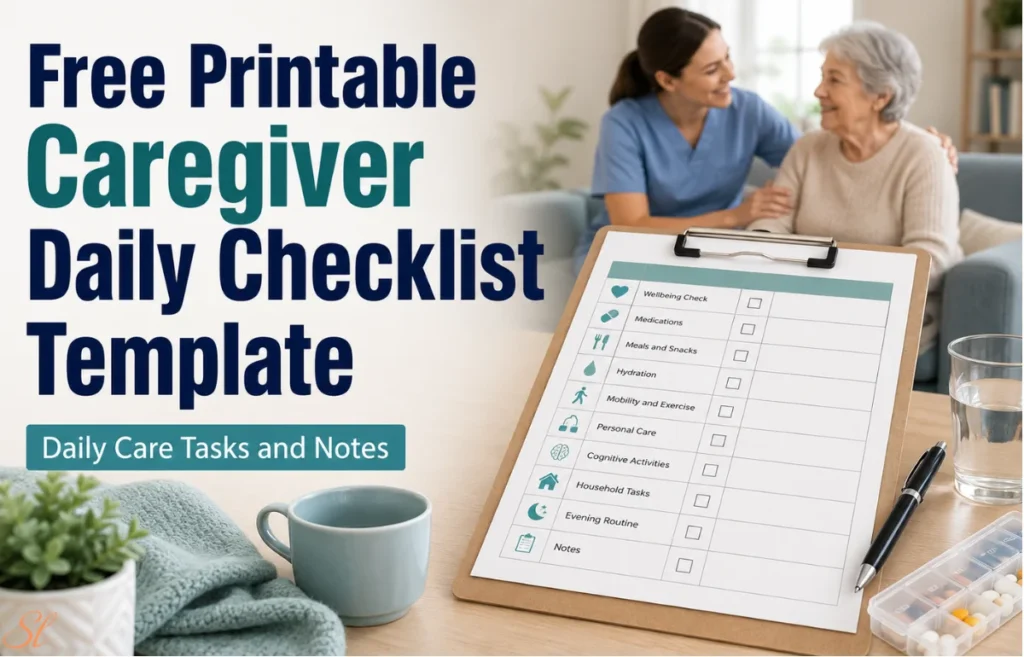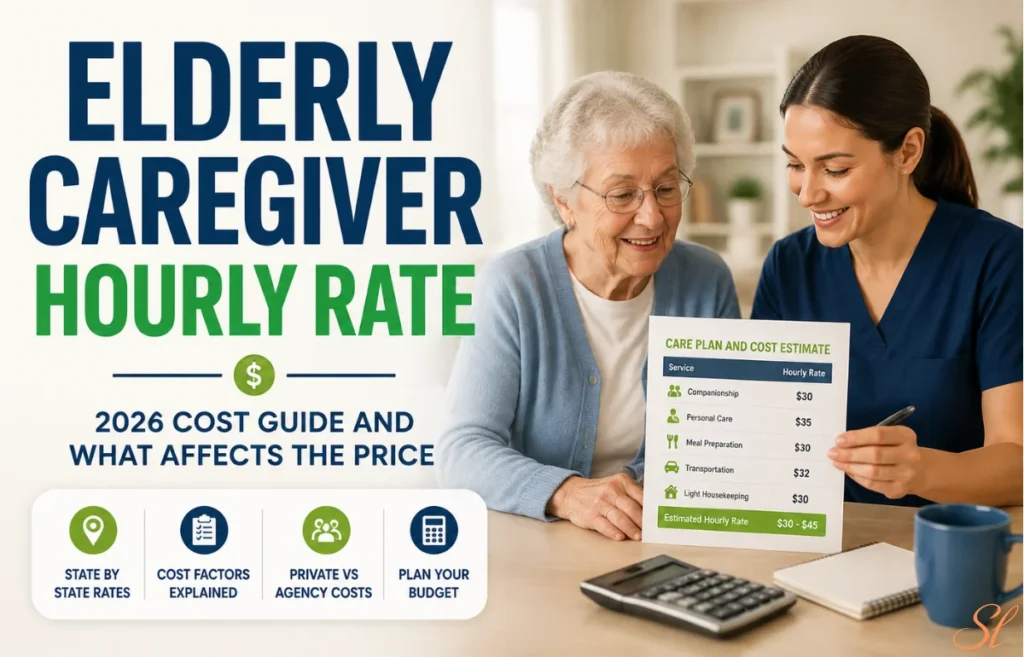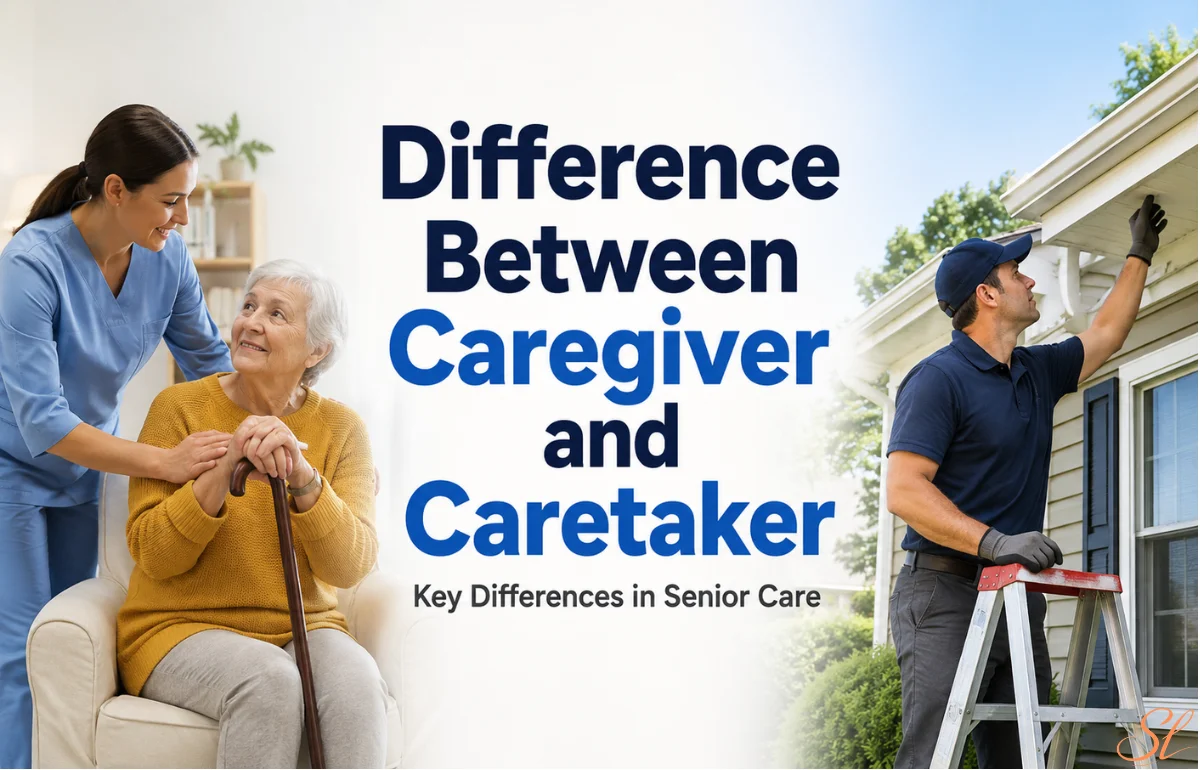
The difference between caregiver and caretaker mainly comes down to what—or whom—the person is responsible for and the type of support they provide. A caregiver usually provides direct, ongoing care to a person who needs help because of age, illness, disability, injury, or daily living limitations. A caretaker is a broader term that may describe someone responsible for a person, property, building, animal, or other asset.
In senior care, I would normally use “caregiver” when talking about someone who helps an older adult with bathing, dressing, meals, mobility, companionship, transportation, or other daily needs. “Caretaker” is not necessarily incorrect, but it can be less precise because the word is also commonly associated with maintaining homes, buildings, grounds, and other property. Dictionaries also recognize some overlap between the two terms, which is why context matters.
What Is a Caregiver?
A caregiver is someone who provides assistance to a person who cannot fully manage some aspects of daily life independently.
That person might be an older adult, someone recovering from surgery, a child, or a person living with a disability or chronic medical condition. MedlinePlus describes a caregiver as someone who cares for a person who needs help taking care of themselves.
Caregivers can be either paid professionals or unpaid family members and friends.
For example, an adult daughter who prepares meals, drives her father to medical appointments, and helps manage his daily routine is a family caregiver even if she has never been formally hired for the role.
The Family Caregiver Alliance distinguishes between informal caregivers—such as relatives, friends, partners, and neighbors—and formal caregivers connected with an organized service system.
What Does a Caregiver Usually Do?
The exact responsibilities depend on the person’s needs, the caregiver’s training, and any applicable professional or state requirements.
Common caregiving duties may include:
- Helping with bathing, grooming, dressing, and toileting
- Preparing meals
- Helping a person eat or drink
- Assisting with walking and transfers
- Providing companionship
- Shopping for groceries
- Doing light housekeeping and laundry
- Arranging transportation
- Helping organize appointments
- Observing changes in the person’s condition
- Providing reminders and supporting established daily routines
The U.S. Bureau of Labor Statistics lists many similar responsibilities for home health and personal care aides, including personal-care assistance, housekeeping, meal preparation, transportation arrangements, appointments, and social engagement.
What I find most useful when explaining the role is to think beyond a list of chores. Caregiving is centered on the person’s day-to-day well-being. The individual receiving care is the focus of the relationship.
What Is a Caretaker?
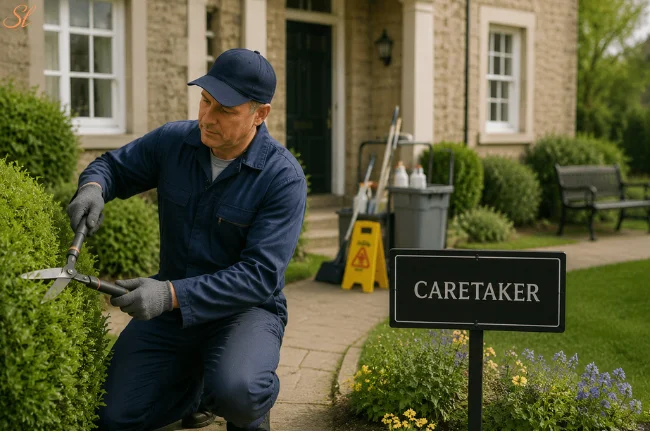
A caretaker is someone entrusted with looking after or maintaining a person, place, animal, or thing.
This broader meaning creates much of the confusion surrounding caregiver vs caretaker terminology.
A caretaker might:
- Maintain a vacant property
- Look after an apartment building
- Care for an estate while an owner is away
- Supervise grounds or facilities
- Look after animals
- Temporarily assume responsibility for something
- In some contexts, provide care to another person
Cambridge Dictionary, for example, defines a caretaker in one common sense as a person employed to look after a building or property and perform duties such as cleaning, repairs, and gardening. Other dictionaries also recognize “a person who takes care of another” as a valid meaning.
That last point matters. Saying that a caretaker never cares for people would be inaccurate.
The words can be synonyms in certain contexts. The real distinction appears in how modern speakers, healthcare organizations, families, and employers typically use the terms.
Caregiver vs Caretaker: Quick Comparison
| Area | Caregiver | Caretaker |
|---|---|---|
| Main focus | Caring for a person | Looking after a person, property, animal, or asset |
| Common in senior care | Yes | Sometimes |
| Personal care | Common | Possible, depending on context |
| Companionship | Common | Not necessarily |
| Property maintenance | Usually not the primary role | Common |
| Paid or unpaid | Both | Usually role-dependent |
| Family member can fill role | Yes | Yes, depending on usage |
| Healthcare-related context | Common | Less precise |
| Emotional support | Often part of the role | Not automatically implied |
| Best term for elder-care services | Usually caregiver | Usually less specific |
The most useful difference, then, is not whether someone is paid or emotionally attached to the person.
That distinction appears in some online explanations, but it is too simplistic. A caregiver can absolutely be a paid professional, and a caretaker can be a relative or friend. Authoritative caregiver definitions explicitly recognize both formal and informal caregiving arrangements.
What Is the Main Difference Between Caregiver and Caretaker?

The main difference between caregiver and caretaker is the scope implied by each word.
Caregiver strongly suggests providing care to another human being.
Caretaker has a wider meaning. It often emphasizes responsibility, supervision, preservation, or maintenance rather than specifically providing personal care.
Consider two examples.
If Maria helps her 82-year-old mother dress, prepares her meals, accompanies her to appointments, and makes sure she is safe at home, I would describe Maria as her mother’s caregiver.
If James lives on an unoccupied estate, checks the property, maintains the grounds, and arranges repairs when necessary, “caretaker” would be the more natural description.
The difference becomes less clear when the caretaker is responsible for a person. In that situation, the terms may overlap.
Caregiver Does Not Automatically Mean Healthcare Professional
This is one distinction families should understand before hiring help.
The word “caregiver” describes a role, but by itself it does not tell you the person’s clinical qualifications, license, certification, or permitted scope of work.
Someone described as a caregiver could be a family member, companion, personal care aide, home health aide, nursing assistant, or another type of worker depending on the setting.
Those roles are not interchangeable.
For example, Bureau of Labor Statistics descriptions show that home health and personal care aides frequently assist with activities of daily living and household tasks, while nursing assistants may perform duties such as measuring vital signs and reporting health concerns to nurses. Training and permitted responsibilities can also depend on the state and position.
So when hiring senior care, I recommend looking past the words in the advertisement.
Ask what the worker is actually trained, authorized, and expected to do.
Is a Family Member a Caregiver or a Caretaker?
In most modern senior-care discussions, “family caregiver” is the clearer choice.
A spouse helping a partner with dementia, a son managing transportation for his mother, or a neighbor regularly assisting an older friend can all fall within the broad concept of informal caregiving.
The Administration for Community Living recognizes family and other informal caregivers in programs supporting people who provide care for older adults and individuals with certain disabilities or health conditions.
And caregiving does not require living in the same house.
A person who coordinates medical appointments, groceries, transportation, finances, or other support from another home may still function as a caregiver.
This is a useful distinction that gets missed when people think caregiving only means hands-on bathing, feeding, or dressing.
Caregiver vs Caretaker in Senior Care
When discussing elderly care services, caregiver is generally the more specific and useful term.
Older adults may need assistance with activities of daily living, commonly including personal tasks such as dressing, bathing, toileting, eating, and moving from one position or location to another. Home- and community-based support can also involve transportation, homemaker services, home modifications, and other forms of assistance.
A senior caregiver may therefore support both practical needs and quality of life.
For example, a caregiver might prepare breakfast, help an older adult get dressed, drive them to an appointment, encourage safe movement, and spend time talking with them during the day.
A property caretaker working at that same person’s home could have a completely different responsibility—checking the furnace, arranging landscaping, monitoring the house while the owner is away, and overseeing repairs.
That example makes the difference between caretaker and caregiver much easier to understand than trying to create an artificial rule based on whether either person receives a paycheck.
Caregiver, Caretaker, Home Health Aide, and Personal Care Aide
Another source of confusion is that families sometimes use all care-related titles interchangeably.
They shouldn’t assume the titles mean exactly the same thing.
| Term | What It Usually Describes |
|---|---|
| Caregiver | Broad term for a person providing care or assistance to another person |
| Family caregiver | Relative, partner, friend, neighbor, or other personally connected individual providing assistance |
| Caretaker | Person responsible for looking after someone or something; often used for property or maintenance |
| Personal care aide | Worker who commonly assists with daily personal and household activities |
| Home health aide | Home-care worker whose responsibilities may include personal assistance and health-related support within the worker’s permitted role |
| Nursing assistant | Trained worker who provides basic patient care, commonly under nursing supervision |
A title alone should never be your only hiring criterion.
If an older adult needs specialized assistance, ask the agency or worker for a written description of services, qualifications, limitations, supervision, and emergency procedures.
Does a Caregiver Provide Medical Care?
Sometimes, but never assume that simply because someone is called a caregiver.
Many caregivers provide nonmedical support such as meals, companionship, hygiene assistance, transportation, mobility help, and household tasks.
Skilled medical services belong to appropriately qualified professionals.
Even within regulated care settings, responsibilities differ. Medicare, for example, distinguishes home health aide assistance such as walking, bathing, grooming, feeding, and changing bed linens from other skilled home health services.
For families, the practical question is therefore not, “Is this person a caregiver?”
It is, “What specific services can this person safely and legally provide?”
That question can prevent misunderstandings when someone’s care needs become more complex.
Which Term Should You Use?
If you’re talking about direct care for a senior, patient, child, or person with a disability, I recommend using caregiver unless a more precise professional title is available.
Use caretaker when the responsibility is primarily connected with property, grounds, buildings, animals, or general custodial oversight.
When someone’s responsibilities fall into both categories, describe the duties rather than relying entirely on the title.
For example:
“Live-in caregiver providing meal preparation, personal assistance, and companionship” communicates far more than simply saying “caretaker.”
Likewise, “property caretaker responsible for maintenance and security” immediately tells readers that the role is not a personal-care position.
Clear language matters especially in job listings, care agreements, service contracts, and family care plans.
A Better Way to Compare Care Roles
One detail I think many explanations of caregiver vs caretaker overlook is that families often spend too much time choosing the right label and not enough time defining the actual responsibility.
A better comparison uses five questions:
- Who or what is receiving care?
- What tasks need to be performed?
- Does the work involve personal or health-related assistance?
- What training or credentials are required?
- Who is responsible if the person’s needs change?
Those questions reveal much more than the job title.
For senior care in particular, a written list of responsibilities can help families determine whether they need companionship, personal care, home health services, nursing support, respite care, or a combination of services.
Why the Terminology Matters
Words affect expectations.
Calling someone a “caretaker” when you really need a trained personal-care worker may create uncertainty about duties. Calling someone a “caregiver” can also be too broad if the person actually needs a licensed clinician or another specifically qualified professional.
That’s why I treat caregiver as an umbrella term in everyday conversation—not proof of a particular credential.
When arranging care, the safest approach is to identify the person’s needs first and match those needs with clearly defined services and qualifications.
FAQs About Caregiver vs Caretaker
Is caretaker the same as caregiver?
Sometimes. The words can overlap when describing someone who looks after another person, but caregiver is generally more specific to human care, while caretaker has broader uses involving property, animals, or maintenance.
What is the difference between a caregiver and a caretaker for elderly people?
A caregiver typically provides personal and everyday support to an older adult. Caretaker may also refer to someone providing care, but the term is less specific in a senior-care context.
Can a family member be called a caregiver?
Yes. Family members, partners, friends, and neighbors who regularly help someone with daily needs can be considered informal or family caregivers.
Is a caregiver considered a healthcare worker?
Not automatically. “Caregiver” is a broad term and does not by itself establish medical training, certification, licensing, or authority to provide clinical care.
Which is the better term: caregiver or caretaker?
For someone providing direct personal assistance to another person, caregiver is usually clearer. For someone maintaining a property, building, grounds, or similar asset, caretaker is generally more appropriate.
Choosing the Right Care Starts With the Role
The difference between caregiver and caretaker is clearer once you focus on responsibility rather than the words themselves. A caregiver primarily supports a person, while a caretaker may look after a much wider range of people, places, animals, or property.
For senior care, “caregiver” is usually the more precise term—but don’t choose help based on a title alone. Write down the older adult’s actual daily needs, then compare those needs with the provider’s services, training, experience, and permitted responsibilities. That small amount of clarity can make it much easier to find the right level of support.

Sophia Williams is a senior care writer with 8 years of experience covering elderly support, caregiving, healthy aging, and independent living. She creates well-researched guides to help seniors, families, and caregivers make informed decisions.