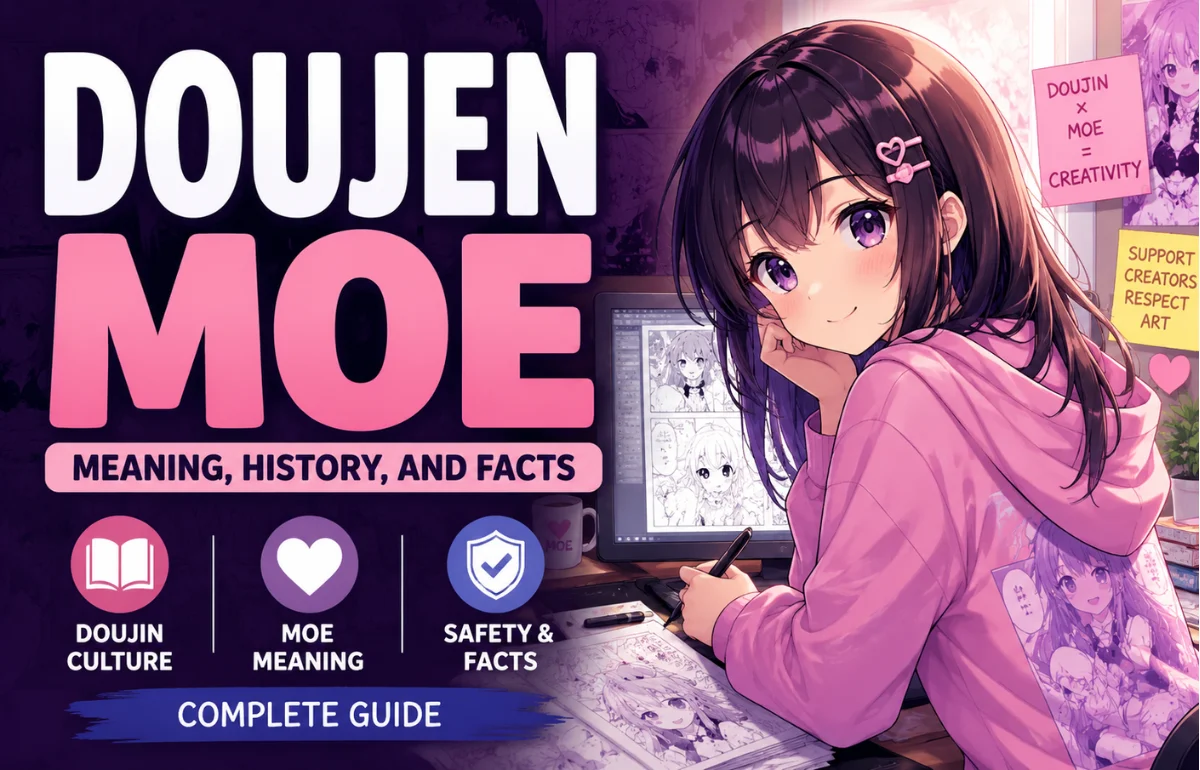
Doujen Moe is a term people increasingly search when looking for information about doujin content, anime fan culture, and an older online platform commonly known as Doujin Moe. The most accurate explanation is that “Doujen” is not the standard Japanese spelling of doujin. Instead, it appears to be a spelling or search variation of “Doujin Moe,” a name historically associated with an online collection of doujin and adult-oriented illustrated material.
At the same time, newer websites have started using Doujen Moe more loosely to describe the meeting point between independent fan creation and the Japanese idea of moe. When I researched the phrase, this difference stood out immediately: many articles treat it as an established cultural movement, but reliable evidence for that specific definition is limited.
That distinction matters if you want to understand what Doujen Moe actually means rather than simply repeat what appears in search results.
What Does Doujen Moe Mean?
The easiest way to understand the phrase is to separate the words behind it.
“Doujen” is generally being used as an alternative or mistaken spelling of doujin. The Japanese term 同人, normally romanized as dōjin or doujin, refers to people who share an interest, hobby, creative goal, or activity. In modern anime and manga culture, the word is strongly connected with independently produced creative works.
“Moe,” written 萌え, describes a feeling of affection, warmth, attachment, or emotional enthusiasm toward a fictional character or particular character trait. It is strongly associated with anime, manga, games, and otaku culture.
Put together informally, Doujen Moe can therefore suggest doujin material connected with moe-oriented characters or anime fandom.
However, I would not describe “Doujen Moe” as an established Japanese artistic genre. That claim appears frequently in newer web articles but is difficult to support through established Japanese terminology.
Doujen, Doujin, Doujinshi, and Moe Are Not the Same Thing
A major source of confusion is that online articles often use these words as though they are interchangeable. They are not.
| Term | Basic meaning | Common use |
|---|---|---|
| Doujen | Nonstandard spelling often used online | Usually a search variation of “doujin” |
| Doujin | People with shared interests; also associated with independent creative activity | Games, music, art, writing, fan projects |
| Doujinshi | Self-published publication | Manga, comics, novels, art books and other printed/digital works |
| Moe | Emotional affection or attachment toward fictional characters or traits | Anime, manga, games and otaku culture |
One detail I regularly see simplified online is the meaning of doujinshi.
Doujinshi does not automatically mean fan fiction, and it does not automatically mean adult content. Independent creators can produce entirely original doujinshi with their own characters and stories. Fan works based on existing franchises are simply one major part of the culture.
That distinction gives readers a much more accurate picture of Japanese independent publishing.
Is “Doujen” a Real Japanese Word?
Not in the sense usually implied by articles about Doujen Moe.
The standard romanization associated with 同人 is “doujin,” “dōjin,” or occasionally “dojin.” Dictionaries define the Japanese word as referring to people who have the same interests or purposes.
I could not find comparable linguistic evidence establishing “doujen” as the standard romanization.
That suggests the spelling may have spread through misspellings, branding, search behavior, or reinterpretations of the older Doujin Moe name.
This is useful for searchers because someone typing:
- Doujen Moe
- Doujin Moe
- Dojen Moe
- doujen manga
- doujin moe meaning
may actually be trying to find information about the same general topic.
The Older Internet History Behind Doujin Moe
This is where the story becomes more interesting.
Recent articles often present Doujen Moe as though it appeared in the mid-2020s as a new anime fandom concept. Older online evidence tells a different story.
References to “Doujin Moe” as a website existed many years earlier. An Urban Dictionary entry referring specifically to the site dates to December 2008, while current domain-registration records show that doujin-moe.com was registered in December 2005.
The site became associated with adult-oriented anime and doujin material rather than simply being a general-purpose community for cute fan art.
That history makes the modern search results unusual. Over time, some publishers appear to have reinterpreted the phrase itself, breaking it into “doujin + moe” and describing the combination as a cultural trend.
The linguistic interpretation is understandable, but it should not be confused with documented history.
Why Are So Many Websites Calling Doujen Moe a Cultural Movement?
Search behavior can reshape the meaning of obscure terms.
When a phrase begins attracting searches, but there is little authoritative information explaining it, publishers often try to infer its meaning from related words. In this case, “Doujen” looks similar to doujin and “Moe” is already an established Japanese fandom term.
From there, it is easy to construct the idea that Doujen Moe means “independently created moe-style fan content.”
The problem is that repeated explanations do not automatically turn an interpretation into an established Japanese term.
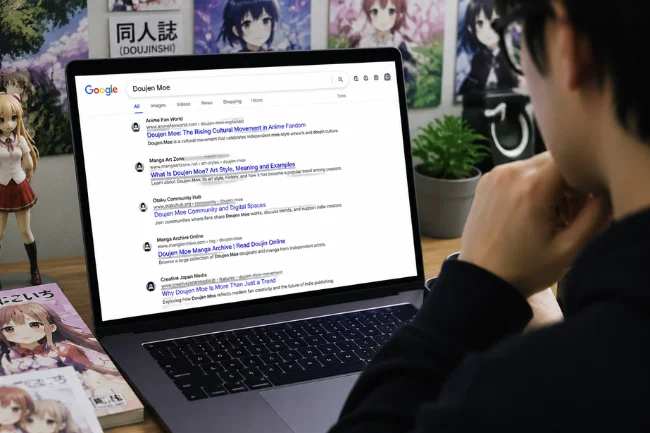
When I compared current search results, I found descriptions ranging from a cultural movement to an art style, digital community, manga archive, and online platform. That inconsistency itself is a useful signal: the phrase does not have one universally accepted modern definition.
What People May Mean When They Search Doujen Moe
| Search intention | What the person is probably looking for |
|---|---|
| “What is Doujen Moe?” | Meaning or identity of the phrase/site |
| “Doujen Moe manga” | Doujin or fan-created manga content |
| “Doujen Moe website” | Information about the older online platform |
| “Doujin moe meaning” | Meaning of doujin and moe terminology |
| “Is Doujen Moe safe?” | Website, privacy, security or content concerns |
Understanding this mixed intent is more useful than forcing every search into one definition.
What Is Doujin Culture?
To understand why the keyword attracts anime and manga readers, it helps to understand doujin culture itself.
Doujin creation is built around independent publishing. Individuals or small creative groups, often called circles, produce their own material outside major commercial publishing systems.
That material can include:
- Manga and illustrated books
- Fiction and short stories
- Art collections
- Music
- Independent games
- Fan adaptations
- Original characters and worlds
Creators may work with existing fictional universes, but many create completely original projects.
That freedom is one reason doujin culture has remained influential. It gives artists space to experiment with niche ideas that might not fit the priorities of a large publisher.
Moe Means More Than “Cute”
Another misunderstanding surrounding Doujen Moe comes from translating moe simply as “cute.”
Cuteness can certainly create a moe response, but the two ideas are not identical.
Kawaii generally describes something as cute or charming. Moe is more closely connected to the emotional reaction a fan experiences toward a character, personality trait, relationship, or fictional situation.
A character may trigger moe because of vulnerability, determination, awkwardness, sincerity, personality contrasts, or other qualities that create affection.
I find this distinction useful because it explains why two visually similar anime characters can generate completely different reactions from fans. The artwork may attract attention, but personality and emotional context often create the attachment.
Is Doujen Moe the Same as Doujinshi?
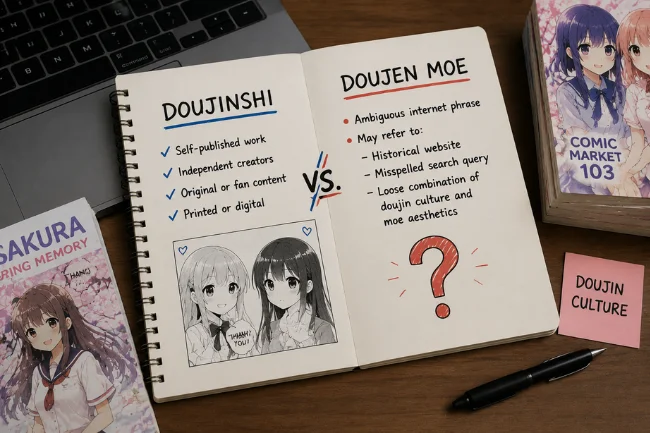
No.
Doujinshi is a real and well-established Japanese publishing term. Doujen Moe is a much more ambiguous internet phrase.
A doujinshi is generally a self-published work created independently of traditional publishing channels. It can contain original material or derivative fan content.
Doujen Moe, meanwhile, may refer to the historical Doujin Moe website, a misspelled search query, or—in newer online articles—a loose combination of doujin culture and moe aesthetics.
Treating the two as synonyms creates unnecessary confusion.
Is Doujen Moe an Online Platform?
Historically, Doujin Moe has been associated with an online website and content network.
As of 2026, domain-registration records still show doujin-moe.com as registered, and third-party uptime services have reported the domain responding at various points. That does not prove that the site’s ownership, catalog, safety, or services remain unchanged.
I would therefore be cautious with claims such as “Doujen Moe currently offers these exact features” unless they are verified directly at the time of publication.
Some newer articles claim the platform provides modern galleries, creator accounts, advanced tagging, community tools, or similar features. Those descriptions should not be repeated without reliable confirmation.
This is especially relevant for older niche websites, because domains can change ownership, functionality, advertising systems, or security practices over time.
Is Doujen Moe Safe to Visit?
The safest answer is that a domain’s historical reputation does not guarantee its current safety.
If someone encounters an unfamiliar anime, manga, or doujin website, I recommend treating it the same way I would any unknown content platform.
Avoid downloading unfamiliar executable files, granting unnecessary browser permissions, entering payment information without verifying the operator, or reusing passwords from important accounts.
Users should also expect age-restricted material on websites historically associated with adult doujin content.
A website responding successfully does not mean its content, advertising partners, downloads, or privacy practices have been independently verified.
Copyright and Creator Rights Matter
Doujin culture also raises a question that short explanations often skip: who owns the underlying work?
Original doujinshi created entirely by an independent artist can be straightforward from an authorship perspective. Derivative works based on copyrighted anime, manga, games, or fictional characters are more complicated.
Practices surrounding fan works vary between rights holders and jurisdictions. Some creators and publishers tolerate certain fan activities, while others impose restrictions or enforce their intellectual property rights.
Uploading somebody else’s artwork without permission introduces another issue entirely.
Readers who want to support doujin creators should look for legitimate creator-controlled stores, convention sales, official distribution pages, or platforms where the artist has chosen to publish the work.
Why Doujen Moe Still Attracts Search Interest
The keyword sits at the intersection of several popular subjects: anime culture, independent manga, internet nostalgia, fandom terminology, and curiosity about obscure websites.
It also contains built-in ambiguity.
Someone may remember the Doujin Moe website from years ago but spell the name “Doujen Moe.” Another person may encounter the phrase in a recent blog article and assume it describes a modern art movement.
A third searcher may simply want to know what doujin and moe mean.
That mixed intent explains why search results can look contradictory.
For me, the most useful way to discuss the keyword is not to pretend that only one interpretation exists. The better answer is to explain the documented terminology, the historical website connection, and the newer reinterpretation separately.
What to Remember About Doujen Moe
Doujen Moe is best treated as an ambiguous internet search term rather than a clearly established Japanese genre.
The established word is doujin, referring to people with shared interests and, in modern fandom, independent creative culture. Doujinshi are self-published works, while moe describes an emotional response or affection toward fictional characters and traits.
“Doujin Moe” also has a documented history as the name of an older adult-oriented doujin website, which predates many modern articles claiming Doujen Moe is a newly emerging cultural movement.
If you encountered the term while researching anime or manga, the next useful step is to identify which meaning you actually need: the historical website, Japanese doujin culture, doujinshi publishing, or the meaning of moe. That will lead you to much more reliable information than treating every use of “Doujen Moe” as the same thing.
Frequently Asked Questions
What is Doujen Moe?
Doujen Moe is an ambiguous search term commonly connected with “Doujin Moe,” an older online doujin site, or used informally for content combining doujin culture and moe themes.
Is Doujen Moe the same as doujinshi?
No. Doujinshi is an established Japanese term for self-published works, while Doujen Moe is an informal and inconsistently used internet phrase.
Is “Doujen” the correct spelling of doujin?
The standard spellings are doujin, dōjin, or sometimes dojin. “Doujen” appears mainly as a spelling variation used in online searches.
Does doujin always mean adult manga?
No. Doujin works can include original or fan-created manga, novels, games, music, art books, and many other independent projects.
What does moe mean in anime?
Moe describes feelings of affection, warmth, or emotional attachment toward fictional characters or particular character traits; it means more than simply “cute.

Ava Bennett is a social media strategy writer with 7+ years of experience covering social platforms, content trends, audience engagement, and digital communication strategies. She creates practical insights to help readers understand the evolving social media landscape.